Do You Hang to the Sidewalk?

Posted: October 15, 2014 in World On The Edge

file000884219889Some of us have gone through events in our lives that have made us afraid to trust.

Some of us have been crushed by circumstances–financial or personal. Some of us have experienced the loss or death or injury of a loved one, and it has knocked us down. And some of us have been betrayed by someone we least expected, shooting our anger and vengeance toward them.

Maybe our circumstance has knocked us to our knees, but maybe it has had a different effect: We won’t fall on our knees at all.

We are angry. We are afraid to trust.

We hang to the sidewalk of what used to be and will not move away from it to take a step forward, a step toward change. We don’t think we can handle it–and worse, we don’t want to try.

We wonder why God did this to us! We are angry and bitter. Maybe we shut ourselves away, or maybe we meet others attempts to help us with bursts of questioning, “What do you know about it anyway? You’re fine, not like me at all!”

BUT that is probably not true, though we may be surprised to discover it.  Because at a given time in our lives, all of us will go through things we don’t want to go through. We will suffer from one thing or another. Every one of us. How do we get through it in one piece?

Oddly, what we don’t think we can do, is the thing we need to do. TRUST in God. And that means trust in ourselves, because God lives within us. And then, TRUST in others who may be serving as Christ among us. We are not alone–never alone–not even when we close ourselves off.

The answer is to open our hearts to God.  And open our physical door to let others in; those who may indeed have had a similar experience, and who may have been called by God  to help us.  Called to help you and me individually, where we are, and as we are, because God loves us that much.

God does not give us our life without His path to walk upon. Let Him  work on our fear and anger by accepting His mercy through His mystical body–the union of all Christians into a spiritual body with Jesus Christ as their head.

God wants to help. Most people want to help. Why don’t we let them?

The Literature of Belief

Posted: October 14, 2014 in World On The Edge

The Literature of Belief                                                                                      ****If you’re near New Orleans, please join us.****

Are You Moving Forward???

Posted: October 13, 2014 in World On The Edge

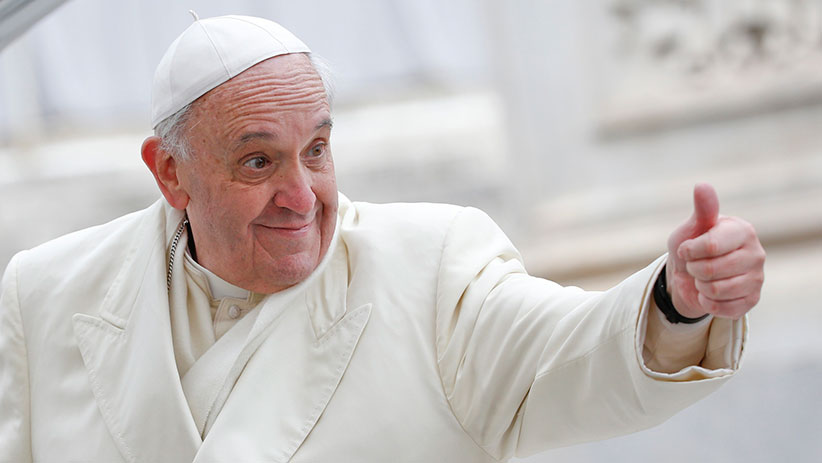
Pope FrancisIn a recent interview with the Argentine publication Viva, Pope Francis issued a list of 10 tips to be a happier person, based on his own life experiences.

The Pope encouraged people to be more positive and generous, to turn off the TV and find healthier forms of leisure, and even to stop trying to convert people to one’s own religion.

But his number one piece of advice came in the form of a somewhat cliche Italian phrase that means, “move forward and let others do the same.” It’s basically the Italian equivalent of, “live and let live.” You can check out the full list below.

The Pope’s 10 Tips for a Happier Life

1. “Live and let live.” Everyone should be guided by this principle, he said, which has a similar expression in Rome with the saying, “Move forward and let others do the same.”

2. “Be giving of yourself to others.” People need to be open and generous toward others, he said, because “if you withdraw into yourself, you run the risk of becoming egocentric. And stagnant water becomes putrid.”

3. “Proceed calmly” in life. The pope, who used to teach high school literature, used an image from an Argentine novel by Ricardo Guiraldes, in which the protagonist — gaucho Don Segundo Sombra — looks back on how he lived his life.

4. A healthy sense of leisure. The Pope said “consumerism has brought us anxiety”, and told parents to set aside time to play with their children and turn off the TV when they sit down to eat.

5. Sundays should be holidays. Workers should have Sundays off because “Sunday is for family,” he said.

6. Find innovative ways to create dignified jobs for young people. “We need to be creative with young people. If they have no opportunities they will get into drugs” and be more vulnerable to suicide, he said.

7. Respect and take care of nature. Environmental degradation “is one of the biggest challenges we have,” he said. “I think a question that we’re not asking ourselves is: ‘Isn’t humanity committing suicide with this indiscriminate and tyrannical use of nature?’”

8. Stop being negative. “Needing to talk badly about others indicates low self-esteem. That means, ‘I feel so low that instead of picking myself up I have to cut others down,’” the Pope said. “Letting go of negative things quickly is healthy.”

9. Don’t proselytise; respect others’ beliefs. “We can inspire others through witness so that one grows together in communicating. But the worst thing of all is religious proselytism, which paralyses: ‘I am talking with you in order to persuade you,’ No. Each person dialogues, starting with his and her own identity. The church grows by attraction, not proselytising,” the Pope said.

10. Work for peace. “We are living in a time of many wars,” he said, and “the call for peace must be shouted. Peace sometimes gives the impression of being quiet, but it is never quiet, peace is always proactive” and dynamic.

Courtesy of the Catholic News Service.

file1791242309948Have you ever put your parents through Hell?

Have you ever put your children through Hell?

Have you ever been in a place in your life when you were a Monster to others?

Did you hit the bottom?

Did you get tired of being tired?

Or hate yourself after every senseless argument, or action, that hurt someone you say you love?

We may not have seen it before, but when those painful things happen, we begin to see ourselves as what we’ve become–Monsters.

And Monsters can change.

First we have to accept what we’ve done and face the fear of what it has done to our lives, and to the lives of family members and friends.

Next, we can make no excuses–none at all. We cannot blame others. We must take responsibility. And then show, and tell, those our monster-status has hurt that we are sorry, and ask for their forgiveness.

Last, we must do everything we can to forgive ourselves. How? Realize that God forgives us as soon as we ask Him to. Realize that He’s never stopped loving us. And simply love him back in the ways He’s shown us; through Scripture, through our church, through other loving people.

We can reform, and we can transform, ourselves into the person we’d like to be.

And so many of us do!

Finally, a very important note. To anyone who has gone through the pain of living with a Monster you love—-please don’t ever say you won’t forgive!!

A Monster should never be without hope that he or she can be a Teddy Bear again.0003_1

river bendI’ve come to see life as like a river–its waters can be calm and serene, but also raging and terrifying–especially where the river bends. And at its bend, there are decisions to be made–decisions with consequences. Which way do we go?

Don’t we want our choice to be a good one?

Decision making is something we do constantly as we are faced with various courses of action in our lives. Some of our decisions are relatively minor ones, but some are major. These are decisions that require thought: What are the pros and cons? We must use reason and logic to choose correctly.

BUT Hugo Mercier and Dan Sperber published a paper in 2011 that concluded many of us use our reason and logic, not to get to the truth or to make good decisions, but primarily to strengthen our position and persuade other people that we are right. In other words we selectively choose data that supports our decision. And we do this selfishly, sometimes without realizing it. When we decide selfishly, our choice rarely makes us happy, and can truly hurt others. In these situations, can we turn instead to the unselfish spirit within us for direction?

We have to pay attention to what the true good is. When we make decisions we should consider their affect on others, too. Because after the long road of life, our eternity depends upon it.

Creation itself began with God calling life out of the water. In the beginning God created the heavens and the earth. 2 Now the earth was formless and empty, darkness was over the surface of the deep, and the Spirit of God was hovering over the waters. Genesis 1:2

The water of a river is symbolic of our relationship with God, carrying the image of renewal, promise and hope. It is through water that we are baptized into the community of the church, and of course Jesus Himself was baptized with water in the River Jordan. It was the day he began his ministry, his loving, sacrificial choice to redeem us. On the other hand, do we remember that it is our bad choices and decisions–yours and mine–that makes our redemption necessary?

Video  —  Posted: October 9, 2014 in World On The Edge

Northern MockingbirdSince researchers started studying Type A personality over 50 years ago, it’s become a household term. Most people now know that Type A personality characteristics have something to do with being competitive and work-obsessed, and can bring an increased risk of health problems, but it’s not always understood exactly what traits constitute “Type A Behavior”, or exactly how these traits impact health and wellbeing.

Think of a Mockingbird. Have you ever been attacked by an angry Mockingbird? It’s been called the noisiest, most  aggressive, small bird you will ever meet. They sing almost endlessly, even sometimes at night, and they flagrantly harass birds that intrude on their territories, flying slowly around them or prancing toward them, legs extended, flaunting their bright white wing patches. A regular Type A personality in birds!

But aren’t we often noisy, aggressive, or territorial, too, when someone threatens to take something from us that we believe is ours?

While the term “Type A” is thrown around often, it’s not always fully known what specific characteristics make up “Type A” personality, even among experts. For example, for some,the term applies to rude and impatient people. Others see workaholics as “Type A”. Many see competitiveness as the main characteristic.

According to research by Elizabeth Scott, Stress Management expert, the following characteristics are the hallmark characteristics of Type A Behavior:
• Time Urgency and Impatience, as demonstrated by people who, among other things, get frustrated while waiting in line, interrupt others often, walk or talk at a rapid pace, and are always painfully aware of the time and how little of it they have to spare.
• Free-Floating Hostility or Aggressiveness, which shows up as impatience, rudeness, being easily upset over small things, or ‘having a short fuse’, for example.
•Competitiveness
•Strong Achievement-Orientation
•Certain Physical Characteristics That Result From Stress and Type A Behavior Over Years, such as Facial Tension (Tight Lips, Clenched Jaw, Etc.)Tongue Clicking or Teeth Grinding, Dark Circles Under Eyes,
Facial Sweating (On Forehead or Upper Lip)

Let’s take another look at the Mockingbirds. They are aggressive throughout the year. Females typically fend off other female mockingbirds, while males confront male intruders. Males disputing territory boundaries fly toward each other, land near the boundary, and face off, silently hopping from one side to another. Eventually, one bird retreats and the other chases it a short ways. If neither bird retreats, they may fly at each other, grappling with wings and claws and pecking at each other. Mockingbirds are also territorial around other bird species as well as dogs and cats.

If we have the personality of a Mockingbird, we may need to tone it down fast–for health reasons as well as how our personality adversely affects others.


Those Crazy Christians

Posted: October 7, 2014 in World On The Edge

ChristiansWhat does it mean to be a Christian? Does it mean you’re better than most people because you go to church on Sunday?

I don’t think so.

Here’s what the Bible says: “It is not anyone who says to me,” Lord, Lord,” who will enter the kingdom of Heaven, but the person who does the will of my Father in heaven.” Matthew 7:21

A Christian is a person who believes in Jesus, develops a personal relationship with him, and lives every day according to his teachings and values. The Christian life is an imitation of Christ, but it is more. It is being transformed into Christ, sharing his life, being here and now his hands and feet and eyes and ears. He lives in us and uses us to do now among men the things he did 2,000 years ago.

Being a Christian means coming to understand that there is more to life than just what meets the eye or enters the ear. We realize that God is present to us and touches us, for example, through the beauty of a sunset or a snowfall, the care and concern of our mother, the delight of being in love and our desire to give of ourselves to other people. And being a Christian means trusting that God is always with us, that no matter what we’ve done, he will welcome a repentant soul, a soul who turns back to Him. Being a Christian means we know we can change for the better, and try to.

In other words, It is no longer I who live, but Christ who lives in me….Galatians 2:20

Each Christian, then, is Christ among us. When we look at another person and see Christ in them, only then can we call ourselves Christian.

Trying to Live Down a Lie?

Posted: October 6, 2014 in World On The Edge

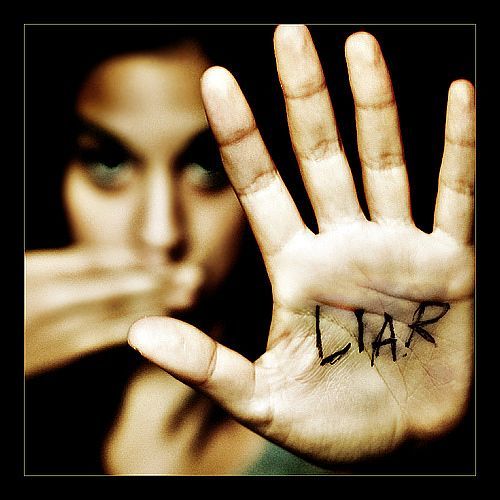
lyingHave you ever tried to live down a lie? A lie has consequences; once it’s there, it’s always there. And here’s the most famous, and deadly, from Genesis:

Now the snake was the most cunning* of all the wild animals that the LORD God had made. He asked the woman, “Did God really say, ‘You shall not eat from any of the trees in the garden’?”

The woman answered the snake: “We may eat of the fruit of the trees in the garden; it is only about the fruit of the tree in the middle of the garden that God said, ‘You shall not eat it or even touch it, or else you will die.’”

But the snake said to the woman: “You certainly will not die! God knows well that when you eat of it your eyes will be opened and you will be like gods, who know* good and evil.”

The woman saw that the tree was good for food and pleasing to the eyes, and the tree was desirable for gaining wisdom. So she took some of its fruit and ate it; and she also gave some to her husband, who was with her, and he ate it.

Then the eyes of both of them were opened, and they knew that they were naked; so they sewed fig leaves together and made loincloths for themselves. When they heard the sound of the LORD God walking about in the garden at the breezy time of the day,* the man and his wife hid themselves from the LORD God among the trees of the garden. 

Original sin began with Satan’s lie. It appealed to human pride. But every sin begins with a lie. No matter what the sin is, when we choose what we know is wrong over what we know is right, it may take a while, but the repercussion of that lie will come. It’s also difficult to watch someone we love go through the repercussion of his/her own actions–especially if something they’ve done affects us personally–because our own life may also be affected.

Human beings often lie, but they don’t like being lied to. Have you ever felt tied up in someone else’s lies–maybe even the lie of a person you love? A child, a spouse, a friend? One lie leads to another and another to cover up that lie, and on, and on, until the liar is literally wrapped in his lies, often taking those he loves with him.

The only way to live down a lie is with the Truth. Come clean. Get it all out. Ask for forgiveness of the person we’ve harmed with our lie. Hopefully, that person will forgive. And when we ask God for forgiveness–and we must ask–we don’t have to worry. We will be forgiven. We Catholics call that the Sacrament of Reconciliation. Though it may be humbling, there’s nothing as uplifting and freeing than forcing ourselves to admit the truth.

So, can we live down a lie? Only by admitting it, then facing the consequences with a God who is so madly in love with us that he can make us new!

What Happened in Your Past?

Posted: October 3, 2014 in World On The Edge

future-past-presentWe cannot get away from our past. It’s always the stepping stone to our future–what happened yesterday genuinely affects what happens in our life today.

From childhood on, the results of past events are indelibly drawn into our actions today, either positively or negatively. I believe the past is a great teacher, perhaps the greatest teacher of all, if we’re open-minded enough to look at it objectively and to consider our mistakes and our triumphs–because our past is filled with both.

There are many of us who whine about our pasts. We blame our present lives on what’s happened to us before. In other words, we haven’t learned how to use our past to create a better life for ourselves. Then there are some of us who may take too much pride in our past–our wonderful childhoods, parents who loved us and were able to provide what we needed. Sometimes the good past is as detrimental to our future as the less than good past . We may become arrogant, thinking we’re superior to others.

We must learn to use whatever we’ve experienced so far in order to further our success in life and our success in becoming the person God intended us to be. Because whatever has happened, God allowed to happen–as a textbook for our future on Earth, and for our eternal life.

So, we don’t want to burn our foundations. We want to use them to build a house, a life, that we can live in–a house with mirrors in which our reflections look happily back at us. A house in which God lovingly lives, side by side with us, no matter our negative or positive past.

What are You Afraid Of?

Posted: October 2, 2014 in World On The Edge

fearWhen we are afraid, our heartbeat quickens, we might perspire, we might feel an uncomfortable grating in our chest like fingernails scraping across a blackboard.

We might be a soldier, fearful in war. We might be the parent of a very ill child or relative near death. We might be out of money, afraid of bankruptcy. We might be alone, with no one to help us, while a stranger breaks into our home.

OR, we may have done something we know is wrong, and be desperately afraid of the consequences that will surely come.

Fear of consequences is a continually rolling fear within us that doesn’t leave, until we’re caught. For we can never get rid of what we’ve done. OR CAN WE?

Why are we afraid when we’ve done something wrong? Are we afraid of the laws of The Justice Department, or of another’s opinion, or of the judgment of God?

Well–we should be afraid of our civil laws. We should be afraid of ruining ourselves in the eyes of other human beings. BUT we should not be afraid of God.

Civil laws are unforgiving. Another person may, or may not, forgive.

But God, if asked, will ALWAYS forgive us. God is the only entity in which we should NOT be afraid.