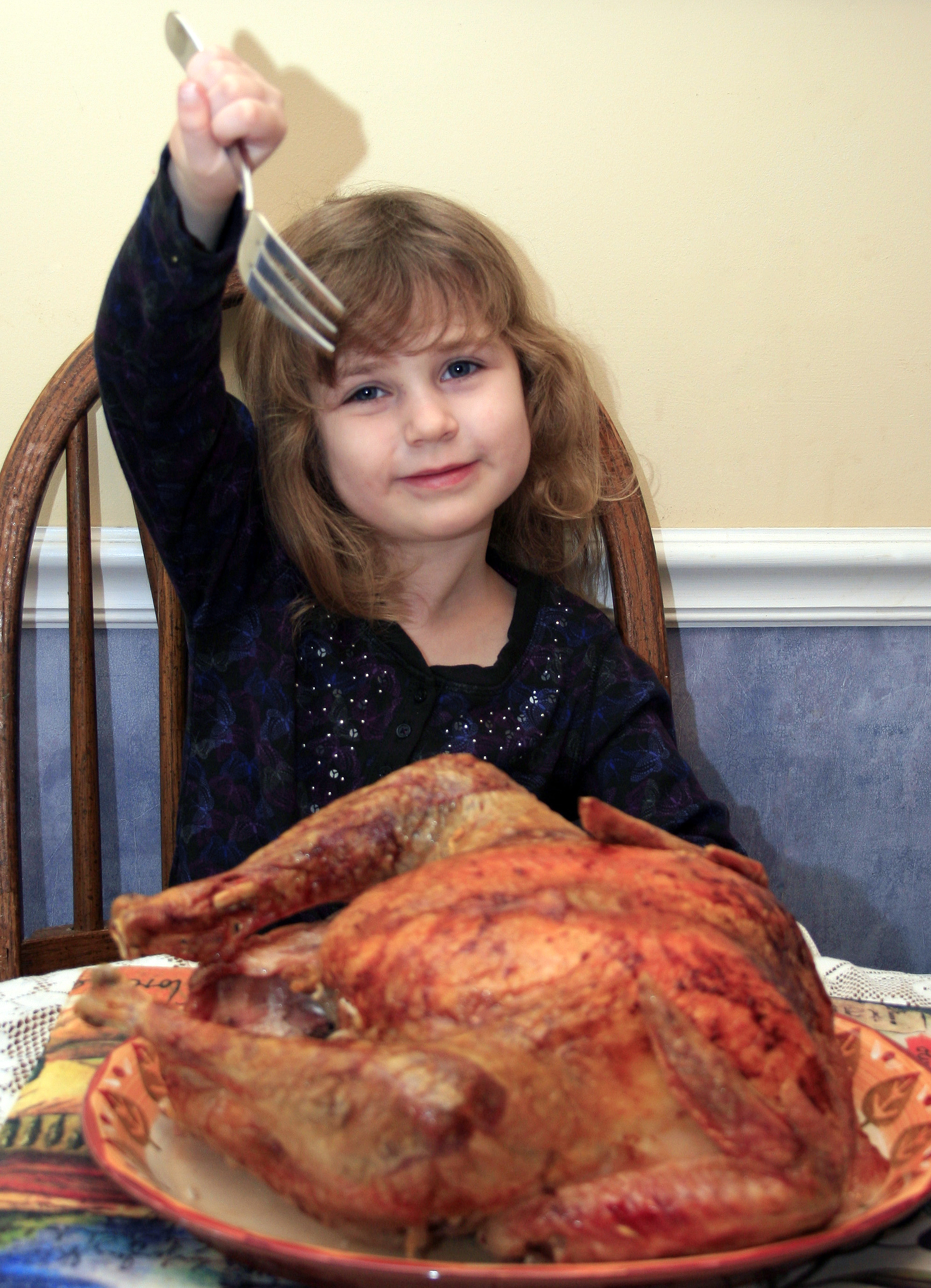
What are the best things in your life–the ones you’re most grateful for?
I’d be willing to bet they’re not “things” at all, but people.
Oh yes, “people” sometimes drive us crazy, hurt us, make lots more work, more stress, insolent remarks, dirty socks, dirty dishes, and confusion in general.
But we know the other side of the coin, too–“people” who are always there for us, who take our side, who run errands when we can’t, who feed us when we’re sick, who wipe our tears and hold our hands when we need the warmth of another human being. People who listen. People who love us.
I give gratitude to those people in my life. I cannot imagine living without those people in my life.
On this Thanksgiving George and I are celebrating the Thanksgiving holiday in the Atlanta area at the home of our daughter, Sheila, her husband, Matt, and precious sons, Daniel, Anthony, and Matthew. We will also visit with our youngest daughter, Anne Marie, her husband Pat, and their two children, Caroline and John Patrick. Our youngest son, Patrick and his daughter, Georgia, will be coming along, too.
I am so grateful for all my family, those I will see over the Thanksgiving Holiday and those who will be in their own homes, but in my heart.
I’m grateful, too, for all you who read this blog. Because of your support, I look forward to writing it five days a week.
So children help your mothers, and mothers hug your children. And fathers love your wives.
We all deal with it. Nothing stays the same no matter how much we might want it to.
This goes for bad times as well good ones.
So, in our bad times, there is always hope.
And in the good times, there is thankfulness for the moment we’re enjoying.
Our lives on earth are short. It is short-sighted not to think so. In fact, it is foolish.
We can moan and groan over the people and things we lose, or we can look for a lesson in the loss.
There is always a lesson.
In the loss of the negative: If we are finally rid of something that we did not want, we may be more careful next time to use our heads and avoid such.
In the loss of the positive: If something wonderful came our way, we will no longer take our joy for granted should such a gift be given us again.
We will be stronger in both situations, knowing objectively that our time here is forever moving from high to low, from up to down.
“I decline to accept the end of man… I refuse to accept this. I believe that man will not merely endure: he will prevail. He is immortal, not because he alone among the creatures has an inexhaustible voice, but because he has a soul, a spirit capable of compassion and sacrifice and endurance. The poet’s, the writer’s, duty is to write about these things. It is his privilege to help man endure by lifting his heart, by reminding him of the courage and honor and hope and pride and compassion and pity and sacrifice which have been the glory of his past. The poet’s voice need not merely be the record of man, it can be one of the props, the pillars to help him endure and prevail.” ― William Faulkner
If we believe there is a God who created each of us, then each of us is a child of God. And each human person has the divinity of God within him, or her. We call this divinity within us, the soul. It is the only part of us that doesn’t die. That makes the soul, and what happens within it, essential.
As Faulkner says, the soul is spirit, just as God is spirit, and capable of great compassion, enormous sacrifice, and inexhaustible endurance. We see these capacities expressed in many good people that we know, and sometimes we express those same qualities ourselves.
But often, compassion, sacrifice and endurance are not expressed by a person’s spiritual nature. Sometimes, he expresses the opposite. To an author, this is food for a story. This is the opportunity to illuminate the battle between good and evil as Faulkner does in his work.
Because there is today, and always has been, a battle between what is inherently good, and what is inherently evil, it is natural for an author to write about it. In a story, this plays out in particular characters—-people like us who struggle with what they believe is right and what they know is wrong. All of this happens in the soul, where our intentions lie. And we either shine our soul, or sully it, by our various decisions to accept good, or evil.
Most of us don’t like to hear that we can choose between good and evil. Some of us don’t even recognize immorality anymore. We can’t put a face on it because today’s humdrum, saccharine tolerance for ‘anything goes’ has blocked it out and blinded us to the better call in our own souls. But a thing is not good or evil because it’s trendy or popular.
I think, deep down, most of us know that truth is truth. Deep down, we know that absolute Truth endures, that it is not relative to public opinion, and that it is a twin of immortality. For me, it is most important for a writer to remember that, too.
How many of us call ourselves Christians? Probably most who read this blog.
But what does it mean to be a Christian, a follower of Christ? Jesus Christ was crucified. Does it mean we’ll be crucified, too?
It may. At the least, we will surely suffer. Life sees to that.
At times, we cause our own suffering by the bad choices we make. Other times, another person, or a circumstance out of our control, may cause it. We may even be betrayed, as Jesus was for thirty pieces of silver.
But one thing I know. God does not cause our suffering. God is loving, always and forever. He never changes in His love for each of us. And He showed us that on the Cross.
Every suffering we encounter is difficult. We don’t want to go through it. We pray for a way to get out of it, just as Jesus did in the Garden of Gethsemane when he asked His Father to take it from Him, but assenting that if He would not, then the will of His Father be done. That is the covenant between Son and Father.
Just as with His own son, sometimes the suffering does not leave us. Even when we pray for it to disappear, God allows it to happen for some purpose we may never know in our earthly life.
As my grandmother consistently told me, “Offer up your suffering.” In other words, we may be suffering for others in a redemptive way that only God understands.
This is what Jesus did, according to the will of His Father. He gave himself away, for each and every one of us, leaving His Holy Spirit within us, leaving us as Temples of Himself, leaving our own self to be used by Him. This is the covenant God offers us. The same covenant He offered His Son. But we have to accept it.
Do we really believe that He is within us and that we are to be messengers of His Holy Spirit? Are we ready to give ourselves away as Jesus did?
Brothers and sisters: Owe nothing to anyone, except to love one another; for the one who loves another has fulfilled the law. The commandments, You shall not commit adultery; you shall not kill; you shall not steal; you shall not covet, and whatever other commandment there may be, are summed up in this saying, namely, You shall love your neighbor as yourself. Love does no evil to the neighbor; hence, love is the fulfillment of the law. —1 Rom 13:8-10
And yet…….
More than 4 million women experience physical assault and rape by their partners. More than 3 million children witness domestic violence in their homes every year. Children who live in homes where there is domestic violence also suffer abuse or neglect at high rates (30% to 60%).
According to the Center for Relationship Abuse Awareness:
Relationship abuse is a choice and it is a learned behavior. For these reasons, it is difficult to say that relationship abuse is caused by any one single factor. However, the following beliefs and attitudes are common for abusers:
Sense of entitlement
A belief they should have power and control over their partner
Belief that they can get away with it
Learned experience that being abusive gets them what they want
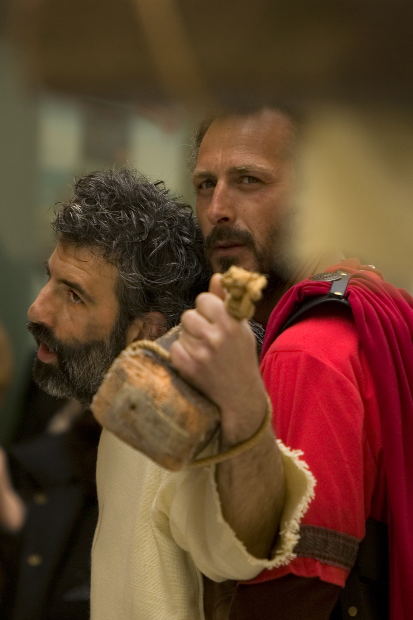
The following is from Three Keys to the Kingdom, by Mother M. Angelica.
THE WAY IT IS
As human beings, we are creatures of emotions, creatures of intellectual abilities, and creatures with the power to accomplish.
Some people spend their time and thoughts in feeling, hearing, seeing, and listening. Whatever cannot be felt or experienced they will not accept. We call these people emotional.
Some people spend their time reasoning and thinking out everything,—and so—anything that cannot be fully understood, they will not accept. We call these people intellectuals.
Other people have only one goal in life, and that is to do as they please, when they please, and they impose their will on others. We call these people domineering.
When any of. these people seek God in their own way, we find the emotional person seeking the consolations of God rather than God.
The proud intellectual seeks knowledge about God, but he never knows God, because he cannot accept the mysteries that he is unable to fully comprehend.
The domineering person seeks God and loves God as long as God does his Will. He cannot accept a “No” from God.
Most of us weave in and out of these three categories all our lives, and we never succeed in being changed into Jesus.
Christianity is a way of life, and it demands a change of heart and a change of mind. It entails a lifelong struggle to change our emotions, our way of thinking, and our way of acting.
We can relate with our emotions in regard to God or neighbor, and so as we look at our Memory to see how we can change it, we will quite easily grasp its role, its weaknesses, and its strength.
And so it is with the Will. We are all well aware of the strength of our Will and the Will of others. It has been the cause of success and failure, joy and sorrow, in our daily life. And so we shall understand the Will as we see its role and weaknesses and strength.
But this is not so true with the Intellect. How we understand, judge, discern, and form opinions, is a mystery—a mystery because the very faculty by which we understand does not comprehend how it understands.
We add Faith to our Understanding, and we give it light; to see things above itself. Faith is something that we have, but it too is something we cannot explain.
And when we say that we must be humble to have a deep Faith, we add an ingredient that is positively repugnant, to something that is already difficult to grasp.
And so, when we get to the faculty of our soul that we call Understanding, we will have to plow a little deeper; so the seeds that will be sown can reap a rich harvest of a new way of thinking.
Our Christianity changes and transforms us from sadness to joy, from darkness to light, and from slavery to freedom. We must seek the way to this “spiritual revolution”‘ that we may be set free from ourselves and live in Him and by Him. We must be a witness to a sad world, of Heaven on earth, of peace amidst turmoil, and joy amidst pain.
So we shall look at our Memory—not to dig in, but to root out.
We shall look at our Understanding—not to comprehend but to utilize.
We shall look at our Will—not to lose it, but to redirect it
She recalled her life as a child, before she turned fourteen. That part of her past held no secrets, there was nothing to hide then. There was only the peaceful escape that came as soon as she shut eyes, when she simply unwrapped any first thought and let it go, seeing it spiral and dance like a striped, toy top spinning from the hand of her grandfather. The image of her grandfather followed many first thoughts when she was a child, but he’s been dead for years.
Back then, she’d been certain her thoughts she came from angels, those she talked with. Not only the stone angels in her grandmother’s garden, but other angels, everywhere, and not one looked the same. She laughed a lot then, pointing at nothing, and playing with children no one else could see. She opened her mouth to drink in colors, tasting red and orange leaves, purple dawns, dark velvet skies that sparkled with diamonds. She drew into her skin the softness of a breeze, and into her ears the symphonic twitter of birds, the lazy sloshing of the Suwanee, and the sweet sound of silence.
In time, she responded to conversations not yet had, and answered questions not yet asked. While her mother called her ‘peculiar,’ and her father lifted his chin and tightened his lips, her early childhood had been a wonderfully bright world, a world with no shadows–until she turned fourteen. Then it transformed into something colorless and dark as the slow-flowing river she stood in. —Faithful, copyright Kaye Park Hinckley, 2015
Was there a time in your life when everything changed? What did you/are you doing about it?
We are all broken people in some way, wishing that we were not. We might like to be like another we know. We might moan and groan about the trouble that has fallen upon us. We might strike out at others. We might curl up in a ball and wish the world would go away.
The girl in the story above was betrayed by someone she trusted. It breaks her for awhile, but then….well, if Faithful is ever published, you’ll find out. The point is there comes a time when, if we allow it, our sight will change. We will see things differently.
Our earthly lives are like jars of clay. They can be beautiful but they are fragile and easily broken. The genuine treasure of each life is beyond the container of our bodies. It is not temporary, but eternal.
For this light momentary affliction is preparing for us an eternal weight of glory beyond all comparison, as we look not to the things that are seen but to the things that are unseen. For the things that are seen are transient, but the things that are unseen are eternal. –Corinthians 4:17-18
Today is a time of mass deception. And what do we do? We ride along in the breeze of all that deception because we are asleep at the wheel.
We are asleep to truth.
If we don’t want to hear the truth about ourselves or our actions, we become defensive. We ask “What is truth?” We come to the conclusion that truth is what I say it is because “I think for myself.”
And then we attack the messenger. We go down the road of ME, where truth is relative, where no one else is as important as I am, and no one else’s needs are as vital as my own. And we tell the messenger of truth that he is wrong.
But we’re deceiving ourselves.
We deceive ourselves as Pontius Pilate did. We use clever words. We wash our hands, so we won’t be blamed, and we allow truth to be hung on a cross.
Sadly, we barely notice the hanging.
The general population seems more concerned with the newest electronic device, or the latest reality show, while the ethics, morality, and honesty of our leaders are in decay. And we react to that decay like G.K Chesterton’s analogy of dead fish floating with the current.
Even if we do notice, it’s never our fault, is it? We may be first to point a finger, but often, we’re the last to lift a hand.
We use all sorts of clever ‘talking tools;’ silver tongues to make our way seem correct. And some of us—-especially in politics and the entertainment industry–have the shiniest of silver tongues.
But Truth is still there, whether we’re asleep at the wheel, or not.
Absolute truth cannot be changed by us or anyone else who tries. Shouldn’t we make an attempt to discover it, and then be changed by it?
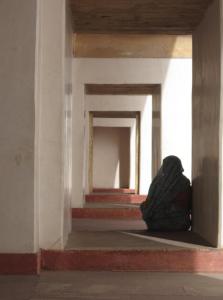
A loving, best friend is one who understands us, a person who knows what’s in our hearts and–for better or worse–loves us anyway.
But a loving, best friend will also tell us the truth. He or she will not lie to us about our shortcomings, but will address them in a loving way, without keeping a record of those wrongs.
Why?
Because loving is all about truth. A truthful love necessarily calls for interaction. It requires a recipient. And the recipient is offered the chance to love back.
Here is our best friend speaking:
Come to Me, all you who are weary and find life burdensome, and I will refresh you. Take My yoke upon your shoulders and learn from Me, for I am gentle and humble of heart. Your souls will rest, for My yoke is easy and My burden light. Mt 11:28-30
Our best friend talks about yokes and burdens. He talks about those circumstances each of us will sometimes find in our life. He offers assistance. He offers refuge.
Make no mistake, our best friend knows our heart and still loves us. But as the recipient of His love, we are called to become more like Him.
With 24 hour news showing us cheater after cheater, murder after murder, greed after greed, we may wonder if there are any heroes left.
Well, there are. And you may be one of them.
Are you a hardworking father, loyal to his wife and children?
Then you are a hero.
Are you a mother who may work two jobs–caring for her children and providing for them financially as best as you can? Then you are a hero.
Are you someone who is a caretaker for those in need?
Then you are a hero.
Are you a person who rather than lying for his/her own gain, rises with courage to speak the truth?
Then you are a hero.
Despite what the headlines tell us, our world is full of heroes. Yes, it is an often violent, selfish, and dangerous world, but these are exactly the things that can MAKE a hero. Heroes rise from dire situations.
Heroes are those who courageously rise from struggle and change those around them for the better. And we can all do that!
 What are the best things in your life–the ones you’re most grateful for?




 The following is from Three Keys to the Kingdom, by Mother M. Angelica.


 A loving, best friend is one who understands us, a person who knows what’s in our hearts and–for better or worse–loves us anyway.

 Translating a World on the Edge