Author Archive

Like Opposites???

Posted: March 22, 2016 in World On The Edge
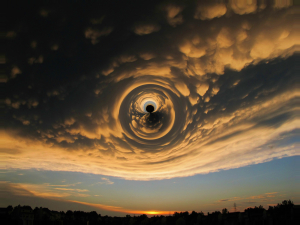
Photo by Earl53, 2012, MorgueFile.com

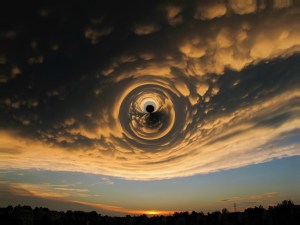
Photo by Earl53, 2012, MorgueFile.com

Sometimes we know a thing best when we understand its opposite. Joy and grief. Pleasure and pain. Serenity and anger.

Grief, pain and anger–we don’t search for those things.

Joy, pleasure and serenity–these are the things we want.

And we know that we want them because we’ve experienced their opposites. Because life is difficult. Life is a struggle for every human being. It comes with thorns.

We grieve over a loss. We feel pain in distress or disease. We are angry when someone betrays us. And we hate the loss, the distress, the betrayal. Because hatred is as much a part of humanity as is its opposite, love.

Love, what we search for more than anything else, encompasses joy, pleasure and serenity. But real love is not a fuzzy feeling. Oddly, real love is born through grief, pain, and even anger. Nowhere is this more apparent—at least for women–than in the process of birth. And what comes from that birth is love, the miracle of a new human life.

We no longer hate the grief, the pain, and the anger we felt, because, at once, we love the child that came from all that. Instead, we forgive, and to a certain extent, we forget the suffering in exchange for our attainment of something greater.

Christians look at Jesus, the man, on a cross of suffering. In the midst of inexplicable grief, pain, and even anger, Christians know his words from that cross, “Father, forgive them.”

The truth is, we’re not promised a “Rose Garden” in this life.

Often, we get the opposite. Still, can’t we be hopeful enough to forgive–and ‘big enough’ to accept–that the things we haven’t searched for, and would never wish for, are, nonetheless, part and parcel of all we strive for?

Resurrection–For Me????

Posted: March 21, 2016 in World On The Edge

file0001847916093Today begins Holy Week for Christians. Holy Thursday, Good Friday, and finally the Resurrection.

On Holy Thursday, Jesus instituted the Holy Eucharist and told us that He would be with us always.

On Good Friday, He showed us how to suffer through the worst of all deaths, the excruciating death of an innocent man through the conniving of greedy and selfish people–a suffering He allowed, for us.

And on Easter Sunday, He rose from the tomb into which evil cast Him.

He rose because no grave could hold Him. No grave could silence Him. No grave could keep Him from us, his beloved–each one of us.

Jesus Christ showed us the way that any one of us can be resurrected as well. First, by our sincere desire for it. Second, by repentance of our sins and a decision to change our behavior. And third, by being open to the Mercy of God, our Father.

The question is: Do we want a life beyond our earthly grave? Do we want to be resurrected?

Resurrection is defined in the dictionary as the act of causing something that had ended or been forgotten or lost to exist again, to be used again, etc.

We come into this world innocent, and nothing can change that we’re made in the image and likeness of God. Part of each one of us is spiritual, like it or not. And it is that spirituality that draws us to God.

But we’ve also been given a free will by our Creator. We can make choices, and some of those choices are wrong ones that steer us away from the inborn spirituality God set in us, and toward a dead end, where we often have no desire to change, or re-charge ourselves. Many of us are fine with our lives as we’re living them. Yet we want eternal life.

Eternal life is the promise of a loving God. In order to receive it, we must resurrect ourselves in the here and now. We must choose, by our own will, an end to our sins.

So that no grave can hold us. No grave can silence us. No grave can keep us from the God who loves us.

Somehow this post got lost in the shuffle, so here it is again!

kph52013's avatarTranslating a World on the Edge

By AcrylicArtist, MorgueFile.com, 2011 By AcrylicArtist, MorgueFile.com, 2011

Newton defined the force of gravity in the following way: Every particle of matter in the universe attracts every other particle with a force that is directly proportional to the product of the masses of the particles and inversely proportional to the square of the distance between them.

That pull in nature–and in human nature, too–did not slowly evolve. It was present from the very beginning of the universe and is surely testimony to a planned creation.

“If gravity ceased for one moment, instant chaos surely would result. All heavenly objects, including the earth, moon and stars, would no longer hold together. Everything would immediately disintegrate into small fragments.”   — Dr. Don DeYoung, Chair of  Science and Mathematics Department at Grace College, Winona Lake, Indiana.

As human beings we are physically attracted to people and things. This physical attraction is part of God’s plan to hold…

View original post 159 more words

By Click, 2008, MorgueFile.com

By Click, 2008, MorgueFile.com

I usually want to know how and why things happen to me that are out of my hands, and when I don’t, I sometimes pitch a fit.

But I don’t have to know how the sun sets to see that it does. I don’t have to know how the internet works in order to use it. I don’t have to know how one person falls in love with another to experience that they do.

I only have to know that God does it all, that He wills there to be good in every present moment whether I understand the present moment or not.

Parents of young children do not explain to them the ins and outs of certain situations that are above their abilities to understand, rather a loving parent sets a parameter the child can grasp. And the child accepts that parameter through faith that his parents decisions come out of  love.

Faith, though, is not something we drum up on our own. It’s a gift given to us by a gracious, generous God. We may think we have weak faith, but the truth is God has given us all the faith we will ever need. We just have to learn how to yield to this great gift.

Lord, increase my faith.

file2321234734336Everyone wants to be Irish on Saint Patrick’s Day. But did you know Saint Patrick was a slave? Here’s the story from the Catholic Encyclopedia.

Patrick was born around 385 in Scotland, probably Kilpatrick. His parents were Calpurnius and Conchessa, who were Romans living in Britian in charge of the colonies.

As a boy of fourteen or so, he was captured during a raiding party and taken to Ireland as a slave to herd and tend sheep. Ireland at this time was a land of Druids and pagans. He learned the language and practices of the people who held him.

During his captivity, he turned to  God in prayer. He wrote

“The love of God and his fear grew in me more and more, as did the faith, and my soul was rosed, so that, in a single day, I have said as many as a hundred prayers and in the night, nearly the same.” “I prayed in the woods and on the mountain, even before dawn. I felt no hurt from the snow or ice or rain.”

Patrick’s captivity lasted until he was twenty, when he escaped after having a dream from God in which he was told to leave  Ireland by going to the coast. There he found some sailors who took him back to Britian, where he reunited with his family.

He had another dream in which the people of Ireland were calling out to him “We beg you, holy youth, to come and walk among us once more.”

He began his studies for the priesthood. He was ordained by St. Germanus, the Bishop of Auxerre, whom he had studied under for years.

Later, Patrick was ordained a bishop, and was sent to take the Gospel to Ireland. He arrived in Ireland March 25, 433, at Slane. One legend says that he met a chieftain of one of the tribes, who tried to kill Patrick. Patrick converted Dichu (the chieftain) after he was unable to move his arm until he became friendly to Patrick.

Patrick began preaching the Gospel throughout Ireland, converting many. He and his disciples preached and converted thousands and began building churches all over the country. Kings, their families, and entire kingdoms converted to Christianity when hearing Patrick’s message.

Patrick by now had many disciples, among them Beningnus, Auxilius, Iserninus, and Fiaac, (all later canonized as well).

Patrick preached and converted all of Ireland for 40 years. He worked many miracles and wrote of his love for God in Confessions. After years of living in poverty, traveling and enduring much suffering he died March 17, 461.

He died at Saul, where he had built the first church.

Why a shamrock on Saint Patrick’s day?

Patrick used the three leaves of the shamrock to explain the Trinity, and has been associated with him and the Irish since that time.

Patrick was a humble, pious, gentle man, whose love and total devotion to and trust in God can be a shining example to each of us. He feared nothing, not even death, so complete was his trust in God, and of the importance of his mission.

By AcrylicArtist, MorgueFile.com, 2011

By AcrylicArtist, MorgueFile.com, 2011

Newton defined the force of gravity in the following way: Every particle of matter in the universe attracts every other particle with a force that is directly proportional to the product of the masses of the particles and inversely proportional to the square of the distance between them.

That pull in nature–and in human nature, too–did not slowly evolve. It was present from the very beginning of the universe and is surely testimony to a planned creation.

“If gravity ceased for one moment, instant chaos surely would result. All heavenly objects, including the earth, moon and stars, would no longer hold together. Everything would immediately disintegrate into small fragments.”   — Dr. Don DeYoung, Chair of  Science and Mathematics Department at Grace College, Winona Lake, Indiana.

As human beings we are physically attracted to people and things. This physical attraction is part of God’s plan to hold together His creation. He is before all things, and in him all things hold together. — Colossians 1:17

What holds each individuals together spiritually is the soul, which is filled with another attraction–the attraction to God.

So we are  created and held in place, both physically and spiritually,  through the gravity of God.

When we do harm to our physical bodies or to the universe, things go out of balance.

When we harm ourselves spiritually by a misuse of our God-given free will, things go out of balance, as well.

Sometimes, we want too much of what we’re attracted to. When that happens, gravity works against us and the pull can be our downfall.  Twice as much isn’t twice as good. As the lyrics below say, wanting more can send us to our knees.

So, perhaps we can look at gravity in more ways than a cold, scientific theory.  Gravity, created and sustained by God, is absolutely necessary for the existence of human beings and their world.

walk while ye have lightWe Christians are in need of a spiritual awakening. We are dulled to our own lives as children of God. We are blunted to examining the actions of our lives in that context. Have we lost our religion, big time?

Catholic historian Christopher Dawson, (1889-1970), an Englishman who strongly believed in the importance of religion’s influence on society, wrote: “A society which has lost its religion becomes sooner or later a society which has lost its culture.”

Look at our culture today. Read about it in the news. We, as human beings, are on front pages and prominent media screens, with scandal after political scandal, murder after gruesome murder–including well over 50 million aborted children since Roe v Wade. Seventy four per cent of students admit to cheating. Premarital and extramarital sex have nearly become the norm. http://realtruth.org/articles/130530-005.html

And still, most people believe in God or in a higher power.
http://www.gallup.com/video/109111/Majority-Americans-Believe-God.aspx At World Youth Day in Brazil an estimated three million people attended! http://www.ibtimes.co.uk/articles/494939/20130727/world-youth-day-2013-rio-pope-francis.htm

Of course, we are sinners. We’ve been sinners since evil reared its head in the Garden of Eden. We were sinners before and after the time of Christ and we’re sinners now. But after His awful Crucifixion, Jesus left us with the grace of His Holy Spirit, allowing us to experience moments of awakening if only we choose to recognize and make use of them.

Are there moments in your life when you’ve felt a Spiritual Awakening. Maybe it’s when you take a walk in your mind back to the place of your roots, your upbringing, or even recall a statement someone made that struck you. Have you ever wondered, “Do I really feel the way I feel? Or is there something I should return to, something bigger and more important for me?”

rocksMy husband and I once stopped at an overlook on The Blue Ridge Parkway. It was Fall, so the mountains beyond us were blazing with color; every shade of red, orange, and yellow. To the side of the overlook, we noticed a little-worn path that led into the woods below. We took it.

Step by step we went down into an odd, emerald-colored shade, almost as if we had descended into a different season. There, we found a stream running between fat tree trunks and meandering down and around small rises in the earth. For a time, we sat in silence on a large rock beside the stream, listening to the trickling sounds and the quiet rustle of a breeze.

At the time, one of my grandsons was a lover of rocks, the more unique, the better for him. So I began to look for some.

All around were smaller rocks that had obviously come from a ragged indent in one side of the large rock on which we were sitting. Perhaps time had made the indentation, or maybe another boulder had fallen upon it. But one thing was certain, the smaller rocks surrounding it had the fiery color of the large rock’s interior, and if any one of them were tested, it would have the same interior composition of elements, too.

Individually though, the parts of the big rock were very different in appearance. Some had ended up in the stream and were round and smooth. Others were angular and roughly formed through weathering and erosion. Yet each was born from the same large rock.

I think our human lives are like those rocks. We all come from the same origin. Many of us may have personally broken away from that entity, or we may have been severed from it by happenstance. Nevertheless, despite our differing appearances through facial features, skin color, or personality traits, we possess the characteristics of our origin. We come from a ‘whole,’ and we all are related to it. This is the fact that makes us brothers and sisters.

Of course, the ‘whole’ I’m speaking of is God, our Creator. The amazing thing is that although we are no longer physically attached to God, as the smaller rocks are no longer physically attached to their origin, we still carry His likeness within us.

Many today, refuse to accept that we carry God within us, or that God exists at all. But if you’ve ever truly loved anyone, how do you come to that refusal? Love is not a physical attachment, not really. Love is something that can’t be touched or seen except through a person’s actions. Our love in action, the way we relate to our brothers and sisters, is the unifying characteristic that likens us to God, and it is the characteristic that distinguishes a human being from the rest of creation.

Reconsider the rocks; the whole and its parts. It is the law of physical nature that the broken pieces of rock will never again be ‘one’ with the boulder they came from. Their natural destiny is to remain divided from it. But human beings have a supernatural destiny. All religions believe that someday we will individually re-unite with God. We will return to the whole.

In the words of Mother Theresa of Calcutta, “I am not sure exactly what heaven will be like, but I know that when we die and it comes time for God to judge us, he will not ask, ‘How many good things have you done in your life?’ rather he will ask, ‘How much love did you put into what you did?'”

In other words, God will ask: How much of Me did you show to the world?

Photo by Dianne Hope, 2015, MorgueFile.com

Copyright 2016, Kaye Park Hinckley

file1801281015946Lent is all about forgiveness–mostly our request to God that He forgive US–because we have done some pretty indefensible, even deplorable things, against God’s word.

But can we forgive others for their indefensible, or deplorable, actions against us?

Do you know anyone who can forgive so easily?

What about a child, a young adult or teen, who tells you point blank that he hates you? What if he or she stole from you, did everything possible to make your life miserable? How would you react? Remember, this is your child, after all.

What if your spouse cheats on you, right under your nose. You’ve trusted him or her. You don’t suspect—until you discover it, maybe by chance. How do you react?

What if a friend whom you considered loyal, maybe your best friend—turns on you, talks behind your back, spreads lies or maybe some truth you’ve trusted to him or her and no one else? What would you do about it?

The fact is these things can easily happen to us, and often do–and most of the time, the situation is out of our control, not even our fault, and deeply hurtful—because these are people that we love. Can you forgive them?

Well, let’s turn it around. What if you are the perpetrator, not the victim, in one of those same situations? Each of us are capable of wrongdoing. Can you admit it? Can you ask for forgiveness?

What does it take to forgive someone who’s hurt you? What does it take to ask for forgiveness when you’ve hurt someone else?

I would posture that we cannot forgive–or ask for forgiveness–without help. And the assistance we need comes from our relationship with the God who created us. If we don’t have a dedicated relationship with God, these two very difficult tasks are impossible. If we do, they are not only possible, they are a certainty.

Forgiveness, and asking to be forgiven are not tangible things. They are not things we can touch. They are possibilities. We can chose them, but we don’t have to. It’s our decision. A decision that we come to because of the beliefs we hold.

If we believe in God, if we say we follow God. If we say we are Christians, we must forgive. And if need be, we must ask for forgiveness. It’s not a request. It’s a commandment.

shc 1830