Photo by Mensatic, 2010, MorgueFile.com

Photo by Mensatic, 2010, MorgueFile.com

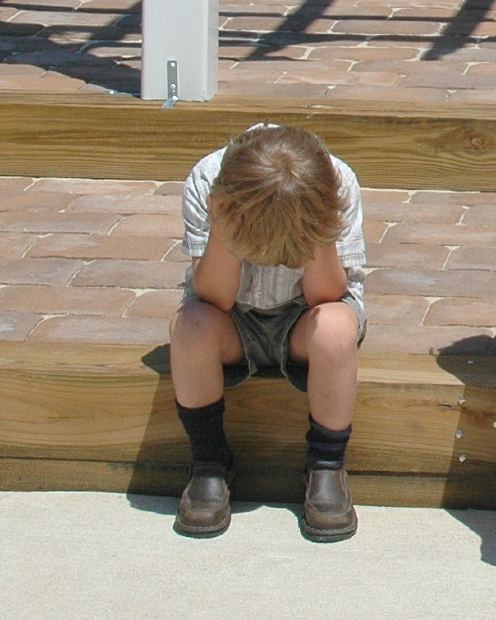
How many people in today’s world would you call ‘damaged?’
Or does life itself just pre-conclude that by the time you leave it you’ll have been damaged in some way?

Life is difficult. For many, it is sometimes dangerous. It’s not a gift, but something to get through. Of course, that’s a depressing view, but many people, especially children, hold it.

Countless children are born into circumstances they did not create, and under circumstances that cause them great pain. Others have been taught to have no faith in anything except themselves, a ‘self’ that is blemished and marred: Trust no one. Everyone is out to get you. Take what you can before it’s taken from you. Grab. Steal. Even kill.

None of us choose the circumstances of our birth, but some appear to be luckier than others—I’m not talking about money here; I’m talking about strong families who support their children. Yes they make mistakes, but they confirm their children as being valuable, and patiently direct them onto non-destructive paths.

I’m talking about one father per family, not a father of ten by ten different women. Appalling? Yes. Yet those young lives are no less valuable in the eyes of God than are the more fortunate children. But how can they know this when their parents slap God in the face by their selfishly stupid behavior?

There is no all-encompassing solution to changing this. More parental responsibility would go a long way, with fathers who not only see life as a gift, but their child and his mother as a gift, rather than a notch on his belt of so-called, ‘baby mamas.’

Every parent is human and often makes poor decisions. There’s no getting around that fact. And sometimes it takes tragedy to see what our mistakes as parents have been. When that happens, we can either fall apart or try to rectify it however we can.

Because life IS a difficult journey for each and every one of us; no matter our parents, no matter our circumstances. It’s little steps, one foot in front of the other, and all the while thinking of ourselves and our children not as victims, but as victors.

https://youtu.be/cA_BkUSmZiI

What Will Your Echo Be?

Posted: July 24, 2015 in World On The Edge
Photo by Veggiegretz, 2012, MorgueFile.com

Photo by Veggiegretz, 2012, MorgueFile.com

In my foyer there is a Grandfather’s Clock dating from the mid eighteen hundreds. Its origin is German. Before it came to me, it belonged to my husband’s uncle, a chaplain and Lieutenant Colonel in the U.S. Air Force. It is a beautiful clock, and temperamental, but if I keep it wound, its gong is clear and loud and steady with an echo that resounds for nearly a full minute throughout the house.

On top of a china cabinet in my dining room, there is an Arsonia Mantel Clock that belonged to my grandmother, also dating from the eighteen hundreds, and may have belonged to my great-grandmother. My grandparents had it when my mother was born in Savannah, GA, and it traveled with their family to Panama City Florida, and finally to Dothan, Al. I remember my grandmother’s daily ritual of winding it. I wasn’t allowed to touch it then, but today, I’m the performer of that ritual and the receiver of its chiming. 

These two old clocks have evaluated time for nearly two centuries. They have broken silence as they struck through births and deaths, through happiness and sorrow, and through all in between. In hours and minutes, these clocks have measured out the lives of many people, some of my family and some unknown. And as people died, the clocks continued to tick along.

There are many clichés about Time: Time is of the essence. Time heals all wounds. Time is money. But what is time really?  To understand, we might consider its opposite.

As human beings on Earth, we cannot experience the opposite of Time–timelessness, or eternity. We cannot fathom ‘No Beginning. No End.’  Our everyday lives are full of schedules and the ticking of clocks.

Some lives tick slow and heavy like the pulse of the Grandfather Clock. Others are quick and lithe as in the tick of the Mantel Clock.

But if Time is how we measure out our lives here on Earth, then what we do in those hours and minutes and seconds we have, must signal something awfully important.

Just as in the ritual of winding the old Mantel Clock, we have a great deal to do with how our time on Earth will be spent and perceived. And as with the Grandfather Clock, there will surely be an echo.

What sort of reverberation will my Time on Earth create?

What will my own echo be?

Photo by quicksandala, 2015, MorgeuFile.com

Photo by quicksandala, 2015, MorgeuFile.com

Starting this blog post, I looked up a general definition for ‘family.’ Well, most of those definitions stretch the gamut of credulity to the point that the entire world can impersonally be called one’s family.

But the entire world is NOT my family–because I am not personally responsible for it. I cannot feed the world. I cannot advise the world. I cannot hold the world in my arms. I am not responsible for when that large entity makes less than good decisions and goes astray. And I’m not held accountable for it.

Love begins by taking care of the closest ones-the ones at home.
–Mother Teresa

I am, however, seriously accountable for those God has seen fit to put under my care. In that I must feed them, advise them, love them, and provide for them as best I can, I am responsible for my children, my spouse, my parents, my other relations, and to a certain extent, those I call my friends.

I am in charge–for a while–of love and peace among a few precious people I relate with every day. I am not in charge of the world. I am not in charge of love in the world, or peace in the world. God is in charge of that. And He may use my heart and hands in particular situations to facilitate that kind of love. But my first priority is my family.

Peace, like charity, begins at home.–Franklin D. Roosevelt

Are all human beings family? Only in that God created us all and called us to care about each other. This is agape love, meaning sacrificial love and an act of the will. And that concept is huge. But in order to accomplish it, we must start small; at home, with family.

If we do not provide for and love our own family first, we certainly will not love our fellow human beings in a sacrificial way–not genuinely anyway. Only if we accomplish love at home are we prepared to accomplish it elsewhere.

Photo by JPPI, 2015, MorgueFilen.com

Photo by JPPI, 2015, MorgueFilen.com

The fear of the Lord is the beginning of wisdom; all who follow his precepts have good understanding. To him belongs eternal praise.– Psalm 111:10 (NIV)

Fear is defined as an unpleasant emotion caused by the belief that someone or something is dangerous, likely to cause pain, or a threat.

But in the quote above, the word Fear is also used in reference to God. Are we supposed to fear, or be afraid of God?

Isn’t it that we  revere the Almighty Power of God, because His power is absolute–the ultimate answer to all questions?

Isn’t it that we should be fearful for ourselves if we follow man alone, negating God?

What I tell you in the dark, utter in the light; and what you hear whispered, proclaim upon the housetops. And do not fear those who kill the body but cannot kill the soul; rather fear him who can destroy both soul and body in hell.–Matthew, 10:27-28

As human beings, when we are afraid, we either run from our fears–or face them with courage. In fact, fear can author courage in most of us. When we are most afraid, courage is offered to us by a loving God. But also a God who has given us free will either to run away, or to stand our ground. And if we choose not to stand our ground, if we don’t follow the precepts of God, but follow the precepts of Man, then we must be afraid.

Even then, fear is our opportunity for courage.

Courage is intangible within us. We cannot touch it. We can only see the result of it–just as we are unable to see the wind, yet its active result is apparent, in swaying trees, or even violent bursts of air that turn things upside down during a storm. It is the same with God. We are unable see to God except through His action of grace in our lives.

Courage– prompted by the fear of losing our religious freedom to practice what we believe in– is needed for those who revere God and His commandments. Never make the mistake of assuming that our religious freedom won’t be taken away by some of our less fearful, fellow men. We must stand our ground. We are called to courage today.

What Comes Easy to You??

Posted: July 15, 2015 in World On The Edge
Photo by Rachjose, 2008 MorgueFile.com

Photo by Rachjose, 2008 MorgueFile.com

We’ve heard it often enough: Life Isn’t Easy.

And in many situations, that’s true.

But not always.

Some things in life do come easy. After all, not one of us is the same. No two human beings are genetically identical. And no two human beings will act exactly the same in every situation of their lives. Depending upon our make-up as distinctive human beings, some things are easier for us than they are for another.

I remember a statement my mother once made after hearing about a friend’s divorce. The friend had said, “Marriage is too hard. I think it might be unnatural.” My mother’s response was the opposite. “Marriage comes easy to me. It’s the most natural thing in the world,” she said, because she had made a ’til death do us part’ commitment.

And commitment is the first step to success.

Is there something that comes easy to you?

Put your efforts there.

Sometimes its our fears, inhibitions, and even our jealousies, that can keep us from being ourselves. We even try to ACT like another, rather than the self we see in the mirror.

Remember the old adage–Be yourself?

Most would agree. Yet some of us don’t follow what we are good at. Instead, we aim to do what someone else is good at.

Within each of us are unique abilities, things we like to do, so they come easier to us. Pay attention to those. We have each been made by an omniscient God who knew what He was doing when He made us. And each one of us are equipped for a purpose in His plan. Let’s work on our purpose, not someone else’s.

Seeing TRUTH???

Posted: July 13, 2015 in World On The Edge
By DeduloPhotos, 2015, MorgueFile.com

By DeduloPhotos, 2015, MorgueFile.com

The lamp of the body is the eye.
If your eye is sound, your whole body will be filled with light; but if your eye is bad, your whole body will be in darkness.
And if the light in you is darkness, how great will the darkness be.
–Matthew 6:22

Is your eye sound? What does that even mean?

Since all us humans have free will, we determine what we do with our eyes, body, and mind. We’re not programed as robots by God. He gave us choices–choices that have a great deal to do with our lives today and our eternal life. It’s all up to us. But are we doing our best with our gift of choice? And if we’re trying to make good choices based on Truth, are there some who’d like to hide Truth from us to suit their own ends?

Are our eyes seeing the real Truths in our world?

OR……

Are our eyes, minds, and bodies  taking in lies created to form our opinions for us? Are we being stroked with persuasions that go against Truth.  Yes. Of course. Undeniably!

Persuasion is powerful.  If it wasn’t,  no advertising could cause us to buy what we don’t need. One of  the most used persuasions in advertising is appealing to  human compassion, because most of us are compassionate people. We don’t want others to hurt. But we can also be fed a false compassion. This is called propaganda.  Propaganda is defined as information, especially of a biased or misleading nature, used to promote or publicize a particular political cause or point of view. And propaganda is not necessarily true.

From Focus on the Family:   “In a society where ultimate truth is treated like a fairy tale, an outdated idea or even an insult to human intelligence, the motto of the day becomes, “WHATEVER!” Believe whatever you want. Do whatever seems best to you. Live for whatever brings you pleasure, as long as it doesn’t hurt anyone. And of course, be tolerant. Don’t try to tell anyone that their whatever is wrong. But where does that leave us? If we have ultimate truth, it gives us both a way to explain the world around us and a basis for making decisions. Without it, we’re alone. We’re just 6 billion organisms running around, bumping into each other with nothing unifying to work for or believe in. It’s every man for himself. And we’re without a purpose; if there’s no true story of where we came from and why we’re here, then there’s nothing that really gives our lives meaning. Sounds a little depressing, huh? And maybe frightening.”–Lindy Keffer

We have to be informed. And especially today, we have to have courage.
It takes courage to go forward when we live a life based on Truth while many around us do not. It takes commitment when many trash genuine Truth.

And it also takes acceptance–the realization that we may be burned because of the absolute truths we believe in, and stand up for.

https://youtu.be/phJo1E94Yk8

Newspeak–What is it??

Posted: June 30, 2015 in World On The Edge
by Markgraf, 2014, MorgueFile.com

by Markgraf, 2014, MorgueFile.com

A person’s thought processes are his/her own–right?. We believe we can think what we want to think. But often we change our ways of thinking, don’t we? A set of circumstances that we experience can cause the change.

But also, if something is drummed time after time into our heads through speech, through books, through media of all kinds, even though it may be against what we really believe, we may find that our way of thinking is changing, too. That is called manipulation. And it is happening today.

Deepak Chopra, Alternative & Complementary Medicine, says that “Manipulation is getting what you want by ignoring or harming the desires of others. Manipulators use charm, persuasion, coaxing, trickery, and misdirection. The underlying idea is “I have to fool people to make them give me what I want.” When they are really caught up in their ploys, manipulators even imagine that they are doing their victims a favor.”

Have you read Nineteen Eighty-Four, by George Orwell? It was published long ago, in 1949, yet it is so prophetic. Newspeak is a fictional language in the novel that manipulates the totalitarian state Oceania as a tool to limit freedom of thought, as well as concepts that pose a threat to the regime such as freedom, self-expression, individuality, and peace. Any form of thought alternative to the party’s construct is classified as “thought crime”.

George Orwell explained that, “the purpose of Newspeak was not only to provide a medium of expression for the world-view ….but to make all other modes of thought impossible.”

Does this sound familiar when it comes to our American freedoms?

We’re living in a dangerous world when our freedoms are threatened, a world going astray. Are we doing something about it–personally? Or are we just plain ignoring it, absorbed in other things?

When we allow ourselves to be manipulated, we ignore error. So, error digs in and we get used to it. Then Newspeak, political correctness, and bad governing, reign. And genuine Truth is made subject to it.

https://youtu.be/aDDJeM5R4PM

DID Love Win??

Posted: June 29, 2015 in World On The Edge
Photo by Prawny, 2014, MorguelFile.com

Photo by Prawny, 2014, MorguelFile.com

Lately, especially after the Obamacare ruling, I have not been a big fan of Chief Justice John Roberts, or the Supreme Court in general. The Supreme Court has taken over the role of Congress by making laws, not interpreting laws, as it was meant to do according to the United States Constitution.

But Justice Roberts at least has seen some of the repercussions to Religious Freedom with the court’s ruling on same-sex-marriage. And it is chilling.

Roberts wrote in his dissent: “Hard questions arise when people of faith exercise religion in ways that may be seen to conflict with the new right to same-sex marriage — when, for example, a religious college provides married student housing only to opposite-sex married couples, or a religious adoption agency declines to place children with same-sex married couples.”

He continued, “Indeed, the Solicitor General candidly acknowledged that the tax exemptions of some religious institutions would be in question if they opposed same-sex marriage. See Tr. of Oral Arg. on Question 1, at 36–38. There is little doubt that these and similar questions will soon be before this Court. Unfortunately, people of faith can take no comfort in the treatment they receive from the majority today.”

Still, the ruling has been met with gleeful words: Love Wins.

Love wins? Since when is it appropriate for the Supreme Court to rule into law their opinions on love? Since when is it appropriate for the Court to rule out the laws of God?

Is it love to take away religious freedom? I would call it force. And genuine love CANNOT be forced.

Love Wins is just another politically correct, hypocritical slogan used by those who scream for tolerance–but only if it benefits themselves.

The following is a 2012 video featuring Cardinal Francis George before his death in April of this year. Great words indeed.

Yes, I’m still taking two weeks off…but Elizabeth Scalia at Patheos asked Catholic bloggers, “Why are you still Catholic?”
http://www.patheos.com/blogs/theanchoress/2015/06/03/dear-catholic-world-why-do-you-remain-a-catholic/

So…Why Do I Remain in The Catholic Church?

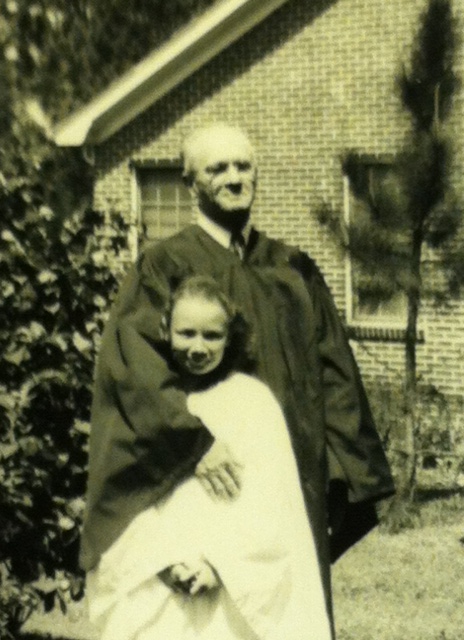
Confirmation for both my grandfather and I. He was 63. I was 9.

Confirmation for both my grandfather and I. He was 63. I was 9.

Because all of my life I’ve had to defend it.

When you defend someone, or something—when you stand up for it– you grow to love it even more. It becomes part of who you are, until people see you as the thing you’re defending. And that’s a big responsibility.

In South Alabama where I was born and grew up, my Protestant friends saw me, first, as a Catholic. Our small town had nearly a hundred Protestant churches, and one tiny Catholic church. My father was from a Protestant family who bristled at Catholicism, as did most Protestants in the Bible Belt; yet he bucked his family to marry my mother, a Catholic, then saw to it that his daughters attended Mass, received the sacraments, and were involved in religion classes.

My mother’s Catholic family has deep roots in both the South and in Catholicism. Her grandparents and their nine children were converted in the late 1800’s by a Jesuit priest, riding through middle Georgia on horseback. Five of her first cousins became priests or nuns.

My Catholic grandmother also married a Protestant. I was very close to both of them. My grandmother, who was also our Religion teacher, designated us as caretakers of our Faith, cautioning us to “Always stand up for what you believe in.” Well, that took courage. We were only a handful of Catholic children in a Protestant town, yet each of us were expected to be able to defend the Church. We were consistently questioned about our religion. When we answered, we were sometimes ridiculed, especially when defending the Eucharist, the Blessed Mother, the Pope, Confession to a priest, Saints, and more. To defend our Faith we had to know it, and know it well.

Still, as much as our friends had to say negatively about Catholicism, there was, at the time, an undercurrent of respect for Catholics that isn’t present today. Often it was spoken in whispers. “(He or she) won’t cheat on that test. They’re Catholic.” “He has to go to church every Sunday. He’s a Catholic.” “Ask her to a movie, but don’t ask her to the ‘blanket party’ at the river. She’s a Catholic.”

This year is the one hundredth anniversary of my parish church which was started in 1915 by fifteen committed people, and today has over 1300 members.

The church of my childhood.

The church of my childhood.

Many have said our Catholic church was built with Protestant money since quite a few of the women in the parish were married to Protestants, and many of those men were employers and leaders in the town. Interestingly, like my own father and grandfather, a good many of them eventually converted to Catholicism. A courageous act. I believe that defending the church gave me courage, too. Courage is a virtue we Catholics desperately need today as we face a possible disintegration of our religious freedom.

As I said earlier, when you defend something you grow to love it even more. I love my church. I love her as God loves all of us, despite our many errors. I think we have to remember that our church is made-up of fallible human beings capable of great love and great sin. But human beings are not the church, not really. We are only its hands, and often our hands are full of that first sin of pride. We are created in the image and likeness of God, but He’s given us the capacity to choose whether or not we will show His image in our lives.

Showing His image is not a ‘sit-down’ thing. It implies action, and action requires the force of God’s grace, which is truth. The Catholic Church is not the building and not the people. It is all about God—God’s tremendous push for absolute truth on earth. And He is pushing us. In order to cooperate, we must be more than superficially informed about our Faith. We must think very deeply, yet humbly, about our Faith. And we must be careful to keep our personal pride out of that thinking.

The Best Things??

Posted: June 15, 2015 in World On The Edge
By Alexander41, 2014, MorgueFile.com

By Alexander41, 2014, MorgueFile.com

What are the best things in your life–the ones you’re most grateful for?

I’d be willing to bet they’re not “things” at all, but people.

Oh yes, “people” sometimes drive us crazy, hurt us, make lots more work, more stress, insolent remarks, dirty socks, dirty dishes, and confusion in general.

But we know the other side of the coin, too–“people” who are always there for us, who take our side, who run errands when we can’t, who feed us when we’re sick, who wipe our tears and hold our hands when we need the warmth of another human being. People who listen. People who love us.

I cannot imagine living without those people in my life–precious people like my husband, children, grandchildren, sister, cousins, and friends; all those who love me and allow me to love them.

But most important, I’m thankful that God loves us all–even when we are at our worst.

So, to all you who read my books. Thank you. And for those who read this blog. Thank you. Because of your support, I look forward to writing it five days a week.

However, I will be taking a little ‘blog-break’ for the next couple of weeks. In the meantime, I have nearly three years of archives for TRANSLATING A WORLD ON THE EDGE, if you’re interested in looking through them.