Most of us are judgmental people, and quick to criticize another, especially if he or she comes from a different place, or thinks in ways that are opposite to ‘our’ ways.
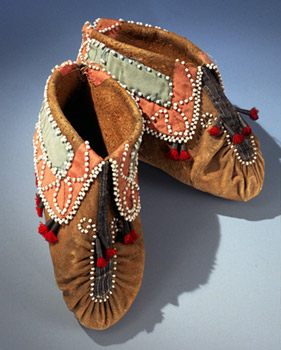
An old Sioux Indian Prayer says, “Great Spirit, help me never to judge another until I have walked in his moccasins.”
My mother loved to quote that prayer. In fact, just a week or so ago when I was in Destin, my sister and I were discussing how our mother often reminded us to try to feel what another person was feeling.
Here’s a 45 second answer to what that is called:
But how often are we truly empathetic?
It’s not that we don’t have empathy for some situations. We cry in sad movies, we feel badly for people we read about who are going through tragedy. But sometimes those who are closest to us don’t get the same treatment. I think we’re so close to them, we expect them to think and feel the same as we do, so we may not try to understand.
And then there are other times when the ‘politically correct’ sort of empathy takes over— current positions that those in power make us think we ‘ought’ to feel, or else we’re less than human, or at the very least inferior to what ‘they’ are. I have to ask then— Is that sort of empathy contrived?
Not all of us come from the same place. Empathy means attempting to see what has happened in a person’s life that led him or her to be the person he projects to others.
But what has happened to a person in the past does not take away responsibility for what he does in the present. Empathy goes just so far.
Still, we must practice it. We must be less quick to criticize–that is unless we’re just ABSOLUTELY PERFECT ourselves.
Well, we know that’s not the case!
So…
First: Let’s try on those other moccasins, and walk in them a bit.
Second: If you want me to walk in YOUR moccasins, then you should try to walk in MINE as well.
In that way—and only in that way—we’ll never walk alone.
“So, because you are lukewarm, and neither cold nor hot, I will spew you out of my mouth.” – Revelation 3:16
What are your convictions? The principles you live by?
If you were asked to list them, could you?
And if you can list them, would they be honestly YOURS?
Or would the list be only the opinions of someone else?
We need to have well-formed, personal convictions that we will stand up for, regardless of danger, embarrassment, or our own timidity .
How do we get that? Oftentimes, our convictions come from our family upbringing. We develop ideas from the ideas of our parents. Of course, many of us discard those convictions as we get older, believing them old-fashioned, or out-of-date in a fast, high-powered world.
Today, many of the principles we once lived by seem to have been thrown out the window and traded-in for popular opinion. We don’t want to appear different from others, we look at media personalities and take on their personas rather than develop our own.
Why do we do this? Is it because creating convictions requires deep thought and we simply don’t have, or take, time to do that? We have little silence in our world. And the multitude of noises that daily assault us don’t allow for much critical thinking.
This is too bad. Because our thoughts always precede our actions. Our thoughts present us with a choice. But if we can’t, or won’t, hear them, we may as well forget even trying to form a principle, much less write down a list of them.
Each of us as individuals are so very important to life itself. We may not think we are, but we are part of a plan in the mind of a God who loves us. He has given us a part to play in this world He put us in. In this time, in whatever place we are, our convictions are important.
Indeed, the strong convictions of even one person can better the universe in ways we may never suspect or understand.
Let’s think about our convictions. Let’s not be without principles.
Let’s not be afraid to express them, and to act on them.
Let’s not be wishy-washy about what we believe.
People disagree. But God allows for heart-felt belief on every side of any issue. He expects that we will have thought about it though. In fact, I believe He demands us to come up with our own personal, and well-thought out, convictions of the heart.
How do we know when is it time to let go–of certain situations, certain people, or certain things?
How do we know when we are we hanging on too long, or that these things are negatives and getting the best of us?
If we remain too subjective, we won’t leave, or give them up. Yet if we look at something objectively, we’re more likely to see the situation as it really is. And this is the beginning of change.
It may not happen right away. It may take just the right moment in our lives for the change in our behavior to occur—that time when we know in our hearts that change is not only better for us, but necessary—even though its also completely out of our personally created comfort zone.
How does this happen?
Sometimes we just get sick of being what we are.
Sometimes another person in our life leads us.
Sometimes God intervenes–and He does it so directly that we can hear His instruction.
His instruction can be in the voice of another.
It can be in the pages of a book.
Or it may be an interior voice interrupting our own thoughts—like the little nudges of a mare urging her foal to get up and walk on its own.
Because no matter what we do, God does not leave us. Throughout our wayward lives, he nudges, pushes, and offers us chances to be who we are meant to be.
All we have to do, is recognize the nudge and act on it.
Of course, it isn’t easy. It isn’t exactly fun either. And we may even be criticized for it. But once we’ve allowed God to lovingly touch us, we won’t want to be without His involvement in our lives.
This world is not really ours. We’re not in control of it, no matter how much we might think so. We are only passing through.
As we travel through our life, the days change for each and every one of us. Each day is different, and each day, we become better or worse, whether we realize it or not.
The ‘better or worse’ is interchangeable.
A day of sadness can suddenly become joyful. A day of joy can abruptly turned to sadness. What is it between these two extremes that holds our life together?
Most definitely it is Hope, that sometimes tiny voice in the heart that strokes us like a loving hand. Hope is a virtue we need to stir up inside ourselves, to get excited over, to pray for, and to practice.
We are more than just a bunch of skin and bones and organs. We are more than what we do with our bodies, or our minds. We truly have a divinity within us, and we are headed back toward the divinity that we came from. The virtue of hope has been instilled in us as a guide—-and to let us know this is our temporary home.
And the older we get, the more we realize that fact.
Stanley Kunitz (1905 -2006) became the tenth Poet Laureate of the United States in the autumn of 2000. Kunitz was ninety-five years old at the time, still actively publishing and promoting poetry to new generations of readers.
Here is his poem, Passing Through, written on his seventy-ninth birthday.
Nobody in the widow’s household ever celebrated anniversaries. In the secrecy of my room I would not admit I cared that my friends were given parties. Before I left town for school my birthday went up in smoke in a fire at City Hall that gutted the Department of Vital Statistics. If it weren’t for a census report of a five-year-old White Male sharing my mother’s address at the Green Street tenement in Worcester I’d have no documentary proof that I exist. You are the first, my dear, to bully me into these festive occasions.
Sometimes, you say, I wear an abstracted look that drives you up the wall, as though it signified distress or disaffection. Don’t take it so to heart. Maybe I enjoy not-being as much as being who I am. Maybe it’s time for me to practice growing old. The way I look at it, I’m passing through a phase: gradually I’m changing to a word. Whatever you choose to claim of me is always yours; nothing is truly mine except my name. I only borrowed this dust.
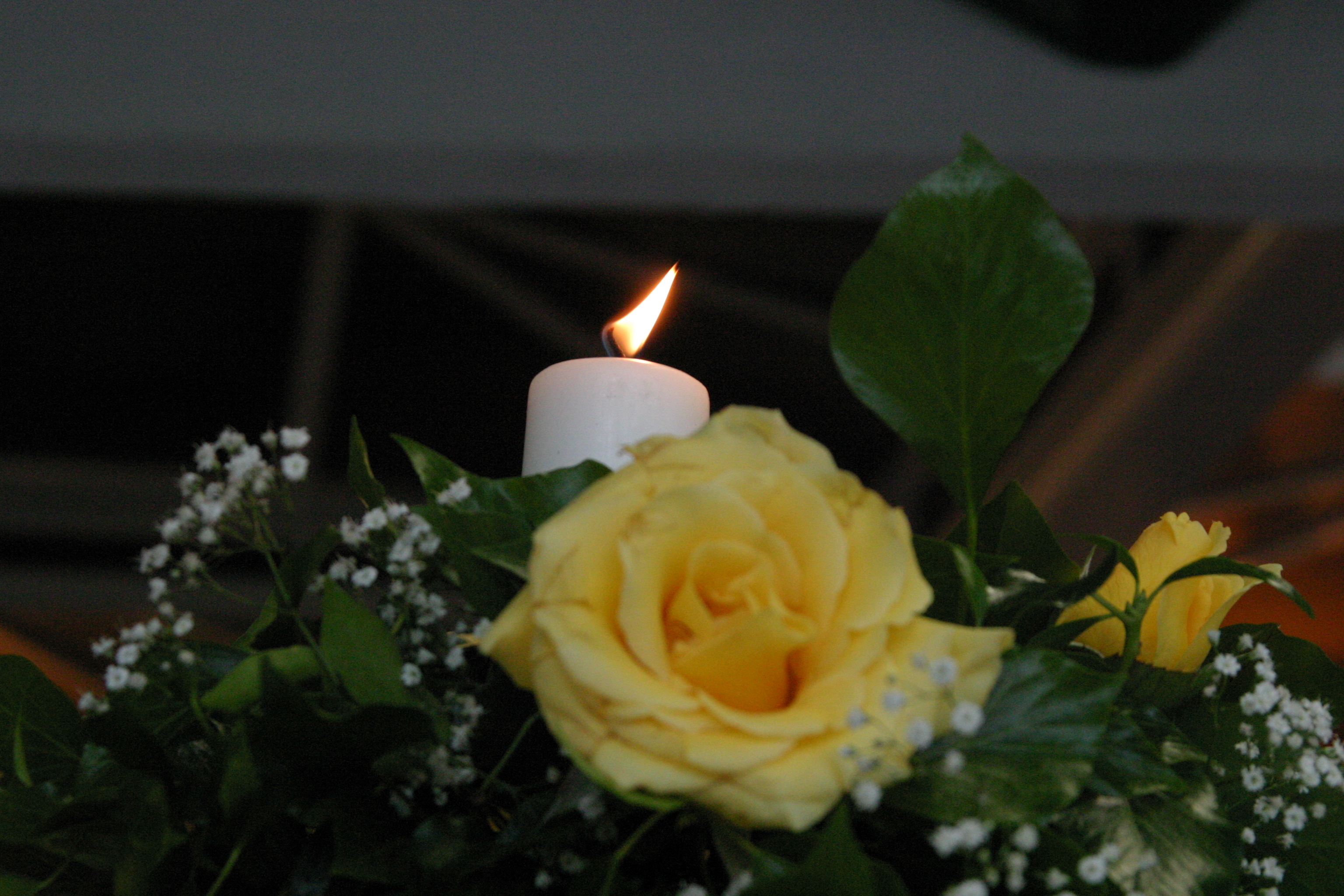
Sometimes we miss opportunities. We blow out our candles before we’ve given them a chance to light up our lives.
We miss chances that could change us for the better. We miss them because we don’t realize their importance at the time, or we’re too busy with something, or we’re just plain too lazy to give up any piece of ourselves requiring an effort of will.
And I think this happens because we are distracted by a dubious attraction, and false connection, to people we don’t even know–and who surely don’t care a thing about us.
Yet we allow those people tell us who, or what, we ought to be:
We ought to be thinner.
We ought to dress like them.
We ought to sing, or dance, or go on Survival trips.
We ought to tolerate anything, no matter if it goes against the grain of what we know is right.
We ought to be liberal.
We ought to be conservative.
We ought to silence our own thoughts and take up theirs.
And on and on.
Sometimes an opportunity may be something we’ve never done before. It may be hard, and we may be frightened. But we have to trust in ourselves. We have to try.
Inside us, is a conscience–a still, small voice that we often ignore. Yet it’s there. And it will speak to us if we listen. It will give us courage.
Do we realize how much we lose by not listening to that voice within us?
Do we realize how much we miss by not trusting in ourselves?
Don’t miss the opportunity to become who YOU are, not who THEY are.
Lets try to keep from blowing out the candle of spiritual suggestion before it has a chance to burn. Let’s open our eyes to the uniquely personal opportunities in each day—and not let the day pass without considering at least one of them.
For all my Atlanta and Decatur friends: Here is one of my opportunities.
On December 6, from 9 until 12, I’ll be the guest speaker at the Mothers Retreat at Christ the King Cathedral in Atlanta. My talk is entitled, “God Loves You Madly–So Let Him.”
And then, on December 7, at 2 pm, I’ll be signing books at Eagle Eye Bookshop in Decatur, GA. I hope you’ll consider coming. I’d love to see you! But if you can’t make it, I know you’ll pray for me, and I thank you for that.
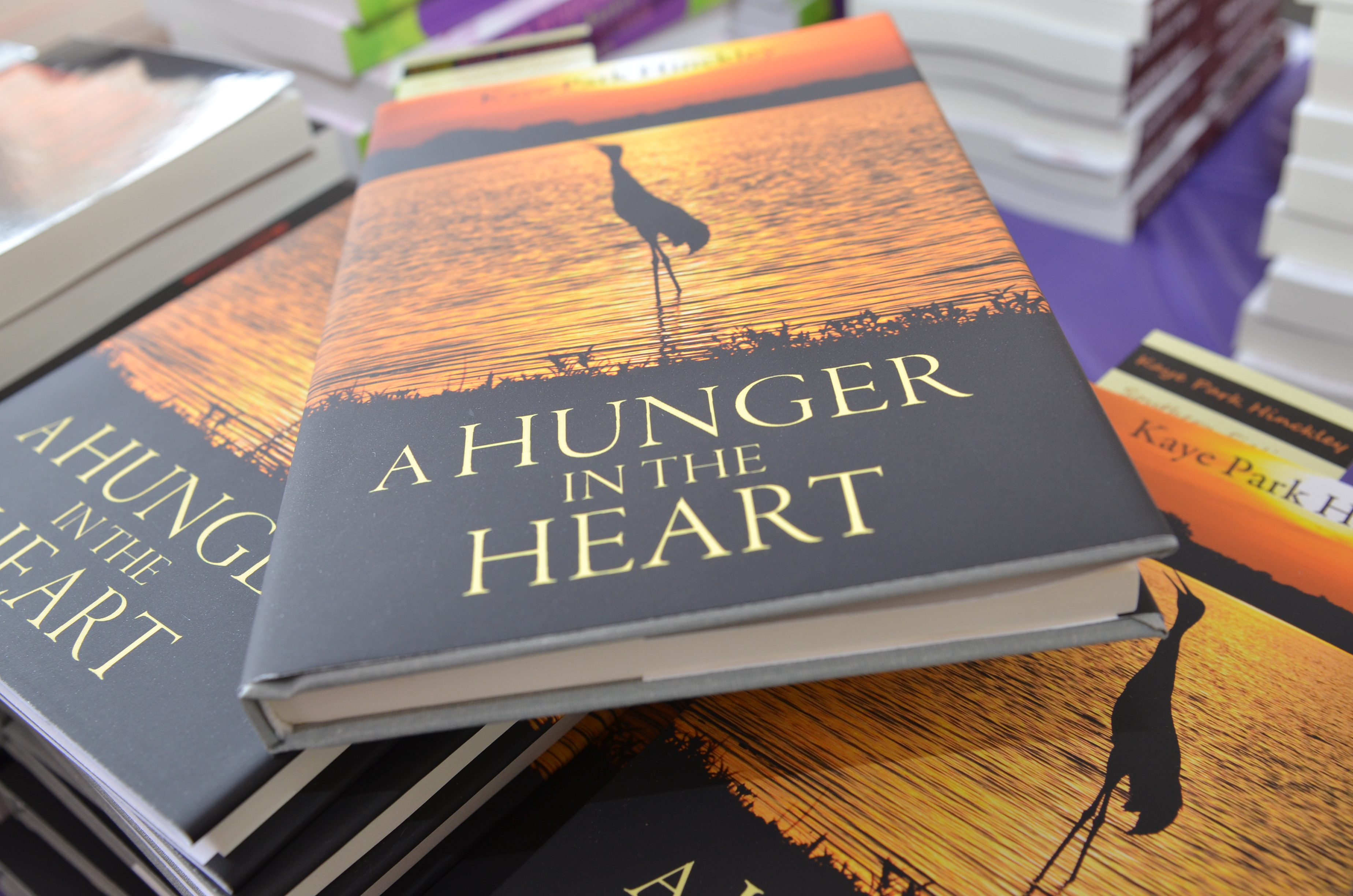
This is my debut novel–my ‘new baby’ for 2013. And I’d like to suggest it to you as a Christmas gift for someone you love.
If you’d like it, it’s in quite a few bookstores now. If it’s not in your favorite bookstore, then click on A HUNGER IN THE HEART at the top left of this page, and then click on either Amazon or Barnes and Noble at the bottom of that page.
A HUNGER IN THE HEART has been presented for several awards for First Novel: The Willie Morris Award for Southern Fiction; American Book Award Before Columbus Foundation; The Ernest Hemingway/Pen Award; 2014 Pen/Faulkner Award; and CALA (Catholic Arts and Letters Award)
Below are some reviews (the best ones, of course) And on the back cover of the book, you’ll find endorsements by Winston Groom, author of Forrest Gump, and Mark Childress, author Crazy in Alabama.
Five stars: “A tremendously good read!, I adored this story for its compassion, its gentle humor and the intensely human, believable and nuanced characters and circumstances. Fig, for me, embodied home-grown (authentic) holiness in his goodness, self-sacrifice and ability to see “beyond” and love the other: the Christ figure of the story. You have real-life people coping with their personal frailties, the consequences of decisions made, bad and good. A satisfying conclusion, avoiding a neatly wrapped up but unrealistic, pat ending. It is a story that one can relate to across cultures and still enjoy the unique flavors of the American South. A definite pleasure to read and re-read!” Sr. Teresa Cardinez
Five Stars: “I read this book because of the blurbs by two of my favorite Southern writers, Winston Groom and Mark Childress. When I finished it, I could see why they endorsed “A Hunger in the Heart.” It’s great Southern fiction and more, with its sense of place, strong narrative voices, kinship, sense of impending doom, and a kind of humor indigenous to the South. The story of the Bridgeman family is a poignant one, even heart-breaking at times, and yet edifying because these characters seem like people I know or have known who inevitably ‘get through’ difficult situations. On a deeper level, “A Hunger in the Heart” is the hunger for love. The book left me with some understanding of how members of any family either contribute to, or relieve, spiritual isolation in another member.” Patrick Canning
Four Stars: “A Hunger in the Heart takes the reader on a rough ride through the emotional mines of a disfunctional Southern family. The author is quite talented in descriptive detail. She really draws a the reader into the story and there are some excellent reflections which make a person want to reread the sentence or the paragraph so as to remember that particular part.” Ann Frailey
Five stars: “What a wonderful read. Such a wide range of emotions covered – reminiscent of my own childhood (which wasn’t Southern.) Characters jump out at me like people I have known. To me a book that makes you want to know how the “rest” of a character’s life turns out is a good book. This is a good book.” Kathryn L. Bailey
Five stars: “A Hunger in the Heart so beautifully illustrates the yearnings of the soul across all the stages of life. The well-developed and almost familiar characters along with the author’s lush and vibrant descriptions make this an incredibly satisfying read. The author really nails the setting and feel of life in the late 1950’s in the deep South. This is an example of meaningful writing sprung from experiences of the heart. Tender and compelling, I enjoyed every word.” Stephanie Thomas
Five stars: “This is a Southern literary novel, set in 1955 in fictional Gator Town, FL. Coleman Puttman Bridgeman, III is a boy coming to terms with the consequences World War II has had on his family. His shell-shocked father, Putt, a decorated hero, stages continual games of war with his son against an enemy that only the father can see. Sarah Neal, Coleman’s religious, but alcoholic, mother blames Putt’s misfortune, and her own, on the black soldier whose life her husband heroically saved. When Putt is accused of a scandalous crime, the boy’s manipulative grandfather, C.P. Bridgeman, holds Sarah Neal responsible, bringing about a bitter estrangement between mother and son, until the boy must fight his own war against a very real enemy. But there is a lot of compassion in this book, too. The family’s wise gardener, Fig, is beacon for Coleman, almost like the boy’s conscience. And Anna, a neighbor girl with problems of her own, understands Coleman’s heart, and points him toward forgiveness and redemptive love. In fact, the spiritual thread of God’s love runs throughout the story, somewhat like an ever-present shadow always at the heels of the characters, if only they turn to notice it. In addition, the book has some very humorous moments, as well as a few surprises for the reader. It’s an entertaining read that stays long in the mind.” Anne Duncan
Four stars: “A Hunger in the Heart” by Kaye Park Hinckley grips the reader’s heart from the very beginning. It is a poignant narrative of perseverance; the finely drawn characters endure serious difficulties. The individuals cope in their own distinct ways, supporting each other as best they can, even if at times the best is toleration. But they never give up. Coleman watches his father, a decorated war hero, struggle with insanity as his mother succumbs to alcohol. Coleman’s grandfather, who isn’t in good health himself, does everything he can to hold the family together. The faithful Fig, who has served his grandfather and family since the boy can remember, is always there to help, all the while dishing out words of encouragement and faith. Catholic values and devotions are gently injected throughout the story. At first I resented repeated references to a crucifix hanging around a drunkard’s neck until I realized that it’s a perfect reminder of Christ’s mission. “Those who are well do not need a physician, but the sick do. I did not come to call the righteous but sinners” (Mark 2:17). I am not very familiar with this genre, but I do know fantastic characterization and a strong story when I see them. My only complaint is that I would have liked to have spent a little more time with some of the characters, a few of whom could inspire separate stories of their own. “A Hunger in the Heart” is a powerful, emotional read. Highly recommended.” A. Abboud
Five stars: “Easy read! Read in almost one sitting. The author painted a picture with words of both the characters and the town, that made me feel like I was in Gator Town, Florida. I grew up following World War II, and only realized as an older adult just how much many folks and families were affected by this.” Jackie
Five stars: Beautifully written in the tradition of southern literary fiction. The novel works in so many ways, but finds its genius in the crafting of memorable characters, each deeply flawed but searching. Aren’t we all? The novel is not overly sentimental, but is still infused with the reality that hope finds its realization in love. A book that will inspire you, and then you’ll re-read to savor the prose.” Ron OGorman
Five stars: “This is a character-based novel set in a small Southern town in the mid-fifties. From the patriarch of the Bridgeman family to Fig, the black, true-blood-son who limps around with a wooden foot, the people shine through as real as your next door neighbors. Or members of your own family. Even through their flaws, you root for them to overcome their various obstacles. Young Coleman yearns for the mental wounds his dad suffered in WWII to heal so his mother will stop drowning her sorrows for their empty life in a bottle. That his mother is comforted by a counselor who obviously adores her threatens the peace between his parents that Coleman so desires. Meanwhile, the patriarch, C.P., frets about his son, his grandson, and his daughter-in-law. His only relaxation comes when he takes Coleman fishing. Things take a turn for the worse when his son is accused of raping a neighbor. How that scenario is handled and what happens when the man responsible for changing the course of all their lives shows up . . . well, that’s another story. The time and place, the imagery, the language, and the people reminded this reader of her days in a small Southern town in North Carolina. Exceptionally well done, Kaye Park Hinkley.” Mary Kay Remick
Five Stars: “With her very detailed and beautiful descriptions, the author has a great way of making all of the characters very real in the readers mind. Each character is extremely well-developed which makes it easy for you to relate to them as if they’re people you already know. I could see this being a great movie! Very illustrative and a heartwarming book that I would recommend to anyone.” P.D.
Four stars: “This brief novel tells the story of a dysfunctional Southern family, set in Florida after World War II. The family struggles to love one another while facing illness, addiction, blackmail, fear, and division. The pacing of the novel is brisk, the action is mostly domestic and quotidian (for a dysfunctional family), yet there are passages of great description and insight. I have seen the author compared to Flannery O’Connor, but I think the author is writing with her own voice and limning a story of love and hope. An excellent debut novel.” Stephanie Mann
Five stars: “I was gripped from the beginning, wanting to see what would happen next. Hinckley’s ear for the Southern is very accurate, but her understanding of human nature surpasses a region. More from this author, please.” Alabama Girl from Atlanta
Five stars: “I enjoyed Kaye’s book immensely! Having lived in the south my entire life, her book was so comfortable. From the gruffness and pride of Coleman’s grandfather to the “monkey in the mirror” wisdom of Fig, each character could be found in a small southern town. Their human flaws, struggles, ability to love and to forgive are what life is all about. More, please!” Eva
Five Stars: “This compelling story of a small town Southerners will hit home on more than one level. The characters bring this multi-level story to life and I want to know what happens next in this town and the lives of these characters. So much more for Ms. Hinckley to tell us.”
Five stars: “If you grew up in the South you will love this book. The characters are so real and the story is so touching. You will learn a lot about southern living. I found it hard to put down once I started reading.” Peggy W. Merrill
Are they so strong that no one can tell you any different?
If anyone disagrees with you, do you fold your arms around your chest, plant your feet in the concrete of your opinions, and stand your ground?
I must admit that I’ve been like that. I went from having no voiced opinion to someone who voiced an opinion on everything— whether I knew what I was talking about or not.
When we come across to people as entirely opinionated, not only do we close our arms to them, but they will not open up to us. This is an important point when raising children, especially teenagers. If we want them to let us know what’s happening in their lives, then we have to plant a fertile ground for that. And that may mean keeping some of our strong opinions to ourselves. It doesn’t mean we let them have a free ride, but that we allow them to have an opinion as well, and that we listen to it. We greet them with open arms, and then we discuss pros and cons on both sides.
This is important in connecting with all people; family, friends, acquaintances. When we close ourselves off with our singular opinions, we may close them out of our lives entirely.
And it’s the same with our relationship with God. People with such strong opinions often ‘buck’ God’s laws because they ‘just don’t agree.’ How prideful is that!
How many times do we–especially as Catholics–say “Well, I believe this teaching, but I’ll never believe that one.”
Or, “I’ll love this person, but not the one across the room.”
There is certainly a time for opinions. We need to have them. But we also need to be careful not to close our arms completely to those who may disagree with us.
After a particularly tiring week or day at work, we’re happy to have an ending. After an argument with a child or spouse, we’re happy for that to end, too. If we’ve had an unusually cold winter, or a dreary rainy and hot summer, we take a joyful breath when all that’s over. If we’re cleaning out a closet, if we’re striving to complete a garden, and certainly if we’re in labor with childbirth near, we want endings!
But we may not want an ending to that last bite of pecan pie, or the sight of a gorgeous sunset, or a night of celebration with our spouse. We may not want to put down that sweet, sleeping baby in our arms. We don’t want to reach the ending of a wonderful song, or a great book, or a loving kiss.
Except endings come. We lose people who mean much to us. Maybe they simply leave, or maybe we we lose them to death.
Endings that come to us by death are the hardest to assimilate. A parent, a spouse, a child, a friend, who are here with us on a given day, and the next day gone.
We grieve these endings. They take a toll on the rest of our lives.
I have always believed that the veil between life and death is very thin. I have always believed that death is another beginning–for each of us, and for our loved ones. I have felt an active connection with those who have left this world for another. I don’t believe they forget us anymore than we forget them. I ask for their prayers, and give them mine. And I do have faith that I will see them again.
Halloween evokes many memories of my children growing up. I probably shouldn’t admit this particular memory, but when ONE of my girls was a tyrannical toddler, I gave the little thing a nickname–“Witchy Woman.” Believe me, at the time it suited her well. All she needed was a miniature broom.
Of course today, she’s anything but witchy–I mean I’m certain her husband and children would never call her such!!
But hey, aren’t we all a little ‘witchy’ at times. Look at some of the characteristics of these tiny, toddling people:
They discover they can walk on two legs and so are “into everything.”
They are stubborn about ME, MINE, and MY.
They are in love with the word NO.
They become easily frustrated.
They like to build, knock down, put in, and take out.
They have very short attention spans.
They imitate almost everything they see.
And then there are:
The big smiles when they wake up from a nap or in the morning (Despite the load in their diapers)
The sloppy kisses.
The arms around your neck.
The squeals of laughter.
The “help Mommy make dinner” pans on the floor.
The colorful scribbles.
The heads of hair full of paste, or spaghetti, or you name it.
The fall, the get-up, the tears and the “I want Mommy!”
Today, my little ‘witchy woman’ is one of whom I’m very proud. Her witchy-ness propelled her, and may even have been the key to her great success as a woman. I am amazed at how high she flies!
More than 70 percent of all religious communities report having new members (both men and women) in formation. But this is less than the large number of entrants in the 1950’s and 1960’s. So we come to the conclusion that the church is losing vocations.
The reasons for this are many, not the least, our very material world. Yet everyday, there are extraordinary people who discover within themselves a love for God so great that nothing but the religious life will do. (If you are a parent and your child expresses a desire to explore a religious or priestly vocation, please listen to them.)
Have you heard of the Nun who kissed Elvis? In 1963, Delores Hart who starred with Elvis and other stars in many movies, gave up her promising career as a movie starlet to go into the convent.
Here are some of her thoughts about helping to discern a vocation to the religious life. It is aimed at young people, like she was, when she entered.
“How do you know if you are being called? Start by reflecting on these questions:
Do I find myself wondering if there is more to life?
Do I have a desire to know God more deeply and give my whole self to him?
Am I drawn to pray and participate in the liturgy?
Do I take an active role in the life of the Church?
Do I feel called to live out the Gospel? Do I desire to live a simple lifestyle? Do I feel called to share life, ministry and faith with others?
Do I value the multicultural abundance in our world? Am I concerned with the unmet needs of others, especially the poor and those treated unjustly?
Do I believe I can live the life of a religious sister or nun? Do I think I can live a life of continual conversion? Do I believe we can do more together than alone?
Do I want a challenging life lived with deep satisfaction and love?
If you answer “yes” to many of these questions, God may be calling you to religious life.”
What follows is an HBO documentary, longer than most of my videos. But it is well worth your time. Mother Delores’s wise words hit home!
 Most of us are judgmental people, and quick to criticize another, especially if he or she comes from a different place, or thinks in ways that are opposite to ‘our’ ways.








 Translating a World on the Edge