Got a Hungry Heart?

Posted: May 2, 2014 in World On The Edge

SONY DSC


No, this is not a plea for a book sale, although if you’d like to check out my novel, A Hunger in the Heart, it’s here:http://www.amazon.com/Hunger-Heart-Kaye-Park-Hinckley/dp/1939627079/ref=sr_1_1?ie=UTF8&qid=1398774636&sr=8-1&keywords=A+Hunger+in+the+Heart

My blog today, however, does have a similar theme in that each of us is after ‘something’ in our lives. We may think of our wants as simple desires,  a goal—-a thing or situation that we strive for. To achieve a goal, one must be willing to work for it, and that means ‘to give up’ something for it.

Of course, we don’t want to give up something good to decide on something bad. But the  truth is that some of our goals are not good for us, and we know it, yet we still crave what we have in mind. We close off any interior searchlight that says–don’t do this, don’t go after this–and turn an outside light, often a superficial light, onto what we want. It won’t bother us we say. Just this once, we say.

Human behavior always begins with some desire. Don’t we need to examine those things we desire in a fuller context? Not just how they will affect us personally, but how they affect others?

When we want something really badly, we usually don’t think first of others, we think of ourselves and our own satisfaction. What we want is ‘good’ for us–a sort of good anyway, at least for the moment.

This is how a young child thinks. I want it, and I want it now. A child isn’t mature enough to foresee complications for others. But we are supposed to be mature adults, not immature children.

One immature decision can drastically change the course of our lives, even change the kind of person we want to be.  So, shouldn’t we comb through our hungers (our goals) and keep only those we’re sure will better us?


Dance with Me?

Posted: April 30, 2014 in World On The Edge

file2301237209145Oh, what an overused expression–How Time Flies. But it is so true–especially in the lives of our children. One day they are babies, and then in no time at all, they’re in school, then college, and beyond.

In every family, there is a certain ‘dance’ we do with our children. Sometimes it has to do with dancing around the time we spend with them.

From the time I was bringing up my children, until now, when my children are bringing up their own, I read and heard about the necessity of spending “quality” time with your sons or daughters. As if  we could pick and choose the “quality”  time.

However, it is my strong belief that children need the “quantity” of our time, too. In fact, I often believe that the quantity of time is the most important.
Quantity of time means we’re there as much as possible. Quantity of time means our children are used to us “being there.” And that means they feel more secure. Think about a young child’s attachment to a doll or stuffed animal. Some children will never leave them behind no matter where they go, because they feel secure with the toy. And without it, they are unhappy. “Quality” time isn’t something they accept with a beloved treasure.

Think of the mind of a child. For example, when you offer him or her a bag of candy, do they want just one quality piece? They may take one piece if that’s all they’re allowed (I know, I know–just an example. Too much sugar is not good for them either) But what I mean is that in a child’s heart, he/she wants quantity.

Children need to see that we enjoy them, that we will protect them, that we love them—-all the time, not just on some specific occasion that suit us. In my opinion, a danger of this “quality’ time thing is that we, as parents, are likely to overcompensate on these occasions, maybe out of guilt. We buy them things they don’t really need, when what they really want is our presence.

Time does indeed go by quickly. We don’t want to look back and wish we’d spent more time with our children. We want to do it now.

Quotation-Immanuel-Kant-good-wilderness-philosophy-reality-potential-progress-ethics-man-morality-Meetville-Quotes-119136


Recently, I was asked by  my eight year old granddaughter to speak to her Elementary School class about the Past as I had lived it. It was fun to tell the children about those things I’d enjoyed when I was their age. Then, being a writer, I mentioned  how the world before computers had once caused me to use a typewriter.   One little girl raised her hand and asked,  “Did the typewriter have a SEND button?”  I had to laugh, answering that the only SEND button we had was through an envelope and stamp.

But oh,  things have changed today, haven’t they?

Most all of us embrace the idea of a changing world. And we have surely have it. What a world we live in! Technology, Knowledge, and Communication at our fingertips. But is it a better world?

Most people believe that progress lies in the possibility of a better world, if not in this life then in the next, in which all wrongs would be made right. This is set into the human heart as HOPE, one of the three theological virtues.

It is natural to question the ethical progress of our world as well as its technological progress. For many, constant and rapid change is often a source of threat, anger, and resentment. Many have lost jobs with the advent of technology, and are forced to re-invent themselves–not necessarily a bad thing.  Still, some of us, especially as we grow older, look back and idolize the past. But the past isn’t where we live.

Yes, many of us worry about the plight of our world today. After all, through the media we’re constantly confronted with daily doses of violence, starving children, families broken by war, slavery, torture, exploitation and other horrible happenings. We need to remember that events like these have happened throughout human history. Still, our job as human beings is to go forward. To progress in every way– not only technologically, but morally as well.

The single quality that allows humanity to over come what seems to be unbearable—in the news and in our personal lives– is the promise that, in the end, life will be better. This promise of progress in the human condition is embedded in our hearts by our Creator.

We want a modern world, but do we want to see an honorable, more virtuous world, too? Do we  want to see a world brimming in Faith, Hope, and Love?  To have it, we must first want it badly enough to live those virtues in our own individual lives.

So, how do we create a better life in a world where things are done so easily for us through technology, that we might forget our own personal responsibility for moving life forward?

We start with ourselves. And we really cannot sit back and wait for others to do it for us. Whatever we do for ourselves impacts us, those we care about, and literally, the world, in  a much  more emphatic way than technology ever could.

“There are many ways of going forward, but only one way of standing still.”
― Franklin D. Roosevelt

DSCN8260There are times when we feel small. We think everyone, except us, seems to have things they’re really  good at.  We think we may be lacking in the talent department, or that we don’t have enough inner drive, or that our job skills are less than another’s. Maybe we even pray that God will give us those things.

And maybe we get a little miffed at Him, too,  because he hasn’t. We may even say, ” Then what am I supposed to be doing here?”

Well, shouldn’t we remember it’s possible that only one small act of our sincere concern for a loved one or neighbor can be BIG.  In fact, it can  actually change their world. And it can change ours, too, when we reach outside of ourselves.

When we reach out to help in some way we become an image of God for others. We allow others to see Christ in us. We are, after all, His hands and feet on Earth.

So what are we supposed to do here?  Here’s what Jesus told Peter:

When they had finished breakfast, Jesus said to Simon Peter.  “Simon, son of John, do you love me more than these?””

He said to him, “Yes, Lord, you know that I love you.”

Jesus said to him, “Feed my lambs.”

He then said to him a second time, “Simon, son of John, do you love me?”

Peter said to him, “Yes, Lord, you know that I love you.”

Jesus said to him, “Tend my sheep.”

Then Jesus said to him the third time, “Simon, son of John, do you love me?”

Peter was distressed that he had said to him a third time, “Do you love me?” and  said to Jesus, “Lord, you know everything; you know that I love you.”

Jesus  replied, “Feed my sheep..”

Asking God to answer our prayers is good, and we should do that. But also, let’s remember that here on Earth we can be the instrument of answering someone else’s prayers as well.

Taking Life for Granted?

Posted: April 9, 2014 in World On The Edge

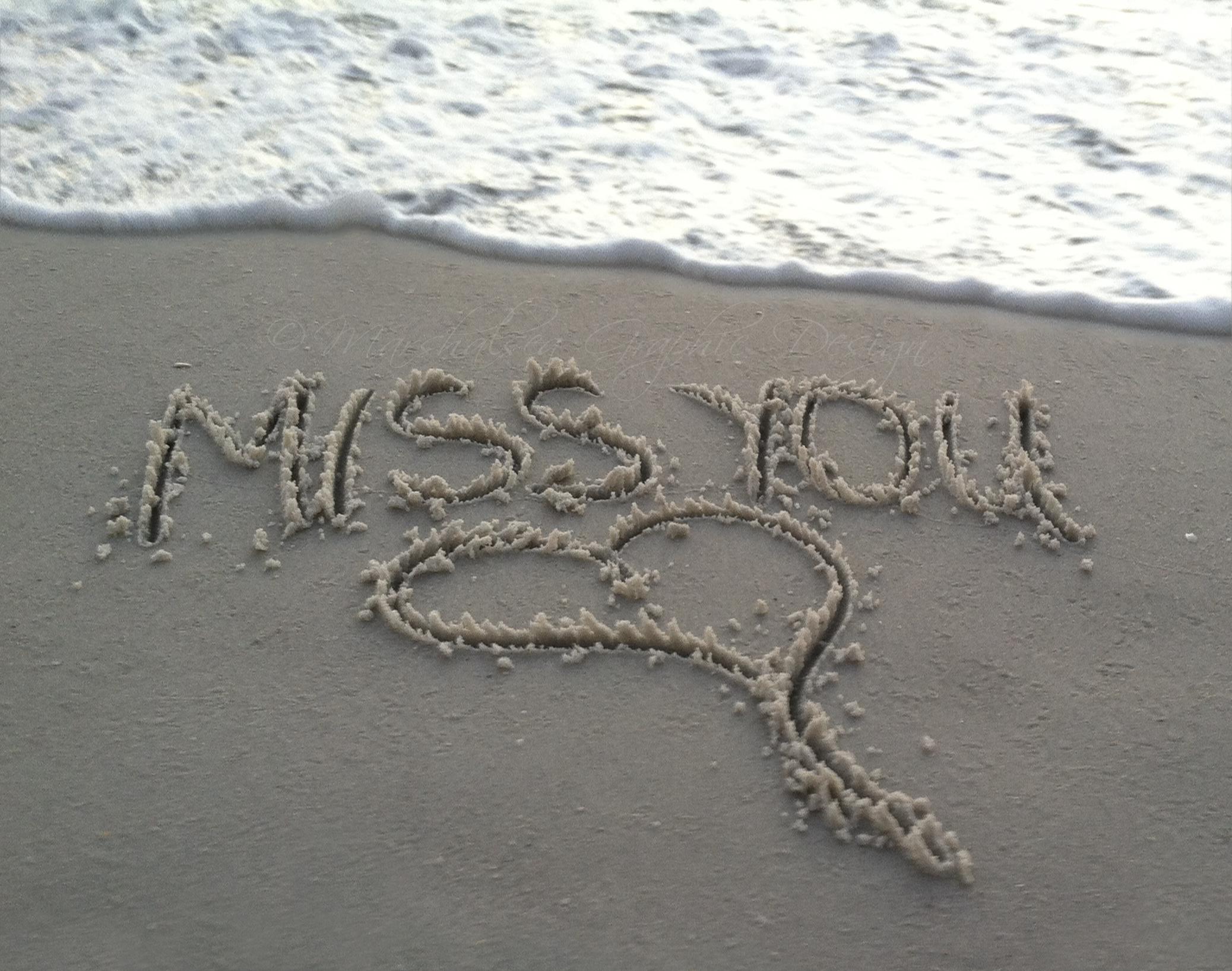
miss you MGD©We take so many things for granted, things that are short-lived and may be absent tomorrow. Sunshine.  Warm weather.  A beautiful bird on a limb that flies quickly away without our notice. Our youth that passes so quickly

So many times we take our present lives for granted, too. Our spouse. Our children. Our health. Our job. Maybe it’s because we’re so busy and don’t have time to think about those great gifts. We only realize how great they are when one or more of them is gone.

But isn’t gratitude in order?  A feeling of happiness comes when we appreciate what we have. Especially, when we look at what we have as ‘everything we need.’

Still, sometimes we get greedy. We look around and say, “I want that.” Maybe it’s a car, or a house, or maybe it’s more dramatic—a new wife or husband. Our desire for something more can become an obsession, precisely because we haven’t considered gratitude for what we already have. So we ignore what we have, and go after what we don’t have.

Of course, we will naturally strive for a better life for our family. And there are some situations that we may need to get away from.  But what if the so-called better life leads to hurting those we professed to love? And what if we’ve made too quick a decision, and regret it.

We need to think. And think hard.

If we’re so busy looking around at others, instead of looking at those who care about us, we’re likely to make a big mistake.

We’re likely to let go of someone and wish we hadn’t.


Striving To Be Better?

Posted: April 3, 2014 in World On The Edge

file00060675003What effect do you have on others–friends, family, children. Is it positive, negative, or a little of both? None of us are perfect, we all have our failures and disappointing days. But isn’t it important to control our possibly harmful actions, feelings, and emotions–most especially interacting with children, but also, interacting with adults?

Not to say that we shouldn’t express our feelings to trusted friends or family, but the way in which we do it can affect them, too. Ideally, our goal ought to be that everyone we meet should be somehow better, simply because they have met us.

Respect for ourselves, and for the other person, is acting on the divine presence of God within us. After all, we are made in His image and likeness.

What about couple relationships, before marriage and after? Could it be that delayed sexual gratification before marriage can actually make a better person of both? Does it show strength, perseverance, respect for the other? Does it show us as a person who values the dignity of another, a dignity which comes directly from God’s presence within us?

Admittedly, in our world today, the world of ME, this is difficult to do. Some close their minds and won’t even conceive of saving sex for marriage. Things have changed, they say. But is that genuine truth?

Isn’t delayed gratification is what we try to teach our children? Do your homework first. Eat your dinner before dessert. Work for your grades, don’t cheat. Tell the truth, don’t lie. We try to teach them these things because we want them to be good to themselves and good to others. After all, not many of us want to raise selfish and greedy brats who want what they want, and want it NOW.

And not many of us want to hear that sex before marriage is like dessert before dinner, but would you tell your child that if he eats all his ice cream, you’ll treat him with green beans? Certainly not. We want what’s best for the people we love.

Yes, it’s hard to be the better man, or woman in any relationship. But as children of God we are called to try.

Rewind and Reload?

Posted: April 2, 2014 in World On The Edge

OLYMPUS DIGITAL CAMERAIf you could rewind and then reload your life, would you do it?

How far would you go back?

What would you change? Would it be just one event, or more?

One thing is for sure. Life molds us from our first day on Earth.

We are influenced by who our parents are, what they taught us,  and how they cared for us.

We are influenced by friends we chose, by schools we went to, by people we dated, by whom we married.

In fact, every little thing we’ve ever done has led us to where to are— a place we like, or a place we despise.

Sometimes we can’t imagine why the bad things happen to us. We may think it’s unfair.  But doesn’t every event teach us something about ourselves?

If we want honest change—change for the better —the most fantastic thing is that we have the capability to do that.  I read this somewhere: “The past is gone.  Today is a gift. That’s why we call it ‘The Present.’

Let’s take a good look at the Gift of Life.

Lent is the perfect time to re-assess. Do we actually need to  rewind, and reload?

Belief

Posted: April 1, 2014 in World On The Edge

DSCN5279Belief: a feeling of being sure that someone or something exists or that something is true.

We are so tied up in people who’ve made names for themselves in sports, movies, television, politics. These people live lives that we envy–money, notoriety, control of others. Somehow the idea pervades our society that these sorts of people are better than most, better than we are because they are so important.

Well, this is so not true. The importance of  a person lies in his heart, not in a newspaper headline.

I think of a seemingly unimportant woman who spends her entire life unknown by any but a few close friends, a woman devoted to her children and husband, a woman who cares for others when they are sick or depressed or in trouble.  I think of a person whose only claim to fame is that she loves. A woman who believes that loving is her mission, and has a will strong enough to commit to it. A woman who can overcome anything because she believes this world is not all there is.

I think of a seemingly unimportant man who works for  his family, provides for his children, is honest in his job. A man who prays. A man who does not let go of his convictions for something less important. I think of a person whose only claim to fame is that he loves. A man who believes that loving is his mission, and has a will strong enough to commit to it. A man who can overcome anything because he believes this world is not all there is.

I think of a seemingly unimportant priest committed to his parish, or his order;  a man whose vocation has been demeaned by some, yet he continues in the holiness of it. A priest for others no matter their often gross imperfections. I think of a priest whose only claim to fame is that he loves. A priest who believes that loving is his mission, and has a will strong enough to commit to it. A priest who can overcome anything because he believes this world is not all there is.

And here is something else I think. When we stand at Heaven’s Gate, we will have no  notoriety except the love we’ve shown others.  Because God does not read headlines. God reads hearts.

What’s your opinion?

Wave After Wave

Posted: March 31, 2014 in World On The Edge

file5451238436403I spent my childhood summers on Panama City Beach, Florida at a cottage my grandfather built for my grandmother , a surprise for their twenty-fifth anniversary.  The beach was something very familiar, the Easter Basket colors of its water–lime green, purple, cobalt blue. Its sand white as sugar, its dunes barely able to be climbed by a young child, and challenging to the point of necessity for a pre-teen. But the most impressive characteristic of the beach were the waves.

A wave can startle. A wave can hit you in the face.  And unless you’re careful, a wave can bring you down.

Isn’t life like that, too?

Don’t we often have wave after wave of surprises, disappointments, and even devastations in life?

But when we make the right judgments, the same waves that bring these things also bring delight, laughter, and that refreshing past-time–fun.

There are scientific principals that effect the waves on a beach, make them less or more.

There are principled and unprincipled  people who effect the waves in our life as well, making it more or less.

Who are those people in our lives ?

On a beach, there are some wonderful waves we’d play in, and some violent waves we wouldn’t go near for fear of danger.

In life there are some wonderful people who care deeply for us, and there are some whose  lies we fall for time after time.  Shouldn’t  we discriminate between the two?  Shouldn’t we consider the dangers, or  benefits of each?

All this concerns what we’re actually after, what we’re really looking for in our lives. We can pretend we’re seeking Truth, but unless we really try to discover and accept what Truth actually is, we’re hypocrites.

The Truth is that there are some people who can help us along, who will walk with us if we let them–people who mirror the image of God in which we are made.  And there are people who pretend to be our best friend, but who actually who mirror the Father of Lies.

Which of these should we turn to?   Which of these should we walk with? Which of these should we trust during our journey toward eternal life?

Temptation

Posted: March 24, 2014 in World On The Edge

Yikes!Let’s talk about Temptation. Lent is a good time for that.

What is temptation? The common definition is the desire to perform an action that one may enjoy immediately or in the short term but will probably later regret for various reasons: legal, social, psychological (including feeling guilt), health-related, economic, etc.

In the context of religion,  temptation is the inclination to sin. We are all uniquely tempted depending on our personalities, genes, upbringing, environment.

Temptation also describes the coaxing or inducing by a person, other than ourselves, into committing  an act that we know is not good for us– the real danger is that this person makes it appear ‘good.’  Smart huh? After all, we wouldn’t choose it if we didn’t think it was good. But of course, this is how we’re misguided.

The best way to avoid temptation is to accept that we will be tempted. Then we have to know weaknesses and honestly admit them.  Next, we  put on the brakes whenever we’re in a situation that might cause us to fall into the wrong things—— or better yet we really, really try  NOT to be in such a situation. If that means excusing ourselves from an event, or an enticing entanglement, then we must  DO it.

Remember that what looks good to us after we’ve already made dubious decisions, or when we’re under some influence and not our true selves, may be exactly the wrong thing under normal circumstance.  For example, to a lonely man, don’t the girls all look prettier at closing time?

Temptation is controllable, if we’re honest with ourselves about our weaknesses, and then courageous enough to stay away from people, places, and situations that are sure to take advantage of our flaws.