Got a Logo????

Posted: July 3, 2015 in World On The Edge

file000103780820A logo is a graphic mark or emblem commonly used by commercial enterprises, organizations and even individuals to aid and promote instant public recognition. In the nearly twenty years I spent running an advertising agency, I created many logos for businesses. Some of those logos are still around, on billboards, trucks, and some television ads. That’s either because the business they represented is still around, too, or because the logo worked well for the business.

If you were interested in promoting yourself and what you stand for–what would your personal logo look like? Would it be bold and brazen, or sedate and sentimental? What would the colors be, the text style, the graphic if there was one? What is it about you that lets other people know who you are?

Logos is a Greek word which means rational thought or reason. In the Bible, it is translated to mean ‘word’ or another name for Jesus. In the beginning was the Word, and the Word was with God, and the Word was God. ]He was in the beginning with God. All things came into being through Him, and apart from Him nothing came into being that has come into being.–John 1:1-4

I would say the longest running logo, and most successful logo by far, is the Christian Cross. Can you imagine how many times it has been inscribed into stone, or imprinted? How many pieces of jewelry have used it? How many books? How many T-shirts?

But a Christian does not need to walk around in a T-shirt imprinted with a cross in order for people to know who we are. Being Christian isn’t just a word that we apply to ourselves. Being a Christian requires actions, the actions that love promotes.

1 John 3:16-20, “This is how we know what love is: Jesus Christ laid down his life for us. And we ought to lay down our lives for our brothers. If anyone has material possessions and sees his brother in need but has no pity on him, how can the love of God be in him? Dear children, let us not love with words or tongue but with actions and in truth. This then is how we know that we belong to the truth, and how we set our hearts at rest in his presence whenever our hearts condemn us. For God is greater than our hearts, and he knows everything.”

We can apply many other emblems to ourselves because we are unique and there are many words that might describe us as individuals. But together we are one. We are Christians. And unconditional love, symbolized by the Cross of Christ, is our logo.

Open to Miracles???

Posted: July 2, 2015 in World On The Edge
By Kakisky, 2010, MorgueFile.com

By Kakisky, 2010, MorgueFile.com

Young children have no problem believing in miracles. They are new, innocent, and without the constraints living in this world can produce. But despite our age, many of us are still open to miracles.

A miracle is a happening that no natural power can bring to pass in any manner or form whatsoever. Have you experienced one?

Of course you have:

If you have seen a baby growing in the body of a woman.

If you have held in your hand the seed of a flower, planted it, and watched it take root and bloom.

If you have seen the light and felt the burn of a sun you could never touch.

If you have forgiven an enemy when you never thought you would.

If you have risked your life for another’s. Or another has risked his for yours.

If you have lived another day in suffering, yet also lived that day with hope.

If you have heard the voice of God through another person, or media outlet, or in the frustrations of a difficult personal situation.

If you have experienced any of these things, you have experienced the miracle of Grace in the world–right here where you are. And there are many more opportunities than these.

But caution. Though it is always being offered, Grace must be noticed affirmatively to be taken advantage of.

If we don’t take the time to notice and affirm them, the miracles of Grace will not affect us–not even if they are all around us.

God’s Grace is as much a part of our earthly lives as our own breathing. But just as with our own breath, we must take it in and make it part of us.

For a Catholic, the greatest of miracles is the grace of the Eucharist. The Bread of Life. For a greater explanation of this, the greatest of miracles, go to: http://www.catholic.com/tracts/christ-in-the-eucharist

Let’s be alert, so we can be open to the miracles that the grace of God shows to the world.


Mary's_Mountain_Cover_for_KindleIn one way or another, each of my books portrays characters in the process of making dire choices. And often they make wrong choices that ultimately cost them. For example, Paul Dunaway in Mary’s Mountain discards his values and knowingly tolerates evil. Tolerance is the keyword in this book–a sickly, fluffy, and misleading tolerance, that costs Paul the highest price.

But aren’t we the same? Don’t we fall for well-presented propaganda (lies)? Are we just too busy to think for ourselves when we let others form our mindsets, our values?

Like a river that don’t know where it’s flowing, I took a wrong turn and just kept going.–Bruce Springsteen

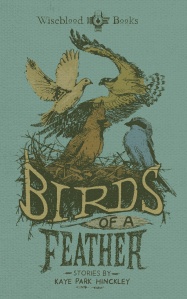
Lucy Adams, Lake Oconee Magazine, wrote the following about my short story collection, Birds of a Feather; but what she wrote also describes my writing in general.

“Hinckley writes characters who are shocking, flamboyant, disturbed, unkind. She writes characters who are merciful, gracious, empathic, loving. She writes characters who demonstrate the dualities of human nature. Edmund, in “Shooting at Heaven’s Gate,” allows himself to be used by evil. Rather than condemn his actions, Hinckley pushes her reader to acknowledge the frailties of the human heart. “We all are capable of doing great evil,” explains Hinckley. “Why does a person do this? I like to know reasons.” Curiosity about human nature propels her plots.Birds_of_a_Feather_FRONT_PUBLICITY_JPGDon’t seek clearly defined protagonists and antagonists here, however. Hinckley’s characters are complicated. They’ve done horrible things, witnessed horrible things, been the victims of horrible things, yet they continue rising each morning and putting one foot in front of the other. They fulfill their obligations to each other while these horrible things gnaw at them from the inside out. Hinckley deftly presents the repulsiveness of her character’s actions, while also revealing her characters’ drive toward love.”A Hunger in the Heart

Author, Richard Van Holst, had this to say about my novel, A Hunger in the Heart: “Like Flannery O’Connor, Hinckley shows us the virtues and the flaws in her characters. And while she displays their weaknesses as traits deserving of compassion, she does not whitewash their faults.”

My own contention is that any decision we make can drastically change the course of our own lives, and even change the kind of people we are as Americans. So, shouldn’t we comb through our hungers (our choices) and make only those we’re sure will better us all?

by Markgraf, 2014, MorgueFile.com

by Markgraf, 2014, MorgueFile.com

A person’s thought processes are his/her own–right?. We believe we can think what we want to think. But often we change our ways of thinking, don’t we? A set of circumstances that we experience can cause the change.

But also, if something is drummed time after time into our heads through speech, through books, through media of all kinds, even though it may be against what we really believe, we may find that our way of thinking is changing, too. That is called manipulation. And it is happening today.

Deepak Chopra, Alternative & Complementary Medicine, says that “Manipulation is getting what you want by ignoring or harming the desires of others. Manipulators use charm, persuasion, coaxing, trickery, and misdirection. The underlying idea is “I have to fool people to make them give me what I want.” When they are really caught up in their ploys, manipulators even imagine that they are doing their victims a favor.”

Have you read Nineteen Eighty-Four, by George Orwell? It was published long ago, in 1949, yet it is so prophetic. Newspeak is a fictional language in the novel that manipulates the totalitarian state Oceania as a tool to limit freedom of thought, as well as concepts that pose a threat to the regime such as freedom, self-expression, individuality, and peace. Any form of thought alternative to the party’s construct is classified as “thought crime”.

George Orwell explained that, “the purpose of Newspeak was not only to provide a medium of expression for the world-view ….but to make all other modes of thought impossible.”

Does this sound familiar when it comes to our American freedoms?

We’re living in a dangerous world when our freedoms are threatened, a world going astray. Are we doing something about it–personally? Or are we just plain ignoring it, absorbed in other things?

When we allow ourselves to be manipulated, we ignore error. So, error digs in and we get used to it. Then Newspeak, political correctness, and bad governing, reign. And genuine Truth is made subject to it.

Video  —  Posted: June 30, 2015 in World On The Edge

Photo by Prawny, 2014, MorguelFile.com

Photo by Prawny, 2014, MorguelFile.com

Lately, especially after the Obamacare ruling, I have not been a big fan of Chief Justice John Roberts, or the Supreme Court in general. The Supreme Court has taken over the role of Congress by making laws, not interpreting laws, as it was meant to do according to the United States Constitution.

But Justice Roberts at least has seen some of the repercussions to Religious Freedom with the court’s ruling on same-sex-marriage. And it is chilling.

Roberts wrote in his dissent: “Hard questions arise when people of faith exercise religion in ways that may be seen to conflict with the new right to same-sex marriage — when, for example, a religious college provides married student housing only to opposite-sex married couples, or a religious adoption agency declines to place children with same-sex married couples.”

He continued, “Indeed, the Solicitor General candidly acknowledged that the tax exemptions of some religious institutions would be in question if they opposed same-sex marriage. See Tr. of Oral Arg. on Question 1, at 36–38. There is little doubt that these and similar questions will soon be before this Court. Unfortunately, people of faith can take no comfort in the treatment they receive from the majority today.”

Still, the ruling has been met with gleeful words: Love Wins.

Love wins? Since when is it appropriate for the Supreme Court to rule into law their opinions on love? Since when is it appropriate for the Court to rule out the laws of God?

Is it love to take away religious freedom? I would call it force. And genuine love CANNOT be forced.

Love Wins is just another politically correct, hypocritical slogan used by those who scream for tolerance–but only if it benefits themselves.

The following is a 2012 video featuring Cardinal Francis George before his death in April of this year. Great words indeed.

Video  —  Posted: June 29, 2015 in World On The Edge

Yes, I’m still taking two weeks off…but Elizabeth Scalia at Patheos asked Catholic bloggers, “Why are you still Catholic?”
http://www.patheos.com/blogs/theanchoress/2015/06/03/dear-catholic-world-why-do-you-remain-a-catholic/

So…Why Do I Remain in The Catholic Church?

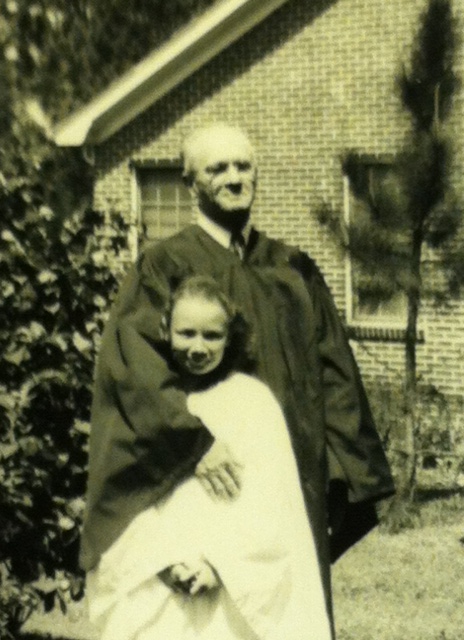
Confirmation for both my grandfather and I. He was 63. I was 9.

Confirmation for both my grandfather and I. He was 63. I was 9.

Because all of my life I’ve had to defend it.

When you defend someone, or something—when you stand up for it– you grow to love it even more. It becomes part of who you are, until people see you as the thing you’re defending. And that’s a big responsibility.

In South Alabama where I was born and grew up, my Protestant friends saw me, first, as a Catholic. Our small town had nearly a hundred Protestant churches, and one tiny Catholic church. My father was from a Protestant family who bristled at Catholicism, as did most Protestants in the Bible Belt; yet he bucked his family to marry my mother, a Catholic, then saw to it that his daughters attended Mass, received the sacraments, and were involved in religion classes.

My mother’s Catholic family has deep roots in both the South and in Catholicism. Her grandparents and their nine children were converted in the late 1800’s by a Jesuit priest, riding through middle Georgia on horseback. Five of her first cousins became priests or nuns.

My Catholic grandmother also married a Protestant. I was very close to both of them. My grandmother, who was also our Religion teacher, designated us as caretakers of our Faith, cautioning us to “Always stand up for what you believe in.” Well, that took courage. We were only a handful of Catholic children in a Protestant town, yet each of us were expected to be able to defend the Church. We were consistently questioned about our religion. When we answered, we were sometimes ridiculed, especially when defending the Eucharist, the Blessed Mother, the Pope, Confession to a priest, Saints, and more. To defend our Faith we had to know it, and know it well.

Still, as much as our friends had to say negatively about Catholicism, there was, at the time, an undercurrent of respect for Catholics that isn’t present today. Often it was spoken in whispers. “(He or she) won’t cheat on that test. They’re Catholic.” “He has to go to church every Sunday. He’s a Catholic.” “Ask her to a movie, but don’t ask her to the ‘blanket party’ at the river. She’s a Catholic.”

This year is the one hundredth anniversary of my parish church which was started in 1915 by fifteen committed people, and today has over 1300 members.

The church of my childhood.

The church of my childhood.

Many have said our Catholic church was built with Protestant money since quite a few of the women in the parish were married to Protestants, and many of those men were employers and leaders in the town. Interestingly, like my own father and grandfather, a good many of them eventually converted to Catholicism. A courageous act. I believe that defending the church gave me courage, too. Courage is a virtue we Catholics desperately need today as we face a possible disintegration of our religious freedom.

As I said earlier, when you defend something you grow to love it even more. I love my church. I love her as God loves all of us, despite our many errors. I think we have to remember that our church is made-up of fallible human beings capable of great love and great sin. But human beings are not the church, not really. We are only its hands, and often our hands are full of that first sin of pride. We are created in the image and likeness of God, but He’s given us the capacity to choose whether or not we will show His image in our lives.

Showing His image is not a ‘sit-down’ thing. It implies action, and action requires the force of God’s grace, which is truth. The Catholic Church is not the building and not the people. It is all about God—God’s tremendous push for absolute truth on earth. And He is pushing us. In order to cooperate, we must be more than superficially informed about our Faith. We must think very deeply, yet humbly, about our Faith. And we must be careful to keep our personal pride out of that thinking.

Video  —  Posted: June 16, 2015 in World On The Edge

By Alexander41, 2014, MorgueFile.com

By Alexander41, 2014, MorgueFile.com

What are the best things in your life–the ones you’re most grateful for?

I’d be willing to bet they’re not “things” at all, but people.

Oh yes, “people” sometimes drive us crazy, hurt us, make lots more work, more stress, insolent remarks, dirty socks, dirty dishes, and confusion in general.

But we know the other side of the coin, too–“people” who are always there for us, who take our side, who run errands when we can’t, who feed us when we’re sick, who wipe our tears and hold our hands when we need the warmth of another human being. People who listen. People who love us.

I cannot imagine living without those people in my life–precious people like my husband, children, grandchildren, sister, cousins, and friends; all those who love me and allow me to love them.

But most important, I’m thankful that God loves us all–even when we are at our worst.

So, to all you who read my books. Thank you. And for those who read this blog. Thank you. Because of your support, I look forward to writing it five days a week.

However, I will be taking a little ‘blog-break’ for the next couple of weeks. In the meantime, I have nearly three years of archives for TRANSLATING A WORLD ON THE EDGE, if you’re interested in looking through them.

Video  —  Posted: June 15, 2015 in World On The Edge

Mary's_Mountain_Cover_for_KindleThe lyrics of the video I posted yesterday sing loudly: In the spirit of the Lord, there is Freedom.

How do each of us know that we ought to have Freedom? Did someone tell us so?

Or is the idea that we are free engrained in each human being from birth?

And if Freedom is engrained in us at birth, then where did it come from?

There can only be one answer, and most of us know what, or who, it is.

The desire to be free does not come from a gene passed to us by our parents, like the shape of our face, or the color of our eyes and hair. It is not something we thought up for ourselves either. It is not an object that can be physically touched, because it is not physical, it is spiritual. .

The desire for Freedom is innate in each human person, and it comes as gift from our Creator.

But our desire for Freedom does not necessarily mean that we will have it. Others can keep it from us, or we can keep it from ourselves–by choice.

Because our Freedom is tied to our personal choices.

It is our choice when we restrict another’s freedom, either physically or spiritually. It is our choice to indulge ourselves in addictions, and bring others into those same addictions. It is our choice to make gods of ourselves at the expense of others.

And it is our choice to ignore that we are all God’s children.

Mary’s Mountain–still FREE until Friday, June 12.

Mary's_Mountain_Cover_for_Kindle
In my novels, short stories, and blog, I write a lot about freedom.

What does freedom mean to you?

For many it means to do whatever I want, which indicates that a personal choice is involved. What we want is at least possible because of basic freedoms that other Americans throughout history have fought for, even died for. And the rest of us benefit from that.

But if an Iraqi or Syrian Christian was asked what freedom means, what would their answer be? What would the answer of a WWII Jew under Hitler have been? Or an African American, under slavery? Or further back, an Irish Catholic under the Penal Laws of Oliver Cromwell? Where is/was freedom for these?

In my yet unpublished historical novel, Echoes of the Risen, Nell Dugan, who along with her family, fought against British tyranny both in England and the new America, has this to say at the end of the American Revolution: The others celebrated our victory for weeks, but I had no enthusiasm after the ghastly murders of Robin and William. All my life I’d dreamed of freedom, strived for freedom, killed for freedom. Now it was here, and I thought only of its lavish price.

Freedom does have a lavish price–a price paid through the personal choices of individuals to be courageous.

Every individual who attempts to make the world a more noble place will pay the price. They will pay a price when lies are told in order to smother their voices of belief, and bring them down. They will pay a price when the courage of their convictions are twisted by the less noble, and they are called bigots, or racists, or homophobics. They will pay a price when the forces of political correctness stomp on their heart-felt values in an attempt to destroy them.

But without their courage, those heart-felt values will surely vanish—exactly what happens in my novelette, Mary’s Mountain when God, and the liberty He has given us, is annihilated.

And it’s still FREE on Kindle for a few more days.

Image  —  Posted: June 10, 2015 in World On The Edge

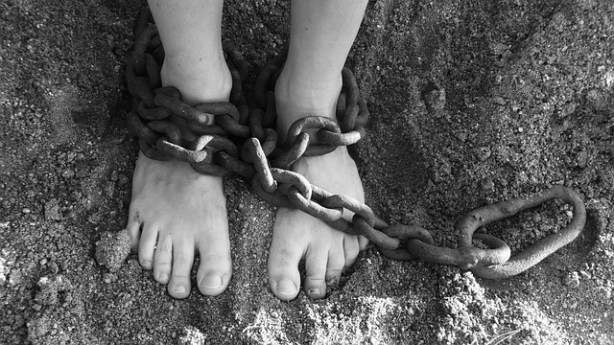
chains-19176_640

We human beings often become chained to our usual ways even though some of our actions are not good for us, and may even be very destructive to ourselves or other people.

We know we need change, but as life itself shows us, there is no change without action. An object, a person, and a fictional character, will continue in its existing state unless it is changed by some external force.

The external force may come through another person or persons. It may come through a physical event. It may even be something that threatens our very life. Still, without some external force, the tendency of any person is to do nothing, to remain unchanged–the same as a vase left for years on a table, collecting dust and cobwebs until someone comes to move it or dust it.

We know that God can take action to change us, and we refer to God’s action in our lives as His Grace.

Except we often think of God’s grace as a feel-good, feather duster; something to cleanse us gently and peacefully. But when we are not easily cleaned–which is often the case–God’s saving grace cannot be peaceful and sublime. In fact….

Sometimes grace is violent… sometimes God wants His life in you so much that it’s going to come in ways that mean you’re going to suffer. Not because He wills it but because He permits it. It says in Hebrews “I will shake you.” And I will shake all created things until all that is left is what is uncreated, what is unshakeable. Put simply — ‘Sometimes I’m going to let you suffer. I’m going to shake you free of all those things that you’ve put in place of my grace, in place of my life in you, until all that’s left is my life in you. Until all you can cling to… is me.’ – Mark Hart

The above quote is from speaker, Mark Hart, to a Catholic Life Teen group, I was struck by its weight. That grace is often uncomfortable, even violent, is the undercurrent of much of my fiction.

Without grace, Paul Dunaway in Mary’s Mountain would not have changed his indulgent ways because he enjoyed money, sex, and power too much. But it costs him.

In A Hunger in the Heart, the question of whether Coleman Puttman Bridgeman III can bring himself to forgive his mother–the woman he believes killed his father–will cost him.

In Birds of a Feather, ten characters struggle with the same outpour of grace. And it costs each one of them.

Grace is an external force. It is an intervention into a misguided, but comfortable situation, and more often than not, grace is uncomfortable. So yes, grace can heal us, but the process of our accepting it can be painful, even violent. And suffering may be its cost. Will we pay it or not?

The notion that grace is healing omits the fact that before it heals, it cuts with the sword Christ said he would bring. –Flannery O’Connor

ysveIt

Video  —  Posted: June 9, 2015 in World On The Edge