Archive for the ‘World On The Edge’ Category

Where’s Home?

Posted: May 5, 2014 in World On The Edge

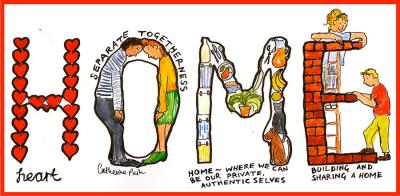
cartoon-catherine-pain-homeAre  we away from home? Not necessarily the place–home. But maybe, where our  heart   ‘used to be’?  Where we may have had different values than the ones we have now?

To find ourselves in such a place, a place that’s not home,  can be disrupting and often disturbing to us–especially if we want to go back. And most especially, if home held the values for us of honesty, justice, determination,  consideration, and most important, love. Values we may not see in the place we are today.

But what if home wasn’t like that? What if the values our home held were the opposite of those above. What if there was  lying in our home, and injustice,  goal-less commands, meanness, and no conception, or perception, of  love?

Wouldn’t we flee from those attitudes?

Many young people experience a life like that, and they flee from it.  The problem is that some also take those undesired values with them when they leave. And that affects others–in another family they may create, in their workplace, in their social connections.

The heart of our homes–the values we teach cannot be given less importance than the schools we were sent to, the ‘things’ we were given,  or the particular sort of house we lived in–big or small.

An old Jesuit saying:: ‘Give me the child and I will give you the man.’ Which is to say how very important the training of a child is.

“Up to the age of seven, we are like sponges, absorbing everything around us and accepting much of it as true, especially when it comes from our parents. The confusion and blind belief of this period can also lead to the early formation of trauma and other deep problems. The critical thing here is to learn a sense of right and wrong, good and bad.” (Changingminds.org) And home is where this is taught.

We are our children’s first and most important teachers. Our home is their schoolroom.  And though we often forget —that makes us, and the home environment we create– very important  to the world around us.

Got a Hungry Heart?

Posted: May 2, 2014 in World On The Edge

SONY DSC


No, this is not a plea for a book sale, although if you’d like to check out my novel, A Hunger in the Heart, it’s here:http://www.amazon.com/Hunger-Heart-Kaye-Park-Hinckley/dp/1939627079/ref=sr_1_1?ie=UTF8&qid=1398774636&sr=8-1&keywords=A+Hunger+in+the+Heart

My blog today, however, does have a similar theme in that each of us is after ‘something’ in our lives. We may think of our wants as simple desires,  a goal—-a thing or situation that we strive for. To achieve a goal, one must be willing to work for it, and that means ‘to give up’ something for it.

Of course, we don’t want to give up something good to decide on something bad. But the  truth is that some of our goals are not good for us, and we know it, yet we still crave what we have in mind. We close off any interior searchlight that says–don’t do this, don’t go after this–and turn an outside light, often a superficial light, onto what we want. It won’t bother us we say. Just this once, we say.

Human behavior always begins with some desire. Don’t we need to examine those things we desire in a fuller context? Not just how they will affect us personally, but how they affect others?

When we want something really badly, we usually don’t think first of others, we think of ourselves and our own satisfaction. What we want is ‘good’ for us–a sort of good anyway, at least for the moment.

This is how a young child thinks. I want it, and I want it now. A child isn’t mature enough to foresee complications for others. But we are supposed to be mature adults, not immature children.

One immature decision can drastically change the course of our lives, even change the kind of person we want to be.  So, shouldn’t we comb through our hungers (our goals) and keep only those we’re sure will better us?

In Trouble?

Posted: May 1, 2014 in World On The Edge

1969230_613498932056057_348736089_nWhat do we usually do when we’re in trouble?  What do we do when we literally feel as if we’re drowning?

Thankfully, these emotions do not come daily, but there are periods in our lives when we go through great stress, or trauma. What do we do? Obsess?  Cry? Make fast, and often wrong decisions?

We look around for someone to help us out, but we see the sand being pulled from under our feet until we’re left with only a hole that doesn’t seem it will ever be filled again.

When we’re in these sort of situations, we wonder if we can survive.

The truth is we can. But not alone. This is when most of us turn to God.

God is found in suffering for many of us–not that we desire it, not that we want it at all. But if we look deeper we will find Him. We will call out to Him. He will help us.

He will definitely help us. In the way we want? Maybe not, maybe in a way much better than we ever thought about.

God will help us. Trust in that.


Dance with Me?

Posted: April 30, 2014 in World On The Edge

file2301237209145Oh, what an overused expression–How Time Flies. But it is so true–especially in the lives of our children. One day they are babies, and then in no time at all, they’re in school, then college, and beyond.

In every family, there is a certain ‘dance’ we do with our children. Sometimes it has to do with dancing around the time we spend with them.

From the time I was bringing up my children, until now, when my children are bringing up their own, I read and heard about the necessity of spending “quality” time with your sons or daughters. As if  we could pick and choose the “quality”  time.

However, it is my strong belief that children need the “quantity” of our time, too. In fact, I often believe that the quantity of time is the most important.
Quantity of time means we’re there as much as possible. Quantity of time means our children are used to us “being there.” And that means they feel more secure. Think about a young child’s attachment to a doll or stuffed animal. Some children will never leave them behind no matter where they go, because they feel secure with the toy. And without it, they are unhappy. “Quality” time isn’t something they accept with a beloved treasure.

Think of the mind of a child. For example, when you offer him or her a bag of candy, do they want just one quality piece? They may take one piece if that’s all they’re allowed (I know, I know–just an example. Too much sugar is not good for them either) But what I mean is that in a child’s heart, he/she wants quantity.

Children need to see that we enjoy them, that we will protect them, that we love them—-all the time, not just on some specific occasion that suit us. In my opinion, a danger of this “quality’ time thing is that we, as parents, are likely to overcompensate on these occasions, maybe out of guilt. We buy them things they don’t really need, when what they really want is our presence.

Time does indeed go by quickly. We don’t want to look back and wish we’d spent more time with our children. We want to do it now.

AWSFacebookLogo2013This past Thursday, my husband, George, and I made a weekend trip to Monroeville, AL for the 17th Alabama Symposium of Writers, this year entitled Saints and Sinners. Of course, the title was a call to me. As a Catholic writer, I’m concerned with the struggles of sin set side by side with the mercy of God—and the fact that despite any individual’s sin, God’s grace can actually bring forth a saint.

But more than that: Mark Childress, who endorsed my debut novel, A Hunger in the Heart, was to receive the Harper Lee Award as Alabama’s Distinguished Writer of 2014. And even more, Dr. Wayne Flynt, George’s History professor at Samford who guided his Masters Thesis, was to receive the 2014 Eugene Current Garcia Award for Distinguished Literary Scholar. For these reasons alone, we wanted to attend the Symposium.

As many of you know, Monroeville is the home of Nelle Harper Lee, author of To Kill A Mockingbird. She only wrote one book. Here’s why:  http://www.al.com/entertainment/index.ssf/2014/04/why_to_kill_a_mockingbird_was.html

At the Symposium, George and I caught up with Mark Childress, who is simply delightful, and just plain funny. And my friend, Charles McNair, author of Land O’Goshen and Pickett’s Charge, the epitome of a Southern Gentleman–and who will blurb the back of my new short story collection, Birds of a Feather,  out in July. And the very gracious Dr. Wayne Flynt who, after all these years, actually remembered George. We also met Roy Hoffman, latest book , Come Landfall, with whom I was especially taken, because he was one of the few who actually addressed in his talk the certain spirituality of each individual, and that it came from God; Sena Jeta Naslund, latest book, The Fountain of St. James Court; Portrait of the Artist as an Old Woman; Koethe Zan, debut author of The Never List; Robert Inman, The Governor’s Lady; and more, including people attending from all around Alabama and the South–even met a man from Canada who’d been intrigued enough to come all that way for the Symposium.

A few pictures of panelists:http://www.al.com/entertainment/index.ssf/2014/04/mark_childress_among_panelists.html

One of the highlights of Event was the showing of a beautiful documentary film produced by Sandra Jaffe of Birmingham. The documentary utilizes the play Our Mockingbird, which was wonderfully performed by students from mostly all white Mountain Brook High School and all black Fairfield High School in Birmingham.http://www.alabamahumanities.org/birmingham-native-filmmaker-revisits-to-kill-a-mockingbird-through-documentary/

For me personally, one of the primary ideas I took away from the event is how hard it is to be a writer—not that I didn’t already know that. But authors who want to be read must have, not only a talent, but a drive within them to keep writing, despite negative reviews, despite naysayers, despite the doubt one frequently has in oneself–and then be able to allow oneself to be pumped by even the smallest of successes.

The event was held on the attractive campus of Alabama Southern Community College, at the Monroeville Community House, and at the Monroe County Museum in downtown Monroeville—located in the old Courthouse, (replicated in the movie of To Kill a Mockingbird) which almost by itself was worth the trip.

So we came back tired–why this blog is a bit late today—but exhilarated, and with plans to attend another Symposium.

Empathy–or not?

Posted: April 24, 2014 in World On The Edge

Can-Empathy-Be-Learned-One-To-Consider-For-Staff-Training-300x233


Have you ever been a student in a new school? On your first day at a new job? At a party where you don’t know a soul? In a relationship where your opinions are treated as inconsequential? ——Did you feel confident or overlooked?

There have been times in our lives when each of us has felt unnoticed or unappreciated. We don’t like the feeling.  Yet at times, haven’t we all overlooked someone–maybe someone we thought beneath our attention?

If we are the one who is overlooked, it would seem that we might show empathy to another in the same position. However, that often isn’t the case. We’re too busy, or too concerned with what WE want that we ignore another’s pain.

What is empathy anyway?

It’s the feeling that you understand and share another person’s experiences and emotions; the ability to share someone else’s feelings. It’s the age old Golden Rule, too. Do unto others as you would have them do unto you.

The keyword is DO.

Unless our empathy brings about some positive response, it’s worthless. Our understanding of others is a call to action. It’s often a call to help, or at the very least, to treat another with kindness.

Empathy is a wonderful character trait–a trait that we want to develop in ourselves— and as parents,  to develop in our children by reminding them that everyone has feelings that can be hurt.

Can you imagine what a better world we would have if everyone practiced Empathy?

Quotation-Immanuel-Kant-good-wilderness-philosophy-reality-potential-progress-ethics-man-morality-Meetville-Quotes-119136


Recently, I was asked by  my eight year old granddaughter to speak to her Elementary School class about the Past as I had lived it. It was fun to tell the children about those things I’d enjoyed when I was their age. Then, being a writer, I mentioned  how the world before computers had once caused me to use a typewriter.   One little girl raised her hand and asked,  “Did the typewriter have a SEND button?”  I had to laugh, answering that the only SEND button we had was through an envelope and stamp.

But oh,  things have changed today, haven’t they?

Most all of us embrace the idea of a changing world. And we have surely have it. What a world we live in! Technology, Knowledge, and Communication at our fingertips. But is it a better world?

Most people believe that progress lies in the possibility of a better world, if not in this life then in the next, in which all wrongs would be made right. This is set into the human heart as HOPE, one of the three theological virtues.

It is natural to question the ethical progress of our world as well as its technological progress. For many, constant and rapid change is often a source of threat, anger, and resentment. Many have lost jobs with the advent of technology, and are forced to re-invent themselves–not necessarily a bad thing.  Still, some of us, especially as we grow older, look back and idolize the past. But the past isn’t where we live.

Yes, many of us worry about the plight of our world today. After all, through the media we’re constantly confronted with daily doses of violence, starving children, families broken by war, slavery, torture, exploitation and other horrible happenings. We need to remember that events like these have happened throughout human history. Still, our job as human beings is to go forward. To progress in every way– not only technologically, but morally as well.

The single quality that allows humanity to over come what seems to be unbearable—in the news and in our personal lives– is the promise that, in the end, life will be better. This promise of progress in the human condition is embedded in our hearts by our Creator.

We want a modern world, but do we want to see an honorable, more virtuous world, too? Do we  want to see a world brimming in Faith, Hope, and Love?  To have it, we must first want it badly enough to live those virtues in our own individual lives.

So, how do we create a better life in a world where things are done so easily for us through technology, that we might forget our own personal responsibility for moving life forward?

We start with ourselves. And we really cannot sit back and wait for others to do it for us. Whatever we do for ourselves impacts us, those we care about, and literally, the world, in  a much  more emphatic way than technology ever could.

“There are many ways of going forward, but only one way of standing still.”
― Franklin D. Roosevelt

Easter Monday

Posted: April 21, 2014 in World On The Edge

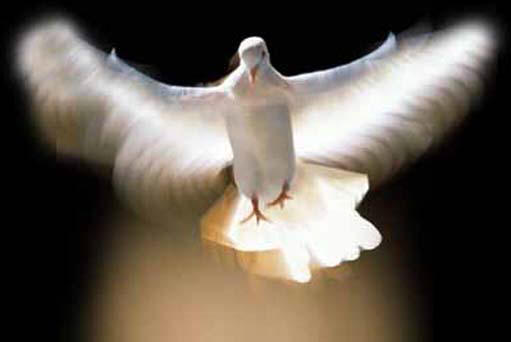
dove (2)This is Easter Monday. We have the risen Christ.

So, does he live in our hearts and minds?  And if He doesn’t, what does?

Maybe Lent did nothing for us. Maybe we didn’t find ourselves acting any differently.

Maybe our hearts are hoarding the same old and tiresome sins.

We are not to worry. We can still change. We have the risen Christ. We have God within us.  And sometimes we only need to shut up and listen to Him.  Second chances?  Or third, or fourth? We can believe it!

A Prayer to the Holy Spirit

Come, Holy Spirit,
fill my heart with Your holy gifts.

Let my weakness be penetrated with Your strength this very day
that I may fulfill all the duties of my state conscientiously,
that I may do what is right and just.

Let my charity be such as to offend no one,
and hurt no one’s feelings;
so generous as to pardon sincerely any wrong done to me.

Assist me, O Holy Spirit,
in all my trials of life,
enlighten me in my ignorance,
advise me in my doubts,
strengthen me in my weakness,
help me in all my needs,
protect me in temptations
and console me in afflictions.

Graciously hear me, O Holy Spirit,
and pour Your light into my heart,
my soul, and my mind.

Assist me to live a holy life
and to grow in goodness and grace.

Amen.

Good Friday

Posted: April 18, 2014 in World On The Edge

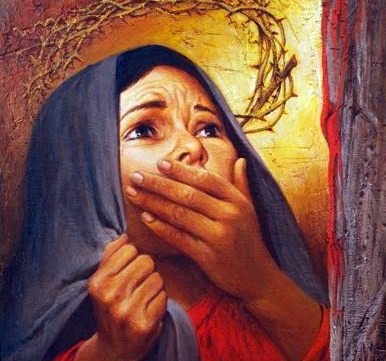
mary-at-the-cross (2)“From the earliest days of Christianity, no Mass has been celebrated on Good Friday; instead, the Church celebrates a special liturgy in which the account of the Passion according to the Gospel of John is read, a series of intercessory prayers (prayers for special intentions) are offered, and the faithful venerate the Cross by coming forward and kissing it. The Good Friday liturgy concludes with the distribution of Holy Communion. Since there was no Mass, Hosts that were reserved from the Mass of the Lord’s Supper on Holy Thursday are distributed instead.

The service is particularly solemn; the organ is not played, and all vestments are red or (in the Traditional Latin Mass) black.

Since the date of Good Friday is dependent on the date of Easter, it changes from year to year.

Fasting and Abstinence:

Good Friday is a day of strict fasting and abstinence. Catholics over the age of 18 and under the age of 60 are required to fast, which means that they can eat only one complete meal and two smaller ones during the day, with no food in between. Catholics who are over the age of 14 are required to refrain from eating any meat, or any food made with meat, on Good Friday.” –Catholicism, About.com

Holy Thursday

Posted: April 17, 2014 in World On The Edge

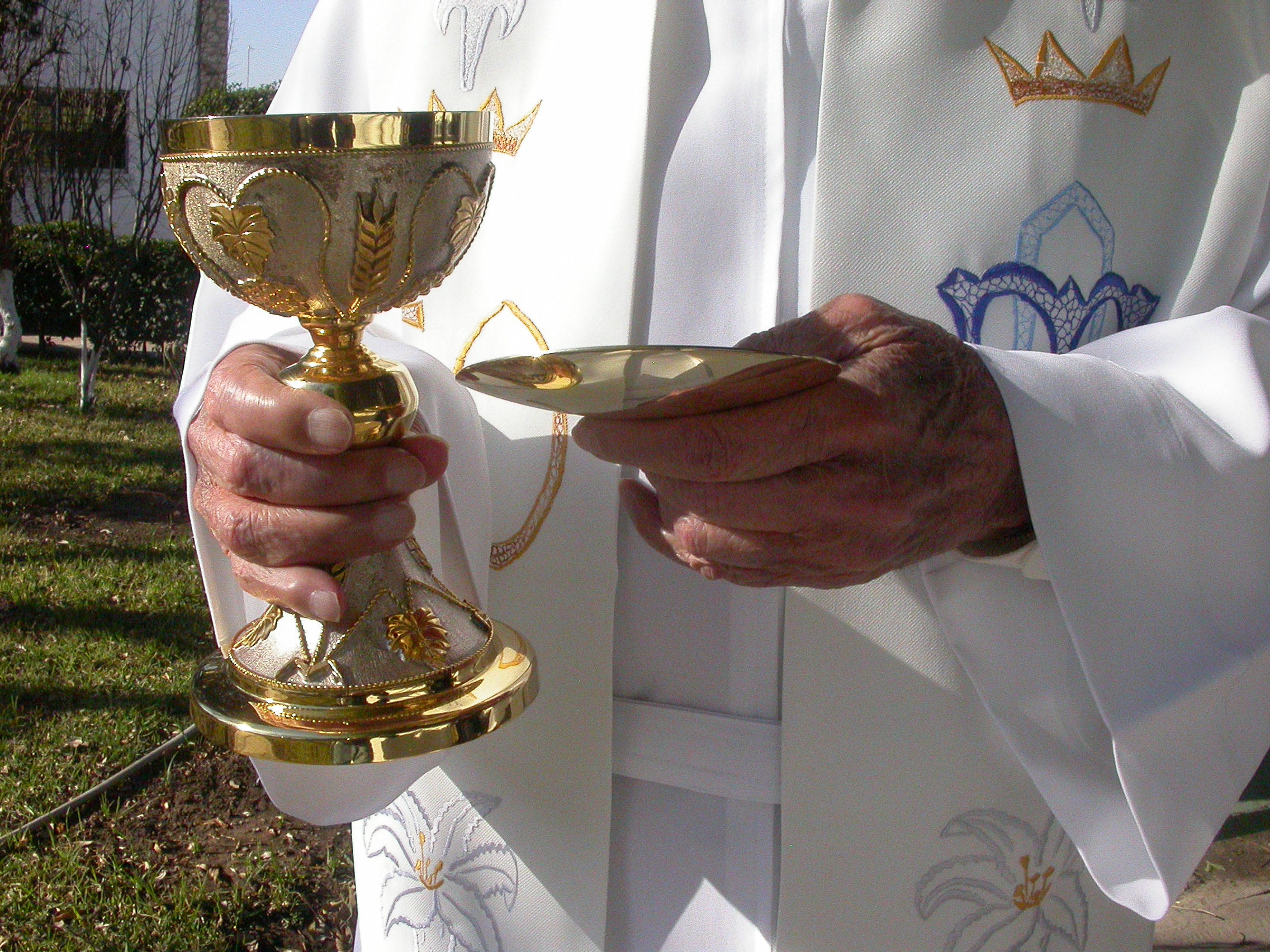
file1081253168589“For Catholics, HOLY THURSDAY is the most complex and profound of all religious observances, saving only the Easter Vigil. It celebrates both the institution by Christ himself of the Eucharist and of the institution of the sacerdotal priesthood (as distinct from the ‘priesthood of all believers’) for in this, His last supper with the disciples, a celebration of Passover, He is the self-offered Passover Victim, and every ordained priest to this day presents this same sacrifice, by Christ’s authority and command, in exactly the same way. The Last Supper was also Christ’s farewell to His assembled disciples, some of whom would betray, desert or deny Him before the sun rose again.

On Holy Thursday there is a special Mass in Cathedral Churches, attended by as many priests of the diocese as can attend, because it is a solemn observance of Christ’s institution of the priesthood. At this ‘Chrism Mass’ the bishop blesses the Oil of Chrism used for Baptism and Confirmation. The bishop may wash the feet of twelve of the priests, to symbolize Christ’s washing the feet of his Apostles, the first priests.

The Holy Thursday liturgy, celebrated in the evening because Passover began at sundown, also shows both the worth God ascribes to the humility of service, and the need for cleansing with water (a symbol of baptism) in the Mandatum, or washing in Jesus’ washing the feet of His disciples, and in the priest’s stripping and washing of the altar. Cleansing, in fact, gave this day of Holy Week the name Maundy Thursday.

The action of the Church on this night also witnesses to the Church’s esteem for Christ’s Body present in the consecrated Host in the Adoration of the Blessed Sacrament, carried in solemn procession to the flower-bedecked Altar of Repose, where it will remain ‘entombed’ until the communion service on Good Friday. No Mass will be celebrated again in the Church until the Easter Vigil proclaims the Resurrection.

And finally, there is the Adoration of the Blessed Sacrament by the people during the night, just as the disciples stayed with the Lord during His agony on the Mount of Olives before the betrayal by Judas.

There is such an abundance of symbolism in the solemn celebration of the events of Holy Thursday layer upon layer, in fact that we can no more than hint at it in these few words. For many centuries, the Last Supper of Our Lord has inspired great works of art and literature, such as the glorious stained glass window in Chartres cathedral and Leonardo’s ever popular (and much imitated) Last Supper in the 16th century.”  Catholic Online