Most of our every day life, we act like children, worried about physical things like appearances. If only we could realize that our everyday life is our spiritual life, from the moment we wake until the moment we lay our heads on the pillow at night. Everything we do matters. Every person we meet is our brother or sister. Every situation we deal with is an opportunity for us to show what we are made of–and who made us.
Our spirit is the human element which gives us the ability to have an intimate relationship with God. Our spirit is the immaterial part of ourselves that connects with God, who Himself is spirit. And it is what gives us our likeness to Him. Also, it is our spirit, given by God, that reveals truth and enables us to worship God appropriately.
We always have God’s spirit, (the capability to act Godly) but we may not always show spirituality.( actual acts of Godliness)
We didn’t have anything to do with our own creation. We had no choice whether we were born or not. That’s interesting in itself–why were we born into this place, at this time? There must be a reason.
If our physical life is finite, but our spiritual life is everlasting, then the reason for our being born into this time and place would have to do with our spirituality—we are expected to do something–here, and now.
We’re expected to see God as an Everyday God, not just a Sometimes on Sunday God.
With such instability in our world today, we may be searching for perspective. Consider first, perspective in Art.
Perspective drawings have a horizon line, which is often implied. This line, directly opposite the viewer’s eye, represents objects infinitely far away. They have shrunk, in the distance, to the infinitesimal thickness of a line named after the Earth’s horizon.
In a perspective drawing, the scene includes parallel lines that have one or more vanishing points. All lines parallel with the viewer’s line of sight recede to the horizon towards this vanishing point. This is the standard “receding railroad tracks” phenomenon.
But this line is seen not only in Art, but also in Philosophy–the study of the fundamental nature of knowledge, reality, and existence.
The French philosopher and Jesuit priest, Pierre Teilhard de Chardin, refers to it as The Omega Point, and thought of it as a cone–one that we are all rising through to its apex–Christ. He clarifies it like this: “Remain true to yourself, but move ever upward toward greater consciousness and greater love! At the summit you will find yourselves united with all those who, from every direction, have made the same ascent. For everything that rises must converge.” (Flannery O’Connor fans will recall this as the title of her last short story collection, influenced by the philosophy of de Chardin).
“In a Universe of “Conical” structure Christ has a place (the apex!) ready for Him to fill, when His Spirit can radiate through all the centuries and all beings; and because of the genetic links running through all the levels of Time and Space between the elements of a convergent world, the Christ-influence, far from being restricted to the mysterious zones of “grace,” spreads and penetrates throughout the entire mass of Nature in movement. In such a world Christ cannot sanctify the Spirit without (as the Greek Fathers intuitively perceived) uplifting and saving the totality of Matter. Christ becomes truly universal to the full extent of Christian needs, and in conformity with the deepest aspirations of our age the Cross becomes the Symbol, the Way, the very Act of progress…..”
I will pause the quote here–because this speaks to me–in a philosophical way– as an explanation of why there is suffering in our God-created world, something so hard for a human being to accept!
But de Chardin continues…”Within a Universe of convergent structure the only possible way in which an element can draw closer to its neighboring elements is by tightening the cone. In such an order of things no man can love his neighbor without drawing nearer to God and, of course, reciprocally (but this we knew already). But it is also impossible (this is newer to us) to love either God or our neighbor without assisting the progress, in its physical entirety, of the terrestrial synthesis of the spirit: since it is precisely the progress of this synthesis which enables us to draw closer together among ourselves, while at the same time it raises us toward God.”
Another pause, because I see in this a value for suffering.
de Chardin, continuing again…”Because we love, and in order that we may love even more, we find ourselves happily and especially compelled to participate in all the endeavors, all the anxieties, all the aspirations and also all the affections of the earth….”
As a child, my grandmother –who lived to be nearly one hundred years old– never failed to comment on the pain of my skinned knees, the loss of a boyfriend, my less than good grade, or any of my youthful disappointments Her words were always. “Offer it up.” I had no real idea what she was talking about until I reached adulthood and went through some very trying and tearful times. Her words were the same, with a little added on: “Offer it up. Suffering has a value.”
But because we are human, our physical selves find that hard to accept. So I think we have to be philosophical about it. We have to have a perspective. We have to raise our minds to the intangible to come to any idea of why suffering?
“St. Cyril of Jerusalem, in instructing catechumens, wrote: The dragon sits by the side of the road, watching those who pass. Beware lest he devour you. We go to the Father of Souls, but it is necessary to pass by the dragon. No matter what form the dragon may take, it is of this mysterious passage past him, or into his jaws, that stories of any depth will always be concerned to tell, and this being the case, it requires considerable courage at any time, in any country, not to turn away from the storyteller.” (Flannery O’Connor, Mystery and Manners: Occasional Prose)
Our personal dragons never really leave us. They hover very close to the things we desire, waiting to turn us in harmful directions. So often, and in various ways–through people, or events– we are warned to beware of them, but just as often, we set the warnings…
There are times when we’re young that we are also confident. Someone will ask, “What do you want to be when you grow up?” And we can give a quick answer. But as we grow, things are not so clear as when we were children. Life gets complicated because we have more and more responsibility–for our own lives, and the lives of those in our care.
We may feel lost. We may not be sure where we’re going anymore. We may not even have a direction in mind. We look around and think we see everyone else in a situation we’d like to be in, too; but we’re just not there–and don’t know if we’ll ever be.
We can feel pretty depressed in times like these. We can feel very alone and unimportant.
Then something happens.
No, we don’t win the lottery.
The something that happens may not seem profitable at the time. It may not be fun. It may be an event that shatters us physically or emotionally–a disease, a betrayal, the loss of a job, or the death of someone we love. Of course, we don’t want to suffer through it. We pray that God will take it all away, knowing in our hearts that He may have something else in mind. Then, as He always will, God gives us the strength to go on. Time passes and we are able to contemplate what has happened to us with a steadier mind and even find that some good has come out of our awful event. We may see ourselves changed in ways we needed to change. We may even have become a better person, the person God always meant us to be.
When raising your children, have you ever practiced what is called Tough Love?
This might come about if they want something badly, but you know it isn’t good for them and so refuse their request. Of course, a child may pitch a fit, cry, stomp, scream that you are being unreasonable. He or she might even say you don’t love them–because if you did, you’d give them what they want.
But there are situations when we know what a child does not know. We are experienced enough to see that a certain thing or situation will harm them. And it’s precisely because we Do love them that we refuse–even when we know that our refusal will cause them pain.
As Christians who pray, we adults do not always receive what we pray for. How do we handle it? Do we pitch a fit, cry, stomp, scream that God is being unreasonable. Do we lose faith that He loves us? Sometimes we do.
Maybe we’ve lost someone dear to us, or are fired from a job. or maybe a huge tragedy out of our control comes upon us as a people–hurricanes, earthquakes, floods, and war? It would seem, then, that God is forcing us to our knees.
Can we believe that all this comes from a God who loves us as a parent?
The answer is difficult. Just as a child questions her parent’s reasoning, we question God’s reasoning. OR at the very least, we wonder about God’s intent.
A wonderful priest I’ve known for many years wouldn’t venture an answer as to why awful things happen to people. “If you want to know why human beings suffer, don’t ask me–ask God,” he said.
So the question goes unanswered because for a human being to know the reasoning of God can be compared to a grasshopper attempting to know the reasoning of a human being. It cannot be done. Yet what we often see happening is that uncontrollable tragedies, like those mentioned above, have an ability to pull people together. People stand together, and pray together, in the face of great disasters.
So, in situations of suffering when it seems God has brought us to our knees, what should we do? I think we trust that God loves us as a parent, and that because of that great love, He will give us what we need to get through, to get up, and even to become better people.
Some of the happiest people, I think, are those who accept life as it is. They look at the good things around them with appreciation. They let go of the less than ‘good’ things with the idea that they learned something from them. They do not walk backward toward past hurts. Of course, this is hard to do.
Many of us are disposed to holding grudges about what he or she did to me. We can’t let it go. We have to have some recompense–to balance things, we say. We let the ghost of yesterday take over today. And some of us allow that vindictive ghost to run our lives.
This will not bring harmony to family life.
Pope Francis questioned pilgrims about the harmony of their home lives at the Sunday Mass held on October 27, 2013, during the “Day for the Family” in Rome. “I would like to ask a question today. Everyone – how will you carry joy home in your heart? How’s the joy in your home? How’s the joy in your family?”
What is our answer to his question? Harmony denotes peace. Holding a grudge is hardly peaceful. Real joy comes when we accept that not every one has our best interests at heart, but that some do. And shouldn’t we focus on the ones who do, rather than the ones who didn’t?
What he or she did to me is in the past. No one can change the past.We have only the Present. And we can most assuredly make our Present, and possibly our Future, worse when we concentrate on a grudge. We may even destroy what is good in the here and now by our vindictiveness.
So let’s turn our backs on those ghosts. Let’s look around to those family and friends who bring us real joy, and concentrate on them. Then, I think we’ll be able to see ourselves in the Present. We’ll see ourselves as ‘doing just fine.’
For the lady involved, one of the first rules of ballroom dancing is: let your partner lead.
Oh, is that hard to do for me! I like to be in control. I like to be in charge. I think it comes from having been the mother of five, as well as a business owner for a good portion of my life.
But I’ve come to see that always being in control does not always work.
A few years back, I was in charge of driving one of my daughters to college at Belmont Abbey in North Carolina. I had to drive through Atlanta, always a fearful drive to me. In addition, two of my younger children were with me, making noise, causing so much confusion that I had trouble following the signs. I ordered them to behave. I ordered them to be quiet. Oh yes, I yelled out all the consequences they would face!
Then, in the busy traffic, I approached an overhead aqueduct with a scrawl of words in black paint: JESUS IS IN CONTROL. How happy I was for that reminder!
Because Jesus is in control.
We don’t need to lead. He will do it.
All we need to do is relax in His arms.
With no more yelling, I made it through Atlanta. I made it to the college.
I’ve made it through much more difficult situations over the years.
I’ve made it with the help of Jesus, the controlling partner in the dance of my life.
Struggle is the fire that hardens the clay of our lives and turns an earthen vessel into something altogether unearthly.
Struggle can produce people who are out of the ordinary, simply because they have had to work hard.
Some of the most commended men and women in history came from a personal struggle with poverty, or loneliness, or a physical setback, and more.
But often, we parents, don’t like to see our children struggle. We want to relieve them of difficulty. We like to ‘fix’ them. We want to save them from anything that hurts–even if they’ve concocted their own unsavory situation.
We should let them know we are there for them. But I think there are times when we shouldn’t be too quick to ‘save’ them. We should allow them to ‘save’ themselves, to strengthen their wings from within.
The moth in a cocoon struggles to get out of it, and by doing so, it grows stronger—strong enough to fly completely away from the cocoon that once tied and bound it.
And there are many children who grow up in extremely difficult circumstances, then struggle to get out, and eventually fly away, too, just like the butterfly.
My short story collection, Birds of a Feather, published by Wiseblood Books, is now available on Kindle as well as paperback.
Birds of a Feather is all about broken people.
Some of the characters don’t realize it at first. They are the ones who won’t see themselves as they really are.
Others are shattered, or left behind, by someone they’ve loved. But then, as in life, something changes for them, or more specifically in them. Some of the characters, but not all of them, recognize an offer of healing. The recognition comes when GRACE is offered.
God’s grace is infinitely available. We only have to want it, to take advantage of it. We only have to trust in Him. We only have to turn around and see Him behind us, possibly in the face and actions of a caring human being that He’s called to help us.
Our lives will change then; maybe in ways we never imagined, or maybe in the way we’ve prayed for. Whatever–we will be transformed.
Can we think of a time in our lives when we were so down, so miserable, that we couldn’t put one foot in front of the other? Grace is very present in these circumstances. It is a ‘waiting’ grace, waiting for us to take it.
Maybe we have to admit our weaknesses. Maybe we have to give up what is dragging us down. Maybe we need to dig deeper for courage, or patience with others, or let go of our anger, or forgive another–or maybe we just ignore its presence.
But we should never imagine that God is not present. Instead, we should imagine ourselves reaching out to Him, to realize that being broken at a given moment does not mean being broken forever.
Photo by Carmemlucia, 2005, MorgueFile.com[/caption]
Order discovered is not merely a sign that there is an intellect in the one who has made the discovery; it is a sign that there is an intellect in the one who has made the ordered being.—Fr. Arnold Benedetto, S.J., “ Fundamentals in the Philosophy of God.”
Order in the universe is proclaimed every time the revolution of the earth about its axis causes the phenomena of day and night. Order is manifested by the earth’s travels in its annual circuit around the sun, with that journey causing seasons of summer autumn winter spring, that causing the accompanying phenomena of growth, decline, decay , and regeneration. The miracle of photosynthesis, the insect world, and the animal world, with each specimen instinctively knowing what it particularly takes to survive; all amazingly ordered. And finally, man.
Think of the development of an embryo, and before that, the organs of reproduction in male and female, created perfectly, one for the other. And how about the human body? What could be more orderly than an individual cell, or an organ such as the heart, or the eyes and ears that record sight and sound?
It is a fact that human beings can detect this order through human intelligence, and marvel at the magnitude of it. How can it not prove the existence of God?
 Most of our every day life, we act like children, worried about physical things like appearances. If only we could realize that our everyday life is our spiritual life, from the moment we wake until the moment we lay our heads on the pillow at night. Everything we do matters. Every person we meet is our brother or sister. Every situation we deal with is an opportunity for us to show what we are made of–and who made us.





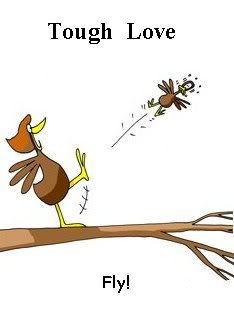


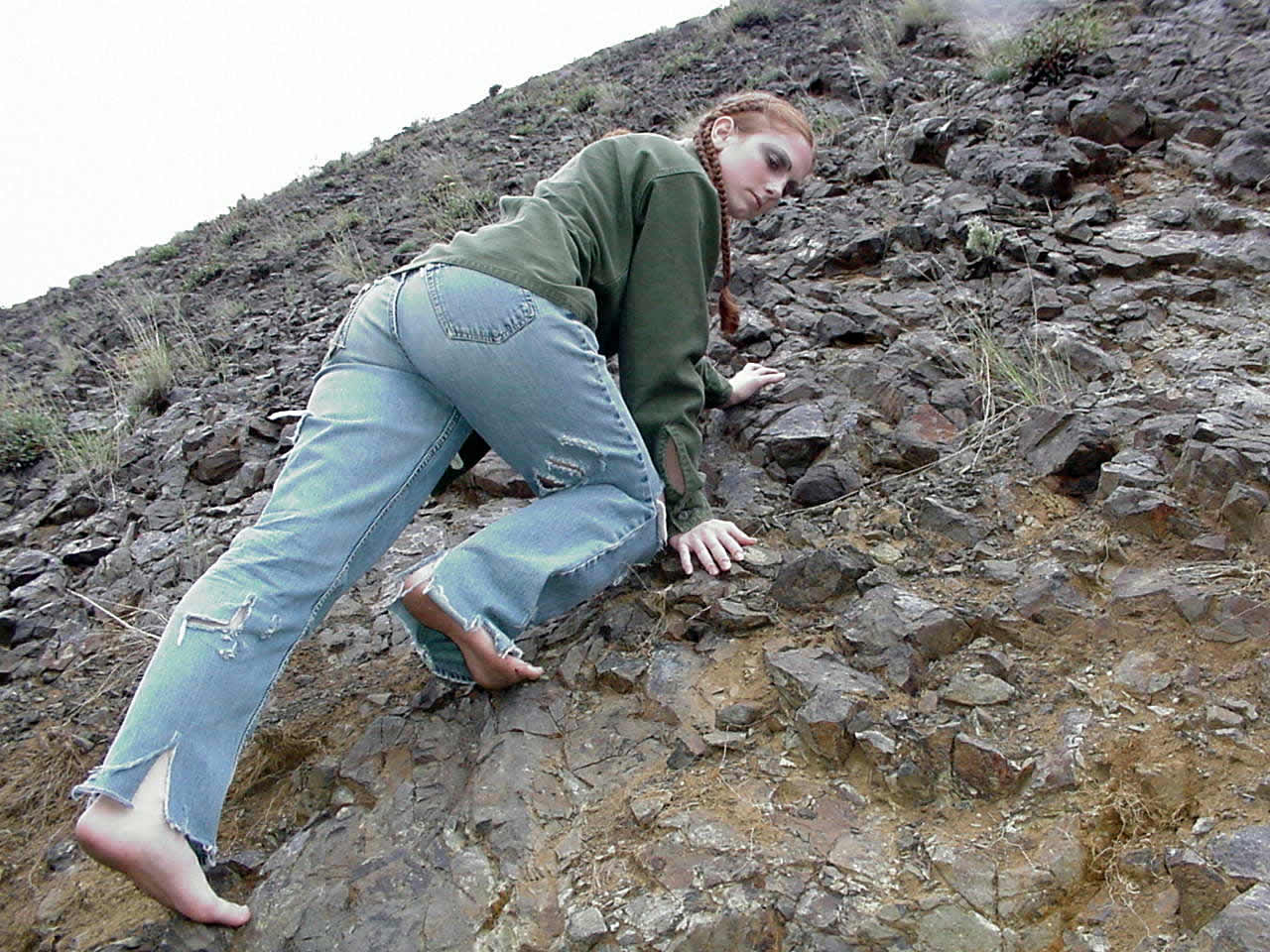


 Photo by Carmemlucia, 2005, MorgueFile.com[/caption]
 Translating a World on the Edge