Author Archive

Most of us have seen abandoned houses on country roads and city streets. There is something tragic about those unkempt places, those buildings that surely still hold the memories of people who once lived there, yet now, are no longer physically connected.

And because there is no physical connection, and the place is left alone, it falls into disrepair.

It’s the same with people left alone.

The most terrible poverty is loneliness, and the feeling of being unloved.–Mother Theresa

In fact, did you know that loneliness can kill you?

Emotional isolation is ranked as high a risk factor for mortality as smoking. A partial list of the physical diseases thought to be caused or made worse by loneliness would include Alzheimer’s, obesity, diabetes, high blood pressure, heart disease, neurodegenerative diseases, and even cancer—tumors can metastasize faster in lonely people.

“Real loneliness is overwhelmingly painful, disintegrative, and paralyzing. It represents a blocking of the fundamental need for personal intimacy, and it originates in pathological object relations in infancy and early childhood. Psychotherapeutically it is difficult to discern real loneliness because the patient cannot communicate it verbally and is frequently unaware of it, and because the more prominent symptoms of hostility and anxiety mask it.”– Psychiatry. XXII, 1959: Loneliness. Frieda Fromm-Reichmann. Pp. 1-16.. Psychoanal Q., 28:572-573.

Personal intimacy is the key here. A person can be in the middle of many people, but without a connection to any one of them, he can feel lonely.

Lonely house, lonely me
Funny with so many neighbors
How lonesome you can be

——Langston Hughes lyrics, Street Scene

Are there people in our lives who need us, need our care and intimacy, yet we’re not giving it to them? Why? Are we too busy, too involved with social media? There maybe be someone right in front of us, maybe someone in our own family, but we don’t see them because our eyes are always on our phones. Sad.

Historical. Southern. Literary.

Two Novels

about the nuisances of love,

and the difficulties of forgiveness.

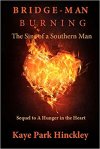
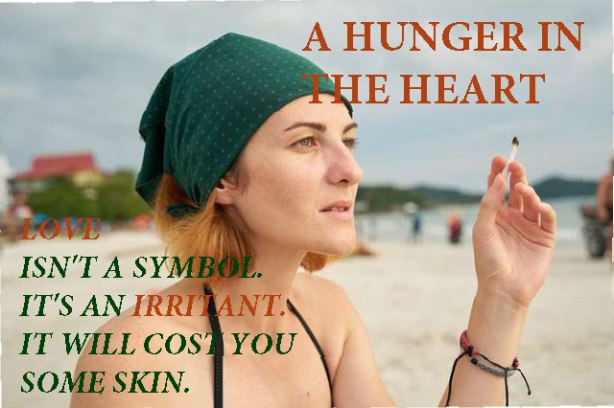
A Hunger in Heart, set in 1955 in fictional Gator Town, Florida, was my debut novel and meant to be the first of two books. Now it’s sequel, Bridge-Man Burning: The Sins of a Southern Man, is finally published. Though each can be enjoyed separately, they go hand-in-hand.

A HUNGER IN THE HEART

Coleman Puttman Bridgeman III is hurt by the love he hungers for. As a boy, he must come to terms with the consequences World War II has had on his family. His shell-shocked father, a decorated hero, stages continual games of war with Coleman against an enemy that only his father can see, while his alcoholic, mother blames Putt’s misfortune–as well as her own afflictions–on the black soldier whose life her husband saved. When Putt is accused of a scandalous crime, the boy’s manipulative grandfather holds Coleman’s mother responsible, bringing about a bitter relationship between mother and son that lasts for years. Coleman’s only affection is for the steadfast gardener, his grandfather’s right-hand man–until a beautiful and sensitive girl moves in next door with her own dysfunctional family. Now a teenager, Coleman falls hard for the girl, his first experience with genuine love. But will he allow her to help him find courage enough to rise above his traumatic childhood and take a step toward forgiveness?

BRIDGE-MAN BURNING: THE SINS OF A SOUTHERN MAN

Coleman leaves his hometown behind, yet carries with him the family blood that runs through his veins and voices of the past that run through his head. In marriage, business and the Vietnam War, Coleman faces life’s most powerful battles where he must confront the weakest, and deepest, parts of himself. Honesty versus dishonesty, faithfulness versus betrayal, and courage versus cowardice, all bring him to the brink of destruction, causing him to question what sort of businessman he truly is, and most especially, what kind of husband he has become. Will he have what it takes to save his marriage to a wife he has betrayed–and yet, sincerely loves? Or will he lose her forever?

Please Share. AND I will be most grateful for your rating or reviews! Thank you!


I am sooo excited to announce this news!!!

THE WIND THAT SHAKES THE CORN: Memoirs of a Scots Irish Woman has WON the 2018 Independent Press Award for Religious Fiction!

The sequel to A Hunger in the Heart is waiting for ratings and/or reviews.

aworldontheedge.com

Posted: May 11, 2018 in World On The Edge

Happy Mother’s Day on Sunday! And congratulations to those of you who are mothers, and to the mothers you had.

If you are a mother, you know that Love–as in “Mama’s Love”–is not a noun with a possessive adjective preceding it. It’s an action, one that lasts a lifetime. I know this from loving my own children. But I also know it from the love of my mother.

I was a shy child, always I wanted my hand in the hand of my mother. And her hand was always there. Sometimes not physically–after all, I had to grow up, be courageous, lose my timidity. She helped me do that. She saw that I loved to draw and gave me art lessons. Everything I drew or painted, she was proud of and showed it off–especially to her Bridge Club, a group of ladies who ended up playing bridge together, once a week for fifty years!

But still, the idea of her hand in mine, and the knowledge she would be there for me, no matter what, was pasted into my thoughts. It gave me security. SHE gave me security. She gave me confidence in myself.

And she prayed for me, and for our family and friends. I remember kneeling around her bed at night for the rosary. Many times I wanted to do something else. For those who are not Catholic, the five decades of the rosary usually end with a prayer to the Blessed Mother, “Hail Holy Queen.” But not for my mother! She went on, with prayers to St. Jude for the sick and hopeless, prayers to St. Michael for our protection, prayers to the Holy Spirit that we might have courage, and on and on. And me? I used to pray for the phone to ring!

My mother was a beautiful woman—really. She received many compliments for that, but she knew people, too. She knew when words were just show, and when they were sincere. “People will sometimes tell you what they think you want to hear. Use your head to determine the truth.” Not to be taken in by everything I read or heard was another thing she passed to me.

My mother had an ability to read people. And sometimes I thought she read them a little too harshly. She was honestly compassionate, but occasionally, she dug her heels in when it came to who I was allowed to be around, or date. My mother had standards, and in her mind, people would either accept her principles, or –should I say?–depart from her company—because she changed her deepest principles for no one. One more characteristic she set into me.

As far as her Faith–it was simple. Simple, yet astounding at times. She grew up Catholic in the Protestant South, one of only three or four Catholics in her high school. She never denied it. She never shrank from it around her Protestant, and Jewish, friends–and she had many, caring about each one. But it was her church she loved and was faithful to, the same little white church I grew up in. One more precious gift–my Faith. So, thank you, Mama, for loving me. You were and always will be, my Rock.

A short time before my mother died, she asked me a question most aging parents would like to know the answer to. She asked about my childhood, wondering what I felt about it. I replied that I’d had a wonderful childhood, thanks to my parents and grandparents. And that was true. But my mother looked at me as she always did when she had something more emphatic in mind. She was good at summing things up, so she zeroed in on what she’d really hoped to hear. “Well, Kaye,” she said. “That’s because you always knew you were loved.”

My mother often spoke in titles. By that, I mean she expressed what was truly important. In this case it was the security found in being loved.

Love is the thing we all want. And it is the basis for feeling secure. In a family, love between the parents produces love in the children. If it is not there, insecurity is the result and is readily seen today in too many children whose home life is askew.  If a child’s foundation is trembling beneath him, the child cannot keep balance and is in danger of a fall into who knows what.  So, what can be done?

My father frequently quoted this: “The best thing a father can do for his children is to love their mother.” I believe this sincerely. So, how does a man genuinely love his wife? Respect, honesty, loyalty, trust, all have a lot to do with love. Aside from God, a husband should treat his wife as the most important person in his life. And of course, the same goes for a wife. Her husband is the most important person in her life as well.  Children who see this kind of love in their parents feel naturally secure, are blessed by it, and better for it no matter the trials they may later face. 

Love is, of course, a verb. An action word, with its fence built around all other virtues. And there are seven virtues. In Catholicism, the first three are the theological virtues of Faith, Hope, and Love–Love being the virtue that gives the others traction.

The four cardinal virtues are Prudence, Justice, Fortitude and Temperance. Prudence heads the list for parents, warding away betrayal, anger, self-centeredness, and a lack of forgiveness. Prudence gives all people, especially parents, the ability to use their powers of reason to see what is good and what is evil, and the courage to keep our children safe from bad influences–in our family, in the outside world, and sometimes even from the child himself. Our children need to be shown that they are always loved, by actions that may be difficult for us yet necessary for them. This is security for a child.

When a child (or an adult for that matter) lacks safety/security in some area, he/she often goes astray. But a strong foundation of self-less parental love, like the example of God’s love for us, can bring him home. And as the mother of five, I know for a fact that it can happen just that way.

Another Review from NetGalley.
Thank you, Educator 269454!

“The Wind That Shakes the Corn: Memoirs of a Scots Irish Woman” is a historical fiction read based upon the life of Eleanor Dugan Parke, eighth great grandmother of author Kaye Park Hinckley. The story that unfolds combines extensive research, family stories handed down for generations as well as fictional embellishments. Eleanor (Nell) was four years old when the English hung her ma and the priest ma was harboring. Why were blameless people killed in 1700 Ireland? The English Crown ruled with an iron fist. The Irish had no rights. They could not own property, vote or attend mass. The Crown sent Presbyterian gentry from Scotland to control Irish land.

Using first person narrative, Nell describes squalid farm life where sheep died from disease and rents were often raised. Nell’s life was one of constant turmoil. We travel with Nell as the English seemingly try to “cleanse” Ireland. On Nell’s wedding night to Arthur Parke, many Irish Catholic and Scots Presbyterian men are killed while women and children are forced aboard ships bound for St. Kitts to work a ten year term of indenture. They experience “the vandalism of dignity”. The worst is yet to come. Nell promised ma there would be retribution doled out to the English. She felt an emptiness, a void that could never be filled. Would forgiveness even be possible?

In “The Wind That Shakes the Corn” we follow Nell through the eighteenth century as she continues her journey eventually arriving in America during the time leading up to the Revolutionary War. Different types of oppression occur in the new land as the colonists seek freedom from English rule.

Author Hinckley has written a novel brimming with many historical facts, however, this reader would not call the tome a memoir. The novel is arguably heavily based upon her eighth great grandmother who lived for ninety nine years. Imaginings include chance encounters, coincidences that seem highly unlikely. That said, this reader found the tome to be a very enjoyable 4 star read.

Thank you Prytania Publishing and Net Galley for the opportunity to read and review “The Wind That Shakes the Corn”.

 


Too Many Troubles???

Posted: May 2, 2018 in World On The Edge

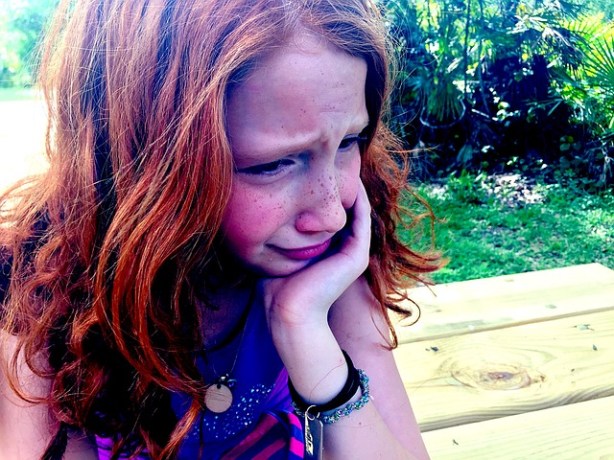
troubled girl-3047297_640

Trouble is part of the human condition. It is always very personal and yet, universal. Trouble has no skin color, no age, no nationality. It is part of life. There is no one in human history who hasn’t been beset by trouble.

But that fact doesn’t make it easier on those who struggle today. We may think our troubles are too big to overcome, even bigger than anyone else’s. If so, we need to remember–as my mother told her own struggling, and very verbal, daughter: There are plenty of people in the world with troubles greater than yours. You’ll feel better if you think about that.

Still, our troubles deeply affect us; mentally, physically, and spiritually.

At times we may feel like a fragile leaf taken up by the wind, with no control over where we’re going. And we worry, we obsess. We may shake, or sweat, crying out, “What will happen to me?”

Maybe we’re suffering from some disease. Maybe we’re despondent over the loss of a loved one. Or we may have deliberately hurt someone else, and while we regret it, what we’ve done eats away at us.

We may have committed an offense we don’t think we can be forgiven for. Or we may be afraid of the punishment we’ll receive from that offense. All these happenings can alter us until we barely respond to others in kind ways, because there’s too much darkness around us to recognize any sort of joy.

But life itself is good. Life can be affirming even in our sorrow, pain, or distress.

The idea that Life is good doesn’t come to us from something outside of us. It comes from inside us, if we allow it to. It comes from creating in our hearts an attitude of Trust–no matter who has hurt us, or who we’ve lost, no matter how terrible we think we’ve been, and no matter how weak our bodies have become.

Trust means a lack of worry about tomorrow. Trust means loving the moment we are living in. Trust means that even if the moment we love doesn’t last, our Trust, our Faith, our Hope will last.

Can we do this alone? Can we stoke the fire inside us and carry it forward without someone else? Don’t we need a hand to hold, the hand of someone who truly loves us?

Oh, you are alone? And nobody loves you?

Don’t fall for that.

We are never alone–not alone on the top of a mountain of happiness and good fortune, and not alone at the bottom of a sea of sorrow and despair.

The One who created us loves us and never leaves us. We are always in His mind, and we can trust that His hand is always extended to us.

All we need do is ask for the touch of His hand. And then, reach out and take it.