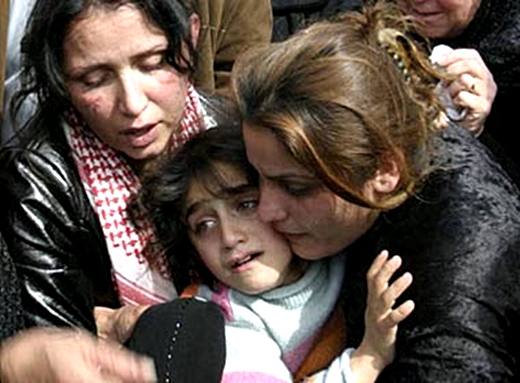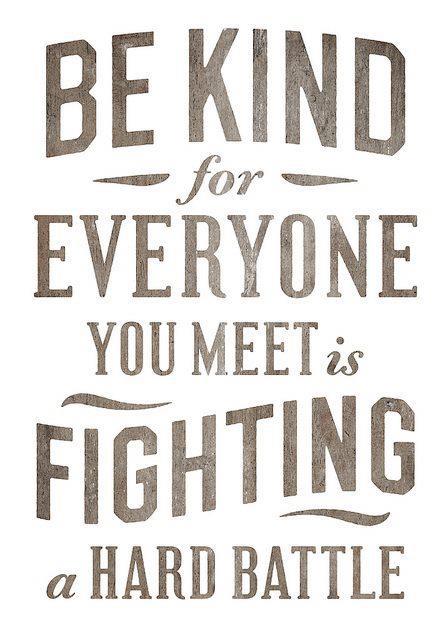
eyes of child

Is this statement True or False? Childish behavior is the opposite of adult behavior.

Well … do we ever fully let go of our childhood experiences—joyful or sorrowful? Either we expose them for all to see and hear, or we hide hide them so no one sees or hears about them. Regardless, our personal childhood experiences color nearly everything we do as adults.

The older I become, the more I’m assured of this—that our childhood years have created a blueprint for the rest of our lives. Sometimes a good blueprint, sometimes not so good.

This is precisely why childhood itself is so important—how and where we spend it,  who was there, and most especially, what were the  attitudes of our parents? More than likely–unless there’s a conscious effort— we express those same attitudes with our own children.

We not only look like our parents, but we also tend to think like them—unless something causes us to rebel—and many do rebel, swearing not to be a clone of either of their parents..

Still, we may later find ourselves like them. We may corner the sheets on bed just like our mother used to do. Or we may have interest in a particular sports team as our father did. Interiorly, we may have learned to solve problems the same as one or the other of our parents.

Because of our parents, we learned empathy for others, or not. We learned selfishness, or not. We put great emphasis on money, or not. We give of ourselves, or not.

As we grow into adults, we often try to forget any sorrows we may have had as children involving our parents, and our peers as well. We may even put aside the joys, too; intending to be ourselves, our own man or woman. Some who have been badly parented have success in consciously doing the opposite with their own children.  But it’s not often any of us get away from the old tapes in our heads as our childhood re-plays. For better or worse, they are there.

The realization that your parents were human, and therefore, imperfect, can be tough to accept. We have a natural tendency to want to protect our parents. We even unconsciously identify with their critical attitudes toward us and often take on their disparaging points of view as our own. This internalized parent is what we refer to as one’s “critical inner voice.” It can feel threatening to separate from the people who we once relied on for care and safety.–Lisa Firestone, Ph.D, Psychology Today

Not all of us have/had mature, loving parents — and no parent is perfect. But even if our earthly parents fail, our heavenly Father never fails. Isaiah assures us, “Can a mother forget her infant, or be without tenderness for the child of her womb? Even should she forget, I will never forget you.” (Isaiah 49:15)

The love of God, Our Father, is constant and unlimited. In the parable of the prodigal son, the father loves his children beyond anything they have earned–the same way He loves us.

So when the blueprint of our earthly parents fail us, and our critical inner voice is heavy to bear, we can turn to the very personal and perfect love of God to become who we were truly born to be

Beauty Is Behind The Scene

Posted: August 14, 2014 in World On The Edge

hdrmergedWe rarely pay attention to the plain and simple things in our world. We notice the flamboyant, the extravagant. Who would not notice a sunset such as this? “Wow! How beautiful!” we might say.
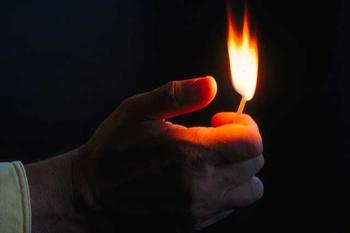
Yet the smallest of particles are responsible for the stunning sunset. You might say they are responsible for its performance. These tiny molecules change the direction of light, causing it to scatter, resulting in the brilliant show of color. The value of the sunset, like the value of a person, is found within. But when we look at either of them, we don’t consider what’s ‘behind the scene.’

In fact, not many want to be ‘behind the scene.’ We are attracted to the flamboyant, to famous people who appear large on the stage of life, such as musicians and actors, and reality shows about so-called ‘real’ people. We fantasize about being like them, without considering their fleeting popularity.

I think this is because we have a very shallow understanding of our world and the crucial place each of us holds in it. We look into the lives of those we mistakenly see as more beautiful or more important, to measure our own lives — which we may consider very small, and not beautiful at all.

So what is truly beautiful?

Elizabeth Kubler-Ross, a Swiss psychiatrist and pioneer in near-death studies, said, “The most beautiful people we have known are those who have known defeat, known suffering, known struggle, known loss, and have found their way out of the depths. These people have an appreciation, a sensitivity, and an understanding of life that fills them with compassion, gentleness, and a deep loving concern. Beautiful people do not just happen.”

The idea of beauty and importance dealt to us by ‘the big screen’ is misleading and short-lived. The beautiful sunset lasts only a while–until the smallest of particles and molecules come together again to bend the light and cause another momentary spectacle. It’s what is inside the sunset that gives it beauty. It’s what is inside us that gives us our beauty, too.

True beauty is often found in what is  not noticed, but nevertheless crucial to the meaning of life itself. So,  I’m taking another look at all flamboyant passing things. I’m taking another look at the fleeting  sunset, and at the people flashed onscreen to us as perfect. I want to consider the more permanent performance of beauty behind those scenes.   Will you join me?


Get Mad??

Posted: August 13, 2014 in World On The Edge

polls_match60013.jpg_4102_164159.jpeg_answer_2_xlargeA three year old boy playing with matches accidentally lets a match fall near the hem of his mother’s living room drapery. But she’s calling him from the kitchen to come eat his dinner.

On his way out, the boy glances at the drapery and sees a tiny smoldering hole, growing wider. Still, mother is calling him to come, “Right now!”

And he’s thinking, “She told me not to play with matches. She’ll be mad.”

So he walks out of the living room, closing the door behind him as if that will get rid of the problem.  

During supper, the boy’s father lays down his fork. “I smell something burning,” he says. Quickly, the boy’s parents  push away from the table and follow the smell to the living room.

Flames are leaping from the drapery, burning out of control and endangering their home. The mother calls 911, but by the time the Fire Department arrives, half the house has burned up.

The three year old wasn’t thinking of the house, or the safety of his parents.  Three year olds rarely think beyond themselves. He was trying to avoid the thing that would immediately affect him–his own discomfort if his mother became angry.

Lighting the match, leaving the room, and finally, not revealing that the living room is on fire–each of these acts has the consequence of expanding danger.

The little boy’s responsibility is lessened because he isn’t mature enough to understand. But we’re adults. We understand that every act we perform has a consequence.

Or do we?

Do we recognize that some dangerous actions have been ignited by our government and have been  allowed to burst into flames that are affecting our freedoms and our country as a whole? Are we leaving the room and simply closing the door behind us to avoid the discomfort of confrontation? Why haven’t  we called it to the attention others? Why haven’t we spoken out against it?

Are we just too busy with ourselves, and like the little boy who burns up his own house, afraid someone might get mad at us?


Are We Aware?

Posted: August 11, 2014 in World On The Edge

protect_iraqi_christiansAre we aware of what’s going on in our world—right now? In Iraq? In Israel and the Gaza Strip? in Syria? On our own border? Where is America’s leadership, and where is the voice of her citizens?

On Sunday, Pope Francis expressed outrage at the violence aimed at religious minorities in Iraq, where fleeing children have died of thirst, and said his emissary to the region would leave Monday. In a strongly worded message during his traditional Sunday blessing, Francis said the news from Iraq “leaves us in disbelief.” He cited “the thousands of people, including Christians, who have been brutally forced from their homes, children who have died from thirst during the escape and women who have been seized.”

The Pope urged the international community to find a political solution “to stop these crimes.” Cardinal Fernando Filoni, the Vatican’s ambassador in Baghdad during the Iraqi war, will travel to Iraq to show solidarity with Christians, among those targeted by Islamic State militants for elimination.

Elimination? These are human beings made in the image and likeness of God.

We may all ask, “What can we do?”

First of all, we have to be aware of what’s going on—right now. We have to sit up and take notice that there is a huge problem with the Islamic State threatening not only  Christians and other religious minorities in Iraq and elsewhere in the Middle East,  but also threatening us— Americans. Because if we ignore it, if we’re too concerned with our everyday lives to make ourselves aware, and if we let that germ of hatred go on as it is now, then its evil–yes, unadulterated evil–will eventually take us down, too.

Whose Life is This?

Posted: August 8, 2014 in World On The Edge

this_is_my_lifeWhen others give us advice we don’t like, we’re sometimes quick to say, “This is my life!” Meaning I’m responsible for myself. But do we really act as if we believe that?

How many of us blame others rather than ourselves when things go wrong with our life? When we do that, we’re not taking responsibility for ourselves; we’re saying something like you should have done something to keep it from happening—you should have been responsible for my life, then this wouldn’t have happened to me.

Making our own mistakes the fault of others is not only whiny, it shows a lack of integrity, dishonesty, and possibly a narcissistic personality.

Narcissists are notorious for placing blame on other people and not on themselves. Even when they clearly and definitely did something wrong, they cannot- and will not- accept responsibility. They almost always deflect the blame elsewhere. Narcissists either ignore their contribution to the situation or insist that the other person (spouse, child, co-worker or etc.) made them do it. Narcissists know right from wrong, they just cannot allow something bad to be their fault. It is another manifestation of their supreme self-centeredness as well as a protection for their fragile ego. It is also a primitive method of avoiding external repercussions.–Alexander Burgemeester

There’s another way to look at the statement “This is my life!” and that is with gratitude for it,  and a desire to polish it to the shine that God intends it to have.

How?

Own what we’ve done. Love others as well as ourselves. Create a space of empathy for others, not demand of others.  Don’t listen to bad-mouthing from someone set on bringing you down. And finally, to see my life as  good, important, valuable, and interwoven in Almighty God’s plan.

http://youtu.be/HjHFmwRh_Ww

223843043950038248_Ma34ntEIA Streetcar Named Desire, by Tennessee Williams, was made into an award-winning movie many years ago. It is still performed annually as a stage play in New Orleans with many vying for the roles, especially the role of Blanche, an aging, down and out prostitute, still hanging onto her dreams of class and propriety.  One of the movie’s most famous lines is the one by Blanche in this video. “I’ve  always depended on the kindness of strangers.”

As children we were told, “Don’t talk to strangers,” We are careful, and rightly so, to tell our children the same, because a stranger might do them harm.

When we’re adults though, it’s a little different. A kind word to someone, even someone we don’t know–even someone like Blanche, can do a lot of good. Sometimes we see a stranger, and our hearts tell us  they need  encouragement. The compassion within us wants to help, if only with a word, and if only momentarily.

We are a compassionate people. Some work with strangers every day, perhaps as a social worker, an EMT, Emergency room doctors and nurses, Police officers, Priests, Preachers, and Nuns.  But it doesn’t have to be our job. Kindness to strangers is actually what God expects of all of us.

What might happen if each of us gave another person more than just smile or a word of encouragement? What if each of us used our God-given talent or trade to really help a person who needs it? Many do. And many bolster their own spirit in the process.

The following video contains portions of another movie called, The Letter Writer. It’s a Christian film, very enjoyable, and makes the point of kindness, even if it does end a bit unrealistically. The movie is about a winning old man who fills his days with writing letters and notes to strangers. He bolsters a distraught teenager’s sagging spirits and helps her learn to help others.

Listen to the words of his letters. Words like these could very well change a life.

It Comes After the Rain

Posted: July 30, 2014 in World On The Edge

Flower-After-the-Rain-Wallpaper

A hard rain is often cleansing.  Roofs of houses, toys left in the yard, pollen-covered driveways and patios are washed by the rain. And then comes the sun.

Think of  the  first rays of sunlight after a hard rain, when  the grass, flowers, crops,  and trees are still wet. Recall how the sunlight falls  upon the leaves and petals, causing them to glisten, and in the process,  dries them.

This is similar to what happens after a tragedy, one we desperately pray will not come, yet it does.

The tragedy may be thrust upon us by another person’s imperfections, or it may have come about from our own transgressions.  Either way, it’s often  a long, long time afterwards that we’re  able to catch our breath and even consider drying our tears, and healing.

But we can trust  that God is waiting  for us to notice Him.  When we turn toward Him and accept His grace, that light will dry our tears, and we can begin to heal.

We often notice grace when we least expect to notice it.  It is always there though, because God is always with us.  But our worries,  busyness, distractions,  addictions, sins, and downright refusal to acknowledge God’s mercy; all get in the way–and may even be at the root of our heartbreaks.

But God can bring good out of the ‘not so good.’  It’s possible for heartbreak and tragedy to bring our best self.

For each person on earth, God will show mercy. We only have to ask for it.  And if we chose  God’s grace, we can come closer and closer to Him, knowing Him better and better, until we’re finally able to say: I am in love with a God who is madly in love with me. So, I am able to trust Him, follow Him, and then surrender my life to Him.

This certainly does not mean  we will have become saints. We will still be flawed human beings,  sometimes  ground in the same old sins. But if we continue to ask, we will  be personally shown what we need to do better.

Psalms 51:10 – Create in me a clean heart, O God; and renew a right spirit within me.

010-gregorian-chant-for-church-and-schoolI’m such an admirer of Gregorian Chant! Those not familiar with it are truly missing an opportunity for a calming solace.

Here’s how it came about. In the three centuries following the death of Saint Benedict, there emerged in the Western Church a marvelously unified tradition of liturgical music known as Gregorian Chant, taking its name from the sixth century Pope Saint Gregory the Great, who did much to promote the use of the chant.

Gregorian Chant conveys the sacred to the secular. “Contrary to the agitating sounds of hip hop, hard rock and heavy metal, Gregorian chant is instead a soothing balm for weary souls and a source of comfort for unsettled hearts. Inspiring and edifying, simple and poignant, this music of paradise slows our racing minds, renews our vigor, and eases the tensions of a harried world. It ethereal quality elevates us from the temporal and transports us to the spiritual.” Judy Keane, The Catholic Exchange

Gregorian chant involves the early Christian liturgical music that originated in medieval times and forms the roots of Western classical music. Consisting solely of melody, the chants are sung unaccompanied and generally by small choral groups–and through the ages have continuously supplied listeners of all circumstances with a soothing sense of solace.

Usually performed by monks, the chant is now being taught in some school programs.  Check out: Gregorian Chant for Church and School By Sister Mary Antonine Goodchild, O.P., Rosary College, River Forest, Illinois (picture above)

“The kind of singing that we do calms the spirit and helps us live in peace with our world and with one another,” says Abbot Philip Lawrence, a scholar of chant who also leads the Monastery of Christ In The Desert – home to an American order of Benedictine monks from Abiquiu, New Mexico. “Chanting has some strange effect on the brain waves according to various studies,” continues Abbot Philip, but this effect is certainly not the Monks of the Desert’s objective; rather their goal, and that of Gregorian chant, notes Abbot Philip, is “to focus on the words rather than the challenge of voice production or sight reading. It is always our hope that our singing will bring others to peace, inner tranquility and an appreciation of beauty. These values can help create a world in which peace and tranquility prevail.”

So, close your eyes and  listen. Enjoy a few moments of peace and tranquility.

writing-messages-on-the-public-wall-that-are-personal_7-annoying-things-people-do-on-facebook

Are there times when you’ve shouted, “Oh, I just want to be somebody else besides me!” Here are a few examples of people who’d like to be somebody else, from something called, “The Experience Project.”

Ever since elementary school I wanted to act and dress up as anything that’s polar opposites of the real me; whatever that is.

I often find myself living in a dream world, imagining I’m someone else. Being anyone is better than being me. In my dream world, I can be loved, and successful – it’s not that easy in real life

I just wanted to be at least “average” if not pretty, and live in a place I love, with nature all around, having a job and a small house. Is that too much to ask from life? After years of trying I am tired and depressed  that I am not living life.

Why Can’t I Be Proud Of Who I Am? I sit in silence asking myself questions like; “how much is enough?”, “at what point will I have accomplished enough to be proud of who I am?”, or “when can I look in a mirror and realize I’m a good person?” I am 35 years old, overweight, and disappointed in myself. I know several aspects of my life are good, such as, my job, my academic success, my twelve year relationship, and there are many others. I feel sad and lonely, longing to find contentment and self acceptance. I desire physical changes, but lack the motivation and inner strength to enact change.

What has happened to cause these very emotional responses? Do we have unrealistic expectations of life, or have we experienced some particular unhappiness or trauma– either imposed upon us by another, or self imposed by our own actions?  Or have we simply forgotten that we are–really and truly– responsible  for ourselves?

Unrealistic expectations, and lack of responsibility for our own lives and actions,  are huge culprits when it comes to our wanting to be someone else.  Unfortunately, the way of our present world is  ‘the bad teacher’ of  both.  We are not encouraged to be ourselves, but something inaccurately called,  better.  Yet each of us is wonderfully made for unique purposes–not necessarily to be the most beautiful, or the richest person.

So, why are we here— as we are?

Are we meant to be self-indulgent? Are we meant  to cause misery and trauma for others? Certainly not. And we’re not meant to cause misery and trauma for ourselves either. But we are guilty of all this.

We are miraculously-made, and therefore complicated,  human beings, each with free will.  We have the ability to choose who we hang around, who and what we see and listen to, but we have to realize that those particular  people and things  can make us or break us.

If we could just take a few minutes–quiet, undistracted minutes–to contemplate  and wonder why we—each person reading this–have been put on earth at this particular time, we might acknowledge what it is in ourselves, and around us,  that needs changing. We might perceive some mission and purpose for our uniqueness . We might quit bellyaching, or blaming those who’ve hurt us. And we might take a step away from what we know in our hearts is wrong, and walk to a shining future. We might just want to be who WE are made to be.

10440811_10152362189957819_2356393420988408435_n

Often we create our own storms,  and then do what the poster says–get upset.

Why? Because the turmoil we created could have been avoided.

Three factors are involved in  the messes that we create for ourselves. The first is  Guilt.

Guilt is an affective state in which we experience conflict at having done something that we believe we should not have done—or conversely, having not done something we believe we should have done. It gives rise to a feeling which does not go away easily. And guilt is driven by conscience.

Conscience is the second factor—though it precedes our actions (if we’re listening to it). Conscience is the part of our minds that makes us aware of our actions as being either morally right or wrong.  And this awareness ought to come before we do anything–always.

Now, that’s  hard due to the many distractions around us. It is surely hard for me. Yet can’t we  make a consistent commitment of even a few seconds of silent questioning before we make decisions? After his conversion to a much more moral life, Saint Augustine advocated a return to one’s conscience and an actual questioning of it.

And what will come from this questioning of ourselves? The third factor: Divine Grace.

Divine grace is a theological term present in many religions. It has been defined as the divine influence which operates in humans to regenerate and sanctify, to inspire virtuous impulses, and to impart strength to endure trial and resist temptation.

Guilt  can turn us around.  Conscience can  deter us next time. But Divine Grace can thoroughly heal and change us if we are open to it. It can turn us from the old, flawed years, and create something  brand new within us.