There are times when I put things off–actually many times when I put things off–things I know I should do. But I talk my self out of doing it for some reason or another. One of the biggest things I put off is cleaning out drawers and closets. If I can squeeze one more item into a drawer, I see it as still ‘workable.’ Sometimes, I do that with my life, too.
But is ‘workable’ what I want? When is it time to turn ‘workable’ into ‘working like a charm?’ And who can do this, except me? And when is the time to do it, except now?
Behold, now is a very acceptable time; behold, now is the day of salvation. 2 Cor 6:2b
Maybe you’ve put things off, too. And maybe those things have to do with your relationship with God.
Most of us want a loving relationship with God, yet we put a lot of “stuff” ahead of our personal attempt to have one.
But we can change that.
We can clean out the closets and drawers of our lives. Get rid of all that makes them ‘unworkable’ by tossing out our old and over-used excuses for keeping what is not genuinely beneficial to us. Even then, we may not have a perfect house (or self) but we will have a house that is ready.
When do we do this?
Well, since tomorrow is always ‘iffy’ for each one of us, Today must be the acceptable time.
What is temptation? The common definition is the desire to perform an action that one may enjoy immediately or in the short term but will probably later regret for various reasons: legal, social, psychological (including feeling guilt), health-related, economic, etc.
In the context of religion, temptation is the inclination to sin. We are all uniquely tempted depending on our personalities, genes, upbringing, environment.
Temptation also describes the coaxing or inducing by a person, other than ourselves, into committing an act that we know is not good for us– the real danger is that this person makes it appear ‘good.’ Smart huh? After all, we wouldn’t choose it if we didn’t think it was good. But of course, this is how we’re misguided.
The best way to avoid temptation is to accept that we will be tempted. Then we have to know weaknesses and honestly admit them. Next, we put on the brakes whenever we’re in a situation that might cause us to fall into the wrong things—— or better yet we really, really try NOT to be in such a situation. If that means excusing ourselves from an event, or an enticing entanglement, then we must DO it.
Remember that what looks good to us after we’ve already made dubious decisions, or when we’re under some influence and not our true selves, may be exactly the wrong thing under normal circumstance.
Temptation is controllable, if we’re honest with ourselves about our weaknesses, and then courageous enough to stay away from people, places, and situations that are sure to take advantage of our flaws.
We enter data into our computers, cell phones, and iPads by means of a keyboard with a universal set of letters and numbers. We can be certain that if we tap an ABC, we get an ABC. This is the reality of a keyboard.
If we enter wrong letters of figures, wrong letters or figures come out.
GIGO (garbage in, garbage out) is a concept common to computer science and mathematics: the quality of output is determined by the quality of the input.
What about the input and output of our lives?
Thinking of life as a keyboard. Again, we cannot tap the letters ABC and expect to get DEF. We cannot put into our mind ideas that we know are wrong, and expect the output of our actions to be good.
What we put into life is what we get out of it. This is also reality.
The best input for each life is a genuine, loving concern for others, as well as for ourselves. This has always been the case for humanity. It’s why the world has progressed.
Today, we live in a selfish society that asks first: What about ME?
So in our own lives, if we only input What about ME? then what do you think our output will be?
Day by day, even minute by minute, each of us are called to make decisions and to act on them. Some are trivial—-what will we eat for supper? What will the children wear to church, or a party?
But the decision to return God’s love affects our whole lifetime. It determines what kind of life we’ll have and even how it will end. How do we make that single decision to reach back? With one word: Yes.
The woman who made the greatest, single decision of all time is The Blessed Mother. Her decision was made with that one word: Yes. And then, throughout her life, she carried out one significant action: She let God lead her. She surrendered to His will.
Mary, the mother of Jesus, surrendered. If she hadn’t, there would be no Jesus Christ. If she hadn’t, there would be no Christianity. If she hadn’t, we’d never have heard the words, “eternal life.” In fact, we would have no idea how to attain it.Mary allowed God to use her; and certainly, she could have said no. She had free will just like the rest of us. Almighty God would never have forced her to bear His son.
For a moment, put yourself in her position. When Mary was asked to be that vessel by a messenger from God, what would she have thought–“Am I going crazy? Do I really see an angel? Am I dreaming?”
She was engaged to be married. How would Joseph react if she turned up pregnant? He had the right to have her stoned. But there was something in her, a grace given by God that allowed her to trust that the angel was His messenger. She didn’t ask for proof that she would become the mother of the Redeemer. Her only question was, “How?” Because she believed in God, and most importantly, she believed that He loved her, and she allowed Him to do so.
But how do we allow God to love us?
Well, Mary knew how. She made the decision to surrender her life to Him.
Surrender is the opening move for each one of us, but for most of us, it’s hard. No matter what our personality is, we each have an instilled desire to control our own life. Why is that? Why do we feel we have to be in complete charge of every aspect of our lives? Why are we so afraid to give up control and surrender ourselves and our problems totally to the will of God?
It may be that we don’t believe, as Mary did, that He loves us—-really and personally loves each one of us. And if we don’t first believe that He’s madly in love with us, then there’s no way we’ll surrender or trust Him.Stop a minute and think about it. The person I trust most in the world is the person who loves me, who wants only the best for me, and would lay down his life for me if he had to.
If I believe that Almighty God loves me—-and he does–then why shouldn’t I trust Him enough to surrender my fears and worries, all my heart breaks, my illnesses, my lack of self confidence–in fact, everything that bothers or upsets me?
When we give up control of our life in favor of God’s plan–done His way, not ours–then we enter onto the road called: Trust. And what does Trust in God prove? It proves His faithfulness. I can certainly say that I’ve seen His faithfulness in my own life. And if you look upon your circumstances, whatever they are, with spiritual eyes, I’m sure you can see it, too.Mary saw it and it caused her to make a decision. It caused her to say: “I am the handmaid of the Lord. Let it be done to me according to thy will.”
Mary Surrendered.
Let’s take a few minutes to think about making that decision to surrender to God’s will. Are we able to let go and trust Our Lord and Savior?
There are times when we feel small. We think everyone, except us, seems to have things they’re really good at. We think we may be lacking in the talent department, or that we don’t have enough inner drive, or that our job skills are less than another’s. Maybe we even pray that God will give us those things.
And maybe we get a little miffed at Him, too, because he hasn’t. We may even say, ” Then what am I supposed to be doing here?”
Well, shouldn’t we remember it’s possible that only one small act of our sincere concern for a loved one or neighbor can be BIG. In fact, it can actually change their world. And it can change ours, too, when we reach outside of ourselves.
When we reach out to help in some way we become an image of God for others. We allow others to see Christ in us. We are, after all, His hands and feet on Earth.
So what are we supposed to do here? Here’s what Jesus told Peter:
When they had finished breakfast, Jesus said to Simon Peter. “Simon, son of John, do you love me more than these?””
He said to him, “Yes, Lord, you know that I love you.”
Jesus said to him, “Feed my lambs.”
He then said to him a second time, “Simon, son of John, do you love me?”
Peter said to him, “Yes, Lord, you know that I love you.”
Jesus said to him, “Tend my sheep.”
Then Jesus said to him the third time, “Simon, son of John, do you love me?”
Peter was distressed that he had said to him a third time, “Do you love me?” and said to Jesus, “Lord, you know everything; you know that I love you.”
Jesus replied, “Feed my sheep..”
Asking God to answer our prayers is good, and we should do that. But also, let’s remember that here on Earth we can be the instrument of answering someone else’s prayers as well.
I think it’s that he welcomes sinners. In other words, He forgives.
Isn’t that wonderful? No matter how we fail, we can always be welcomed back by God.
When it comes to welcoming others back into our hearts, how do we compare to our wonderfully welcoming God?
Do we hold grudges? Do we plan for the downfall of someone who’s hurt us? Or do we open our arms to them despite what they’ve done to us.
If we hold a grudge against someone, the door to God will be closed. It will be absolutely closed, with no way to him. Only if we forgive others will we be forgiven. I am sure that many prayers are not heard because the person praying has a grudge against someone, even if he is not aware of it. Jesus says more than once that before we pray we must forgive. If we want Jesus, we must have a forgiving heart.
– J. Heinrich Arnold
It all comes down to this question: Can we forgive others as Jesus did on the Cross? Are we able to accept that we are sinners, too?
Welcoming back into our world those who have hurt us, is a Christian requirement. And God is waiting for us to do it.
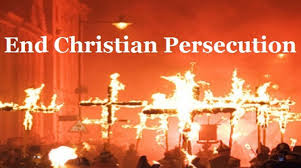
We must take notice of what is happening in our world today. Evil in the form of The Islamic State is knocking at the front door of America and we need to stand against it. Many have warned about this evil in the past.
Bishop Fulton J Sheen wrote in 1950:
“Today (1950), the hatred of the Moslem countries against the West is becoming hatred against Christianity itself. Although the statesmen have not yet taken it into account, there is still grave danger that the temporal power of Islam may return and, with it, the menace that it may shake off a West which has ceased to be Christian, and affirm itself as a great anti-Christian world Power”.
Bishop Sheen again, in 1952:
“The Christian European West barely escaped destruction at the hands of the Moslems. At one point they were stopped near Tours and at another point, later on in time, outside the gates of Vienna. The Church throughout northern Africa ws practically destroyed by Moslem power, and at the present hour, the Moslems are beginning to rise again. If Moslemism is a heresy, as Hilaire Belloc believes it to be, it is the only heresy that has never declined. Others have had a moment of vigor, then gone into doctrinal decay at the death of the leader, and finally evaporated in a vague social movement. Moslemism, on the contrary, has only had its first phase. There was never a time in which it declined, either in numbers, or in the devotion of its followers.”
Hilaire Belloc wrote in 1938:
“Will not perhaps the temporal power of Islam return and with it the menace of an armed Mohammedan world, which will shake off the domination of Europeans — still nominally Christian — and reappear as the prime enemy of our civilization? The future always comes as a surprise, but political wisdom consists in attempting at least some partial judgment of what that surprise may be. And for my part I cannot but believe that a main unexpected thing of the future is the return of Islam”.
Sir Winston Churchill gave the following speech in 1899:
“How dreadful are the curses which Mohammedanism lays on its votaries! Besides the fanatical frenzy, which is as dangerous in a man as hydrophobia in a dog, there is this fearful fatalistic apathy. The effects are apparent in many countries, improvident habits, slovenly systems of agriculture, sluggish methods of commerce, and insecurity of property exist wherever the followers of the Prophet rule or live. A degraded sensualist deprives this life of its grace and refinement, the next of its dignity and sanctity. The fact that in Mohammedan law every woman must belong to some man as his absolute property, either as a child, a wife, or a concubine, must delay the final extinction of slavery until the faith of Islam has ceased to be a great power among men.
Individual Muslims may show splendid qualities, but the influence of the religion paralyses the social development of those who follow it. No stronger retrograde force exists in the world. Far from being moribund, Mohammedanism is a militant and proselytizing faith. It has already spread throughout Central Africa , raising fearless warriors at every step; and were it not that Christianity is sheltered in the strong arms of science, the science against which it had vainly struggled, the civilization of modern Europe might fall, as fell the civilization of ancient Rome .”
Pope Francis, 2014
“Hatred is not to be carried in the name of God…War is not to be waged in the name of God.”
The Vatican’s Pontifical Council for Inter-religious Dialogue said Isis had committed “and was continuing to commit unspeakable criminal acts”. To reinforce the point, it listed some of the atrocities for which Isis is reported to have been responsible. They included “the massacre of people solely for reasons of their religious adherence”; “the execrable practice[s] of decapitation, crucifixion and hanging of corpses in public places”; “the choice imposed on Christians and Yazidis between conversion to Islam, payment of a tax (jizya) and exodus”; “the forced expulsion of tens of thousands of people, including children, old people, pregnant women and the sick”; “the abduction of women and girls belonging to the Yazidi and Christian communities as war booty (sabaya)”, and “the imposition of the barbaric practice of infibulation”.
In 1967, Martin Luther King, Jr. said:
“He who passively accepts evil is as much involved in it as he who helps to perpetrate it.”
We have to be aware of the tragedies taking place. And be courageous enough as a nation–the greatest nation on Earth—to take a substantial stand against evil.
We cannot use fatigue or fear as an excuse not to act. ASAP.
Struggle is the fire that hardens the clay of our lives and turns an earthen vessel into something altogether unearthly.
Struggle can produce people who are out of the ordinary, simply because they have had to work hard.
Some of the most commended men and women in history came from a personal struggle with poverty, or loneliness, or a physical setback, and more.
But often, we parents, don’t like to see our children struggle. We want to relieve them of difficulty. We like to ‘fix’ them. We want to save them from anything that hurts–even if they’ve concocted their own unsavory situation.
We should let them know we are there for them. But I think there are times when we shouldn’t be too quick to ‘save’ them. We should allow them to ‘save’ themselves, to strengthen their wings from within.
The moth in a cocoon struggles to get out of it, and by doing so, it grows stronger—strong enough to fly completely away from the cocoon that once tied and bound it.
And there are many children who grow up in extremely difficult circumstances, then struggle to get out, and eventually fly away, too, just like the butterfly.
If we do so, we are burying part of ourselves as well.
Friedrich Nietzsche (1844-1900) was a German philosopher and atheist, who claimed God is Dead. He thought the exemplary human being must craft his/her own identity through self-realization and do so without relying on anything transcending that life—such as God or a soul.
Of course, this is ridiculous, a contradiction to who we are. We have a soul–each of us, and that soul came from God. When we say we’re made in God’s image, our human soul is what we’re talking about. It is the one and only way we are like God, who is pure spirit.
However, my human soul, and yours, are not pure spirit. Spiritual, yes–but not pure spirit. Man is a spirit in matter, in the form of a body. He is spirit and body. God and the angels are pure spirits because they are not dependent on matter, as we are, either intrinsically or extrinsically. To be completely independent of matter for any material being is impossible. The human soul is intrinsically dependent on matter for some of its activities. But our soul is not purely material either, because for other activities it is not intrinsically dependent on matter.
So the human soul of man belongs to both the realm of the spirit and the realm of matter. Man is the lowest of the spirits, and the highest of the material beings, and he alone belongs to both the realm of the spirit and the realm of matter. As the new Catholic Catechism explains, spirit and matter, in man, are not two natures united, but rather their union forms a single nature. (CCC 365).
Most human beings understand that the soul, by its nature, is often in opposition to the body. This is the struggle of every human person. Because we have free will–we can choose.
Nietzsche struggled with many questions, and used his free will–a component of his soul, and part of his human spiritual make-up–to come up with his own wrong answer about a living God, only because that living God gave him the freedom to choose.
We have the same freedom as Nietzsche, and many other God-despisers like him, because despite what they say, they have inherited spiritualty from God.
When we make personal, even political, decisions, are we helping to dig those societal graves that want to bury God, too?
Well, it cannot be done without burying ourselves–we are part of Him.
Who is the woman who means, or has meant, the most to you? Is it someone you trust? Someone you love? A woman you admire from the media?
Or is it a woman unnoticed by the world, a part of your life, but loved by only a few?
What are the qualities this woman has that makes her so important to you?
Traits traditionally cited as feminine include gentleness, empathy, and sensitivity. I would submit another trait: extraordinary bravery.
Is the woman you most admire a woman of bravery?
There are many women today who stand up with courage–in quiet and often unappreciated ways such as:
Loyalty to a loved one.
Tending to sick children or parents.
Making a paycheck cover the month.
Giving up something she WANTs so her children can have what they NEED.
Standing by a friend despite the politics.
Loving an enemy who’s asked her for forgiveness.
Quieting the gossip of others when she knows it is hurtful.
Continuing, when continuing is hard.
Keeping faith in God and passing it to others by her example.
Here are some examples of bravery in women from the Bible.
Sarah – wife of Abraham. Sarah was also the step-sister of Abraham. When they went down to Egypt, Abraham told Sarah to say that she was his sister, which was true. She then caught the eye of the King of Egypt who took her as his wife, but later restored her to Abraham through divine admonition. Sara gave birth to their son Isaac when she was 90 years old and Abraham was 100 years old. She laughed when she was told by visitors to their home that she would have a son. Therefore, the son she bore was named Isaac which means “He will laugh.” Isaiah 51 calls Sarah the mother of the chosen people.
Rebecca – married Isaac when he was forty years old. Rebecca bore twins, Esau and Jacob when Isaac was sixty years old. Esau grew to be a skillful hunter and was preferred by Isaac. Esau was tricked into selling Jacob his birthright. Rebecca favored Jacob and when Esau was sent by his father to hunt some game, Rebecca prepared a dish for Jacob to give to his father, pretending he was Esau. She also covered Jacob’s hands with goatskin since Esau was hairy and Jacob was not. Isaac, thinking that Jacob was his favored son Esau, gave Jacob his blessing. Esau returned and learned that Jacob had received his father’s blessing and his father had no blessing left to give to Esau.
Deborah – a unique character in the Bible. She was a prophetess as well as the only woman to be a Judge of Israel, making her the equivalent of a king. She was also a leader of the army of Israel. Israel had been under domination by the Canaanites for twenty years. Sisera was the captain of the Canaanite army which far outnumbered the army of Israel. Deborah was told by God to have her general, Barak, take his soldiers to Mount Tabor. They would be engaged in battle by the Canaanite soldiers but the Israelites would win the battle. Barak agreed to do it only if Deborah would accompany him. The Israelites did indeed defeat the Canaanites. Deborah gave all the glory to God for the victory and also thanked Him for what He had done for the nation of Israel.
Judith – The king of Ninevah sent his general Holofernes to subdue the Jews. The Jews who were suffering from a famine were about to give up when the widow Judith reprimanded them and told them she would deliver the city herself. She entered the camp of Holofernes and captivated him with her beauty. When he became drunk, she cut off his head. She returned to the city with his head as a trophy and the Jews gained the strength to defeat their enemy. Chapter 16 is Judith’s song of thanksgiving to God for the victory.
Ruth – In the time of the judges, a famine arose in the land of Israel. Therefore, Naomi and her family emigrated from Bethlehem of Judea to the land of Moab. After her husband and children died, Naomi left Moab to return to Bethlehem. She was accompanied by her daughter-in-law Ruth who insisted on going with her. Ruth intoned that famous quote “Your people shall be my people, and your God my God.” To help out, Ruth went to work in the fields of Boaz, a rich man. Boaz married Ruth who bore him a son Obed, the grandfather of David. The book of Ruth therefore gives insight into the origin of David, King of Israel and the royal ancestor of the Messiah.
Esther – Upon the death of her parents, Esther was adopted by her uncle Mordecai. Esther won the favor of King Ahasuerus who made her his queen. The king had meanwhile raised Haman to high rank and all the king’s servants bowed down to Haman. Mordecai would not bow down to Haman. Haman obtained the king’s consent to a massacre of all the Jews in the kingdom. (Mordecai, of course, was a Jew.) A gallows was erected to hang Mordecai. The king learned belatedly that Mordecai had never been rewarded for revealing a plot by the eunuchs to kill the king, and therefore planned to reward him accordingly. He asked Aman what would be a fitting reward for one to be honored by the king. Aman, thinking that he himself was to be honored, suggested the use of the king’s apparel and insignia. Esther informed the king of the plot of Aman to destroy her people. The king then ordered Aman to be hanged on the gibbet he prepared for Mordecai and bestowed on Mordecai all of Aman’s property. Mordecai then instituted the feast of Purim to celebrate the day when Aman would have destroyed the Jews but which Esther turned into a day of triumph.
All of these women of the Bible showed extraordinary bravery during a time when women were regarded as mere chattel with no rights and little respect. It is fitting that they should be recognized for their character and accomplishments in the book that is the Word of God.
Shouldn’t those quiet women in our lives today–those we love and admire–be recognized by us for their the courage of their character?
 There are times when I put things off–actually many times when I put things off–things I know I should do. But I talk my self out of doing it for some reason or another. One of the biggest things I put off is cleaning out drawers and closets. If I can squeeze one more item into a drawer, I see it as still ‘workable.’ Sometimes, I do that with my life, too.












 Translating a World on the Edge