TGIF! And I mean that sincerely. Besides, Friday is appropriate for this first page of the fifth story in Birds of a Feather. The story is entitled ” The Mercy Seat,” after an old Protestant hymn some of you may know, or remember. And here is your question and multiple choice answers, after you’ve read the first page.
Who can be a saint? Choose one to put in the comment section
. only the goody goodies
. member of the New Orleans football team
. an innocent child
. everyone
The Mercy Seat
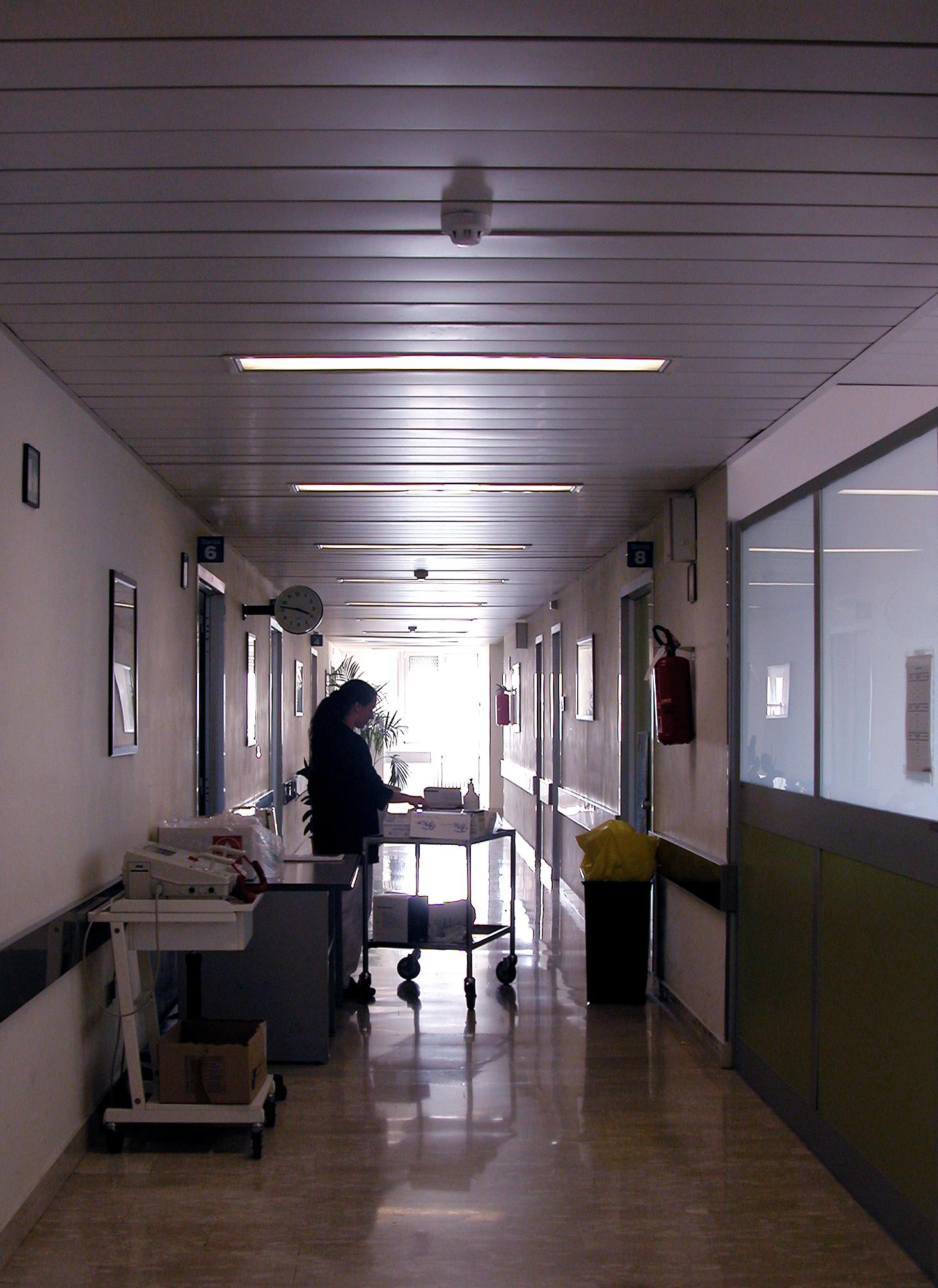
Today is Good Friday. It is my turn with Grandmother. Her gray hair is spread out upon the pillow like roots from an old tree. She lies sleeping in her hospital bed, in a room of clinically accurate monitors, IV poles, and bed rails. To someone looking in, she might seem insignificant, barely separable from the sheets drawn tightly around her like swaddling. Yet she is the most consequential person in my unworthy life. She is church to me, salve for a sinner.
From her window on the second floor, across Bell Street, is a view of the crumbled parking lot where the church used to be; Saint Mary Magdalene,Grandmother’s church, the church of my Catholic family. It was built of white brick on the corner of Main Street back when Main was lined with huge oaks hovering like protective parents over everything below.
In our small town Catholic children were armed with the sacraments and the Catechism, raised to defend the Pope, Confession, and Natural Family Planning. “Defend your church with courage,” Grandmother instructed us, “because the Lord wants you to be a saint.”
Our footfalls behind hers, on the sidewalk after morning Mass, became as one melodic phrase, tapping out yeses for our conductor. Because of her, I kept in line. I didn’t lie, or cheat, or deceive. But that was then. I am not a child anymore.
Already Thursday! Time for the first page of the fourth story in Birds of a Feather, entitled The Psalm of David Fowler. Here is the multiple choice question: What is the theme of the story going to be? Note your answer in the comment box.
. Georgia weather in December
. Every act has a consequence
. Fires can be dangerous
And here’s the first page of the story:
The Psalm of David Fowler
One afternoon before ‘it’ happened—he was in the back yard, poking the rake into a pile of burning leaves. Laura called to him from the porch, “Don’t let that fire get out of hand and burn the house down!”
A stream of smoke spread across the yard—not in his direction; it advanced toward her. She covered her eyes.
“You shouldn’t be burning leaves in the first place, David. They protect the grass from a freeze.”
“What freeze? We may never have one.” It was the middle of December and South Georgia weather was characteristically kind with a temperature in the low seventies.
“We always have at least one freeze. And remember last year? It was so cold the pipes burst, and we were without water for a week!”
He gave her a condescending shake of his head. “I’ve got it under control, baby.” Then he remounted the riding mower.
“Don’t go off and leave that fire burning!”
Even over the sound of the mower, he could hear her warning. He advanced up the yard anyway. All around him dry leaves fluttered and fell rain-like over the yard, while flames from the unattended pile began to lick up, higher and higher.
“Don’t you ever think about the consequences?” she shouted as he turned the corner of the house. He knew she’d run for the hose.
The day “it” happened, she asked him the same question about consequences, then she ran into the bedroom, locked the door, and cried. One year later, he, David Fowler, entered the gates of a federal prison, a consequence far beyond his imagining.
He was immediately strip-searched, a procedure that scooped from him the last adhering particle of dignity he’d been able to hold on to since his sentencing, and generated in his mind words he’d heard decades before, as an altar boy serving Mass: I am a worm, not a man; the scorn of men, despised by the people. All who see me scoff at me; they mock me with parted lips, they wag their heads.
As a twelve year-old boy, dressed in his floor-length black cassock and white surplice, the words meant nothing to him then. Not until today when he was ordered by a female guard to remove his clothes, his T-shirt, his underwear; when he was ordered to bend over for her coarse, gloved intrusion of his body; did he genuinely absorb them.
The first page of the third story in Birds of a Feather is coming up. But here’s a little behind the scenes info on the story. It takes place in a fictional town in Alabama called Bethel, which in the Bible refers to the Gate of Heaven and the site of Jacob’s Ladder.
The name Bethel comes from the Hebrew beth, meaning house, and el, meaning God. Bethel means House of God. Numerous events of Bible History occurred there, including God’s appearance to Abraham and Jacob, and for some time it was the place where the Ark of The Covenant, containing The Ten Commandments, was housed.
And here is your multiple choice question: Who do you think will be the antagonist in this story?
Choose one and type it in the comment box below:
Edmund, Mal, The dead grandfather, Edmund’s wife, or None of the above
SHOOTING AT HEAVEN’S GATE
Satin is crouching at your door. You ain’t seen him coming, boy. Nobody seen him coming but the Lord Jesus Christ. Now, he’s after you. Don’t wait for his spear. Conquer him!
On the last day of the Spring term, Edmund had to leave the teacher’s podium during a Sociology class because his grandfather’s fanatical voice would not depart from his head. Standing in front of his class, he couldn’t remember the point he was making and his teacher voice began to tremble; so he lifted the sheet of notes he’d made as a reminder, but the notes seemed to will themselves into a crumpled ball then fly from his hand toward the back of the room. His students looked stunned. Several dodged the paper ball, and the rest turned their eyes downward, as if they were embarrassed for him, as if he didn’t measure up to their expectations, and never would.
He felt nauseous, mumbled some excuse, left the class room and headed down the hall to the men’s room, just as the squatty shadow of Mal Hawkins emerged from its fluorescent glare. And therein lies your ruin, Edmund. I’ve told you to nip him in the bud. But will you listen? No!
“You all right?” Mal asked, holding open the door for Edmund to enter. “
“Fine!” he snapped at the psychology professor, while in his mind his grandfather went on and on about the fact that Edmund was not fine. Not fine at all.
“See you tonight then.” Mal said. “We’ll get you feeling better—that is, if your wife will let you out.”
“Oh, she’ll let me out alright,” Edmund said. “She doesn’t tell me what to do.”
Mal grinned as he left, and the door to the men’s room swung closed behind him.
Today is Terrific Tuesday. Whether it’s terrifically good, or terrifically bad, will probably depend on us. So let’s try the best we can to make it the former, not the latter.
Thank you for your response on my Monday Blog!
Here’s the first page of the second story in my soon to be published collection, Birds of a Feather. It’s called “Dragon.”
Can you guess where the Dragon will be found in this story?
Pick an answer, and leave it in the comment section below.
On the beach
In a mirror
In Richard’s medicine bottle
DRAGON
I keep my head down when I sign for a Gulf front room, not wanting to face the night clerk. She directs me to the fifth floor: shell-shaped pillows on a king-sized bed, gauzy drapery mimicking crystal green water, and double-paned windows, framing a fire-breathing, dragon-like sunset.
At home, in Highlow, they’d quoted St. Cyril. “Beware of the dragon,” they’d said about Richard.
I stretch out on the king-sized bed and turn on the massage. The pulsing reminds me of his fingers and the expensive bottle of sun block he bought, all of which he used on me. Richard liked manipulation, the slip-sliding feel of possession. Maybe he was born that way and couldn’t help it. Maybe I could have changed him. Then maybe he wouldn’t have died.
For months, I was Richard’s only nurse; the one he’d been having an affair with was afraid to touch him after she learned he had AIDS. He didn’t cheat anymore, and he didn’t lie, except in the bed he’d made for himself.
At home I was taught compassion, so I timed out medication every four hours, kept watch that the oxygen hose stayed in his nostrils, that the battery worked in case of a storm surge; but I resented the stench of his bed pan, the ooze of his lesions, the diapers wrapped around hips so thin that bones showed through tissue paper skin. The man betrayed me after all.
“Don’t trust him,” they’d said.
Before I left Mobile, I telephoned Anthony, Richard’s best friend, to say I was leaving. Again, Anthony said, “I love you.” He wanted to know if I loved him. I gave no answer.
An empty pause and then, “Richard’s death was an accident, Liz. You didn’t create the storm. I’ll call your cell tomorrow.”
For the next nine days, I’ll be posting the first page of each of the nine stories in my collection, Birds of a Feather, to be published July 14, 2014. The first story is entitled, “Red Bird.”
Can you guess what the Red Bird symbolizes in this story?
Pick one:
Judgment
Bad Dreams
Chasing Birds Out of Your Yard
Please feel free to leave your answer in the comment section below the video. Here’s the first page of the first story.
RED BIRD
The recurring dream has been with Jude for thirty years, nearly half his life. In it, he’s a boy of six or seven,cornered by an elderly man in a wrinkled linen suit and a white straw hat. The man has caught him in the act of—he doesn’t know exactly what, because this is where the dream always begins. It could be a number of things.Jude isn’t sure if the man is friend or enemy. The man never speaks, only passes judgment with his eyes. By now, Jude is used to the dream, to the old man and his quiet condemnation. When the large hand reaches for him, he usually shrinks to nothing then wakes with a sense of accomplishment that he has outsmarted his judge another time. But when he wakes this November morning, he doesn’t remember having dreamed at all. Something different muddles his mind,some confusion he can’t get rid of.
A drizzle of rain, in the rhythm of a heart-beat, taps against his bedroom window. He turns to look, but the corner of the down pillow is flipped up and blocks his vision. He raises a weak hand to pat it down, surprised at how much strength diabetes has stolen from him. The gray sky appears disfigured by an arthritic tree and a cardinal clings to a leafless limb, a red blemish in the drizzling rain. He’s not sure why he shouts, “Get away,red bird.” Fly before you’re caught!
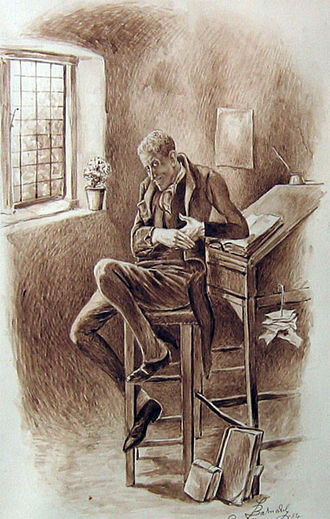
Uriah Heep, antagonist in Charles Dicken’s, David Copperfield
Uriah Heep, from David Copperfield, is one of Charles Dickens’s most wicked characters, definitely a villain; a greedy clerk and money-lender, who fawns his way through David Copperfield and blackmails his way to success. The character has as little pigment in his body as he does decency, though he makes frequent references to his own “‘umbleness.” Heep is an evil character, a blackmailer, with no empathy for others. To read about him is to make your skin crawl!
We know from the outset he’s going to be evil. “[He] had hardly any eyebrows,” says the boy, David, “and no eyelashes, and eyes of a red-brown, so unsheltered and unshaded, that I remember wondering how he went to sleep.” Uriah has a pale face, red eyes , and “a long, lank, skeleton hand, which particularly attracted my attention”
The cold, long, white hands of Uriah Heep stand in for the inhumanity of the rest of him: he is like a dead thing, totally immune to any kind of human warmth or sympathy. David is only 11 at this point, but even he is wise enough to see that Uriah Heep isn’t trustworthy.
In real life, there are certainly real life villains–particular villains in each of our lives. Are we wise enough to know who they are? How do we recognize someone who would do us wrong, or put us in danger? Most of the time, they don’t look like Uriah Heep, but like everyone else we know.
Well, why is that? Why does a person capable of committing evil look like the rest of us?
Because he is like the rest of us–and sometimes he/she is US.
So, can we recognize evil in ourselves as easily as we can in others? Can we honestly look at ourselves? Of course, not; at least not easily. And that is what often makes us smug Christians, even hypocritical Christians.
This is why we must open ourselves to God through prayer, asking that He allow us to see and stay away from those who would lead us astray—and most importantly, that He will allow us to see ourselves as we really are, too often the villain, too often the problem in our own lives. The wonderful thing is, He will give us the grace we need to change ourselves, if we ask for it.
The music video is by a band from my youth, coincidentally named, Uriah Heep. You’ll have to hang with the introductory and ending instrumentals–that was usual for heavy metal in the 1970’s. And of course, there are the psychedelics, but the message is on the mark.
If you grew up in the South, a common destination was ‘Mama’s.’ The expression doesn’t mean that Daddy isn’t there, too; but when we refer to going to our home place, it’s always, “I’m going to Mama’s.”
And when/why do we go?
We go when we’re upset, when we’re hungry, when we want conversation, or hugs or understanding, and to step back onto our home base. For all those things, we go to Mama’s.
And when we leave that place, we take the memory of it with us—a lamp in our thoughts.
Mama’s is a state of mind. A place of refuge in an often stormy and even dangerous world. Mama’s is safety, security. It is roots.
Why do we need this? Because there is so much in our lives that has become temporary, disposable things that have no deep meaning—in fact some things that have no meaning at all except in our possession of them.
Here’s what J.R.R. Tolkien says in “The Fellowship of the Rings.”
“All that is gold does not glitter,
Not all those who wander are lost;
The old that is strong does not wither,
Deep roots are not reached by the frost.”
Of course, I realize that Mama is absent in many homes, that abuse, neglect, abandonment, and violence are prevalent, and it is tragic that so many children have to live with this opposite of what home is supposed to be. How can we change this?
It starts with the sort of training–or lack of it–that parents have gotten in their own homes. And it comes with a loving commitment to everyone present in Mama’s house.
I thought it very interesting that a week or so ago, just before Mother’s Day, at least 80 percent of my Facebook friends changed their personal profile picture to a picture of their mother. And many of the conversations revolved around all the loving things they remembered doing at “Mama’s.”
As for me, there was, and still is, no place quite like Mama’s. My mother’s house has been sold now, my mother and father are gone, but they haven’t left my heart, and never will.
What does a runner look like when he finally spies the finish line of a 5K race? Isn’t he or she perspiring profusely, panting out breaths, his heart pounding, muscles aching. He’s so close to the finish line, he knows he won’t quit. A little bit more, and then—it’s done. He’s over! He’s put in the work. He suffered through the race. Soon, his breathing quiets, his perspiration dries, his heart stops pounding, his muscles loosen. There is more than just a smile reflected upon his face.
What does a painting look like when the artist begins? Only a line, more lines, colors washing every which way. He doesn’t like it. He wipes it off. He begins again. Lines and color come together until–finally, he has what he wants. He’s created beauty. And he smiles, too.
What does a woman giving birth look like when she’s in labor? An oversized body groaning, crying, pushing, shouting. And then–finally, it’s over. A new human life is laid on her breast. Her child. And she smiles, too.
The point is there is more to be seen in each of these particular events than the suffering or hard work or frustration. In time, we see personal accomplishment, the creation of something beautiful, and most miraculous, the emergence of human life–be it brand new, or only renewed.
There’s more to be seen in the struggles of our individual lives as well. Maybe we’re concentrating on the hard work, frustration, or suffering, and there’s the chance of giving up. But if we hang in there, if we give it our best–in time, we’ll see that our life is emerging too–into something better.
Have Faith in that. “While other worldviews lead us to sit in the midst of life’s joys, foreseeing the coming sorrows, Christianity empowers its people to sit in the midst of this world’s sorrows, tasting the coming joy.” –Tim Keller, Walking with God Through Pain and Suffering.
God created us as specific individuals. He has given us specific gifts. Some gifts may be more obvious. Some may be quieter, less obvious, but one is just as valuable as the other.
God’s gift to you is meant to be used for the benefit of others. And He will come up with a way for you to use, too–if you’re open to His voice. If you listen. But be warned, He will ask for your courage. He will want to lead you, maybe where you’ve never been before. And to that, you’ll have to agree, and then TRUST.
Are you using your gifts? Here’s an example of someone who is.
Recently, a nun went on the Italian version of The Voice.
“My dream was to be a singer,” Sister Cristina told the state news agency, in her only interview. “The Lord has made use of my wish to call me to him, and is taking me to realise my dream in a way that I could have never imagined.”
Having grown up in Sicily, Sister Cristina was not yet a nun in 2008 when she played the role of Sister Rosa in a musical to celebrate the anniversary of the Ursuline Sisters of the Holy Family. She was spotted by Claudia Koll, who had starred in the 1992 erotic film Cosi Fan Tutte, which was released internationally as All Ladies Do It, but who had since returned to the Roman Catholic Church and was starting a drama school at a nunnery in Rome.
“When I saw Cristina, I realised she should be one of the first ones” to enroll, Koll said. “She had the ability to reach people’s hearts, to communicate with people. And she had a beautiful voice.”
At the beginning of Sister Cristina’s March 19 appearance on The Voice, the camera focused briefly on her sensible nun’s shoes as the judges perked up at the sound of her voice and the roar of the crowd. During these early auditions, the four judges sit with their backs to the performers. Then, if they like the voice, they hit a button, and their chairs spin so they can face the singer.
The first judge to hit the button for Sister Cristina was J-Ax, who is now serving as her coach in the competition. Once a self-proclaimed “bad boy,” J-Ax began to tear up. A man who grew up idolising Run DMC and Public Enemy saw in Sister Cristina a different sort of rebel, “Somebody breaking the rules, and doing it in a joyful and cheerful way”.
When she rehearses with J-Ax, he promised the convent’s mother superior that he would protect his protege from the evils of show business. He also said that once the show ran its course, he would talk to her about spirituality. “The light in her eyes makes me curious,” he said.
To some observers, the success of Sister Cristina is another byproduct of the new tone established during the first year of the papacy of Pope Francis. If it once might have seemed inappropriate for a nun to even appear on the show – an issue still stirring discussion on different Catholic websites – now the outpouring of public support is seen as more proof of the so-called Francis effect.
“There is a tendency for music to need to be transgressive,” said the Reverend Raffaele Giacopuzzi, artistic director of the Good News Festival, the Christian singing competition won by Sister Cristina last year. “But today faith is the last transgression. So the time was ripe, but no one noticed.”
Is it time for you to use your gift? Is it time for you to TRUST that God will lead you?
How many lives will be stirred or changed because God has given Sister Christina the means to use her gift? Of course, that remains to be seen, but I believe it will be many.
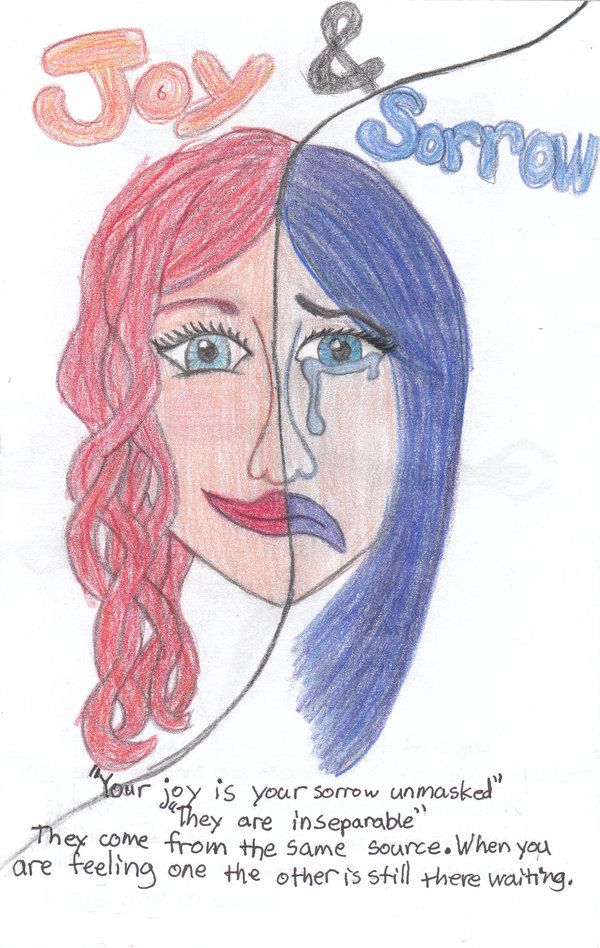
The joy within us wants out. How do we give it breath?
Each of us have had our bad days, bad weeks, maybe even bad years, when we were sick, or broke, or hurt, or just plain miserable, over one thing or another. Maybe it’s happening to some of us now.
But believe it or not, we were not created to have misery, but to have joy.
There is a place within us that yearns for joy, a place where the possibility of joy actually lives, but sometimes, we’re too hard-headed to even try to get in touch with it. We’d rather complain, or gripe about our situation because we’re desperate to have another understand what we’re going through. We want pity, or we want to make another, maybe someone close to us, feel guilty.
The truth is though, only we, ourselves, can bear a personal burden. And when we obsess and complain over it, we’re actually hurting ourselves, as well as those around us.
How much more pleasant this world would be if we magnified our blessings the way we magnify our disappointments. —Unknown
For me, and maybe for you, it’s necessary to surrender our misery to God. It may be necessary, too, to go through the bad times–but with the attitude that the bad times will not last. Because they won’t. They never do.
I’m not saying, “Shut up, and suffer with a smile on your face–oh if only we could! But what we can do is put our minds on the joy that is surely within us, joy concerning the good things in our lives, joy that there are those who love us, and then we can turn to others and try to love and help them find joy, too.
“The deeper that sorrow carves into your being the more joy you can contain. Is not the cup that holds your wine the very cup that was burned in the potter’s oven?”—Kahlil Gibran
 TGIF! And I mean that sincerely. Besides, Friday is appropriate for this first page of the fifth story in Birds of a Feather. The story is entitled ” The Mercy Seat,” after an old Protestant hymn some of you may know, or remember. And here is your question and multiple choice answers, after you’ve read the first page.


 Happy Monday!







 Translating a World on the Edge