“No one can serve two masters. Either you will hate the one and love the other, or you will be devoted to the one and despise the other. …Matthew 6:24
No doubt, there is often frustration in the choice we make about who to serve. God does not force us to serve Him. We have been given free will–we can just as easily choose NOT to serve Him.
Except He does have a plan. We are put on Earth by our Creator to serve others in one way or another. God wants us to make a difference during our life. It may be a big difference, or a very small one–but it is a difference designed specifically for us. We can ignore that, or take it to heart, but it’s a fact that the world will be changed, for better or worse, because we are here.
If we serve God, we know our lives will be worthwhile. Though we may not appear to be society’s idea of success, we will be successful if we follow Him.
If we are not following God, then we are following something or somebody that won’t bring us authentic joy— Only the holy are happy.
God has a unique plan for each of us, a mission that we may not, at once, be aware of. We discover it by staying close to God in prayer and in the service of others–when we serve others, we are serving God. And that gives our lives great meaning.
The following song by Bob Dylan is about finding meaning in life through serving God. At the time of writing, Dylan was a born-again Christian, hence the song’s religious message: “You’re gonna have to serve somebody/Well, it may be the devil or it may be the Lord/But you’re gonna have to serve somebody
John Lennon thought this song was “embarrassing” and wrote “Serve Yourself” in response to it. Lennon’s song criticized Dylan’s preaching and instead asserted: “You gotta serve yourself/Ain’t nobody gonna do it for you.”
In 1980, Dylan’s song was awarded the Grammy Award for Best Rock Vocal Performance by a Male. While the religious nature of the record alienated many of Dylan’s older fans, the album also gained Bob a new wave of Christian fans.
Sacrifice: To forfeit something for something else considered to have a greater value.
Sacrifice does not mean giving up something for nothing; it means giving up one thing for something else we believe is worth more.
Sacrifice is part of the very definition of what it means to truly love another person. In fact, intimate relationships require sacrifice. I think we understand this most in the context of family, because we do sacrifice for our spouse, our children, and our parents. And one of the most important, and hardest, things to sacrifice for family is often our time.
Today’s society tries to obliterate sacrifice at every turn. Ads promise people that they can fulfill their desires without having to forsake anything at all. “Lose weight without giving up your favorite foods!” “Get a great body without long workouts!” “Get rich without having to work hard!” The denial of sacrifice is everywhere. How about our soaring credit card debts–and of course the national debt?
But it’s a fairy tale to think you can have whatever you want without sacrifice.
If you want to lose weight, you have to stop eating what puts the weight on. If you want to get ripped, you have to work out. If you want to be loved, and to love, you have to show another person that you would give up something of importance for them. Love and Sacrifice are intertwined–and they cost us, sometimes a great deal.
For Christians, the greatest sacrifice given out of love is the ransom Jesus Christ paid for us. And I believe the second greatest sacrifice was that of his mother, Mary. Can you imagine watching as your beloved innocent son suffered and died? Mary did something that only she and God have done. They both freely allowed their only Son to be a sacrifice for the salvation of the world.
Since most of have things about ourselves we’d like to change or make better, we’re always planning new beginnings. In our heads, the tape plays, “This Monday, I’m going to start…….”
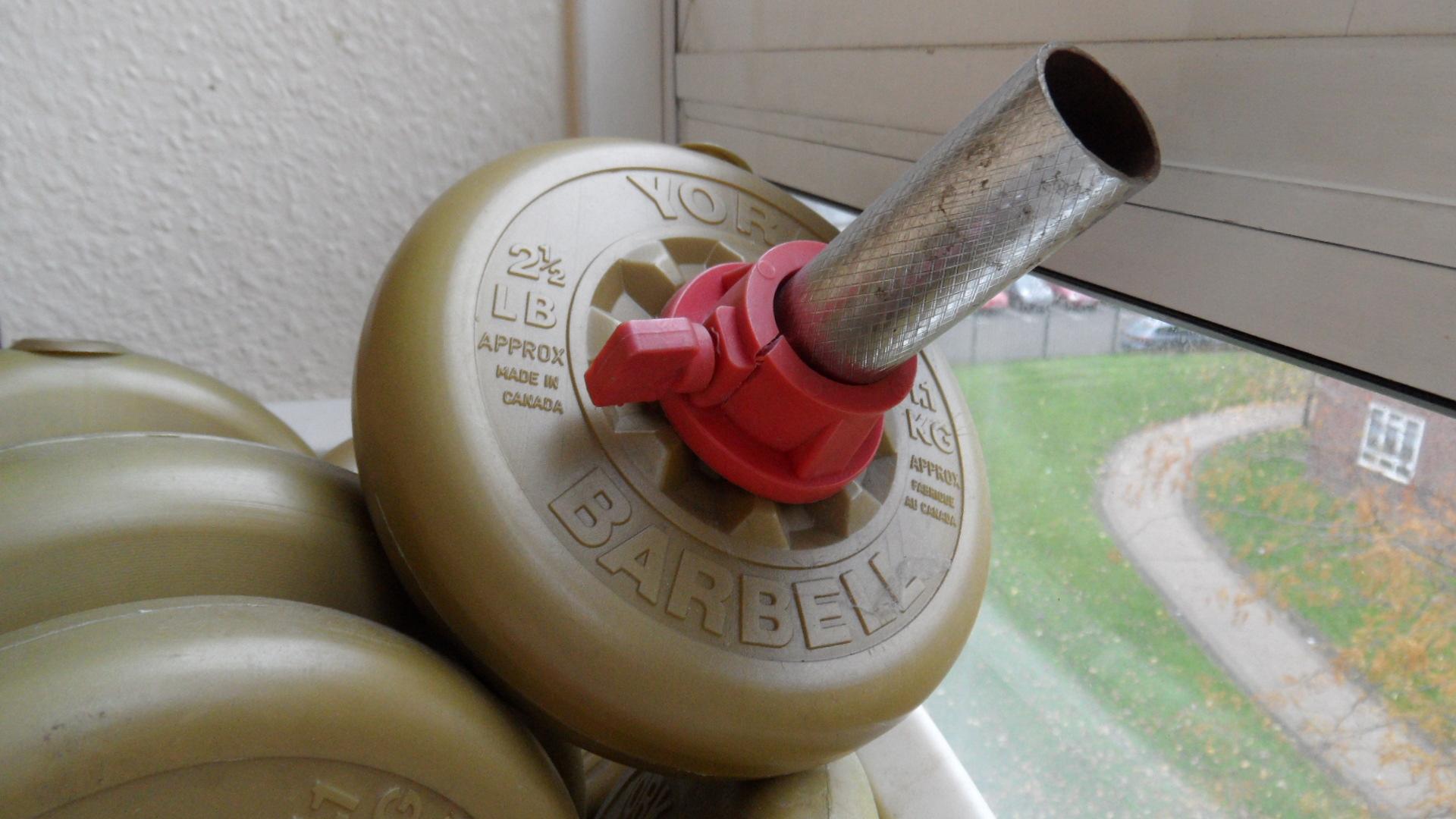
But if you’re like me, starting something over, or beginning something new, is hard to do. We get very comfortable with our bad habits, don’t we? We know we ought to ‘fix’ them, but we’re a bit wimpy when it comes to actually doing it. I have a set of hand weights I bought nearly twenty years ago—how many times have I used them? Maybe twenty. Yes, I’m that bad!
It’s called procrastination. Here’s a great quote: Procrastination is opportunity’s assassin.– Victor Kiam
People will tell you to “just do it!” But how?
Here are ten things, presented by Marcia Eckerd, Ph.D. on Psychology Today. They’re not instant, she says, but at least helpful:
” 1. Create a deadline you must meet. I set up a meeting that requires me to finish a report and use panic to get me going.
2. It’s common knowledge, but it works – go on your diet or exercise routine with a friend.
3. Break the task into smaller pieces and reward yourself when you actually finish a piece. (Snickers is my reward of choice.) It helps to see the light at the end of the tunnel.
4. Work somewhere outside of home so the usual distractions aren’t there. Or make your work area as distraction-free as possible.
5. Get started even if it’s a gesture. Often, that’s the hump that’s hardest to hurdle.
6. Actually look at your to-do list. Take off anything non-essential, and set a time to start on one thing. The size of the list may scare you away.
7. Talk to yourself, although not out loud if you’re somewhere public. Repeat to yourself: “I have set a priority.” If you feel pulled to do errands or check e-mail, you have set a priority.
8. Organize the bills/papers/supplies you need to do your task. You’re less likely to wander away if you have everything together.
9. Set a time when you must sit down, and don’t allow yourself to do anything else for at least a half hour. You might start out of boredom.
10. Figure out a time to do what you need to do and stick to it. As crazy as it sounds, I lift weights before I go to bed. It’s the only consistent time I can manage.”
Let’s talk about the Catholic Church, about her contributions to Western civilization, not only the fields of Theology and Philosophy, but also in science, art and architecture, music, education, geology, law and jurisprudence, language, and the status of women.
Let’s talk about it, precisely because many don’t want us to talk about it. They’d rather talk about the so-called historical ‘repression’ by the church, and by religion in general.
In their discussion, Secularism is assumed to be right and to bring us progress. The Secularists dig in their heels and say the church is an obstacle to their personal progressivism, which means their own version of Truth.
In fact, to the so-called progressive secularist, all religion is wrong. This is far from Truth–I’m talking about absolute Truth, the kind that doesn’t change on a whim. All religions in Western Civilization preach about ‘Truth’ and ‘brotherhood,’ that each of us is a child of God, brothers and sisters who strive for the Truth. And hopefully we are striving for Truth as it really is, not for a changeable truth that is genuine one day, but not the next, according to our whim.
This less than genuine idea of truth has promoted an inaccurate history of Western Civilization that is being used to malign both the Catholic Church, and Christianity in general.
The following quote is from Thomas E. Woods, Jr. –How the Catholic Church Built Western Civilization
“About the least fashionable thing one can do these days is utter a kind word about the Catholic Church. The idea that the church has been an obstacle to human progress has been elevated to the level of something everybody thinks he knows. But to the contrary, it is to the Catholic Church more than to any other institution that we owe so many of the treasures of Western civilization. Knowingly or not, scholars operated for two centuries under an Enlightenment prejudice that assumes all progress to come from religious skeptics, and that whatever the church touches is backward, superstitious, even barbaric. Since the mid-20th century, this unscholarly prejudice has thankfully begun to melt away, and professors of a variety of religious backgrounds, or none at all, increasingly acknowledge the church’s contributions.”
The author, Thomas E. Woods, knows what he’s talking about. He’s an American historian, political analyst, and author. Woods is a New York Times best-selling author and has published eleven books. He has written extensively on the subjects of American history, contemporary politics, and economics. Woods holds a B.A. from Harvard university and a Ph.D from Columbia University, both in History. He is a senior fellow of the Ludwig von Mises Institute in Auburn, Alabama and a member of the editorial board for the Institute’s Libertarian Papers. Woods is also an associate scholar of the Abbeville institute in McClellanville, South Carolina. The Abbeville Institute promotes the cultural inheritance of the American Southern tradition as “a valuable intellectual and spiritual resource for exposing and correcting the errors of American modernity,” as opposed to “colleges and universities [which] have come to be dominated by the ideologies of multiculturalism and political correctness.
Some books on this subject are listed below the video. This video is only the introduction to others that Wood has created. Many may find it valuable to consider viewing the rest.
It has become almost cliché to say that before you can truly love someone else, you must first love yourself. Cliché or not, the statement is true.
But we cannot love a false self. We are more than mannequins dressed by another’s intentions. We have to know who we are–for Real.
Loving oneself begins with digging deep to be honest about who we are and what we do. Digging deep to discover the things we are good at, and loving those things about ourselves. Digging deep to discover our faults, our flaws, and doing something about those so that we can love ourselves. Because love is not just a word, it is always action.
When Jesus talked about the greatest commandment of all, He quoted Deuteronomy 6:5 and said we are to love God with all our heart. But He also added the second greatest commandment: You shall love your neighbor as yourself. God wants us to love ourselves, the way He created us to be.
Oddly, or maybe miraculously, the way to honestly loving ourselves is by loving others. How many times have you felt a certain excitement over what you’ve done for another–a word of encouragement, an act of mercy, a simple gift to another of something he/she desperately needs?
Conversely, don’t we feel disheartened when we try to be only what another wants us to be–especially if what another wants us to be goes against our moral code? That’s the failure to love ourselves, that’s being untrue to the core of who we are.
If we want to be happy, we must realize that God loves us terribly, and because He does, we can love ourselves, too–enough that we want to be worthy of His divine love. As it always does, God’s love calls us to action.
There is a story, Bluebird of Happiness, in my new collection, Birds of a Feather, in which a physician misuses his profession in an attempt to keep peace with his controlling wife. He puts that misguided peace above being true to his own moral core. Of course, he is unhappy with himself, with his life, and with his wife. I think many of us do something like this only to please others, or to keep some tranquility. But it does not make us happy. Loving yourself in the right way is what will actually make us happy.
Taking to heart other people’s opinions of us as if they were Truth— though sometimes those opinions may flatter us, as well as put us down–.- is not the way to the joy of knowing and loving ourselves.
So, let’s take some time out to discover what we’re good at, or what we’d like to be better at. Take off any false image we have of ourselves that someone else may have thrown upon us. Then we will find the goodness within us that it takes to love ourselves, and because of that goodness, we will love others.
How you ever wished for an imaginary “help button” that would give you immediate assistance with a significant problem? Well, you do have one.
You have the mercy of God.
What do we know about God’s mercy? Have we seen it work in our lives, or do we notice it at all? Do we notice that despite our sinfulness, God still loves us–and waits for us to love Him in return?
Think of the parable of the merciful father whose son returned to him after taking his inheritance and squandering it. Always, the father is waiting for his son to come home. Finally, when he catches sight of his wayward boy slinking back because he has no place else to go, the father runs to meet him with joy, despite what his son has done.
Did you know you are loved like that? You are loved by God.
Do we think our sins are too big, too disgusting to be forgiven? Are we afraid of what God might do to us because of our sins? But again– He loves us.
I am certain that He will do nothing except love us–loves us through our sins, and His love will rid us of them if we let it. Trust in that.
“Let us always remember this in our lives as Christians: God always waits for us, even when we have left him behind!” Pope Francis, The Church of Mercy
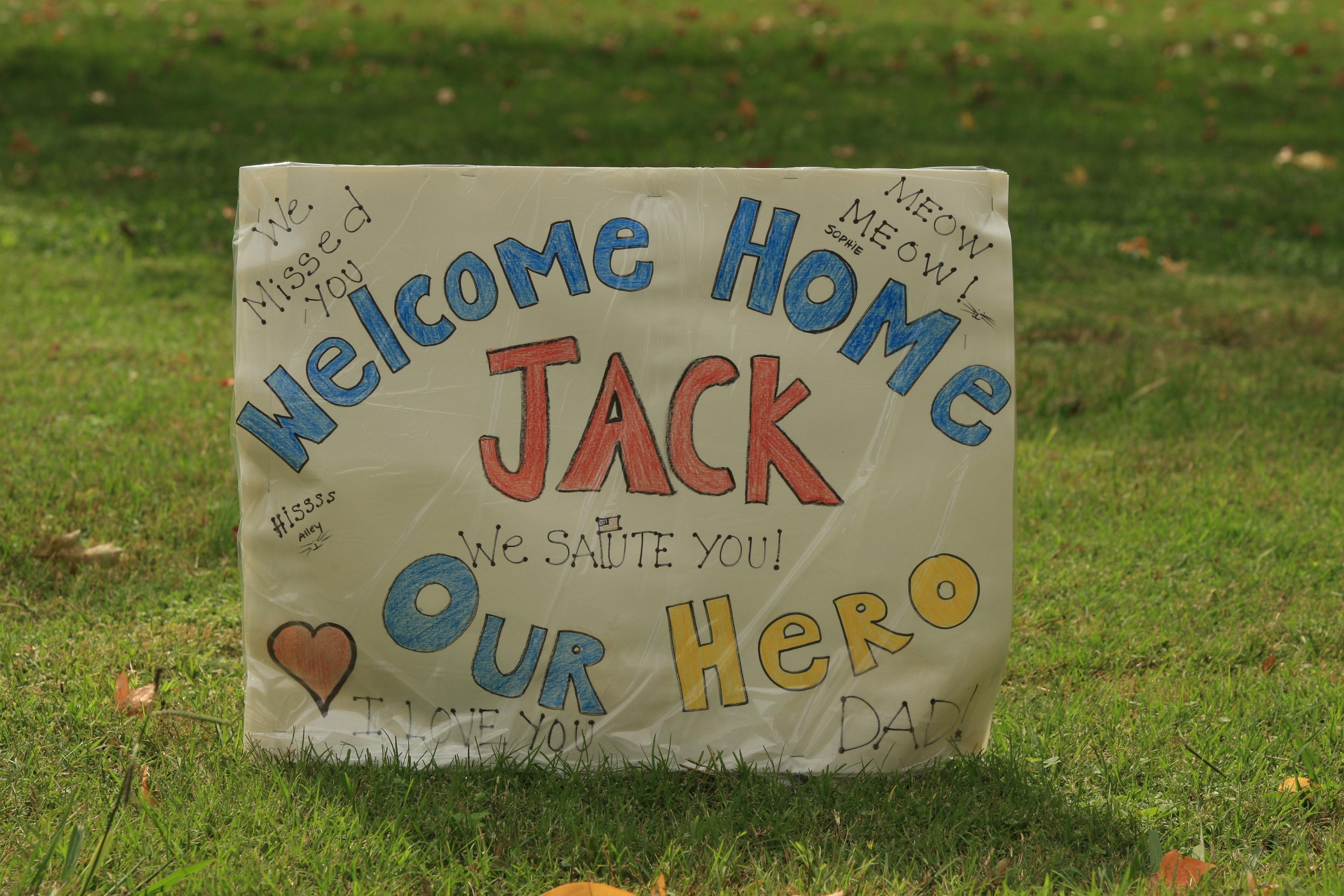
I think this is a good one: A hero is a person who is unafraid to make what they believe to be a ‘right’ decision. And if the decision turns out not to be correct, they own up to it and accept the consequences.
This means that a hero must have courage—enough not only to stand up for what is right, but to keep going no matter how tough it gets. Heroes are not people who have super-human strength, super speed or the ability to shoot beams from their eyes. They are just average people who care about people, about human life and how fragile it really is.
According to researchers, empathy and compassion for others are key variables that contribute to heroic behavior. People who rush in to help others in the face of danger and adversity do so because they genuinely care about the safety and well-being of other people. A 2009 study found that people who have heroic tendencies also have a much higher degree of empathy.
Heroes are good at seeing things from the perspective of others.
Researchers suggest that heroes aren’t just compassionate and caring; they have a knack for being able to see things from the perspective of others. They can ‘walk a mile in another man’s shoes,’ so to speak.
Heroes are competent and confident.
It takes both skill and self-confidence to rush in where others fear to tread. Researchers suggest that people who perform heroic acts tend to feel confident in themselves and their abilities. When faced with a crisis, they have an intrinsic belief that they are capable of handling the challenge and achieving success no matter what the odds. Part of this confidence might stem from above-average coping skills and abilities to manage stress.
There are so many heroes who go unnoticed, selfless people who step out of what is easy and take up something hard to elevate someone else. And they ask for no recognition.
Today we hear and read so much about the world’s villains. But look around—maybe even in your own family–the world is filled with heroes.
You’ve probably been asked this question thousands of times in different scenarios. “Are you okay?”
Depending on the situation, if you’re like me, you may lose emotional control, you may even want to belt the questioner and yell, “No! Would you be okay with this?”
Emotional control is the key here. That means acting like a “real” adult and not a small child. How many times do small children have an emotional meltdown in public places, or even a full-blown temper tantrum? A sad but true fact is that many of us lack emotional control, when we become angry, impatient, or frustrated.
This takes time, but the key to learning to control emotions is learning to control our thoughts. Angry thoughts take us to angry words and actions. Sad or personally negative thoughts lead us to discouragement.
But if we turn our minds to positive thoughts, loving thoughts, grateful thoughts, we find that we become happy. The key to developing emotional self-control is learning to “reboot” as soon as we feel negative emotions coming on. Then change our thoughts to something positive so that our mood might improve.
We will not do this overnight. It takes practice, but eventually, when bad things–or bad people–happen to us, we can use our mind to become stronger so that we can weather the storm.
Have you ever looked at a large oak tree and wondered how long ago it sprang from an acorn? Or swam in the Gulf or ocean and wondered how long it had been a body of water? Or looked at a star, or the moon, or the dirt below your feet, and thought about their ages?
Even more mind-boggling is how many multitudes of people have lived their short lives on Earth, and then passed from it! That’s like counting grains of sand on all the world’s beaches.
Scientists think that the Earth is 4.54 billion years old. Coincidentally, this is the same age as the rest of the planets in the Solar System, as well as the Sun. And because our Sun is heating up, scientists also think that humanity has less than a billion years more to enjoy the surface of our planet before it becomes inhospitable.
A billion years?
No matter if we live to be a hundred, what a miniscule portion of time on Earth is ours! If there’s one certain truth, it’s that we are only passing through this world.
So how can we make a difference?
We must thoroughly and truly know our own strengths and weaknesses. We should not lie to ourselves, it’s a waste of time. We can use our courage, not our fears, and embrace our strengths and even our weaknesses, then use them not only to our advantage, but for the advantage of others. Because we’re not passing through this life alone. Those who travel with us are our spiritual brothers and sisters.
Each of us has something to give, something that can change the world in ways we may never know, or imagine.
We may be only an itsy bitsy, tiny part of Time, but our voice is meant to be heard.
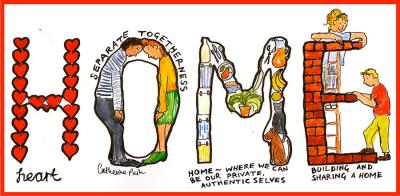
Are we away from home? Not necessarily the place–home. But maybe, where our heart ‘used to be’? Where we may have had different values than the ones we have now?
To find ourselves in such a place, a place that’s not home, can be disrupting and often disturbing to us–especially if we want to go back. And most especially, if home held the values for us of honesty, justice, determination, consideration, and most important, love. Values we may not see in the place we are today.
But what if home wasn’t like that? What if the values our home held were the opposite of those above. What if there was lying in our home, and injustice, goal-less commands, meanness, and no conception, or perception, of love?
Wouldn’t we flee from those attitudes?
Many young people experience a life like that, and they flee from it. The problem is that some also take those undesired values with them when they leave. And that affects others–in another family they may create, in their workplace, in their social connections.
The heart of our homes–the values we teach cannot be given less importance than the schools we were sent to, the ‘things’ we were given, or the particular sort of house we lived in–big or small.
An old Jesuit saying:: ‘Give me the child and I will give you the man.’ Which is to say how very important the training of a child is.
“Up to the age of seven, we are like sponges, absorbing everything around us and accepting much of it as true, especially when it comes from our parents. The confusion and blind belief of this period can also lead to the early formation of trauma and other deep problems. The critical thing here is to learn a sense of right and wrong, good and bad.” (Changingminds.org) And home is where this is taught.
We are our children’s first and most important teachers. Our home is their schoolroom. And though we often forget —that makes us, and the home environment we create– very important to the world around us.
 “No one can serve two masters. Either you will hate the one and love the other, or you will be devoted to the one and despise the other. … Matthew 6:24







 Translating a World on the Edge