railwaytracksWith such instability in our world today, we may be searching for perspective. Consider first, perspective in Art.

Perspective drawings have a horizon line, which is often implied. This line, directly opposite the viewer’s eye, represents objects infinitely far away. They have shrunk, in the distance, to the infinitesimal thickness of a line named after the Earth’s horizon.

In a perspective drawing, the scene  includes parallel lines that have one or more vanishing points.   All lines parallel with the viewer’s line of sight recede to the horizon towards this vanishing point. This is the standard “receding railroad tracks” phenomenon.

But this line is seen not only in Art, but also in Philosophy–the study of the fundamental nature of knowledge, reality, and existence.

The French philosopher and Jesuit priest, Pierre Teilhard de Chardin, refers to it as The Omega Point,  and thought of it as a cone–one that we are all rising through to its apex–Christ.  He clarifies it like this: “Remain true to yourself, but move ever upward toward greater consciousness and greater love! At the summit you will find yourselves united with all those who, from every direction, have made the same ascent. For everything that rises must converge.” (Flannery O’Connor fans will recall this as the title of her last short story collection, influenced by the philosophy of de Chardin).

“In a Universe of “Conical” structure Christ has a place (the apex!) ready for Him to fill, when His Spirit can radiate through all the centuries and all beings; and because of the genetic links running through all the levels of Time and Space between the elements of a convergent world, the Christ-influence, far from being restricted to the mysterious zones of “grace,” spreads and penetrates throughout the entire mass of Nature in movement. In such a world Christ cannot sanctify the Spirit without (as the Greek Fathers intuitively perceived) uplifting and saving the totality of Matter. Christ becomes truly universal to the full extent of Christian needs, and in conformity with the deepest aspirations of our age the Cross becomes the Symbol, the Way, the very Act of progress…..”

I will pause the quote here–because this speaks to me–in a philosophical way– as an explanation of  why there is suffering in our God-created world, something so hard for a human being to accept!

But de Chardin continues…”Within a Universe of convergent structure the only possible way in which an element can draw closer to its neighboring elements is by tightening the cone. In such an order of things no man can love his neighbor without drawing nearer to God and, of  course, reciprocally (but this we knew already). But it is also impossible (this is newer to us) to love either God or our neighbor without assisting the progress, in its physical entirety, of the terrestrial synthesis of the spirit: since it is precisely the progress of this synthesis which enables us to draw closer together among ourselves, while at the same time it raises us toward God.”

Another pause, because I see in this a value for suffering.

de Chardin, continuing again…”Because we love, and in order that we may love even more, we find ourselves happily and especially compelled to participate in all the endeavors, all the anxieties, all the aspirations and also all the affections of the earth….”

As a child, my grandmother –who lived to be nearly one hundred years old– never failed to comment on the pain of my skinned knees, the loss of a boyfriend, my less than good grade, or any of my youthful disappointments  Her words were always. “Offer it up.” I had no real idea what she was talking about until I reached adulthood and went through some very trying and tearful times. Her words were the same, with a little added on: “Offer it up. Suffering has a value.”

But because  we are humanour physical selves  find that hard to accept. So I think we have to be philosophical about it. We have to have a perspective. We have to raise our minds to the intangible to come to any idea of why suffering?


 

Video  —  Posted: August 21, 2014 in Lawn Chair Catechism, World On The Edge

Screen Shot 2012-01-02 at 10_17_44 AMMost of our every day life, we act like children, worried about physical things like appearances. If only we could realize that our everyday life is our spiritual life, from the moment we wake until the moment we lay our heads on the pillow at night. Everything we do matters. Every person we meet is our brother or sister. Every situation we deal with is an opportunity for us to show what we are made of–and  who made us.

Our spirit is the human element which gives us the ability to have an intimate relationship with God. Our spirit is the immaterial part of ourselves that connects with God, who Himself is spirit. And it is what gives us our likeness to Him. Also, it is our spirit, given by God, that reveals truth and enables us to worship God appropriately.

We always have God’s spirit, (the capability to act Godly) but we may not always show spirituality.( actual acts of Godliness)

We didn’t have anything to do with our own creation. We had no choice whether we were born or not.  That’s interesting in itself–why were we born into this place, at this time?  There must be a reason.

If our physical life is finite, but our spiritual life is  everlasting, then the reason for our being born into this time and place would have to do with our spirituality—we are expected to do something–here, and now.

We’re expected to see God as an Everyday God, not just a Sometimes on Sunday God.


imagesCXCYE23Z

We must take notice of what is happening in our world today. Evil in the form of The Islamic State is knocking at the front door of America and we need to stand against it.  Many  have warned about this evil in the past.

BpSheenBishop Fulton J Sheen wrote in 1950:

“Today (1950), the hatred of the Moslem countries against the West is becoming hatred against Christianity itself. Although the statesmen have not yet taken it into account, there is still grave danger that the temporal power of Islam may return and, with it, the menace that it may shake off a West which has ceased to be Christian, and affirm itself as a great anti-Christian world Power”.

Bishop Sheen again, in 1952:

“The Christian European West barely escaped destruction at the hands of the Moslems. At one point they were stopped near Tours and at another point, later on in time, outside the gates of Vienna. The Church throughout northern Africa ws practically destroyed by Moslem power, and at the present hour, the Moslems are beginning to rise again. If Moslemism is a heresy, as Hilaire Belloc believes it to be, it is the only heresy that has never declined. Others have had a moment of vigor, then gone into doctrinal decay at the death of the leader, and finally evaporated in a vague social movement. Moslemism, on the contrary, has only had its first phase. There was never a time in which it declined, either in numbers, or in the devotion of its followers.”

300px-Belloc_sideHilaire Belloc wrote in 1938:

“Will not perhaps the temporal power of Islam return and with it the menace of an armed Mohammedan world, which will shake off the domination of Europeans — still nominally Christian — and reappear as the prime enemy of our civilization? The future always comes as a surprise, but political wisdom consists in attempting at least some partial judgment of what that surprise may be. And for my part I cannot but believe that a main unexpected thing of the future is the return of Islam”.


Sir Winston Churchill gave the following speech in 1899:

“How dreadful are the curses which Mohammedanism lays on its votaries! Besides the fanatical frenzy, which is as dangerous in a man as hydrophobia in a dog, there is this fearful fatalistic apathy. The effects are apparent in many countries, improvident habits, slovenly systems of agriculture, sluggish methods of commerce, and insecurity of property exist wherever the followers of the Prophet rule or live. A degraded sensualist deprives this life of its grace and refinement, the next of its dignity and sanctity. The fact that in Mohammedan law every woman must belong to some man as his absolute property, either as a child, a wife, or a concubine, must delay the final extinction of slavery until the faith of Islam has ceased to be a great power among men.

untitled (3)

Individual Muslims may show splendid qualities, but the influence of the religion paralyses the social development of those who follow it. No stronger retrograde force exists in the world. Far from being moribund, Mohammedanism is a militant and proselytizing faith. It has already spread throughout Central Africa , raising fearless warriors at every step; and were it not that Christianity is sheltered in the strong arms of science, the science against which it had vainly struggled, the civilization of modern Europe might fall, as fell the civilization of ancient Rome .”


Pope Francis, Last Sunday, 2014:

images (12)

“Hatred is not to be carried in the name of God…War is not to be waged in the name of God.”
The Vatican’s Pontifical Council for Inter-religious Dialogue said Isis had committed “and was continuing to commit unspeakable criminal acts”. To reinforce the point, it listed some of the atrocities for which Isis is reported to have been responsible. They included “the massacre of people solely for reasons of their religious adherence”; “the execrable practice[s] of decapitation, crucifixion and hanging of corpses in public places”; “the choice imposed on Christians and Yazidis between conversion to Islam, payment of a tax (jizya) and exodus”; “the forced expulsion of tens of thousands of people, including children, old people, pregnant women and the sick”; “the abduction of women and girls belonging to the Yazidi and Christian communities as war booty (sabaya)”, and “the imposition of the barbaric practice of infibulation”.

images (11)In 1967, Martin Luther King, Jr. said:

“He who passively accepts evil is as much involved in it as he who helps to perpetrate it.”


We have to be aware of  the tragedies taking place.  And be courageous enough as a nation–the greatest nation on Earth—to take a substantial stand against evil.

We cannot use fatigue or fear as an excuse not to act. ASAP.

To be honest……well,  we may need to be Rambo.

Image  —  Posted: August 19, 2014 in World On The Edge

OLYMPUS DIGITAL CAMERAWhen we assess our lives,  it’s  often  from a superficial point of view.

We  look at how popular we are, how successful we are, how much money we make, how big our house is, what clubs we belong to, and then we ask ourselves, “Who is noticing my successes? How do I look in their eyes?” Many times, our very self worth is contained in the dubious answers to those questions.

But if we spend our whole lives chasing after people who might notice us, and ‘stuff’ that makes us feel important, then we have seriously missed the boat.

There is only one question we need to ask ourselves–and it is crucially important to us in the ‘here and now’ because the answer to it will determine our eternity. The question is: What does God, in all His magnificence, expect from Me?

God does not care if you are pretty, handsome, or just plain. He does not care if you have a fan club of thousands reading your Facebook page and clicking “like.” He does not care if you live in a big house, a trailer, or a shack. And He certainly does not care about your bankroll.

It’s really very simple. What He cares about is how much you love and the way you love.

Attempting to understand and be patient with a trying person or child is a way to love. Loyalty to a spouse despite the difficulties in marriage is a way to love. Self-sacrifice for a greater purpose is a way to love. Toning down anger toward someone who’s hurt you is a way to love. And I’m sure you could list numerous other ways.

The point is, what God expects of us has nothing to do with making ourselves large in life, but in making ourselves small enough to consider the needs of others.

We may think we’re so smart, and maybe we have more educational degrees than anybody we know, but we’ll still be only ‘educated fools’ —unless we realize that right here, right now, we’re creating our own eternity, based only on how much we’ve loved others and respected ourselves as children of God.

In a nutshell, that’s all that is truly important.

Image  —  Posted: August 18, 2014 in World On The Edge

eyes of child

Is this statement True or False? Childish behavior is the opposite of adult behavior.

Well … do we ever fully let go of our childhood experiences—joyful or sorrowful? Either we expose them for all to see and hear, or we hide hide them so no one sees or hears about them. Regardless, our personal childhood experiences color nearly everything we do as adults.

The older I become, the more I’m assured of this—that our childhood years have created a blueprint for the rest of our lives. Sometimes a good blueprint, sometimes not so good.

This is precisely why childhood itself is so important—how and where we spend it,  who was there, and most especially, what were the  attitudes of our parents? More than likely–unless there’s a conscious effort— we express those same attitudes with our own children.

We not only look like our parents, but we also tend to think like them—unless something causes us to rebel—and many do rebel, swearing not to be a clone of either of their parents..

Still, we may later find ourselves like them. We may corner the sheets on bed just like our mother used to do. Or we may have interest in a particular sports team as our father did. Interiorly, we may have learned to solve problems the same as one or the other of our parents.

Because of our parents, we learned empathy for others, or not. We learned selfishness, or not. We put great emphasis on money, or not. We give of ourselves, or not.

As we grow into adults, we often try to forget any sorrows we may have had as children involving our parents, and our peers as well. We may even put aside the joys, too; intending to be ourselves, our own man or woman. Some who have been badly parented have success in consciously doing the opposite with their own children.  But it’s not often any of us get away from the old tapes in our heads as our childhood re-plays. For better or worse, they are there.

The realization that your parents were human, and therefore, imperfect, can be tough to accept. We have a natural tendency to want to protect our parents. We even unconsciously identify with their critical attitudes toward us and often take on their disparaging points of view as our own. This internalized parent is what we refer to as one’s “critical inner voice.” It can feel threatening to separate from the people who we once relied on for care and safety.–Lisa Firestone, Ph.D, Psychology Today

Not all of us have/had mature, loving parents — and no parent is perfect. But even if our earthly parents fail, our heavenly Father never fails. Isaiah assures us, “Can a mother forget her infant, or be without tenderness for the child of her womb? Even should she forget, I will never forget you.” (Isaiah 49:15)

The love of God, Our Father, is constant and unlimited. In the parable of the prodigal son, the father loves his children beyond anything they have earned–the same way He loves us.

So when the blueprint of our earthly parents fail us, and our critical inner voice is heavy to bear, we can turn to the very personal and perfect love of God to become who we were truly born to be

Video  —  Posted: August 15, 2014 in World On The Edge

hdrmergedWe rarely pay attention to the plain and simple things in our world. We notice the flamboyant, the extravagant. Who would not notice a sunset such as this? “Wow! How beautiful!” we might say.
Yet the smallest of particles are responsible for the stunning sunset. You might say they are responsible for its performance. These tiny molecules change the direction of light, causing it to scatter, resulting in the brilliant show of color. The value of the sunset, like the value of a person, is found within. But when we look at either of them, we don’t consider what’s ‘behind the scene.’

In fact, not many want to be ‘behind the scene.’ We are attracted to the flamboyant, to famous people who appear large on the stage of life, such as musicians and actors, and reality shows about so-called ‘real’ people. We fantasize about being like them, without considering their fleeting popularity.

I think this is because we have a very shallow understanding of our world and the crucial place each of us holds in it. We look into the lives of those we mistakenly see as more beautiful or more important, to measure our own lives — which we may consider very small, and not beautiful at all.

So what is truly beautiful?

Elizabeth Kubler-Ross, a Swiss psychiatrist and pioneer in near-death studies, said, “The most beautiful people we have known are those who have known defeat, known suffering, known struggle, known loss, and have found their way out of the depths. These people have an appreciation, a sensitivity, and an understanding of life that fills them with compassion, gentleness, and a deep loving concern. Beautiful people do not just happen.”

The idea of beauty and importance dealt to us by ‘the big screen’ is misleading and short-lived. The beautiful sunset lasts only a while–until the smallest of particles and molecules come together again to bend the light and cause another momentary spectacle. It’s what is inside the sunset that gives it beauty. It’s what is inside us that gives us our beauty, too.

True beauty is often found in what is  not noticed, but nevertheless crucial to the meaning of life itself. So,  I’m taking another look at all flamboyant passing things. I’m taking another look at the fleeting  sunset, and at the people flashed onscreen to us as perfect. I want to consider the more permanent performance of beauty behind those scenes.   Will you join me?


Video  —  Posted: August 14, 2014 in World On The Edge

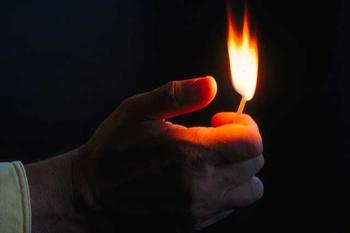
polls_match60013.jpg_4102_164159.jpeg_answer_2_xlargeA three year old boy playing with matches accidentally lets a match fall near the hem of his mother’s living room drapery. But she’s calling him from the kitchen to come eat his dinner.

On his way out, the boy glances at the drapery and sees a tiny smoldering hole, growing wider. Still, mother is calling him to come, “Right now!”

And he’s thinking, “She told me not to play with matches. She’ll be mad.”

So he walks out of the living room, closing the door behind him as if that will get rid of the problem.  

During supper, the boy’s father lays down his fork. “I smell something burning,” he says. Quickly, the boy’s parents  push away from the table and follow the smell to the living room.

Flames are leaping from the drapery, burning out of control and endangering their home. The mother calls 911, but by the time the Fire Department arrives, half the house has burned up.

The three year old wasn’t thinking of the house, or the safety of his parents.  Three year olds rarely think beyond themselves. He was trying to avoid the thing that would immediately affect him–his own discomfort if his mother became angry.

Lighting the match, leaving the room, and finally, not revealing that the living room is on fire–each of these acts has the consequence of expanding danger.

The little boy’s responsibility is lessened because he isn’t mature enough to understand. But we’re adults. We understand that every act we perform has a consequence.

Or do we?

Do we recognize that some dangerous actions have been ignited by our government and have been  allowed to burst into flames that are affecting our freedoms and our country as a whole? Are we leaving the room and simply closing the door behind us to avoid the discomfort of confrontation? Why haven’t  we called it to the attention others? Why haven’t we spoken out against it?

Are we just too busy with ourselves, and like the little boy who burns up his own house, afraid someone might get mad at us?


Video  —  Posted: August 13, 2014 in World On The Edge

3f6fb1bWe are beings with the ability to make choices. But often we’re reluctant to make them. Sometimes that’s because we don’t want to take on the responsibility of what might happen after we make our choice, or our stand on some issue. Is this laziness, or a lack of courage? I think it might be both.

But there are some choices that are so important we must find the courage to make them–and not later, but now. Oh, I’ll get to it someday just doesn’t cut the mustard when it comes to something as important as our soul and where it will spend eternity.

As a youth, Saint Augustine lived a hedonistic lifestyle for a time, associating with young men who boasted of their sexual exploits with women and men. They urged the inexperienced boys, like Augustine, to seek experience or to make up stories about their experiences in order to gain acceptance. It was during this period that he uttered his famous prayer, “Grant me chastity and continence, but not yet.”

Like Saint Augustine, some say they will wait for the right moment to change their errant ways. But what if we aren’t given a right moment? What if we’re suddenly given no more moments at all.

We can go on and on for some time in our addictions, selfishness, meanness, and refusal to listen to the Word of God. But we cannot go on forever. There will come a time when our earthly life will be extinguished.

So how long will we wait to do what we know in our hearts we need to do? How long will it take for us to quit slapping God’s love  away and instead,  turn toward it?

Image  —  Posted: August 12, 2014 in World On The Edge

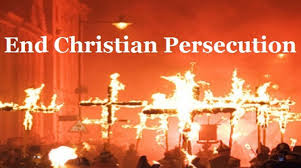
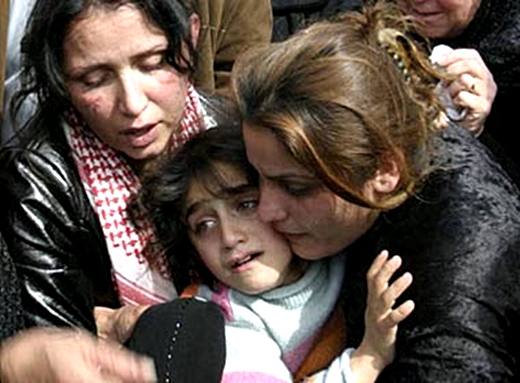
protect_iraqi_christiansAre we aware of what’s going on in our world—right now? In Iraq? In Israel and the Gaza Strip? in Syria? On our own border? Where is America’s leadership, and where is the voice of her citizens?

On Sunday, Pope Francis expressed outrage at the violence aimed at religious minorities in Iraq, where fleeing children have died of thirst, and said his emissary to the region would leave Monday. In a strongly worded message during his traditional Sunday blessing, Francis said the news from Iraq “leaves us in disbelief.” He cited “the thousands of people, including Christians, who have been brutally forced from their homes, children who have died from thirst during the escape and women who have been seized.”

The Pope urged the international community to find a political solution “to stop these crimes.” Cardinal Fernando Filoni, the Vatican’s ambassador in Baghdad during the Iraqi war, will travel to Iraq to show solidarity with Christians, among those targeted by Islamic State militants for elimination.

Elimination? These are human beings made in the image and likeness of God.

We may all ask, “What can we do?”

First of all, we have to be aware of what’s going on—right now. We have to sit up and take notice that there is a huge problem with the Islamic State threatening not only  Christians and other religious minorities in Iraq and elsewhere in the Middle East,  but also threatening us— Americans. Because if we ignore it, if we’re too concerned with our everyday lives to make ourselves aware, and if we let that germ of hatred go on as it is now, then its evil–yes, unadulterated evil–will eventually take us down, too.

Video  —  Posted: August 11, 2014 in World On The Edge

this_is_my_lifeWhen others give us advice we don’t like, we’re sometimes quick to say, “This is my life!” Meaning I’m responsible for myself. But do we really act as if we believe that?

How many of us blame others rather than ourselves when things go wrong with our life? When we do that, we’re not taking responsibility for ourselves; we’re saying something like you should have done something to keep it from happening—you should have been responsible for my life, then this wouldn’t have happened to me.

Making our own mistakes the fault of others is not only whiny, it shows a lack of integrity, dishonesty, and possibly a narcissistic personality.

Narcissists are notorious for placing blame on other people and not on themselves. Even when they clearly and definitely did something wrong, they cannot- and will not- accept responsibility. They almost always deflect the blame elsewhere. Narcissists either ignore their contribution to the situation or insist that the other person (spouse, child, co-worker or etc.) made them do it. Narcissists know right from wrong, they just cannot allow something bad to be their fault. It is another manifestation of their supreme self-centeredness as well as a protection for their fragile ego. It is also a primitive method of avoiding external repercussions.–Alexander Burgemeester

There’s another way to look at the statement “This is my life!” and that is with gratitude for it,  and a desire to polish it to the shine that God intends it to have.

How?

Own what we’ve done. Love others as well as ourselves. Create a space of empathy for others, not demand of others.  Don’t listen to bad-mouthing from someone set on bringing you down. And finally, to see my life as  good, important, valuable, and interwoven in Almighty God’s plan.

Video  —  Posted: August 8, 2014 in World On The Edge