Trying to Fix Things?

Posted: September 16, 2014 in World On The Edge

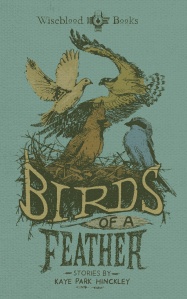
Birds_of_a_Feather_FRONT_PUBLICITY_JPG

I know there of many of you in this nearly miraculous online window of acquaintance who could show me a thing or two about the goodness in your own lives. But bear with me as I continue to put out what I believe to be true–that God is madly in love with each of us, and that love is a big thing. Big enough to change our lives. And I can’t speak for you, but I need that truth.

When something  goes wrong in my life, how do I try to fix it?

First, do I even try to fix it?

Or do I  go after the person who caused the problem with a hammer in my hand?

This  story in Birds of a Feather is about an artist who experiences something going very wrong in her life, and how she tries to fix it.

Click on the cover to order the book.

LITTLE THINGS, BIG THINGS

Late at night after the children are in bed and she’s certain Aaron is sleeping, Amelia takes her flashlight and climbs the back stairs into the attic of the century-old house, to paint. She climbs the wooden steps carefully, barely putting any weight at all on the top step, the one that creaks. In the corner of the attic where the support beam to the rafters makes a perfect right angle with the floor, is a square table with small brass lamp. When she pulls the lamp switch, the table and everything on it– canvas, tubes of oil paint, dry brushes in a glass jar—all come to light in a nearly perfect sphere. She clicks off the flashlight then. A lot of light is neither necessary nor wanted.

Tonight she is working on a portrait of Aaron, an eight-by-ten canvas, as all of them are. Portraits of the children are finished, for now anyway; she will come back to them later when she finds a flaw, or when some new characteristic needs to be added. The children’s faces, four of them, hang from nails hammered into the pine walls like pictures in a beloved, private gallery. Below, stacked against the wall, are more canvases of each of the children from years past, babyhood onward. But this is the first time she’s painted Aaron. Aaron’s unfinished face sits on an easel, looking back at her through deep brown eyes. The eyes are still flat. No highlights yet. Amelia hasn’t determined whether the light in his eyes will come from the right, or the left.

She pours varnish into a small metal cup, and turpentine into the glass jar, then swishes the brushes around to be sure they are clean, wiping each of them with a stained cotton cloth, pouring out the old, dirtied turpentine, and refilling the jar with the new. On a glass plate, she squeezes out the oil paint, beginning with cadmium yellow light and titanium white. Highlights for Aaron’s eyes. The light will come from the right, she thinks, wondering why she hesitated last night when she began his portrait; the light in each of her portraits always comes from the right, from the only natural light possible in the attic–through one round window that looks like the porthole of a ship. Through that window, occasional moonbeams compete with the lamp, and if the beams are bright enough, as they sometimes are, Amelia turns off the lamp, and paints by moonlight.

Tonight there is no moon, so the lamp stays on. She paints for an hour or so, until Aaron’s face is just like she wants it, charged with an expression of love and faithfulness accented by the meticulous highlights in his eyes. Then she takes the canvas and hangs it on a waiting nail, beside the portrait of their last child, Aaron Junior.


Love Yourself??

Posted: September 15, 2014 in World On The Edge

Birds_of_a_Feather_FRONT_PUBLICITY_JPG

We are called to love ourselves as well as others. But we cannot love a false self. We are more than mannequins dressed by another’s intentions. We have to know who we are–for Real.

Loving oneself begins with digging deep to be honest about who we are and what we do. Digging deep to discover the things we are good at, and loving those things about ourselves. Digging deep to discover our faults, our flaws, and doing something about those so that we can love ourselves.

Being loving–or unloving–can always be seen in our actions.

Here is the first page of a story about a man who cannot love himself–until he changes who he has become.  Click the book cover to order.

Blue Bird of Happiness

Halloween. Old Florida Highway 98. Right turn toward the Gulf, a procedural deviation from integrity. Procedure is programmed into the mind of a physician. Even some deaths are scheduled.

The sun roof is open and the windows down. I turn the Lexus into the parking lot of The Boat Dock Bar, crushing primeval oyster shells beneath Michelin Energy tires while triangular flags slap plastic, carrot-colored polka dots against a hallowed, sapphire sky, and an incongruent blast of music shuts out the pious breath of waves.

There are lots of bars in Destin, but this one is set apart. The Boat Dock Bar claimed her Gulf-front spot when the town was just another Florida fishing hole, and then held to it, regenerating like the tail of a lizard after Hurricane Dennis. When the hurricane hit, my wife, Felicia, heard about The Boat Dock’s fate and called from her law office to tell me. Four people in plastic masks, drunk enough to think they could ride out the hurricane on a walkway with weak railings, were swallowed by the sea.

The walkway was the bar’s first renovation. Crossing the wood planks, I pass a memorial sign that reads: ‘To the Flawed and Fallen,’ and I’m envious of the bar’s resurrection.An outside voice enters in. Envy is normal  and shouldn’t be suppressed. It simply needs to be properly channeled. A lesson I learned in Group Therapy. Never mind the maternal negation in my head —that envy is a cardinal sin opening the soul to greater vices.

I didn’t have time for a change of clothes, so I’m still dressed in a pair of new khaki shorts I paid eighty-five dollars for at the outlet two weekends ago, the last time I was down here. I wear no socks with my loafers, no underwear for easy disrobing, and no shave since I left Birmingham. A wealthy woman I met here once—a woman with hungry eyes, but too old for me—summed me up by saying I had a neat, charmingly passive, appearance. I doubt she would say the same today; there’s a salsa splatter on my expensive Polo shirt from a drive-in lunch on the way down, and then a swerve of the Lexus to avoid the unavoidable.

Special Saturday Blog

Posted: September 13, 2014 in World On The Edge

birthday%20cake

I don’t usually do a blog on Saturday. But this is a very special blog for my ‘biggest blog fan.’

This is a fan who encourages me daily, who clicks ‘like’ whether it’s a good blog or not.  A fan who happens to be my husband.

And today is his birthday.

It’s a day for me to let him know how much I love him, and appreciate him.

So here’s a song I think will do just that, because I wrote it just for him.

He may even give it two ‘likes.’

A Heart In Repair?

Posted: September 12, 2014 in World On The Edge

08fatalrhythmThat a healthy human heart is essential to life is surely an understatement. When our hearts are not working properly, we are in danger.

V-tach is one problem to look out for, and definitely one to repair. Ventricular tachycardia (V-tach or VT) is a type of tachycardia, or a rapid heart beat, that starts in the bottom chambers of the heart, called the ventricles, the main pumping chambers of the heart.  V-tach can be a fatal rhythm  because it may lead to ventricular fibrillation,  and sudden death.

But we speak of our hearts in other ways besides our physical health. We also speak of our hearts in a spiritual way that has to do with love. ..love for oneself, and love for others. Whether diseased physically or spiritually,  our hearts sometimes need repair.  Fatal Rhythm, Ron O’Gorman’s new novel repairs the hearts of its characters  in both ways.

If you like a roller-coaster novel with a genuine hero you can pull for, then Fatal Rhythm is the book to read. The well thought-out twists and turns sit right alongside the quiet, sweet, tug-at-the-heart moments until the last page is turned.

Click on the cover to order the book.

Here’s a short summary:

In the pre-dawn hours of the graveyard shift, the ICU at the Houston Heart Institute is quiet, and quietly patients are dying. Surgery resident Joe Morales dreams of becoming a rich heart doctor. First, he must survive his assignment to an ICU rife with land mines–unexplained patient deaths, rival faculty, fellow resident saboteurs, a cost-slashing administrator, a ruthless insurance executive, a seductive head nurse, a jealous wife, a critically ill son, an overprotective mother, and an orderly distraught over his daughter’s death. To salvage the career he thought he wanted, Joe must determine the cause of the suspicious deaths. In the process, he’s forced to re-examine the ethnic and religious heritage that he had rejected.

R. B. O’Gorman obtained a PhD in Biochemistry from Rice University and studied cardiovascular surgery under Dr. Michael E DeBakey. FATAL RHYTHM is a medical suspense/mystery based on his training experience with Micahel E. DeBakey, called the “greatest surgeon ever.”

Dr. O’Gorman  and I will be part of an event entitled “The Literature of Belief” on October 16 from 6–7:30 pm at The Garden District Book Store in New Orleans.  We’d love to have you! We will also be in Mobile, AL on October 4–along with our books– for the Catholic Women’s Conference.

Wanna Be in That Number?

Posted: September 11, 2014 in World On The Edge

Birds_of_a_Feather_FRONT_PUBLICITY_JPG

If you were asked the question: Who can be a saint?  Which of these would you choose?

. only the goody goodies?

. member of the New Orleans football team?

. an innocent child?

. everyone?

This is the first page of a story  entitled ” The Mercy Seat,” after an old Protestant hymn some of you may know, or remember.  It is the fifth of ten stories in Birds of a Feather. Click on the cover to order the book.

The Mercy Seat

Today is Good Friday. It is my turn with Grandmother. Her gray hair is spread out upon the pillow like roots from an old tree. She lies sleeping in her hospital bed, in a room of clinically accurate monitors, IV poles, and bed rails. To someone looking in, she might seem insignificant, barely separable from the sheets drawn tightly around her like swaddling. Yet she is the most consequential person in my unworthy life. She is church to me, salve for a sinner.

From her window on the second floor, across Bell Street, is a view of the crumbled parking lot where the church used to be; Saint Mary Magdalene,Grandmother’s church, the church of my Catholic family. It was built of white brick on the corner of Main Street back when Main was lined with huge oaks hovering like protective parents over everything below.

In our small town Catholic children were armed with the sacraments and the Catechism, raised to defend the Pope, Confession, and Natural Family Planning. “Defend your church with courage,” Grandmother instructed us, “because the Lord wants you to be a saint.”

Our footfalls behind hers, on the sidewalk after morning Mass, became as one melodic phrase, tapping out yeses for our conductor. Because of her, I kept in line. I didn’t lie, or cheat, or deceive. But that was then. I am not a child anymore.

What is The Consequence?

Posted: September 10, 2014 in World On The Edge

Birds_of_a_Feather_FRONT_PUBLICITY_JPG

Man is able to snatch everything except one thing, the last of human freedoms: the choice of an attitude under any given set of circumstances to determine his own path.― Viktor E. Frankl

Following are the first pages of “The Psalm of David Fowler,” the fourth story in Birds of a Feather. Click on the cover to order the book.

The Psalm of David Fowler

One afternoon before ‘it’ happened—he was in the back yard, poking the rake into a pile of burning leaves. Laura called to him from the porch, “Don’t let that fire get out of hand and burn the house down!”

A stream of smoke spread across the yard—not in his direction; it advanced toward her. She covered her eyes.

“You shouldn’t be burning leaves in the first place, David. They protect the grass from a freeze.”

“What freeze? We may never have one.” It was the middle of December and South Georgia weather was characteristically kind with a temperature in the low seventies.

“We always have at least one freeze. And remember last year? It was so cold the pipes burst, and we were without water for a week!”

He gave her a condescending shake of his head. “I’ve got it under control, baby.” Then he remounted the riding mower.

“Don’t go off and leave that fire burning!”

Even over the sound of the mower, he could hear her warning. He advanced up the yard anyway. All around him dry leaves fluttered and fell rain-like over the yard, while flames from the unattended pile began to lick up, higher and higher.

“Don’t you ever think about the consequences?” she shouted as he turned the corner of the house. He knew she’d run for the hose.

The day “it” happened, she asked him the same question about consequences, then she ran into the bedroom, locked the door, and cried. One year later, he, David Fowler, entered the gates of a federal prison, a consequence far beyond his imagining.

He was immediately strip-searched, a procedure that scooped from him the last adhering particle of dignity he’d been able to hold on to since his sentencing, and generated in his mind words he’d heard decades before, as an altar boy serving Mass: I am a worm, not a man; the scorn of men, despised by the people. All who see me scoff at me; they mock me with parted lips, they wag their heads.

As a twelve year-old boy, dressed in his floor-length black cassock and white surplice, the words meant nothing to him then. Not until today when he was ordered by a female guard to remove his clothes, his T-shirt, his underwear; when he was ordered to bend over for her coarse, gloved intrusion of his body; did he genuinely absorb them.


Climbing Higher??

Posted: September 9, 2014 in World On The Edge

Birds_of_a_Feather_FRONT_PUBLICITY_JPG
The first page of the third story in Birds of a Feather is coming up. But here’s a little behind the scenes info on the story. It takes place in a fictional town in Alabama called Bethel, which in the Bible refers to the Gate of Heaven and the site of Jacob’s Ladder.

The name Bethel comes from the Hebrew beth, meaning house, and el, meaning God. Bethel means House of God. Numerous events of Bible History occurred there, including God’s appearance to Abraham and Jacob, and for some time it was the place where the Ark of The Covenant containing The Ten Commandments was housed.

This story was written because of my concern about the deadly violence being perpetrated today–even in the  small towns of our beautiful America.

Click on the book cover to order.

SHOOTING AT HEAVEN’S GATE

Satin is crouching at your door. You ain’t seen him coming, boy. Nobody seen him coming but the Lord Jesus Christ. Now, he’s after you. Don’t wait for his spear. Conquer him!

On the last day of the Spring term, Edmund had to leave the teacher’s podium during a Sociology class because his grandfather’s fanatical voice would not depart from his head. Standing in front of his class, he couldn’t remember the point he was making and his teacher voice began to tremble; so he lifted the sheet of notes he’d made as a reminder, but the notes seemed to will themselves into a crumpled ball then fly from his hand toward the back of the room. His students looked stunned. Several dodged the paper ball, and the rest turned their eyes downward, as if they were embarrassed for him, as if he didn’t measure up to their expectations, and never would.

He felt nauseous, mumbled some excuse, left the class room and headed down the hall to the men’s room, just as the squatty shadow of Mal Hawkins emerged from its fluorescent glare. And therein lies your ruin, Edmund. I’ve told you to nip him in the bud. But will you listen? No!

“You all right?” Mal asked, holding open the door for Edmund to enter. “

“Fine!” he snapped at the psychology professor, while in his mind his grandfather went on and on about the fact that Edmund was not fine. Not fine at all.

“See you tonight then.” Mal said. “We’ll get you feeling better—that is, if your wife will let you out.”

“Oh, she’ll let me out alright,” Edmund said. “She doesn’t tell me what to do.”

Mal grinned as he left, and the door to the men’s room swung closed behind him.


Where Do Your Demons Hide?

Posted: September 8, 2014 in World On The Edge

Birds_of_a_Feather_FRONT_PUBLICITY_JPG

“St. Cyril of Jerusalem, in instructing catechumens, wrote: The dragon sits by the side of the road, watching those who pass. Beware lest he devour you. We go to the Father of Souls, but it is necessary to pass by the dragon. No matter what form the dragon may take, it is of this mysterious passage past him, or into his jaws, that stories of any depth will always be concerned to tell, and this being the case, it requires considerable courage at any time, in any country, not to turn away from the storyteller.” (Flannery O’Connor, Mystery and Manners: Occasional Prose)

Our  personal dragons never really leave us.  They hover  very close to the things we desire, waiting to turn us in harmful directions.  So often, and in various ways–through people, or events– we are warned to beware of them, but just as often, we set the warnings aside.

Here is the beginning of  “Dragon,” the second of ten stories in Birds of a Feather. Click the cover to order the book on Amazon.

DRAGON

I keep my head down when I sign for a Gulf front room, not wanting to face the night clerk. She directs me to the fifth floor: shell-shaped pillows on a king-sized bed, gauzy drapery mimicking crystal green water, and double-paned windows, framing a fire-breathing, dragon-like sunset.

At home, in Highlow, they’d quoted St. Cyril.
“Beware of the dragon,” they’d said about Richard.

I stretch out on the king-sized bed and turn on the massage. The pulsing reminds me of his fingers and the expensive bottle of sun block he bought, all of which he used on me. Richard liked manipulation, the slip-sliding feel of possession. Maybe he was born that way and couldn’t help it. Maybe I could have changed him. Then maybe he wouldn’t have died.

For months, I was Richard’s only nurse; the one he’d been having an affair with was afraid to touch him after she learned he had AIDS. He didn’t cheat anymore, and he didn’t lie, except in the bed he’d made for himself.

At home I was taught compassion, so I timed out medication every four hours, kept watch that the oxygen hose stayed in his nostrils, that the battery worked in case of a storm surge; but I resented the stench of his bed pan, the ooze of his lesions, the diapers wrapped around hips so thin that bones showed through tissue paper skin. The man betrayed me after all.

“Don’t trust him,” they’d said.

Before I left Mobile, I telephoned Anthony, Richard’s best friend, to say I was leaving. Again, Anthony said, “I love you.” He wanted to know if I loved him. I gave no answer.

An empty pause and then, “Richard’s death was an accident, Liz. You didn’t create the storm. I’ll call your cell tomorrow.”


Recurring Dreams?

Posted: September 6, 2014 in World On The Edge

Birds_of_a_Feather_FRONT_PUBLICITY_JPG

Repetition in our dreams can indicate a similar situation in our waking life.  A recurrent dream usually happens when we are  not paying attention to something important, so the dream will  repeat itself until we finally understand and receive the message.

Here’s the example of a character’s experience with an important dream—from “Red Bird,” the first story in Birds of a Feather, published in July by Wiseblood Books.

Click on the book cover to order the  collection of ten stories .

RED BIRD

The recurring dream has been with Jude for thirty years, nearly half his life. In it, he’s a boy of six or seven,cornered by an elderly man in a wrinkled linen suit and a white straw hat. The man has caught him in the act of—he doesn’t know exactly what, because this is where the dream always begins. It could be a number of things. Jude isn’t sure if the man is friend or enemy. The man never speaks, only passes judgment with his eyes. By now, Jude is used to the dream, to the old man and his quiet condemnation. When the large hand reaches for him, he usually shrinks to nothing then wakes with a sense of accomplishment that he has outsmarted his judge another time. But when he wakes this November morning, he doesn’t remember having dreamed at all. Something different muddles his mind,some confusion he can’t get rid of.

A drizzle of rain, in the rhythm of a heart-beat, taps against his bedroom window. He turns to look, but the corner of the down pillow is flipped up and blocks his vision. He raises a weak hand to pat it down, surprised at how much strength diabetes has stolen from him.  The  gray sky appears disfigured by an arthritic tree and a cardinal clings to a leafless limb, a red blemish in the drizzling rain.  He’s not sure why he shouts, “Get away, red bird.” Fly before you’re caught!

jesus-and-the-devilMost people believe in angels, and that God created them, but many don’t believe in  the devil. Yet the devil was created by God before God created Man.

Frankly,  especially today, I don’t see how it’s  possible not to believe in  the devil, who is evil itself.  We don’t have to go to the Middle East to find Satan in action—because he’s certainly here, too—-but what is happening there surely points a finger at personified evil  Consider the beheadings of Americans, the crucifixion of Christian children and the burning out of their eyes, the raping of women,  burying people alive,  destroying their homes, stealing, torturing, defaming, and on and on!

The devil hates goodness, and goodness is all about God.

So, what is the nature of  Satan’s game?

The devil attacks us in our complacencies, where we are, through what we love. And sometimes the devil has a very attractive face–one that’s hard to resist.  He lures us by our addictions, the things we think most about, the things we’ve tied ourselves to. He yanks on the chain of those addictions, leading us further and further away from what is good, to what is evil–until we become his devoted ‘pet.’ Then he’s got us just where he wants us.

No, we don’t want to hear this.  We say, “Look, I am who I am, and who I am is okay.”

Well, that depends. Because we weren’t given life on earth in order to fulfill ourselves. Believe it or not, each of us has a greater mission than our own existence. There is a reason for our having been born.    God knows our mission even if we haven’t yet discovered it. And it has nothing to do with evil, and everything to do with good.

To determine what is good for us requires an informed conscience—an objective conscience, based on what we know to be true. We have to be able to stand outside of ourselves and look into the mirror of what we are becoming. And then, we have to courage enough to admit it.

The Devil is a liar,  who will use any means to get to us–flattery is one of them. That misguided axiom we hold to–“I’m okay, you’re okay no matter what I do, or what you do” is one of his tools. We see it growing day by day in our present society.

The word Satan comes from the Hebrew verb satan meaning to oppose, to harass someone. The word devil is derived from the Greek diabolos meaning an accuser, a slanderer. The Bible says  that in the beginning, God created Satan as a good angel, as a beautiful cherub called Lucifer. Lucifer had a superabundance of spiritual gifts, he was also endowed, as we are, with the gift of free will. God left him free to choose good over evil, and, as we know, he chose evil, rebelling against God and taking one third of the angels (now referred to as demons) with him into rebellion.

And war broke out in heaven: Michael and his angels fought with the dragon; and the dragon and his angels fought,  but they did not prevail, nor was a place found for them in heaven any longer.  So the great dragon was cast out, that serpent of old, called the Devil and Satan, who deceives the whole world; he was cast to the earth, and his angels were cast out with him. —Revelation 12:7-9

These angels irrevocably chose through their free will to rebel against God and not to serve Him.  When we do the same in our lives, Satan would be the tempter, the one to bring out the fallen nature in ourselves, the one to assist us in tripping and falling, the one to turn us from God.

How can we say he’s not real?  And how can we honestly say that we haven’t personally learned a thing or two from him?