Do you see yourself as ‘part’ of something? Do you play a big part, or a small part?
Maybe you think “big” is more important than “small.”
The strirrup bone inside the eardrum is the smallest bone in the human body. And the femur is the biggest bone in the human body. Which is most important? Well, I wouldn’t want to do without either of those parts, would you? How powerful those parts are!
On the other hand, many of the deadliest creatures on Earth are also some of the tiniest (like the deathstalker scorpion) It’s the diminutive size of these animals that makes them so terrifying because they’re hard to see. Their small size gives them power, too
A few weeks ago, one of my sons put a new radiator in his car–all by himself! It took him time, many hours on quite a few days to do it, mostly because he was missing a tiny little part of what it would take to complete the job–a disconnect tool. Everything was fine except he needed that tiny tool to get his big radiator running like it should.
Whether a thing is “big” or “small” is not important. What’s important is that it do the job it was created to do.
Each of us has a part to play in life. It may seem a small part to us, but small things can literally change the world for the better—if we are not so absorbed in ourselves, if we remember that everyone we meet is journeying through life with us, and if we hold out a hand to another fellow traveler every now and then.
“St. Cyril of Jerusalem, in instructing catechumens, wrote: The dragon sits by the side of the road, watching those who pass. Beware lest he devour you. We go to the Father of Souls, but it is necessary to pass by the dragon. No matter what form the dragon may take, it is of this mysterious passage past him, or into his jaws, that stories of any depth will always be concerned to tell, and this being the case, it requires considerable courage at any time, in any country, not to turn away from the storyteller.” (Flannery O’Connor, Mystery and Manners: Occasional Prose)
Our personal dragons never really leave us. They hover very close to the things we desire, waiting to turn us in harmful directions. So often, and in various ways–through people, or events– we are warned to beware of them, but just as often, we set the warnings aside.
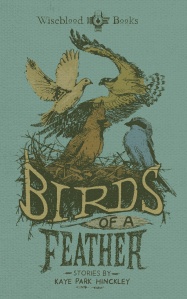
Here is the beginning of “Dragon,” the second of ten stories in Birds of a Feather. Click the cover to order the book on Amazon. It’s now on Kindle, too!
DRAGON
I keep my head down when I sign for a Gulf front room, not wanting to face the night clerk. She directs me to the fifth floor: shell-shaped pillows on a king-sized bed, gauzy drapery mimicking crystal green water, and double-paned windows, framing a fire-breathing, dragon-like sunset.
At home, in Highlow, they’d quoted St. Cyril. “Beware of the dragon,” they’d said about Richard.
I stretch out on the king-sized bed and turn on the massage. The pulsing reminds me of his fingers and the expensive bottle of sun block he bought, all of which he used on me. Richard liked manipulation, the slip-sliding feel of possession. Maybe he was born that way and couldn’t help it. Maybe I could have changed him. Then maybe he wouldn’t have died.
For months, I was Richard’s only nurse; the one he’d been having an affair with was afraid to touch him after she learned he had AIDS. He didn’t cheat anymore, and he didn’t lie, except in the bed he’d made for himself.
At home I was taught compassion, so I timed out medication every four hours, kept watch that the oxygen hose stayed in his nostrils, that the battery worked in case of a storm surge; but I resented the stench of his bed pan, the ooze of his lesions, the diapers wrapped around hips so thin that bones showed through tissue paper skin. The man betrayed me after all.
“Don’t trust him,” they’d said.
Before I left Mobile, I telephoned Anthony, Richard’s best friend, to say I was leaving. Again, Anthony said, “I love you.” He wanted to know if I loved him. I gave no answer.
An empty pause and then, “Richard’s death was an accident, Liz. You didn’t create the storm. I’ll call your cell tomorrow.”
Last Thursday, I was invited to speak at the Georgia Museum for Writers. It was a lovely time–wonderful new friends and great food. I thank the Board so much for their kind hospitality!
The Georgia Museum in Eatonton, GA, honors three writers from the area: Joel Chandler Harris, Alice Walker, and Flannery O’Connor, so I was delighted to be there.
The following is an article that came out last week in the area’s Lake Oconee Living Magazine, about my short story collection Birds of a Feather, from which I read a story. I also gave a short reading from A Hunger in the Heart, and spoke about why I write as I do.
Here’s the article:
DESPITE OUR DIFFERENCES, WE ARE THE SAME
Collection is propelled by curiosity about human nature
Written by Lucy Adams
Dual nature plagues the human existence.
No one lives without despair and hope, grief and joy, tears and laughter, selfishness and gratitude, jealousy and empathy, self-loathing and self-love, destructiveness and creativity. Though we focus on differences, attempt to elevate our worth above others, justify our righteousness by comparing deeds, we essentially are all the same.
As Kaye Park Hinckley’s collection of short stories is titled, we are Birds of a Feather. “The theme of all the stories is sin and salvation,” says Hinckley, “the sinfulness of everyone and the opportunity for everyone to take advantage of God’s mercy.” Raised in the Catholic Church in the deep South, Hinckley crafts each story in Birds of a Feather out of her Southern heritage and her Catholic faith. “What I want people to take away from this book,” says Hinckley, “is that we are all created in the divine image of God.” Intertwining religion with regional culture, the collection is classic Southern literature in the same vein as short stories by the likes of Flannery O’Connor, whose work strongly influences that of Hinckley.
She writes characters who are shocking, flamboyant, disturbed, unkind. She writes characters who are merciful, gracious, empathic, loving. She writes characters who demonstrate the dualities of human nature. Edmund, in “Shooting at Heaven’s Gate,” allows himself to be used by evil. Rather than condemn his actions, Hinckley pushes her reader to acknowledge the frailties of the human heart. “We all are capable of doing great evil,” explains Hinckley. “Why does a person do this? I like to know reasons.” Curiosity about human nature propels her plots.
Don’t seek clearly defined protagonists and antagonists here, however. Hinckley’s characters are complicated. They’ve done horrible things, witnessed horrible things, been the victims of horrible things, yet they continue rising each morning and putting one foot in front of the other. They fulfill their obligations to each other while these horrible things gnaw at them from the inside out. Hinckley deftly presents the repulsiveness of her character’s actions, while also revealing her characters’ drive toward love.
In the story “Dragon,” Liz harbors guilt and secrets about a vengeful act that she believes revealed her true nature, which she pours out to a roadside café waitress as if making a confession. Her confessor comforts her, saying, “Listen Shugah, we all got to pass by the dragon . . . Don’t give him nothing else to eat.” The power of sinfulness is juxtaposed against the power of God’s mercy. The capability to do great evil lies next to the ability to advance great good.
In the midst of turmoil and wrestling with truth, Hinckley injects humor so familiar, it causes the reader to recognize himself. “Red Bird” poignantly traces the ocean of dementia into which the main character, Jude, drifts without fighting the tide. His wife, conflicted in her anger over his past wrongs and her duty to care for him in his illness, addresses him with irritation, asking, “Don’t you know who I am, Jude?” He doesn’t, so he grins and replies, “Don’t you know who you are?”
Released in July, Birds of a Feather contains ten short stories that hearken to Hinckley’s Alabama childhood, Georgia roots (on her mother’s side), and Catholic faith. She masterfully manipulates the English language and the vernacular to generate fully developed plots and well-rounded characters. Drawing on the influences of Flannery O’Connor, William Faulkner, and others, she infuses her writing with a bounty of symbolism. Most of all, she is fair, always fair to her characters and her reader. She allows them to make their own choices and to draw their own conclusions. Because, at the very core of the human condition, of us all, of Birds of a Feather, is free will.
Meet the author!
The Georgia Writers Museum in downtown Eatonton welcomes Kaye Park Hinckley, author of Birds of a Feather, for a book signing event on Oct. 30, from 5:30 p.m. to 7:30 p.m. The event is free and open to the public and light refreshments will be served. For more information, call the museum at (706) 991-5119 or visit http://www.georgiawritersmuseum.com.
We filter the world through our personal experiences with people and events. Everything that happens to us in a relationship or an event is filed away in our brains, and then re-used in interpreting and reacting to other people and events.
Experiences we have with our parents affect the way we see our world today, and especially later on.
Friends influence us for better or worse.
And our children–I think–often teach us to be courageous. We stand up for them, nurse and nurture them. We find ourselves to doing things for them we wouldn’t necessarily do if we didn’t love them.
Personal relationships affect all of us. Some relationships may not be so good. Some may be wonderful. But whatever they are, we learn and grow from them. People influence people. That’s a fact.
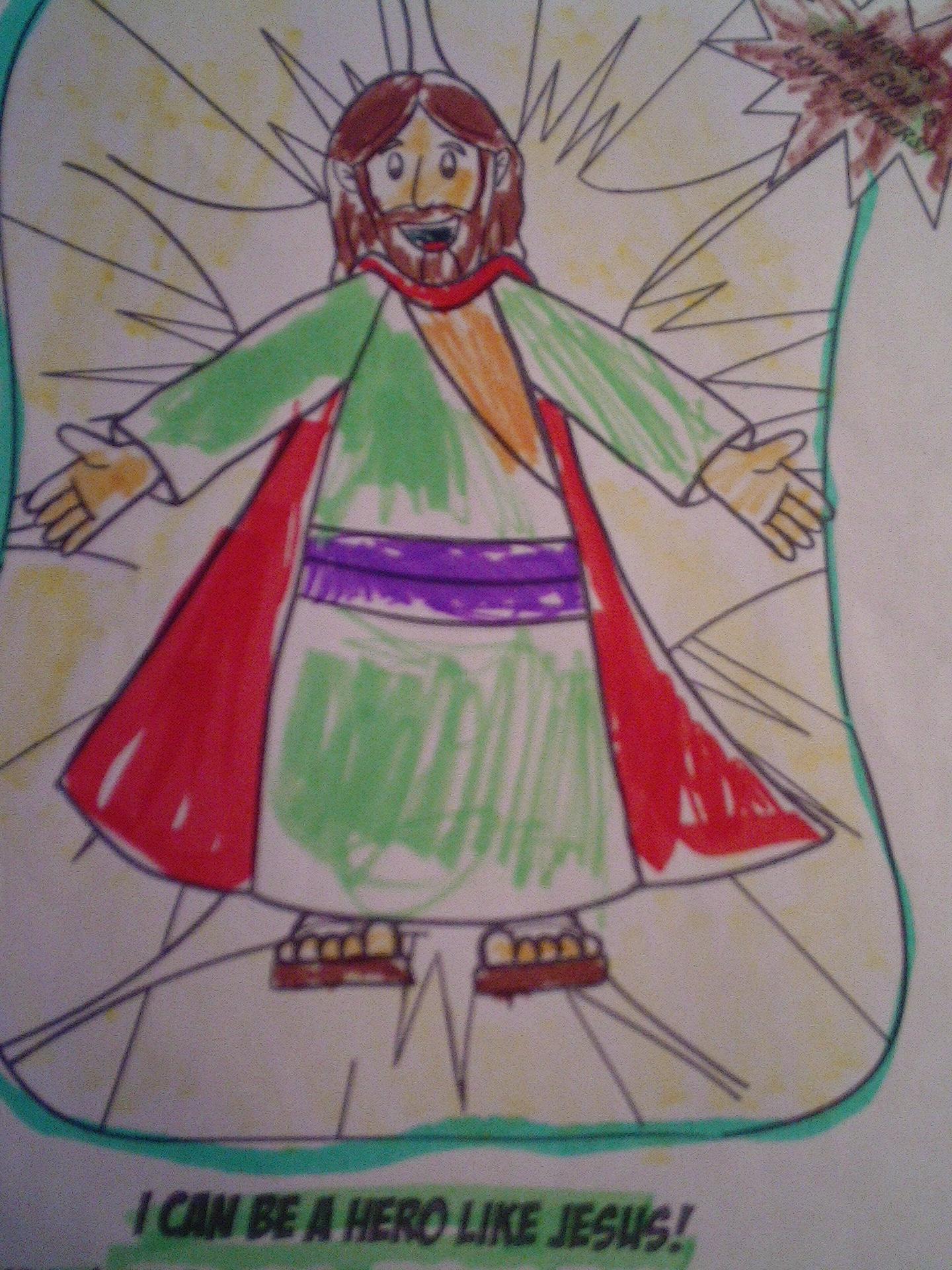
It’s become standard to talk about a personal relationship with Jesus. What a wonderful influence He is! The life of Christ truly shows us The Way.
How did He relate with His earthly parents, Mary and Joseph? With friends, with enemies, with sinners and saints? There are so many lessons to be learned from Him in those relationships!
The next time we have relationship questions or problems we should consider Jesus’s relationships. They provide the answer. And we certainly should be sure our children know all about Him.
Growing up, my parents and grandparents usually added the word ‘Sweet” to His name. So that’s what I used as a child when I spoke or thought about Him: “Sweet Jesus.”
I think the adjective adds a lot to a child’s perspective. Someone ‘sweet’ is someone to whom a child will easily talk to, ask questions of, or simply love.
This is the sort of relationship we want with our God, isn’t it?
We want to be able to talk to Him. Ask questions of Him. Simply love Him.
If you haven’t already, try talking to Him. Ask questions of Him. He will respond in the most curious ways–and then–and this is a promise– you’ll have no problem at all simply loving Him.
How many times have we acted wrongly—and known it?
How many times have we regretted hurting someone, even hurting them badly?
Have we tried to make it right? Have we asked for forgiveness?
Before forgiveness can be given by someone we’ve hurt, that person should be able to trust that we are contrite.
What is contrition, really? True contrition comes from the soul, and by God’s grace. It involves not only sincere sorrow for our offenses, but a firm purpose of committing them no more.
It’s more than just saying we’re sorry. It’s changing our very selves, if need be.
I don’t know about you, but for me, changing myself is HARD. I know what I need to do, but I don’t do it, or maybe I do it a little and then excuse myself. One step forward, two steps back–but I don’t want to give up trying, do you? And I won’t have to.
We do have strength that will be given to us—and it comes, as the following song says–from a higher window. It is the strength of our Redeemer who will help us to contrition, to change, to asking for forgiveness, and then to love. It’s never too late. The possibility is here. Is today the day?
When we follow a person on Twitter, it’s because we either admire him or her, or because we’re curious. We may not be a fan, yet; but we want to see what makes this person tick, how he or she goes about things, even what he has to offer us in return. If we like what we see, we’re enthusiastic. We’re devoted. We are a Fan.
Are we true fans of Jesus? Do we attempt to shadow His goodness?
Shadowing Jesus isn’t about showing up for the church committees we may serve on. Following Him isn’t about putting in an appearance at Mass, or Sunday Services. Following Jesus is personal: Jesus and me.
My path to growth is taken as a child of God. This path involves others, but if it doesn’t begin with me, it is a fruitless and futile effort. Once we have that personal beginning, we will naturally reach out to others.
On our new path, we attempt to emulate–to be like Jesus. In the beginning of our imitation of Him, we discover the stirring of a fact we may not have realized: we are already His. We are made in His image. We are made to be good.
And He wants us. He wants us to freely choose Him. But we have the ability to say yes or no. On our path of following Him, when He turns to us and asks us to be a reflection of His goodness, how many times have we said, no? I would suggest many.
However, each step we take with Him, each communicative step, each conversation with our God—whether positive or negative on our part, is a step to growth. Because God will never leave us, though we may leave Him, time and time again.
The trick is never to give up on the following. To learn what makes Him tick. How He goes about things. We have to understand what He offers us in return.
Outward discipleship can be an off and on thing, like pulling petals off a daisy in a reversed child’s game: I love Him. I don’t love Him. I love Him. I don’t Love Him. After all, we are flawed and fragile.
But God is perfect. God is always. His grace through the Holy Spirit is forever present. We have to choose, and sometimes re-choose it; nevertheless, our genuine path as Human Beings is to continue to follow Truth in our walk with Jesus.
As human beings, we are inherently good, but unfortunately, we sometimes allow ourselves to be misguided when assessing the “good” in our society. Today, we are misguided by the trappings of a word: Tolerance.
Click on the book cover to order on Kindle and see how I’ve treated Tolerance taken to the extreme. One of its underlying themes is: “First, get rid of The Shepherd, and then go after His Sheep.”
HOW IS THIS BEING DONE TODAY?
Well, do you want to be described as ‘intolerant?’
No, that’s a big negative. It shows us as small and petty.
Do you want to be described as “tolerant?’
Yes, in many circles, that’s a plus. It shows us as large and magnanimous.
But Tolerance is one word that has can have opposite definitions, all according to its relevance in particular situations.
We are tolerant toward our children, even when they are exasperating, because we love them. Yet, we will not tolerate certain kinds of behavior from them—that’s also because we love them, and want to raise them to be good people.
There are some morally ugly, and essentially evil, viewpoints parading around today under the guise of tolerance. For Christians to let these viewpoints go unchallenged, no matter how politically correct those viewpoints have become, is cowardly. Evil must be named, and it must be confronted.
The problem is: “Satan never looks like Satan. He drapes himself in celebrity and humor and humanitarianism, using celebrity to mislead, humor to mock, and humanitarianism to de-humanize.”— Father George Rutler
Here are more wise words from Bishop Fulton J. Sheen:
“Love is Not Tolerance.
Christian love bears evil, but it does not tolerate it. It does penance for the sins of others, but it is not broadminded about sin.The cry for tolerance never induces it to quench its hatred of the evil philosophies that have entered into contest with the Truth. It forgives the sinner, and it hates the sin; it is unmerciful to the error in his mind. The sinner it will always take back into the bosom of the Mystical Body; but his lie will never be taken into the treasury of His Wisdom.
Real love involves real hatred: whoever has lost the power of moral indignation and the urge to drive the buyers and sellers from the temples, he has also lost a living, fervent love of Truth. Charity, then, is not a mild philosophy of “live and let live”; it is not a species of sloppy sentiment. Charity is the infusion of the Spirit of God, which makes us love the beautiful and hate the morally ugly.”
Be aware of a misguided tolerance of evil—-because a hungry wolf in sheep’s clothing is still a wolf.
Halloween evokes many memories of my children growing up. I probably shouldn’t admit this particular memory, but when ONE of my girls was a tyrannical toddler, I gave the little thing a nickname–“Witchy Woman.” Believe me, at the time it suited her well. All she needed was a miniature broom.
Of course today, she’s anything but witchy–I mean I’m certain her husband and children would never call her such!!
But hey, aren’t we all a little ‘witchy’ at times. Look at some of the characteristics of these tiny, toddling people:
They discover they can walk on two legs and so are “into everything.”
They are stubborn about ME, MINE, and MY.
They are in love with the word NO.
They become easily frustrated.
They like to build, knock down, put in, and take out.
They have very short attention spans.
They imitate almost everything they see.
And then there are:
The big smiles when they wake up from a nap or in the morning (Despite the load in their diapers)
The sloppy kisses.
The arms around your neck.
The squeals of laughter.
The “help Mommy make dinner” pans on the floor.
The colorful scribbles.
The heads of hair full of paste, or spaghetti, or you name it.
The fall, the get-up, the tears and the “I want Mommy!”
Today, my little ‘witchy woman’ is one of whom I’m very proud. Her witchy-ness propelled her, and may even have been the key to her great success as a woman. I am amazed at how high she flies!
On Earth, we don’t have the fullness of Heaven, where all is perfect and God’s presence is enjoyed eternally. But when we pray that God’s kingdom will come on earth (as in the Lord’s Prayer) we want our devotion and our service to God to show that He is present, here, in some way. We do this by loving and caring for the people He created; all people, made in His image and likeness.
We can choose not to do this. We can choose to hate, or disrupt, or bring others down. We can choose not to see their connection to the God who made them, and us—-
But—-This does not mean we should be blindly tolerant. This does not mean that we go along with everything.
At times, it means that we are called to rock the boat. At times, we are called to be irate enough to ‘overturn the tables in the temple’ as Jesus did to the moneychangers.
And I think TODAY is one of those times.
I believe our country, our once-respected and great America, is being threatened from within, as well as from without.
If you read this blog, you know I’m a fan of Aesop’s fables. Here is another: The Swallow and the Other Birds
It happened that a Countryman was sowing some hemp seeds in a field where a Swallow and some other birds were hopping about picking up their food. “Beware of that man,” quoth the Swallow. “Why, what is he doing?” said the others. “That is hemp seed he is sowing; be careful to pick up every one of the seeds, or else you will repent it.” The birds paid no heed to the Swallow’s words, and by and by the hemp grew up and was made into cord, and of the cords nets were made, and many a bird that had despised the Swallow’s advice was caught in nets made out of that very hemp.
What did I tell you? said the Swallow. “Destroy the seed of evil, or it will grow up to your ruin. “
Are we headed to a place of ruin? We find it so easy to go along with the crowd—and we find it so hard to stand up against what we know isn’t right. And often we throw up our hands and give up on something, or someone—a child, a friend, a co-worker, even a spouse.
Today, I ask: Have we given up on America? Have we become tired or indifferent to what our country was supposed to be, but is no longer? What can we do about it?
Of course, the first answer is prayer. But we should expect that our prayer will lead God to call for our personal action. When we pray that God’s Kingdom will come on earth—who will bring it if not us? We are, after all, God’s hands, heart, eyes, and feet on Earth.
The call we discover through prayer will be different for each of us. It may be a tiny call by God. It may be a significant one. But small or large, if we don’t act on it, nothing will change for the better.
And so, I ask: Does the re-constructed path we’re presently allowing in America resemble God’s Kingdom on Earth? If not, then in prayer, each one of us should listen carefully to what we ought to do to make it better.
Some say that a religious perspective shapes one’s creativity to such an extent that it corrupts art for its purposes. But does a non-religious perspective act in the same way? Does a non-religious perspective also corrupt art for its purposes?
A myriad of perspectives abound in our world: how do we see the world around us, how do we choose to live in it? A writer’s beliefs, whether religious, political, or social, will affect his or her creation. It is a matter of degree whether the creation becomes art, or whether it is turned into propaganda, which is not art.
Religion does not compromise art, and is not an impediment to the fiction writer. On the contrary, it aids in creativity, providing a component that pushes life and human reason to a higher, non-material level than simple, day to day dogmatisms. It is a lens through which an author translates a very human world, without moralizing propaganda, but rather with an empathy for all that makes us human, both spiritual (invisible) and physical (visible) components.
A common experience to humanity is one of depravity. The Christian author’s lens is the grace of God offered to humanity in spite of its depravity, but the reader shouldn’t have to be a believer to appreciate the author’s story.
Some Christian authors write a story that is slavishly and artificially constructed to argue his point. The story is not nearly as important as the moral of the story. This may, at first, sound logical. But this is definitely not the right approach to writing fiction—for Catholics or anyone.
Here is Flannery O’Connor’s Catholic orientation: from the sign to the thing signified, from the visible to the invisible, from the sacrament to the mystery. The more real fiction is, the more the story confronts the reader with concrete details in the language rather than abstract ideas, the greater and more forceful the metaphysical persuasiveness and power. Readers of “A Good Man is Hard to Find,” for example, do not have to be subjected to a Catholic lecture on human sinfulness; rather, “The Misfit” as a character is so concretely and vividly and authentically presented to our senses that we know him intimately, and the wickedness in his heart and life—and ours?—is a reality that cannot be denied without great effort.
Flannery O’Connor, as a Catholic Southern writer, understood that fiction is not firstly and ultimately about an idea, but about incarnation. It is about the concrete. It is about matter. It is about life. And this is the Art of Christian Fiction.
Based on Flannery O’Connor’s Religion and Literature:Dogma and its Implications for Art, by Tami England Flaum
 Do you see yourself as ‘part’ of something? Do you play a big part, or a small part?






 Translating a World on the Edge