AM I SHOUTING LOUD ENOUGH???

Posted: September 19, 2023 in World On The Edge
Tags: ,

“When you can assume that your audience holds the same beliefs you do, you can relax and use more normal means of talking to it; when you have to assume that it does not, then you have to make your vision apparent by shock — to the hard of hearing you shout, and for the almost-blind you draw large and startling figures.” ~ Flannery O’Connor

Am I shouting loud enough to be heard through my writing?

I often wonder–because it’s what I want to do.

I want to portray the world I see through a Christian lens, and the world I see is not a sweet and fluffy world. Not anymore, if it ever was. So don’t expect that in my NOVELS.

Ours has become a raw world, on the edge of losing the reality of absolute Truth–which by the way is not defined as our opinion. And each of us is individually guilty of nudging society toward the Lie.

When our goal in life is only whatever makes US feel good. When it’s all about ME. When my ambitions always go ahead of others. My satisfactions. My addictions. My face, and only my face, in front of the crowd, or the camera, or the photographer. When YOUR face doesn’t matter because the goal of MY life is ME. When those we look up to–leaders from every facet of society–do the same; we promote the Lie that says, I am God. It is a Lie that will literally kill us, individually, and as a nation.

My stories reflect these deadly, human attitudes, but I hope they reflect something else, too. That we can re-discover the Truth about who we were created to be. Because we are meant to be more than examples of humanity’s flaws. We are meant to be, and to live, as if we are children of a flawless God. Our attempt to do this–to allow God’s Grace to work within us–can re-spark us, until in Truth, we are alive again.

But when we feel the world crashing down upon us, when we are worried about the future of our families and country, we are fearful. We search for answers to our problems. We want to fix them, right here and now, except we may not be in control of the solution. What a relief it is to allow someone else to lead us, someone we TRUST; and then, with confidence, follow their lead.

The most secure place to put our trust is in God. And when we trust in Him, He will lead us. When we let go, like a frightened child standing on the pool’s edge, and jump into our Father’s arms with faith; he will not only catch us and keep us from drowning, he will teach us to swim.

Of course, it takes courage to overcome fear with faith. Will we jump anyway?

I have seen God’s work in my own life. I have experienced His loving leadership through events I thought I could not possibly survive, physically or emotionally.  When I tried to handle everything on my own, I was closing off God’s presence in my life, and couldn’t take advantage of the grace He offered me when I needed it most. And I surely needed that grace!

I found that trusting in God is a continuous mindset–always a first ‘go to’ — that brings a real peace.

Everyone on the earth is born with two, innate possibilities for living out his or her time here. It’s our choice. Will we live out goodness, or evil? My stories are about the choice we all have, and how an individual character handles it. I hope you’ll read them. And if you like, critique them, too.

ship-716778_960_720

My husband.
Myself.
Our five children.
In–not a ship–but a blue and white van.

High Tide Coming.

A beach on the coast of  Saint Augustine, Florida.

STUCK IN THE SAND!!

Tide comes in. We can’t move.
Funny at first. One of the children teases, “How high’s the water, Mama?”

Except, it becomes serious.

We try everything. But…the wheels keep spinning and that beautiful wet sand won’t let them go.

And then…

A man walks toward us, zigzagging down the beach. Reeking with whiskey.
“Eeeew!” say the children.

The drunk man drawls, “Let the air out of your tires.”

“You’ve got to be kidding!” is the unanimous reply.
Follow this man’s advice? No way!

The drunk shrugs his shoulders. Continues his zigzag swagger down the beach.

My husband and I look at each other.
We look at the saltwater swamping the wheels. We could be shipwrecked if we don’t do something.

So, we act…

We let the air out of the tires.

And…well, if you’ve ever had this happen, you know that letting air out of the tires WORKS.

Moral of the story? It doesn’t take a perfect person to give good advice.

In fact, you’ll never get good advice from a perfect person—because there are no perfect people. All of us are broken in some way. This goes for those who would like to be our President, as well.

The flawed man in our very real story knew what was wrong and tried to fix it. If we hadn’t listened, the worst might have happened.

Every imperfect person, every American, knows his/her country, at this very moment, is walking a dangerously sharp razor blade. This is due to the failure of so-called ‘progressive’ politics, which has taken us backward, not forward. Taken us to a place of uncertain safety, of economic disaster, of squashed religious freedom, of no respect for human life. This is a place where only the self rules, where lies are accepted for those with power, but never for those without it, and where the future of our America as a whole is forgotten. What’s in it for me? is the primary concern.

Make no mistake, the dangerous and raging waters intent on destroying America as we know it, are rising higher and higher.

And we are absolutely STUCK in the sand without a leader, a leader who is unafraid, who will speak the truth regardless of political correctness. A leader who’s proven advice we can trust.

There will be no escape from the SAND if we continue with another administration exactly like today’s.

Unless we release the stale hot air that keeps us immobile, and replace it with a strong, fresh–and yes, imperfect– new voice, we will remain stuck in the sand until we drown.

So, I ask, are you ready to act?

Each of you has one vote.  Are you willing to cast it on the side of America?

This is not the time to forget or ignore the legacy of the American Revolution. Today, more than ever, it is the time to remember that our forefathers fought and died in a revolution for freedom helping to create and build an America based on The Constitution of the United States. Originally, the Constitution was comprised seven articles delineating the national frame and constraints of government.  After 1787, The Constitution became America’s legacy, a legacy which speaks of virtue and morality — a legacy that has been the basis of our government for nearly two hundred and fifty years.  And yet, today that legacy is in jeopardy.

What sort of legacy will be left by today’s administration to the people they leave behind–our children, and our grandchildren? How many of America’s present leaders actually realize their purpose is to be an example of  virtue to America’s citizens?  How many of them ever even speak about VIRTUE?  And yet, virtue is essential to what it means to be a real leader and a truly human person. Anyone seeking a role in leadership must have the moral purpose of making our country and her people better, not worse.

Any legacy is built over time, not overnight. It is often thought to be money or property willed to a descendent. But the legacy any of us leave to our descendants will be much more than material; it will be spiritual as well. We will pass to those left behind a legacy built on genuine truth, or a legacy of falsity whereby we have attempted to destroy genuine truth most often out of personal greed.

Our country’s spiritual legacy–its moral virtue–affects many, many, people, not only those related to us. For those who lead our country, this should be of special concern. Why isn’t it?

The moral virtues are attitudes, dispositions, and good habits that govern one’s actions, passions, and conduct according to reason; and are acquired by human effort, which for our leaders means the effort of putting the nation above one’s own selfish purposes. Why don’t they?

The cardinal virtues are prudence, justice, fortitude, and temperance. How are our political leaders–from the top down — showing us those virtues? Where is the prudence, the fortitude, and for heaven sake, where is the temperance?

In 2016, we elected a president who, like each of us, was not a perfect person–but was, and  still is, a real leader.  He began building a legacy for America built on truth and common sense.  And he succeeded where others have failed miserably.  But the legacy President Trump built flies in the face of many on the left who have their own selfish, even immoral, agendas, and so they seek to bring him down by division, distraction, and falsifying the facts with astounding hypocrisy–even imprudently employing our Department of Justice to do it. Do we want this type of leadership?

Is this the sort of legacy we want for America, for our children and their children? The present anything goes attitude in society and in government is more than dangerous; it can destroy us. This TIME in which we are living is crucial for each one of us. We must be prudent, we must seek justice with courage and thoughtful self-discipline. Because at this moment in time, we are creating the husk of  a legacy we will pass on.

Right now our beautiful country and many of the people who love it are being tarred and feathered by unscrupulous politicians who use their positions in government for their own gain, not ours. They must be stopped.

Soon, we will have a golden opportunity to finally Make America’s Legacy Great Again, but only if the lack of prudence by some of our leaders is outweighed by fortitude from the majority. To re-establish America as the great country she is, the election of a president who is devoted to America and her Constitution cannot come too soon. And we cannot sit back and think it will happen without each of us. We ALL have a part to play in Making America Great Again. So, stand up today and begin.

I know some of you are not Trump supporters, but I know you LOVE your country. You do not want our American rights to be cancelled. You do not want America to have no borders, to have women and children abused on the border in heart-breaking ways, to have alien criminals allowed into every state in our union, bringing their drugs with them to sell throughout out country causing the deaths of so many. You do not want to to be energy-dependent again on the Middle East, to have no right to free speech, to have no right to bear arms. You do not want our American heritage dragged through the mud by lies and hypocrisy. You do not want your religion threatened. You do not want GOD demeaned. You do not want your America to cuddle-up to China like a sick puppy. You do not want your rights as parents to be taken over by the government disguised as a school board. You do not want men to be able to compete in women’s sports. You want TRUTH not LIES from the government and the media. And most specifically you want a government you can TRUST to put the PEOPLE FIRST, and not ITSELF.

I sincerely believe that this man, Donald Trump, is the ONLY person who can and WILL make America Great Again. Give it a listen, and then SHARE. https://www.youtube.com/live/X_ik069yLlQ?feature=share

We cannot remain SILENT when our country is literally being cancelled.

Posted: July 2, 2023 in World On The Edge

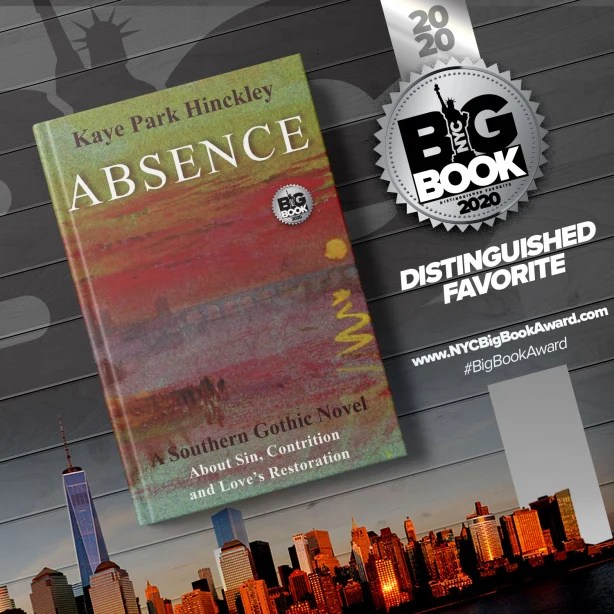
ABSENCE by Kaye Park Hinckley

Reviewed by Courtney Guest Kim

Genre: Southern Gothic

Year Published: 2020

Now in Hardcover

Audience: wives and mothers

Absence belongs to the Southern Gothic tradition because the secrets are dreadful; the stubbornness is perverse; and children play with a human skull in bed. Yes, there is a version of incest too. But if it were possible to reclaim a genre in the tradition of Sidney Lanier—one of whose poems provides both the epigraph and the title of this story—Absence would rightfully be called Southern Poetic. This novel with intense resolve excises every trace of trashiness from its postmodern Alabama countryside. These peanut farmers are poor, but they have a quality not usually ascribed to them: dignity. And because they have dignity, when they fall into evil ways the outcome is not merely horrible, but tragic.

When you close this book, you will feel an anxious impulse to confess your sins, lest they fester and warp the lives of everyone connected to you. More surprisingly, you will have learned to associate the peanut plant with the redemption of man. Kaye Park Hinckley returns to country life what we have long since ceased to expect of it: beauty and meaning. At every level her story reaches roots into the deepest origins of this nation. But apart from explaining a few Creek Indian words, she does not afflict her characters with peculiar dialogue or bizarre impulses. Nor does she try to render local speech patterns into idiosyncratic spelling. Her story utterly rejects every facile trope of a throwaway culture. It hones in on the most important thing this country has trashed: human souls.

James Greene is desperate, but he is not vulgar. His fall into evil is the age-old tragedy of man. He does not do evil because he wants evil, but because he wants the good that has been denied him. Like Adam in the Garden of Eden, he reaches for a fruit that is good in itself, and he does it for the sake of the woman he loves. Like Cain, faced with disappointment, he does not turn toward God in sorrow but away from God in anger. And if you are tempted to shrug off these choices as minor ones, Absence will chill you with the stark reminder that human beings are not just bodies, but souls, whose spiritual influence cannot be suppressed, even when the bodies have gone missing. It’s not just that the ends do not justify the means: the evil means will work their poison through every aspect of your life. So beware, reader. When you enter this terrain of red soil, you leave behind every escape devised by an escapist culture. There are only two alternatives–hell on earth, or redemption through suffering.


One definition of the word “situation” is the way in which something is placed in relation to its surroundings. But often, when people talk about being in a situation, they usually mean that something important has gone bad in some way.

Not every day is a good day. We each have our personal situations. Some are social situations in which we don’t have enough confidence in ourselves. Maybe we are shy about conversing with others, afraid someone might be too critical of us.

Maybe our situation is that we’ve had a financial fall-out, and don’t know how to fix it.

Maybe there’s a person we love, who doesn’t seem to love us. Or maybe we have an addiction, such as drugs or alcohol.

For many, there’s the situation of betrayal by a friend, or spouse.

Or it could be that we’re lonely, or sick, or even dying.

Especially in the turbulence of today, we are confronting so many situations that can harm us! Some are self-imposed, because all of us have choices, and often we choose wrongly. Some are thrust upon us through no fault of our own, and we feel helpless for ourselves, our friends, our families, and our country.

So how do we handle these harmful situations? Can we do it on our own?

Well, the answer to that is that we don’t have to do it on our own. Not if we have God as our partner in life. Not if we turn to him in all those situations listed above and more. Even if they are situations we caused ourselves. God will help us through, if only we ask him.

Will our problems be solved every time in the way we want them to be solved? The answer is not always.

But if God is involved, if we give our situation to Him, if we let Him carry us, we can have peace, trusting that good will come from it in a way we may not anticipate.

I honestly do not know what I would do if I did not have God to turn to, and I’m sure many of you feel the same.

You’re my safe place, my hideaway
You’re my anchor, my saving grace
You’re my constant, my steadiness
You’re my shelter, my oxygen

I don’t know who I’d be if I didn’t know You
Thank God I do

I don’t know who I’d be if I didn’t know You
I’d probably fall off the edge
I don’t know where I’d go if You ever let go
So keep me held in Your hands
I don’t know who I’d be if I didn’t know You
Thank God I do

GIFTS

Posted: June 19, 2023 in World On The Edge

Each of us have gifts, God-given talents. The gifts of some may seem more apparent than others. For example, in those who appear on our televisions, in our movie theatres, on our radios—the so-called “stars.” But the value to God of each individual’s gift is the same, because God does not discriminate.

Early on, when I lived in Birmingham, my neighbor and I shared a babysitter, an older woman we’d met at a nearby Garden Nursery. Her name was Mrs. Hays. Anything she put into the ground, grew. There wasn’t a plant or flower or tree she didn’t seem to completely understand. She knew what each needed to flourish. And she handled our young children the same way. Whenever she came, they did indeed flourish. The gift she gave our children, and my neighbor and I as mothers, cannot be measured. Mrs. Hays wasn’t on the big screen, or the radio, or newspaper, but she made a lasting imprint on four young children. She had a gift and quietly used it. No fanfare, just solid intention driven by a love for all things growing.

Sometimes those—not all, but some–in the spotlight seem to want only that—-the spotlight. Is this the purpose of their gift?

What would happen in our world if everyone had a common purpose for the use of their gifts? What if every singer used his/her voice to further the better instincts of a human being rather that the basest instincts? What if every actor, artist, writer, politician, or talk-show host used his/her talent to expose the true reason God made man?

Of course, it wouldn’t take away their, or our, fallen nature; we’d still have one. We’d still have our pet addictions, our meanness, our selfishness, our frequent disregard for others.

Still, a true and correct mindset behind use of our God-given gifts might remind each of us that we do have the ability to strive for higher things. And sometimes a reminder is all it takes to change.

By Ranbud, 2016, MorgueFile.com

By Ranbud, 2016, MorgueFile.com

None of us like controlling people. None of us like to be under the thumb of another, with their weighty opinions imposed upon us. None of us like to be ridiculed for what we believe, and forced to do what we don’t believe.

And we shouldn’t have to put up with it. We live in a country founded on our personal freedoms. We are not told what to do by some king and his council–are we?

Well. . .hmmmm.  Let’s take a look at controlling people

Controlling people are self-centered and immature. They think they are bigger than they are. They don’t like your independence, only theirs, so they’re likely to make sure you don’t rule yourself.

How? They take away your choices, usually through manipulative propaganda, and if that doesn’t work as well as they would like, they enforce laws through some kingly, or executive, power they perceive they have been given.

But . . . . to take away a man’s freedom of choice, even his freedom to make the wrong choice, is to manipulate him as though he were a puppet and not a person.” — Madeleine L’Engle

We are not puppets in our personal relationships. Neither are we puppets  to be used by those in control of our government. Yet, we are. And people are angry.

Not only at our president, but political parties. As controllers, they are also self-centered and immature, believing they are bigger than they are. Besides that, they may be too filled with avarice and pride to use typical common sense.  Their words are used to tickle ears, to get the vote. But are they sincere? Or are they only using huge segments of the population to get what they want for themselves.

For the time will come when they will not endure sound doctrine; but wanting to have their ears tickled, they will accumulate for themselves teachers in accordance to their own desires.–2 Timothy 4:3

We need people, rich or poor, with guts and gumption enough to stand up for the sound doctrine on which our nation was built. Because the major issues we face today have not been soundly dealt with.

Now, it is our turn to decide. We can restore America. We can get rid of the pompous King Kongs already in our lives, and in our government who say one thing to secure a vote from others, but do something entirely different for themselves.

Nobody crowned them Kings, or Queens, of anything.

A wonderful Tuesday to everyone!

The idea for my latest novel Shooting at Heaven’s Gate published by Chrism Press, came from the third story in Birds of a Feather, my short story collection published by Wiseblood Books.  Both books can be found on Amazon or from the publisher.

Do you think you’re at Heaven’s Gate? Do you think God wants you enough to allow you to climb the ladder? Well, you’ll never climb it unless you’re pure as fallen snow. Unless you leave room for God’s wrath, not your own. Repent! –The Old Preacher speaking to Edmund in the novel Shooting at Heaven’s Gate

Here’s a little behind the scenes info. Both the novel and the short story take place in a fictional town in Alabama called Bethel,  which in the Bible refers to the Gate of Heaven and the site of Jacob’s Ladder. The name Bethel comes from the Hebrew beth, meaning house, and el, meaning God. Bethel means House of God. Numerous events of Bible History occurred there. For some time it was the place where the Ark of The Covenant, containing The Ten Commandments, was housed. Also, God’s appearance to Abraham, as well as Jacob’s Ladder – GENESIS 28:15-19

When Jacob awoke from his sleep, he thought, “Surely the LORD is in this place, and I was not aware of it.”
He was afraid and said, “How awesome is this place! This is none other than the house of God; this is the gate of heaven.”
Early the next morning Jacob took the stone he had placed under his head and set it up as a pillar and poured oil on top of it.
He called that place Bethel, though the city used to be called Luz.
 
Jacob’s ladder brings us closer to God by an often difficult climb upward and towards Him. 
 

SHOOTING AT HEAVEN’S GATE

Satin is crouching at your door. You ain’t seen him coming, boy. Nobody seen him coming but the Lord Jesus Christ. Now, he’s after you. Don’t wait for his spear. Conquer him!

In the novel, Edmund is a young, married Sociology professor, haunted by his grandfather, a holiness preacher who, from the grave, constantly challenges to change his addictive ways. Except the young man ends up murdering his wife, and then, several other people, including a Dermatologist that Edmund has been led–by Dr. Mal Hawkins, head of the psychology department at their community college–to believe is having an affair with his wife. Mal is the real antagonist in the book, an atheist and true narcissistic sociopath, parading as Edmund’s friend even as he provides him with drugs. 

To counterbalance all this evil with goodness, is Alma, a teenager who works the jewelry counter at Dillard’s, where she is surprisingly given by Edmund an expensive diamond necklace meant as a ‘gift of amends’ for his wife, who he does not realize he has killed. 

Authors who take up the task writing fiction from a Christian perspective ultimately reveal whether they are theologians of glory or theologians of the cross. Kaye Park Hinckley is a theologian of the cross.  Climbing Jacob’s ladder takes suffering. You will find the symbolism of ‘climbing up’ in several situations expressed in Shooting at Heaven’s Gate. You won’t find this kind of hard-core realism in the “Christian Fiction” section at Barnes and Noble where theologians of glory are cashing in big these days.

Here are dope fiend lunatics, adulterers, and drunks, along with hard working, sympathetic, normal folks – typically of the suffering spouse model. Theologians of glory take one look at these scenarios and quickly identify who gets the glory and who goes to hell. The problem with the standard Christian fiction fare is that the derelicts have a conversion experience and then things always get better. But in these pages, it’s not so simple.

In “Shooting at Heaven’s Gate,” a spiraling out of control college professor is haunted by the voice of his Pentecostal preacher grandfather who warns a grief-stricken adolescent that he must repent or face God’s wrath. But he also remembers the words of a kind Priest who had told him that God would continue to love him despite his actions. His actions as an adult become front-page news in the same way regular readers of Southern grit lit are accustomed.

We have a serious sinner on our hands, but we also learn that he suffered horrible tragedy at a tender age and a brain injury to boot. As far as we know, he never properly repented, but his actions put the words of the Priest to the test in a big way, forcing us to ask whether the promise made by the Priest concerning God’s mercy was just cheap sentiment. But this Priest, who only gets a passing notice, is a theologian of the cross, and the bloody mess of the cross is the only thing that will resolve this mess.

I’ve come to appreciate how messy life is, and how wrong it is to ever produce a work of art that implies otherwise.  — Jim Hale, reader.


JACOB’S LADDER,  Bruce Springsteen

We are climbing Jacob’s Ladder.

Brothers and Sister’s all.

We are Climbing Jacobs Ladder

Every rung goes higher and higher

Every rung just makes us stronger

We are brothers an sisters, all.


Video  —  Posted: May 30, 2023 in World On The Edge

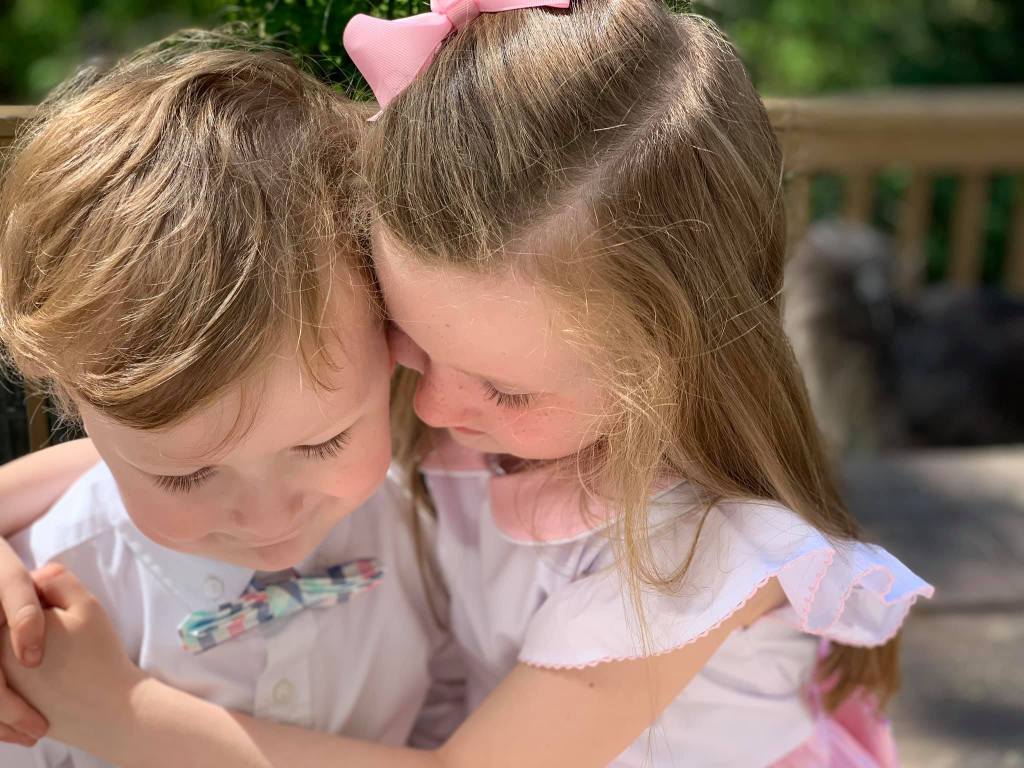
This image has an empty alt attribute; its file name is bother-sister-jp-and-caroliine.jpg

Is this statement True or False? Childish behavior is the opposite of adult behavior. 

Well … do we ever fully let go of our childhood experiences—joyful or sorrowful? Either we expose them for all to see and hear, or we hide them so no one sees or hears about them. Regardless, our personal childhood experiences color nearly everything we do as adults.

The older I become, the more I’m assured of this—that our childhood years have created a blueprint for the rest of our lives. Sometimes a good blueprint, sometimes not so good.

This is precisely why childhood itself is so important—how and where we spend it,  who was there, and most especially, what were the  attitudes of our parents? More than likely–unless there’s a conscious effort— we express those same attitudes with our own children.

We not only look like our parents, but we also tend to think like them—unless something causes us to rebel—and many do rebel, swearing not to be a clone of either of their parents..

Still, we may later find ourselves like them. We may corner the sheets on bed just like our mother used to do. Or we may have interest in a particular sports team as our father did. Interiorly, we may have learned to solve problems the same as one or the other of our parents.

Because of our parents, we learned empathy for others, or not. We learned selfishness, or not. We put great emphasis on money, or not. We give of ourselves, or not.

As we grow into adults, we often try to forget any sorrows we may have had as children involving our parents, and our peers as well. We may even put aside the joys, too; intending to be ourselves, our own man or woman. Some who have been badly parented have success in consciously doing the opposite with their own children.  But it’s not often any of us get away from the old tapes in our heads as our childhood re-plays. For better or worse, they are there.

The realization that your parents were human, and therefore, imperfect, can be tough to accept. We have a natural tendency to want to protect our parents. We even unconsciously identify with their critical attitudes toward us and often take on their disparaging points of view as our own. This internalized parent is what we refer to as one’s “critical inner voice.” It can feel threatening to separate from the people who we once relied on for care and safety.–Lisa Firestone, Ph.D, Psychology Today

Not all of us have/had mature, loving parents — and no parent is perfect. But even if our earthly parents fail, our heavenly Father never fails. Isaiah assures us, “Can a mother forget her infant, or be without tenderness for the child of her womb? Even should she forget, I will never forget you.” (Isaiah 49:15)

The love of God, Our Father, is constant and unlimited. In the parable of the prodigal son, the father loves his children beyond anything they have earned–the same way He loves us.

So when the blueprint of our earthly parents fail us, and our critical inner voice is heavy to bear, we can turn to the very personal and perfect love of God to become who we were truly born to be.

Video  —  Posted: May 17, 2023 in World On The Edge