We enter data into our computers, cell phones, and iPads by means of a keyboard with a universal set of letters and numbers. We can be certain that if we tap an ABC, we get an ABC. This is the reality of a keyboard.
If we enter wrong letters of figures, wrong letters or figures come out.
GIGO (garbage in, garbage out) is a concept common to computer science and mathematics: the quality of output is determined by the quality of the input.
What about the input and output of our lives?
Thinking of life as a keyboard. Again, we cannot tap the letters ABC and expect to get DEF. We cannot put into our mind ideas that we know are wrong, and expect the output of our actions to be good.
What we put into life is what we get out of it. This is also reality.
The best input for each life is a genuine, loving concern for others, as well as for ourselves. This has always been the case for humanity. It’s why the world has progressed.
Today, we live in a selfish society that asks first: What about ME?
So in our own lives, if we only input What about ME? then what do you think our output will be?
Our childhood home is the place where our conscience was formed. A place where we felt safe and secure.
And why did we feel safe? Hopefully, because we trusted those who lived there.
We trusted them not only to provide for us, but to give us right answers, and to guide us by good example.
Most of us are fortunate that our parents did these things. But unfortunately, not all parents keep their children safe, or give them right answers, or guide by good example.
At one time or another, for one reason or another, all of us leave home. For a job, marriage, or some other venture that we think will bring us happiness.
But if our home was a good one, it’s a place we like to return to. We don’t even have to be there, we hold it in memory. It’s always in our heart.
What if our life away from home is not as we’d envisioned it?
Away from home, we may have made mistakes, wrapped ourselves in erroneous motives, or addictions, or meanness, or jealousy, or revenge, and on and on. At first, we may feel that we can’t come home, even that we wouldn’t be wanted there. Or maybe we like our new lifestyle better.
So we stay away.
Do we continue on the long road home, making more and more mistakes along the way?
Or do we clean ourselves up, and prepare to return?
There is one home each of us will return to, whether we want to or not. Our eternal home. And we do not chose when that return will take place. Shouldn’t we be preparing for that?
Day by day, even minute by minute, each of us are called to make decisions and to act on them. Some are trivial—-what will we eat for supper? What will the children wear to church, or a party?
But the decision to return God’s love affects our whole lifetime. It determines what kind of life we’ll have and even how it will end. How do we make that single decision to reach back? With one word: Yes.
The woman who made the greatest, single decision of all time is The Blessed Mother. Her decision was made with that one word: Yes. And then, throughout her life, she carried out one significant action: She let God lead her. She surrendered to His will.
Mary, the mother of Jesus, surrendered. If she hadn’t, there would be no Jesus Christ. If she hadn’t, there would be no Christianity. If she hadn’t, we’d never have heard the words, “eternal life.” In fact, we would have no idea how to attain it.Mary allowed God to use her; and certainly, she could have said no. She had free will just like the rest of us. Almighty God would never have forced her to bear His son.
For a moment, put yourself in her position. When Mary was asked to be that vessel by a messenger from God, what would she have thought–“Am I going crazy? Do I really see an angel? Am I dreaming?”
She was engaged to be married. How would Joseph react if she turned up pregnant? He had the right to have her stoned. But there was something in her, a grace given by God that allowed her to trust that the angel was His messenger. She didn’t ask for proof that she would become the mother of the Redeemer. Her only question was, “How?” Because she believed in God, and most importantly, she believed that He loved her, and she allowed Him to do so.
But how do we allow God to love us?
Well, Mary knew how. She made the decision to surrender her life to Him.
Surrender is the opening move for each one of us, but for most of us, it’s hard. No matter what our personality is, we each have an instilled desire to control our own life. Why is that? Why do we feel we have to be in complete charge of every aspect of our lives? Why are we so afraid to give up control and surrender ourselves and our problems totally to the will of God?
It may be that we don’t believe, as Mary did, that He loves us—-really and personally loves each one of us. And if we don’t first believe that He’s madly in love with us, then there’s no way we’ll surrender or trust Him.Stop a minute and think about it. The person I trust most in the world is the person who loves me, who wants only the best for me, and would lay down his life for me if he had to.
If I believe that Almighty God loves me—-and he does–then why shouldn’t I trust Him enough to surrender my fears and worries, all my heart breaks, my illnesses, my lack of self confidence–in fact, everything that bothers or upsets me?
When we give up control of our life in favor of God’s plan–done His way, not ours–then we enter onto the road called: Trust. And what does Trust in God prove? It proves His faithfulness. I can certainly say that I’ve seen His faithfulness in my own life. And if you look upon your circumstances, whatever they are, with spiritual eyes, I’m sure you can see it, too.Mary saw it and it caused her to make a decision. It caused her to say: “I am the handmaid of the Lord. Let it be done to me according to thy will.”
Mary Surrendered.
Let’s take a few minutes to think about making that decision to surrender to God’s will. Are we able to let go and trust Our Lord and Savior?
There are times when we feel small. We think everyone, except us, seems to have things they’re really good at. We think we may be lacking in the talent department, or that we don’t have enough inner drive, or that our job skills are less than another’s. Maybe we even pray that God will give us those things.
And maybe we get a little miffed at Him, too, because he hasn’t. We may even say, ” Then what am I supposed to be doing here?”
Well, shouldn’t we remember it’s possible that only one small act of our sincere concern for a loved one or neighbor can be BIG. In fact, it can actually change their world. And it can change ours, too, when we reach outside of ourselves.
When we reach out to help in some way we become an image of God for others. We allow others to see Christ in us. We are, after all, His hands and feet on Earth.
So what are we supposed to do here? Here’s what Jesus told Peter:
When they had finished breakfast, Jesus said to Simon Peter. “Simon, son of John, do you love me more than these?””
He said to him, “Yes, Lord, you know that I love you.”
Jesus said to him, “Feed my lambs.”
He then said to him a second time, “Simon, son of John, do you love me?”
Peter said to him, “Yes, Lord, you know that I love you.”
Jesus said to him, “Tend my sheep.”
Then Jesus said to him the third time, “Simon, son of John, do you love me?”
Peter was distressed that he had said to him a third time, “Do you love me?” and said to Jesus, “Lord, you know everything; you know that I love you.”
Jesus replied, “Feed my sheep..”
Asking God to answer our prayers is good, and we should do that. But also, let’s remember that here on Earth we can be the instrument of answering someone else’s prayers as well.
I think it’s that he welcomes sinners. In other words, He forgives.
Isn’t that wonderful? No matter how we fail, we can always be welcomed back by God.
When it comes to welcoming others back into our hearts, how do we compare to our wonderfully welcoming God?
Do we hold grudges? Do we plan for the downfall of someone who’s hurt us? Or do we open our arms to them despite what they’ve done to us.
If we hold a grudge against someone, the door to God will be closed. It will be absolutely closed, with no way to him. Only if we forgive others will we be forgiven. I am sure that many prayers are not heard because the person praying has a grudge against someone, even if he is not aware of it. Jesus says more than once that before we pray we must forgive. If we want Jesus, we must have a forgiving heart.
– J. Heinrich Arnold
It all comes down to this question: Can we forgive others as Jesus did on the Cross? Are we able to accept that we are sinners, too?
Welcoming back into our world those who have hurt us, is a Christian requirement. And God is waiting for us to do it.
In my house, there are things I won’t let go of–no matter that they’re old, no matter that they often clutter my cabinets and tables and wouldn’t be called wonderful interior decoration. From the old 19th century portrait of my Grandmother as a little girl, to the Love Seats my parents bought for their first home, to the old rosary that hung over the bed of my husband’s grandparents, and many, many more beloved and old “treasures.”
These are things I have to keep–and keep them within my view.
Memory comes from such as those. The idea that a small part of important people in my life are remembered in those things is comforting.
In my life today, there are also people and things I won’t let go of. No matter that they sometimes disappoint–as I sometimes disappoint them.
This is a disposable society. Something gets worn or doesn’t work, we tend to throw it out rather than fix it. And often, we do that with people–acting as if people are things.
Not everyone can be ‘fixed’ by us. But we can stand by them in their trials. We can keep them in our view, and help, or console, them when we can.
Shouldn’t we be the kind of people who realize that true happiness is not found in riches or well-being, in human fame or power, or in any human achievement – however beneficial it may be – such as science, technology, and art–or in any person, unless we see God’s image in them?
Growing up, when I wanted something I wasn’t sure I would receive, I was frequently given the advice, “Wait and see.”
Of course, that requires patience. The timing of something we desire doesn’t always come quickly. And waiting is difficult.
Some things we wait for are out of our control; they depend on others.
But there are other things that we make the decision to wait for. We want it—-maybe very badly– but for one reason or another, we wait for it. This is self-control.
Our society today doesn’t speak much about patient self-control. It speaks about immediate self-fulfillment, quick self-gratification. We want what we want when we want it. But making conscious choices that allow us to live in agreement with our deepest values often requires the ability to delay gratification.
Years ago, a researcher came up with an idea to show the value of the ability to delay gratification. His study subjects were a group of four-year-old children.
He offered each participant a large, puffy marshmallow but told them all that if they would wait 15 to 20 minutes while he ran an errand, they could have not one, but two marshmallows.
Some of the four-year-olds were able to control their impulse to eat their marshmallows right away. Others could not.
Many years later, the researcher followed up with his subjects and found that the ability to control impulses and delay gratification was associated with success in many different areas of their lives as adults.
For example, those who delayed gratification were more self-motivated and more persistent in the face of obstacles in their lives. On average, they scored 210 points higher on SAT tests. Those who had quickly consumed the first marshmallow offered them, continued to have impulse-control problems in adulthood. The researcher characterized them as more troubled, stubborn, indecisive, mistrustful, and less self-confident.
All those years of giving up candy for Lent and waiting for the chocolate bunny in my Easter Basket, must have helped. When I look back at past events in my life, I can see that quite a few of those things I waited for turned out well. I’ll bet you can, too.
Remember your first time jumping into water as a child? . You were afraid, but you let go and jumped because your father was waiting to catch you.
As adults, we still have our fears But when we let go, and trust in our heavenly father, God will not only catch us, he will surprise us.
God’s surprises come in a myriad of ways, and at unexpected times.
Sometimes He surprises us through people—especially in our narrow-mindedness when we judge a person.
Oh, we have our own ways of judging people. Often it’s a first impressions: how they’re dressed, how attractive they are, how they speak, smell, or walk. We don’t see a child of God, made in His image. We see someone who is different from our own image of what a person should be. And sometimes, we pompously see someone who’s ‘in our way.’ And so, we circumvent them, and never get to know what they may have had to offer–the surprises God has in mind.
Jesus, Himself, tells us that there’s not much sense in this sort of response by people stuck in their own ideas.
He asks: “To what, then, can I compare the people of this generation? What are they like? They are like children sitting in the marketplace and calling out to each other: “‘We played the pipe for you, and you did not dance; we sang a dirge, and you did not cry.
For John the Baptist came neither eating bread nor drinking wine, and you say, ‘He has a demon.’ The Son of Man came eating and drinking, and you say, ‘Here is a glutton and a drunkard, a friend of tax collectors and sinners.’ But wisdom is proved right by all her children.”-Luke 7:31-35
True wisdom is to TRUST in God. Trust is always the answer.
If Jesus healed the sick, raised the dead, turned five loaves and two fishes into enough to feed five thousand, with leftovers; then we can trust him to surprise us again? Trust Him to surprise us personally? Trust Him to do much more than we can imagine?
Because we can only imagine the ways God will surprise us with His love. So, love Him. Trust Him. Let Him do His work in you.
MARY’S MOUNTAIN is now in paperback, as well as on Kindle. If you haven’t read it, I hope you will. It answers the question of what happens when we forget our values and make the easier, and maybe more profitable, decision to tolerate evil.
Here are the first few pages.
I
Irene tap, tap, taps her Waterman pen on the mahogany desk and leans over the polished wood, spreading her tailored wool reflection between us. “Just tell me, Paul,” she demands, glancing at my manuscript. “Why would you write this?”
She’s too close for a quick answer. I’m aware of the tension in her slightly-open mouth, like a Venus Fly trap emitting a floral perfume that rides on her breath; her breath that had once become my breath, numbing the edges of my tongue like Novocain.
Tap, tap, tap.
I study the web of veins behind her gold-rimmed glasses. They travel over the whites of her eyes like a red penciled road map to disaster. So, I keep my mouth shut.
She lays down her pen, thumps my manuscript with her fingers like a preliminary drum roll. “After all our success, you desecrate everything we worked for with this patriotic puke. Why, Paul?”
But I’m looking at the tiny smudge on the bow of her mouth. Out-of-place lipstick? A trace of double-chocolate mousse? There are plenty of desserts here, except the sugar’s fake, with a bitter after-taste.
I understand her disappointment, even her anger. After all, she’ll be held responsible. She has a Board of Directors now, and it’s not easy to run a place like this. There are lots of lulus here. I should know. She and I conceived it together—The Institute of Tolerance.
Today, inside its progenies, rigid rooms are covered in fiddle-faddle flowers and sentimental hearts beating warm and fuzzy pizazz into nearly every state of the union. Outside each building, a neon sign blinks: Tolerance Today, Tolerance Tomorrow, Tolerance Forever! The signs have fingers, virtual reality, to motion the people inside. The signs move. The lights move. And the people inside are moved, to tolerate anything.
“Paul?” She’s in my face again, stroking me with my name like she used to do when we were lovers. “I feel your pain,” she says, and her nose seems to grow before my eyes. “But you’ve betrayed our cause. The Solitary Room may be necessary unless you agree to renounce this nonsense.” She lays a hand on my arm. “There is no principle worth dying for.”
Her touch is sacrilege. Her polished, glued-on nails prick the sleeve of my issued pink shirt. Her papery palm burns my forearm as if the bones beneath her skin were poker hot.
I loathe her, but I didn’t always felt this way….
**************
I hope you take a look at my other books, too. In one way or another, each of them portrays characters in the process of making dire choices. And often they make wrong choices that ultimately cost them.
But aren’t we the same?
Like a river that don’t know where it’s flowing, I took a wrong turn and just kept going.–Bruce Springsteen
Lucy Adams, Lake Oconee Magazine, wrote the following about my short story collection, Birds of a Feather; but what she wrote also describes my writing in general.
Hinckley writes characters who are shocking, flamboyant, disturbed, unkind. She writes characters who are merciful, gracious, empathic, loving. She writes characters who demonstrate the dualities of human nature. Edmund, in “Shooting at Heaven’s Gate,” allows himself to be used by evil. Rather than condemn his actions, Hinckley pushes her reader to acknowledge the frailties of the human heart. “We all are capable of doing great evil,” explains Hinckley. “Why does a person do this? I like to know reasons.” Curiosity about human nature propels her plots.
Don’t seek clearly defined protagonists and antagonists here, however. Hinckley’s characters are complicated. They’ve done horrible things, witnessed horrible things, been the victims of horrible things, yet they continue rising each morning and putting one foot in front of the other. They fulfill their obligations to each other while these horrible things gnaw at them from the inside out. Hinckley deftly presents the repulsiveness of her character’s actions, while also revealing her characters’ drive toward love.
…………………
My contention is that any decision we make can drastically change the course of our own lives, and even change the kind of people we are as Americans. So, shouldn’t we comb through our hungers (our choices) and make only those we’re sure will better us all?
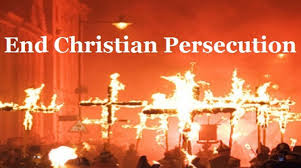
We must take notice of what is happening in our world today. Evil in the form of The Islamic State is knocking at the front door of America and we need to stand against it. Many have warned about this evil in the past.
Bishop Fulton J Sheen wrote in 1950:
“Today (1950), the hatred of the Moslem countries against the West is becoming hatred against Christianity itself. Although the statesmen have not yet taken it into account, there is still grave danger that the temporal power of Islam may return and, with it, the menace that it may shake off a West which has ceased to be Christian, and affirm itself as a great anti-Christian world Power”.
Bishop Sheen again, in 1952:
“The Christian European West barely escaped destruction at the hands of the Moslems. At one point they were stopped near Tours and at another point, later on in time, outside the gates of Vienna. The Church throughout northern Africa ws practically destroyed by Moslem power, and at the present hour, the Moslems are beginning to rise again. If Moslemism is a heresy, as Hilaire Belloc believes it to be, it is the only heresy that has never declined. Others have had a moment of vigor, then gone into doctrinal decay at the death of the leader, and finally evaporated in a vague social movement. Moslemism, on the contrary, has only had its first phase. There was never a time in which it declined, either in numbers, or in the devotion of its followers.”
Hilaire Belloc wrote in 1938:
“Will not perhaps the temporal power of Islam return and with it the menace of an armed Mohammedan world, which will shake off the domination of Europeans — still nominally Christian — and reappear as the prime enemy of our civilization? The future always comes as a surprise, but political wisdom consists in attempting at least some partial judgment of what that surprise may be. And for my part I cannot but believe that a main unexpected thing of the future is the return of Islam”.
Sir Winston Churchill gave the following speech in 1899:
“How dreadful are the curses which Mohammedanism lays on its votaries! Besides the fanatical frenzy, which is as dangerous in a man as hydrophobia in a dog, there is this fearful fatalistic apathy. The effects are apparent in many countries, improvident habits, slovenly systems of agriculture, sluggish methods of commerce, and insecurity of property exist wherever the followers of the Prophet rule or live. A degraded sensualist deprives this life of its grace and refinement, the next of its dignity and sanctity. The fact that in Mohammedan law every woman must belong to some man as his absolute property, either as a child, a wife, or a concubine, must delay the final extinction of slavery until the faith of Islam has ceased to be a great power among men.
Individual Muslims may show splendid qualities, but the influence of the religion paralyses the social development of those who follow it. No stronger retrograde force exists in the world. Far from being moribund, Mohammedanism is a militant and proselytizing faith. It has already spread throughout Central Africa , raising fearless warriors at every step; and were it not that Christianity is sheltered in the strong arms of science, the science against which it had vainly struggled, the civilization of modern Europe might fall, as fell the civilization of ancient Rome .”
Pope Francis, 2014
“Hatred is not to be carried in the name of God…War is not to be waged in the name of God.”
The Vatican’s Pontifical Council for Inter-religious Dialogue said Isis had committed “and was continuing to commit unspeakable criminal acts”. To reinforce the point, it listed some of the atrocities for which Isis is reported to have been responsible. They included “the massacre of people solely for reasons of their religious adherence”; “the execrable practice[s] of decapitation, crucifixion and hanging of corpses in public places”; “the choice imposed on Christians and Yazidis between conversion to Islam, payment of a tax (jizya) and exodus”; “the forced expulsion of tens of thousands of people, including children, old people, pregnant women and the sick”; “the abduction of women and girls belonging to the Yazidi and Christian communities as war booty (sabaya)”, and “the imposition of the barbaric practice of infibulation”.
In 1967, Martin Luther King, Jr. said:
“He who passively accepts evil is as much involved in it as he who helps to perpetrate it.”
We have to be aware of the tragedies taking place. And be courageous enough as a nation–the greatest nation on Earth—to take a substantial stand against evil.
We cannot use fatigue or fear as an excuse not to act. ASAP.











 Translating a World on the Edge