Some men remain boys all their lives. Others assume manhood at a very young age and keep it, but still others must discover it for themselves through great trials, often of their own making.
Manhood begins in the heart and grows into commitment and integrity. Those two things–commitment and integrity–are indicative of a man’s strength. And I’m not talking about either male or female strength here–female strengths are very different. I’m talking strictly about males.
I knew a boy who became a man despite himself. How did this transformation occur? Oddly it came out of the lack of commitment and integrity when the boy wanted only the gratification of drugs, sex, and selfishness. Finally, he was cast to his knees by his wrong decisions. But there, on his knees, at the bottom of the heap, he looked upward, and learned where he came from.
So God created mankind in his own image, in the image of God he created them; male and female he created them.–Genesis 1:27
At his very lowest point, the boy who became a man discovered he was a child of God. He made a commitment, and then carried it out with integrity. And the man became strong.
But a man is not a man because he has muscular strength, has a good job, or is financially successful. He is not a man because he is married or has fathered children.
He is a man because he is made in the image of God. He is a man because he is committed to the God who made him. He is a man because he reaches up, out of himself, for his God–always. And he shows his commitment through the integrity with which he lives his life unselfishly, with faith, hope, and love.
(God’s)delight is not in the strength of the horse, nor his pleasure in the legs of a man. The LORD delights in those who fear him, who put their hope in his unfailing love.–Psalm 147:10-11
The cover of this month’s National Geographic Magazine labels Mary, the mother of Jesus, as the most powerful woman in the world.
How true this is! And thank goodness, because today more than ever, we need her to pray for us.
From National Geographic Magazine, December, 2015:
Devotion to the Blessed Mother is everywhere. Marigolds are named for her. Hail Mary passes save football games. The image in Mexico of Our Lady of Guadalupe is one of the most reproduced female likenesses ever. Mary draws millions each year to shrines such as Fátima, in Portugal, and Knock, in Ireland, sustaining religious tourism estimated to be worth billions of dollars a year and providing thousands of jobs. She inspired the creation of many great works of art and architecture (Michelangelo’s “Pietà,” Notre Dame Cathedral), as well as poetry, liturgy, and music (Monteverdi’s Vespers for the Blessed Virgin). And she is the spiritual confidante of billions of people, no matter how isolated or forgotten.
Praying for the Virgin Mary’s intercession and being devoted to her are a global phenomenon. The notion of Mary as intercessor with Jesus begins with the miracle of the wine at the wedding at Cana, when, according to the Gospel of John, she tells him, “They have no wine,” thus prompting his first miracle. It was in A.D. 431, at the Third Ecumenical Council, in Ephesus, that she was officially named Theotokos, Bearer of God. Since then no other woman has been as exalted as Mary. As a universal symbol of maternal love, as well as of suffering and sacrifice, Mary is often the touchstone of our longing for meaning, a more accessible link to the supernatural than formal church teachings. Her mantle offers both security and protection. Pope Francis, when once asked what Mary meant to him, answered, “She is my mamá.”
Today, December 8, the Latin rite of the Catholic Church all over the world celebrates Mary by “The Feast of the Immaculate Conception.” What is The Immaculate Conception?
The Catholic Church teaches that from the very moment of her conception, the Blessed Virgin Mary was free from all stain of original sin. This simply means that from the beginning, she was in a state of grace, sharing in God’s own life, and that she was free from the sinful inclinations of human nature.
Mary was immaculately conceived as part of her being “full of grace” and thus “redeemed from the moment of her conception” by “a singular grace and privilege of almighty God and by virtue of the merits of Jesus Christ, Savior of the human race.”
The doctrine of the Immaculate Conception upholds the holiness and deity of Christ. In fact, Catholics use Luke 1:46-56, Mary’s song of praise, as a prayer to God, called The Magnificat.
46 And Mary said, “My soul magnifies the Lord, 47and my spirit rejoices in God my Savior, 48 for he has looked on the humble estate of his servant. For behold, from now on all generations will call me blessed; 49 for he who is mighty has done great things for me, and holy is his name. 50 And his mercy is for those who fear him from generation to generation. 51 He has shown strength with his arm; he has scattered the proud in the thoughts of their hearts; 52 he has brought down the mighty from their thrones and exalted those of humble estate; 53 he has filled the hungry with good things, and the rich he has sent away empty. 54 He has helped his servant Israel, in remembrance of his mercy, 55 as he spoke to our fathers, to Abraham and to his offspring forever.”
From the Catechism of the Catholic Church:
492 The “splendour of an entirely unique holiness” by which Mary is “enriched from the first instant of her conception” comes wholly from Christ: she is “redeemed, in a more exalted fashion, by reason of the merits of her Son”. The Father blessed Mary more than any other created person “in Christ with every spiritual blessing in the heavenly places” and chose her “in Christ before the foundation of the world, to be holy and blameless before him in love”.
508 From among the descendants of Eve, God chose the Virgin Mary to be the mother of his Son. “Full of grace”, Mary is “the most excellent fruit of redemption” (SC 103): from the first instant of her conception, she was totally preserved from the stain of original sin and she remained pure from all personal sin throughout her life.
–From the Clarion Herald, Official Newspaper of the Archdiocese of New Orleans. Published on Tuesday, 27 March 2012, written by Tim Hedrick, Contributing Writer
Why do we pray the Our Father?
One of the most frequently prayed prayers among Catholics and Christians of other denominations is the Our Father. For most Christians, it is one of the first prayers that everyone learns from a young age. One of the main reasons it holds primacy in our faith and is prayed each week in the liturgy is that Jesus himself taught us the prayer. When asked by his disciples about how to pray, Jesus taught his disciples the prayer traditionally known as the “Our Father” or “the Lord’s Prayer.” This prayer appears in Matthew 6:9-13 and Luke 11:2-4.
Is there a particular structure to the Our Father?
After the initial address to the Father, the prayer itself is composed of seven petitions. There are three “thy-petitions” (thy name, thy kingdom, thy will) followed by four “us-petitions” (give us, forgive us, lead us not and deliver us). In order to better understand the Lord’s Prayer, it is important to briefly examine each petition.
“Our Father, who art in heaven…”
When Jesus taught his disciples to pray, he did not teach them to pray “My Father,” but rather “Our Father.” This reminds us that we are God’s sons and daughters together in Christ, not as isolated individuals. It is only as the body of Christ that we can pray to God as Father. When we call God “Father,” it is a reminder for us to live as children in relation with God. In teaching us to call God “Father,” Jesus also tells us that we have the privilege to call God by the same name he used in his intimate relationship with the Father.
“Hallowed be Thy name…”
In the first petition, we are asking that God’s name would be “hallowed” or sanctified. Objectively speaking, God’s name is already holy, but the prayer is asking that God make his name holy to all people through his works and deeds. (See Ezekiel 36:22-27.)
“Thy kingdom come…”
The second petition has a twofold meaning. First, we are praying for the coming of the kingdom of God here and now in our everyday lives. At the same time, we are also praying for Christ’s glorious return at the end of time and the final coming of the reign of God.
“Thy will be done, on earth as it is in heaven…”
The third petition asks God that our will be conformed to his divine will. When Jesus was praying to the Father in the Garden of Gethsemane, he also used the words “thy will be done.” When we pray “thy will be done” we commit ourselves to following Jesus by taking up our cross.
“Give us this day our daily bread…”
In the fourth petition, “give us” expresses our trust in our heavenly Father. “Our daily bread” refers to our earthly nourishment that is necessary to physically sustain us throughout the day and the Bread of Life (the Word of God and the Body of Christ) that spiritually nourishes us. As Catholics, we are privileged to receive the “Bread of Life” daily in the Mass.
“Forgive our trespasses, as we forgive those who trespass against us…”
In the fifth petition, we beg for God’s mercy for the times that we have fallen short of loving God and loving our neighbor. We acknowledge that the Father’s mercy and forgiveness are able to penetrate our hearts to the extent that we are able to forgive our enemies.
“Lead us not into temptation…”
Some people wonder why we would ask God not to lead us into temptation. The letter of St. James clearly says that God does not tempt us with evil (James 1:13). Therefore, in this petition, we are asking that God does not allow us to take the path that leads to sin. We are praying to avoid the near occasion of sin.
“But deliver us from evil…”
Closely tied to the previous prayer, in this final petition, we are asking God to protect us from evil. The Catechism teaches that the “evil” in this petition is not an abstract evil, but actually “refers to a person, Satan, the Evil One, the angel who opposes God” (CCC, 2851). While we acknowledge the reality of the devil, we place our trust in Christ and his definitive victory over evil on the cross.
“Amen!”
After praying all of these petitions, we end by affirming our belief in all that we have prayed by saying “Amen” or “So be it!”
Why do some Christians add a line at the end of the Our Father?
Some Christians pray, “For the kingdom, the power and the glory are yours for ever,” immediately at the end of the Our Father. While this line was not included in the prayer recorded by the Gospels, it was included in The Didache, a first or second century writing that summarizes much of the teaching of the apostles. Catholics pray this line during the liturgy, but only after a prayer by the priest, in order to honor the tradition while also maintaining the traditional prayer included in the Gospels.
One of my favorite Catholic hymns is Panis Angelicus. It was sung at my wedding, and at the weddings of my children. It is special to me, too, because my oldest grandson, a Voice major at Vanderbilt, performed it at my youngest daughter’s wedding a few years ago. If only I had a video of that! I could literally listen to this hymn for hours.
The strophe of “Sacris solemniis” that begins with the words “Panis angelicus” (bread of angels) has often been set to music separately from the rest of the hymn. Most famously, in 1872 Cesar Franck set this strophe for tenor voice, harp, cello, and organ, and incorporated it into his Messe à trois voix, Op. 12.–Wikipedia
Latin Text
Panis Angelicus fit panis hominum
Dat panis coelicus figuris terminum
O res mirabilis!
Manducat Dominum
Pauper, pauper, servus et humilis
Pauper, pauper, servus et humilis
English Translation
The angel’s bread becomes the bread of men
The heavenly bread ends all symbols
Oh, miraculous thing! The body of the Lord will nourish
The poor, poor, and humble servant
The poor, poor, and humble servant
When a child is born to us, we make plans. Our hearts lift when we consider who he or she might become, how he or she might influence the world.
This is common to parents in the moments of joy after the birth of their child.
We don’t consider that anything bad might happen to him or her. We see their lives shining and happy. Of course, realistically we know that won’t be the case.
I wonder what Mary and Joseph felt, don’t you?
Did they know the suffering that would befall their child?
Did they know the tremendous influence He would have?
Did they know the enormous offering He would make for humanity–His very self?
How could they possibly have known that? How can we possibly know what fate holds for our children?
But every night a child is born is a HOLY NIGHT.
Every day a child comes into the world, the world itself is given another chance to expand in goodness. Because each of us holds that goodness within us, and the possibility of spreading it.
As wonderful a time of year as the Christmas season is, it can also be burdensome.
There are the decorations, the presents, the cooking, the cleaning, the extra school parties—not to mention the price tag for all these things!
Mothers with children and grandchildren are especially stressed at a time when we wish we could simply breathe and enjoy the Birthday of our Savior.
But preparation is necessary. In fact, Advent is the season of Preparation– and Waiting.
In all our busyness, we can keep in mind what we are trying to do—-create a celebration worthy of such a Birthday, but we are also preparing our children and family for the joy of receiving, not only wrapped gifts, but the joy of knowing that because of Our Savior, we have the promise of eternal life.
We will be the givers of many presents this Christmas, but let’s not forget that we are the receivers of the greatest gift of all. And when we get tired–and yes, cranky. When we want to spout off at whomever is in front of our face—let’s take a load off ourselves and give it to Him. That’s the gift God wants from us—our Trust that He will handle it all for us if we truly allow Him the chance to do so.
“Come to me, all of you who are weary and carry heavy burdens, and I will give you rest.” Matthew 11:28 …
Sometimes we overlook the most important people in our lives. These are people who are always there for us, so much so, that we have come to expect their help, their companionship, their love. We take them for granted. We treat them like a comfortable pair of old shoes.
Often these over-looked, comfortable people are our parents, our spouse, a best friend, or even our older children, as if their love is a given, and simply something we will always have.
But when we think deeper, we know that this is not so. Time takes its toll on our parents. Our spouse may occasionally like a “Thank you.” Our children may like to see appreciation in our eyes rather than hear our criticism. Our friends who help us may need help themselves.
We love them all, but often we put our needs ahead of theirs without giving it a second thought.
In this season of Advent, I plan to take a special look at those in my life whom I’ve taken for granted. I plan to consider what my life would be without them. I want to take a good look at myself and then realize that those times I’ve overlooked their goodness, I have wasted an opportunity to show them how much I love them. Of course, this includes my relationship with God and His goodness.
In fact, if I truly see each of my loved ones as God’s own creation, how can I do otherwise?
My husband sent me this article after he received it in his email. See what you think.
Are men happier people?
What do you expect from such simple creatures? Your last name stays put. The garage is all yours. Wedding plans take care of themselves. Chocolate is just another snack. You can never be pregnant. You can wear a white T-shirt to a water park. You can wear NO shirt to a water park.
Car mechanics tell you the truth. The world is your urinal. You never have to drive to another gas station restroom because this one is just too icky. You don’t have to stop and think of which way to turn a nut on a bolt. Same work, more pay. Wrinkles add character. Wedding dress $5000. Tux rental-$100. People never stare at your chest when you’re talking to them. New shoes don’t cut, blister, or mangle your feet. One mood all the time. Phone conversations are over in 30 seconds flat. You know stuff about tanks.
A five-day vacation requires only one suitcase. You can open all your own jars. You get extra credit for the slightest act of thoughtfulness. If someone forgets to invite you, he or she can still be your friend. Your underwear is $8.95 for a three-pack. Two pairs of shoes are more than enough.. You almost never have strap problems in public. You are unable to see wrinkles in your clothes. Everything on your face stays its original color.. The same hairstyle lasts for years, maybe decades. You only have to shave your face and neck.
You can play with toys all your life. One wallet and one pair of shoes — one color for all seasons. You can wear shorts no matter how your legs look.. You can ‘do’ your nails with a pocket knife. You have freedom of choice concerning growing a mustache. You can do Christmas shopping for 25 relatives On December 24 in 25 minutes. No wonder men are happier.
NICKNAMES
* If Laura, Kate and Sarah go out for lunch, they will call each other Laura, Kate and Sarah.
* If Mike, Dave and John go out, they will affectionately refer to each other as Fat Boy, Bubba and Wildman.
EATING OUT
* When the bill arrives, Mike, Dave and John will each throw in $20, even though it’s only for $32.50. None of them will have anything smaller and none will actually admit they want change back.
* When the girls get their bill, out come the pocket calculators.
MONEY
* A man will pay $2 for a $1 item he needs.
* A woman will pay $1 for a $2 item that she doesn’t need but it’s on sale.
BATHROOMS
* A man has six items in his bathroom: toothbrush and toothpaste, shaving cream, razor, a bar of soap, and a towel.
* The average number of items in the typical woman’s bathroom is 337. A man would not be able to identify more than 20 of these items.
ARGUMENTS
* A woman has the last word in any argument.
* Anything a man says after that is the beginning of a new argument.
FUTURE
* A woman worries about the future until she gets a husband.
* A man never worries about the future until he gets a wife.
MARRIAGE
* A woman marries a man expecting he will change, but he doesn’t.
* A man marries a woman expecting that she won’t change, but she does.
DRESSING UP
* A woman will dress up to go shopping, water the plants, empty the trash, answer the phone, read a book, and get the mail.
* A man will dress up for weddings and funerals.
NATURAL
* Men wake up as good-looking as they went to bed.
* Women somehow deteriorate during the night.
OFFSPRING
* Ah, children. A woman knows all about her children. She knows about dentist appointments and romances, best friends, favorite foods, secret fears and hopes and dreams.
* A man is vaguely aware of some short people living in the house.
THOUGHT FOR THE DAY
A married man should forget his mistakes. There’s no use in two people remembering the same thing!
What are the best things in your life–the ones you’re most grateful for?
I’d be willing to bet they’re not “things” at all, but people.
Oh yes, “people” sometimes drive us crazy, hurt us, make lots more work, more stress, insolent remarks, dirty socks, dirty dishes, and confusion in general.
But we know the other side of the coin, too–“people” who are always there for us, who take our side, who run errands when we can’t, who feed us when we’re sick, who wipe our tears and hold our hands when we need the warmth of another human being. People who listen. People who love us.
I give gratitude to those people in my life. I cannot imagine living without those people in my life.
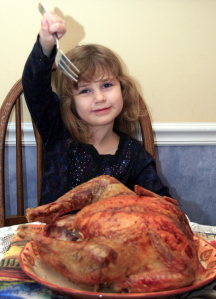
On this Thanksgiving George and I are celebrating the Thanksgiving holiday in the Atlanta area at the home of our daughter, Sheila, her husband, Matt…


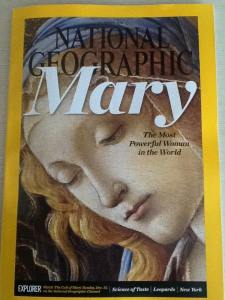 The cover of this month’s National Geographic Magazine labels Mary, the mother of Jesus, as the most powerful woman in the world.







 Translating a World on the Edge