Sometimes the breaking is unavoidable. We make a promise to a spouse, a child, or a friend; then we have to work, we are ill, or something goes wrong with the car, and we just can’t follow through.
Sometimes we just don’t do what we mean to do, although we have the best of intentions.
Then there are other times when we promise serious things; yet we take our promise very lightly, or maybe we just get carried away by emotion or strong desire.
A promise is never one-sided. It always involves another. And when we give it, we give away a piece of ourselves. We make ourselves vulnerable in the giving of a promise because we are fallible human beings and that means we can fail.
And in our failure, we wound another.
Often, we feel terrible when we’ve broken a promise–especially one so important as a marriage vow. When that twinge of conscience moves in, it’s hard to ignore. We feel diminished. We haven’t done what we meant to do.
Some of us chastise ourselves. Some of us ask for forgiveness.
And if we’re the person wounded by the breaking of a promise, we might refuse to forgive betrayal.
Can we remember that we are made in God’s image? If we do remember that, then shouldn’t we act as if we are?
God keeps His promises. I will not violate my covenant
or alter the word that went forth from my lips. –Psalm 89:34
And God also forgives. Then Peter came up and said to him, “Lord, how often will my brother sin against me, and I forgive him? As many as seven times?” Jesus said to him, “I do not say to you seven times, but seventy-seven times.—Matthew 18:21-22
A person’s decisions are his own and no one else’s. That person may or may not listen to advice.
A hard-headed person who thinks his/her way is the only way will not listen to your way, even though you may be positive your way is best for them. This is especially true in some parent/teenage and young adult relationships.
A parent can cajole, beg, pray, and scream, but some children will not listen. And we cannot keep them from falling into error.
But it is said that experience is the best teacher, so sometimes falling is what they may need to do.
Of course, it is painful for parents who did not envision such a fall for their child. They did not envision his/her making so many mistakes, and so they cry and pray for their child to return to them, pray that the young person finds life away from home is not as wonderfully free as he or she thought.
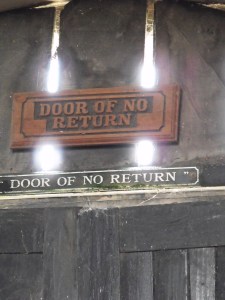
But when this happens, ours must never be a door of no return. When our loved one returns, as often happens, we parents must show our love by opening our arms to receive them in love.
The struggle of someone who’s gone astray–child or adult–is difficult to go through, even if it is of his/her own making. Hopefully, he will come to a point, maybe the lowest he’s ever had in his life, that will cause him to take a good look at who he has become. But the decision to change will be his alone.
This is why anyone’s struggle ( no matter what kind of struggle it is) is not always a bad thing. Even if we are on bottom, we have the God-given ability to choose to climb up. And when we make that hard and courageous choice to climb, we are doing it with God’s gift to us–our free will.
We all know something about creating, whether it be a meal, a flower garden, a painting, a book, or a ceramic vase. When we begin our creation of these things, they never appear as they will when they are finished.
The meal is at first just a bunch of ingredients on the countertop. The flower garden begins as a patch of grass or weeds that we must dig up in order to plant. The painting starts off as a canvas without color. The book is only an idea. The vase, a lump of clay.
We go through a lot of work putting these things into the form that we want them to be. We use our minds, our hearts, our hands–and it can be a struggle. But if we’re committed, we don’t give up. We keep our eyes on the end results, the beauty of our finished creation.
The is the way God works, too. We begin as a thought in the mind of God. He brings us into being, and tends us, never separating from us—though we can, and often do, separate from Him. He molds us by His hand, through the joyful and sorrowful events of our lives, into the loving people we are meant to be.
The word which came to Jeremiah from the Lord saying, “Arise and go down to the potter’s house, and there I will announce My words to you.” Then I went down to the potter’s house, and there he was, making something on the wheel. But the vessel that he was making of clay was spoiled in the hand of the potter; so he remade it into another vessel, as it pleased the potter to make.
Then the word of the Lord came to me saying, “Can I not, O house of Israel, deal with you as this potter does?” declares the Lord. “Behold, like the clay in the potter’s hand, so are you in My hand…Jeremiah 18:1-6
At times in our lives, the hands of God do not seem gentle, and we are in mental or physical pain–i.e we are suffering. And we don’t want to suffer–who does? But God does allow suffering. He doesn’t cause it, but He allows it to be used for some purpose in our life. Some purpose we may know nothing about at the time.
One way to get through painful times is to picture ourselves, as Jeremiah did, as clay in the hands of the potter. And, just as we do when we create something ourselves, to keep our thoughts on the end results.
Imagination is more important than knowledge. For knowledge is limited to all we now know and understand, while imagination embraces the entire world, and all there ever will be to know and understand. – Albert Einstein
Well, that would have to be the imagination of our Creator. With a magnitude that is inconceivable to us, only God knows all and understands all.
The root word in “imagination” is image. God used his imagination to create us. We are made in the image and likeness of God. We are made with memory, imagination, and will.
Free will.
For Human Beings, it is our memory that leads to imagination. And imagination causes us to freely act.
We use our memory to recall events of our life, and those events can stoke our imagination positively, such as the memory of our best Christmas or Thanksgiving so far, and that leads to next year, and then the action of how we’ll create an even better Christmas or Thanksgiving.
Memory can also stoke a negative imagination. Someone did me wrong last week, and then the action of how will I get back at him?
Our memories are entirely our own. If we choose to re-hash and re-hash past hurts, it is no one’s fault but ours that we are miserable. It’s no wonder that our lives seem dark and confusing.
We have an imagination that can alleviate that.
Our imagination can bring light back to our lives when we look at the bad situation with a different perspective. Then with our free will, we can choose to ‘act out’ in a positive way.
All this, through our imagination. But too often, we don’t, or won’t, use it.
It’s our imagination that allows us to move on and keep going, because it allows us to forgive. Our Creator never remembers our sins once we’ve repented them. If we are made in His image and likeness, and by His imagination, then shouldn’t we try to do the same?
WHAT IS CONFESSION AND WHY IS IT GOOD FOR YOU? By Paul Wilkes, Huff Post Religion, 4/10/2012
Deep within every human heart, there is the desire to be good. We all want to find and be our best selves, to go to bed each night at peace with who we are and how we acted that day. We want to be the kind of person we ourselves would want as a friend: trustworthy, dependable, fair. Yet often we fail — ourselves and others — in ways both small and significant.
What can lift this burden and restore our humanity is confession, a word that I use often in my new book, “The Art of Confession.” In my own religious tradition, Catholicism, the word “Confession” has a very specific meaning. That is not what I am talking about here. Instead, I’d like you to consider confession with a small c. Religious confession is directed to a higher power, but it is first and foremost a conversation with ourselves.
When we take an honest look at confession, we quickly see that it is a pillar not only of religious belief, but mental health. It demands something for which there is no substitute: that we be honest with ourselves.
Confession strips away the veil that we often cast over our actions, realigning our souls with what is best and truest in our natures. I use the word “align,” because when we betray ourselves (some would define this as sinning), we fall out of alignment. Until we acknowledge — confess — our souls remain confused and fragmented.
This kind of confession, which demands self-reflection and change, has little to do with the flood of confessional disclosures that characterize our age — on tell-all TV talk shows and social networking sites, even via an iPhone app for confession. In this time of Internet connectivity, amid the din of over-sharing, we mistake spasms of self-revelation for honesty. Our inner voice is not so easily found and cannot be parsed into 10-second bursts. That voice needs time to find the right words to say and the right place to say them.
As Thomas Merton, a monk and mystic, wrote: We are at liberty to be real, or to be unreal. We may be true or false, the choice is ours. We may wear now one mask and now another, and never, if we so desire, appear with our own true face. But we cannot make these choices with impunity. Causes have effects, and if we lie to ourselves and to others, then we cannot expect to find truth and reality whenever we happen to want them. If we have chosen the way of falsity we must not be surprised that truth eludes us when we finally come to need it!
Because it has been so trivialized, confession has lost its power and vitality. In our society today to confess is often considered foolish, weak, even corrosive to our self-esteem, unnecessary. “Such an antiquated notion,” some might say, “of right and wrong. What a naive understanding of how things really work, what people are really like.”
The truth is that confession, as I seek to redefine it in my book and in this series, is wise and strong and necessary, unburdening both the soul and the psyche to live a forthright, productive, and fuller life. Confession is not only for those who have committed some great public or private “sin.” For most of us, our “little murders” — our duplicities, the daily hurts, neglects, and carelessness we inflict upon others and upon ourselves — need to be confronted and acknowledged.
When confession becomes a practice, a daily reevaluation of one’s actions — an art — its power continues to grow, instilling a new sense of confidence, a vision of what life truly can be and hold. Something as simple as a short, nightly reflection, which I present in a later blog, can sort out the chaff from the wheat of the day just past, clearing the mind right then, and setting the tone for the days to come.
Using confession to live honestly and consciously — the goal in this book — is an art to be learned and a skill to be practiced. It is neither an easy fix nor a heal-all. Our brash modern optimism assumes that all can be made well if we only will it to be so, but human behavior is complex, requiring deeper thought and actual, sometimes painful recalibration.
Confession is, quite simply, an attitude. It is the cornerstone of the intentional life, not merely a clearing out of the debris, that which is bad or wrong in us, but a realignment of what is best in us, an intention to live a better life. When confession becomes a practice, a daily re-evaluation of one’s actions — an art — its power continues to grow, instilling a new sense of confidence, a vision of what life truly can be and hold. It is building upon something strong and sure and ultimately reliable. Confession is about truth, and as Thomas Merton advises us, what follows from an attitude of truth will not fail us.
I love, love, love this video. It tells me that no matter how busy I am, no matter how I may wonder if I’m doing things right, and no matter what the day brings, I can handle it. It makes me smile. I hope it makes you smile, too.
All the drawings are by beautiful Asian children–and pictured above, is my beautiful Asian granddaughter!
Paul Simon wrote this song as a thinly veiled message to Art Garfunkel, referencing a specific incident where Garfunkel went to Mexico to act in the film Catch-22. Simon was left alone in New York writing songs for Bridge over Troubled Water, hence the lonely feelings of “The Only Living Boy in New York.”
Simon refers to Garfunkel in the song as “Tom”, alluding to their early days when they were called Tom and Jerry, and encourages him to “let your honesty shine . . . like it shines on me.”
The background vocals feature both Garfunkel and Simon recorded together in an echo chamber, multi-tracked around eight times.–Wikipedia
Answer: When tragedy strikes, it is common for people to ask, “What does this mean?” When we witness some disaster or mass murder, there is a natural feeling that what has happened should not have happened. This innate sense of “wrongness” is a clue to meaning in these events. When we look to find meaning in tragedy, we must have the right perspective. We need to approach the question in a way that allows for a coherent answer, and this is only possible through a Christian worldview. Because God instills meaning into every moment and event in history, through Him we can begin to find meaning in suffering. The nature of this world lends itself to tragic events. Fortunately, God speaks to us, so that we can find not only meaning, but salvation and relief from the sufferings of the world.
When studying physical motion, it is crucial to understand perspective. Speed and acceleration are only meaningful in relation to some other object; this object is the reference point. The way in which the reference point moves affects our perception. The same is true in our sense of right and wrong. For concepts of good, bad, right, wrong, or tragedy to be meaningful, they have to be anchored to a reference point that does not change or move. The only valid reference point for these issues is God. The very fact that we consider a mass murder wrong strongly supports the idea of God as the reference point for our sense of good and evil. Without God, even the events we consider the most tragic are no more meaningful than anything else. We have to understand the nature of this world and our relationship to God in order to draw any meaning at all from the things we see.
God infuses every moment and every event with meaning and gives us confidence that He understands what we are going through. When Jesus instituted communion, He tied the past, present, and future together. 1 Corinthians 11:26 says, “For as often as you eat this bread and drink the cup (the present), you proclaim the Lord’s death (the past) until He comes (the future).” God’s knowledge of all events means nothing is insignificant to Him. If God knows when a sparrow falls, He certainly knows when we face tragedy (Matthew 10:29-31). In fact, God assured us that we would face trouble in this world (John 16:33) and that He has experienced our struggles personally (Hebrews 2:14-18; Hebrews 4:15).
While we understand that God has sovereign control over all things, it is important to remember that God is not the source of tragedy. The vast majority of human suffering is caused by sin, all too often the sin of other people. For instance, a mass murder is the fault of the murderer disobeying the moral law of God (Exodus 20:13; Romans 1:18-21). When we look to find meaning in such an event, we have to understand why this world is the way it is. The hardship of this world was originally caused by mankind’s sin (Romans 5:12), which is always a matter of choice (1 Corinthians 10:13). While God is perfectly capable of stopping tragedies before they begin, sometimes He chooses not to. While we may not know why, we do know that He is perfect, just, and holy, and so is His will. Also, the suffering we experience in this world does three things. It leads us to seek God, it develops our spiritual strength, and it increases our desire for heaven (Romans 8:18-25; James 1:2-3; Titus 2:13; 1 Peter 1:7).
In the garden of Eden, God spoke to Adam and communicated in clear and direct ways, not in abstract concepts. God speaks to us today in the same way. In some ways, this is the most important meaning to be found in any tragedy. Tragic events demonstrate much of their meaning in the way we react to them. C.S. Lewis said, “God whispers to us in our pleasures, speaks in our conscience, but shouts in our pains. It is his megaphone to rouse a deaf world.” This does not mean that God causes tragedy, but that He uses our reaction to tragedy to speak to us. Tragic events remind us not only that we live in an imperfect and fallen world, but that there is a God who loves us and wants something better for us than the world has to offer.—Resource: gotQuestions?.org
No one gets through life without the need for love, and the need for mercy. They are what makes us human. They are what God expects from us.
Love and mercy are part of us because we have inherited the capacity to express them from God, our Father.
We believe we are loving when we give to those in need, and this is true. We believe we are loving when we assist those who love us. This is also true.
But what about loving those who do not love us? What about loving those who actually reject us?
Loving those who reject our love is the highest form of love in action. It is Mercy. And nobody does Mercy as well as the God we profess to follow.
O give thanks unto the Lord, for He is good, for His mercy endureth for ever . Psalm 136
Look at us. Mostly we have a “what’s in it for me?” mentality–sometimes we even perform what we call works of mercy to make us look good in the eyes of others, or to make us feel better about ourselves.
But if you want to see perfect love and perfect mercy, then look at a crucifix. Jesus offered Himself, without a thought for Himself, to those who rejected His love. And then with great mercy, said: Father, forgive them; for they know not what they do. And parting his garments among them, they cast lots. –Luke 23:34
Yesterday, December 8, in the Catholic Church, began the Jubilee Year of Mercy. We have been called to take note.
For all those who think they are unloved, and don’t deserve to be–well, you are so wrong. The only question for you is: “Will you meet love halfway?”
Love requires action. Your action, too. Not just someone else’s.
People are basically good. People are basically kind and loving. Often, to be loved takes only a step toward someone else. Only a little courage on your part.
You may worry that your approach won’t be returned. If that should happen, don’t be dismayed. Try again. And you can do it, because despite what you think, YOU as a human being, have great value. You are an expression of God’s much more powerful love. You are an expression of divine love.
God loves you infinitely more than people can. God loves you as if you were the only person He ever created. Take a step toward Him, and find out.
“Lost Soul”
There was a man of confused and sad nature Thought no one loved him, that was not true He said he was a lost soul, didn’t fit in anywhere Didn’t know where to turn or who to turn to
There’s a lost soul coming down the road Somewhere between two worlds With an oar in his hands and a song on your lips We’ll row the boat to the far shore Row the boat of love, lost soul
Ever since, oh, I can remember We all tried to ease the pain Took him in when he needed some shelter Tried to make him feel he was one of us again There was one day, oh, I can remember He sat alone with a pencil in his hand All day long he drew careful on the paper In the end, just a picture of a man
There’s the lost soul coming down the road Somewhere between two worlds With an oar in his hands and a song on your lips We’ll row the boat to the far shore Row the boat of love, lost soul
Oh, dear Mary, do you remember The day we went walking downtown As I recall, it was in early December After school had just let out When I see you on the street in the twilight I may tip my hat and keep my head down You show me love, but maybe I don’t deserve it I’ve been called but not been found
There’s a lost soul coming down the road Somewhere between two worlds With an oar in his hands and a song on your lips We’ll row the boat to the far shore Row the boat of love, lost soul






 From gotquestions?. org

 Scruples:


 Translating a World on the Edge