Author Archive

childIs this statement True or False? Childish behavior is the opposite of adult behavior.

Well … do we ever fully let go of our childhood experiences—joyful or sorrowful? Either we expose them for all to see and hear, or we hide hide them so no one sees or hears about them. Regardless, our personal childhood experiences color nearly everything we do as adults.

The older I become, the more I’m assured of this—that our childhood years have created a blueprint for the rest of our lives. Sometimes a good blueprint, sometimes not so good.

This is precisely why childhood itself is so important—how and where we spend it, who was there, and most especially, what were the attitudes of our parents? More than likely–unless there’s a conscious effort— we express those same attitudes with our own children.

We not only look like our parents, but we also tend to think like them—unless something causes us to rebel—and many do rebel, swearing not to be a clone of either of their parents..

Still, we may later find ourselves like them. We may corner the sheets on bed just like our mother used to do. Or we may have interest in a particular sports team as our father did. Interiorly, we may have learned to solve problems the same as one or the other of our parents.

Because of our parents, we learned empathy for others, or not. We learned selfishness, or not. We put great emphasis on money, or not. We give of ourselves, or not.

As we grow into adults, we often try to forget any sorrows we may have had as children involving our parents, and our peers as well. We may even put aside the joys, too; intending to be ourselves, our own man or woman. Some who have been badly parented have success in consciously doing the opposite with their own children. But it’s not often any of us get away from the old tapes in our heads as our childhood re-plays. For better or worse, they are there.

The realization that your parents were human, and therefore, imperfect, can be tough to accept. We have a natural tendency to want to protect our parents. We even unconsciously identify with their critical attitudes toward us and often take on their disparaging points of view as our own. This internalized parent is what we refer to as one’s “critical inner voice.” It can feel threatening to separate from the people who we once relied on for care and safety.–Lisa Firestone, Ph.D, Psychology Today

Not all of us have/had mature, loving parents — and no parent is perfect. But even if our earthly parents fail, our heavenly Father never fails. Isaiah assures us, “Can a mother forget her infant, or be without tenderness for the child of her womb? Even should she forget, I will never forget you.” (Isaiah 49:15)

The love of God, Our Father, is constant and unlimited. In the parable of the prodigal son, the father loves his children beyond anything they have earned–the same way He loves us.

So when the blueprint of our earthly parents fail us, and our critical inner voice is heavy to bear, we can turn to the very personal and perfect love of God to become who we were truly born to be.

More Than What We See…..

Posted: January 19, 2016 in World On The Edge

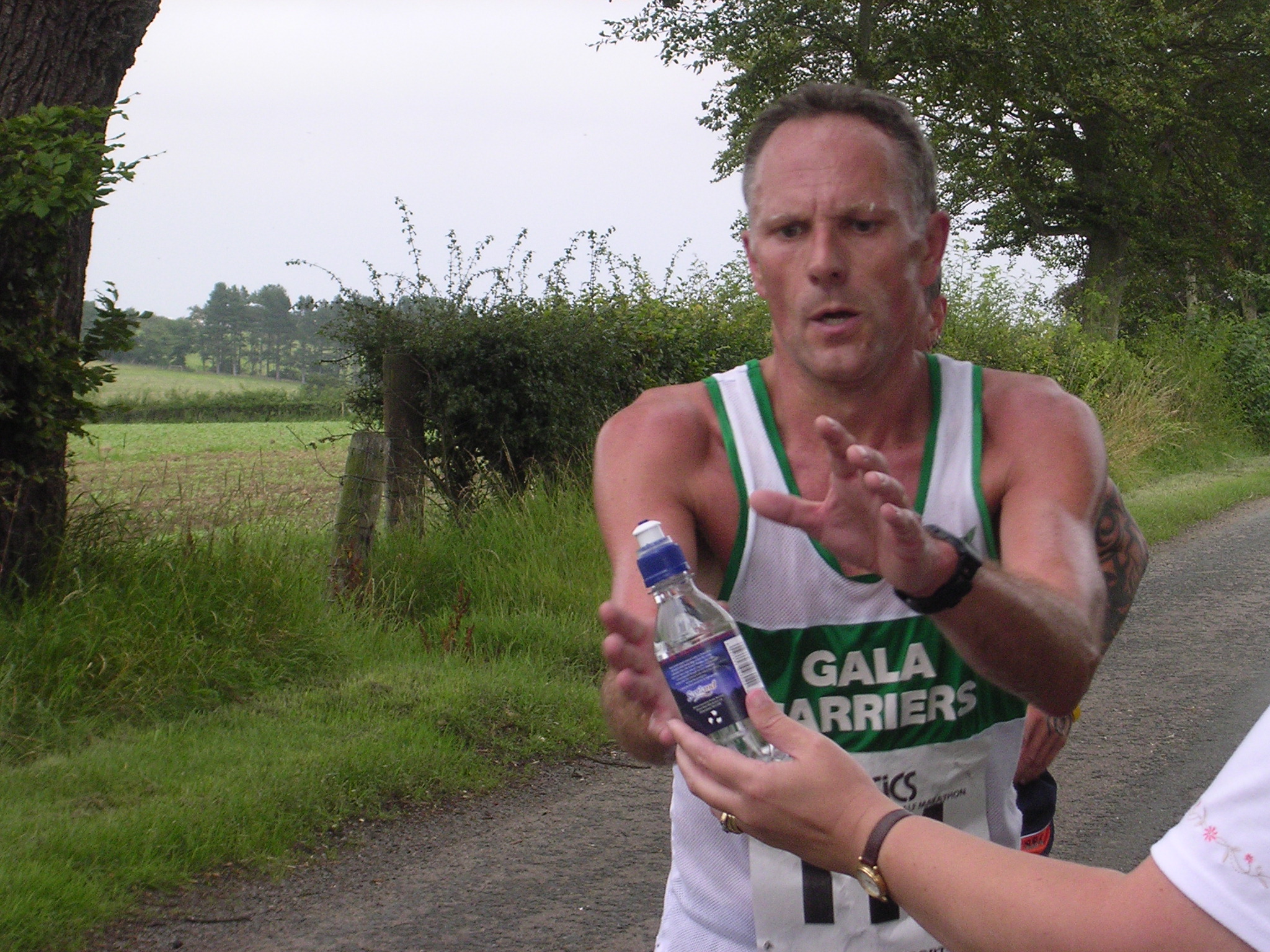
file0001888333711What does a runner look like when he finally spies the finish line of a 5K race? Isn’t he or she perspiring profusely, panting out breaths, his heart pounding, muscles aching. He’s so close to the finish line, he knows he won’t quit. A little bit more, and then—it’s done. He’s over! He’s put in the work. He suffered through the race. Soon, his breathing quiets, his perspiration dries, his heart stops pounding, his muscles loosen. There is more than just a smile reflected upon his face.

What does a painting look like when the artist begins? Only a line, more lines, colors washing every which way. He doesn’t like it. He wipes it off. He begins again. Lines and color come together until–finally, he has what he wants. He’s created beauty. And he smiles, too.

What does a woman giving birth look like when she’s in labor? An oversized body groaning, crying, pushing, shouting. And then–finally, it’s over. A new human life is laid on her breast. Her child. And she smiles, too.

The point is there is more to be seen in each of these particular events than the suffering or hard work or frustration. In time, we see personal accomplishment, the creation of something beautiful, and most miraculous, the emergence of human life–be it brand new, or only renewed.

There’s more to be seen in the struggles of our individual lives as well. Maybe we’re concentrating on the hard work, frustration, or suffering, and there’s the chance of giving up. But if we hang in there, if we give it our best–in time, we’ll see that our life is emerging too–into something better.

Have Faith in that.
“While other worldviews lead us to sit in the midst of life’s joys, foreseeing the coming sorrows, Christianity empowers its people to sit in the midst of this world’s sorrows, tasting the coming joy.”
–Tim Keller, Walking with God Through Pain and Suffering.

By lauramusikanski, 2015, MorgueFile.com

By lauramusikanski, 2015, MorgueFile.com

Waiting for the fish to bite or waiting for wind to fly a kite. Or waiting around for Friday night or waiting perhaps for their Uncle Jake or a pot to boil or a better break or a string of pearls or a pair of pants or a wig with curls or another chance. Everyone is just waiting.– Dr. Seuss

Do you want change? How long will you wait for it to happen without you? For anything to happen there must first be a personal action.

I’m a great procrastinator at times. I know what I want to happen. I know what it will take to make it happen. Yet I wait. Why?

It’s been said that one person can make a difference, and if you want to change the world, change yourself first. While that may rely a little too much on the Pollyanna principle, it makes sense. A personal change for the better is certainly a good thing and can spread to others.

But sometimes we wait, or put things off, because we’re lazy, or overwhelmed by the task, or fearful we won’t succeed. What does it take to get ourselves going? Because nothing will happen unless we do.

The sluggard does not plow in the autumn; he will seek at harvest and have nothing–Proverbs 20:4.

Yes, happening things take time. No one builds a house in a day. A business doesn’t start off amazingly successful in its first week. An education can take twelve plus years. But each of these require a first step, a starting point–an action. Otherwise they are only wishes blown in the air.

We must take that action, whatever it is.

Here are ten things to get us moving, presented by Marcia Eckerd, Ph.D. on Psychology Today. They’re not instant, she says, but at least helpful:

1. Create a deadline you must meet. I set up a meeting that requires me to finish a report and use panic to get me going.
2. It’s common knowledge, but it works – go on your diet or exercise routine with a friend.
3. Break the task into smaller pieces and reward yourself when you actually finish a piece. (Snickers is my reward of choice.) It helps to see the light at the end of the tunnel.
4. Work somewhere outside of home so the usual distractions aren’t there. Or make your work area as distraction-free as possible.
5. Get started even if it’s a gesture. Often, that’s the hump that’s hardest to hurdle.
6. Actually look at your to-do list. Take off anything non-essential, and set a time to start on one thing. The size of the list may scare you away.
7. Talk to yourself, although not out loud if you’re somewhere public. Repeat to yourself: “I have set a priority.” If you feel pulled to do errands or check e-mail, you have set a priority.
8. Organize the bills/papers/supplies you need to do your task. You’re less likely to wander away if you have everything together.
9. Set a time when you must sit down, and don’t allow yourself to do anything else for at least a half hour. You might start out of boredom.
10. Figure out a time to do what you need to do and stick to it. As crazy as it sounds, I lift weights before I go to bed. It’s the only consistent time I can manage.”

It’s very possible those ten things will be helpful, but what must happen first is a deeply felt, deliberate, and personal step by you and I to make a difference in what we see as wrong for us individually,  as Americans, and as Children Created by God.

Photo by Clarita, 2008, MorgueFile.com

Photo by Clarita, 2008, MorgueFile.com

Are there people you would call “great?” How do you recognize greatness in him or her?

Some might say a person is great because he/she is powerful or famous or wealthy. That may have been the case in the ancient world, but not today.

A great person is one we can respect, someone who is decent and caring human, who shows love and acceptance equally. A great person is someone we can trust.

Do you want to be great? How do you do it?

In reading the lives of great men, I found that the first victory they won was over themselves… self-discipline with all of them came first.— Harry S Truman

Self discipline must surely be the first personality trait of greatness. The ability to control one’s feelings and overcome one’s weaknesses; the ability to pursue what one thinks is right despite temptations to abandon it. Persistence to the end for what one believes in.

This person of self discipline will not be a fickle man or woman who purports to believe one thing until something more politically correct causes him to change his mind. He or she will be someone who sticks to a standard of absolute Truth.

I think of a father or mother who will sacrifice whatever needs sacrificing to do what is best for their children. I think of a person humble enough to apologize for his/her mistakes and then set out to change those mistakes. I think of a giver, not a taker, a person who works untiringly for the good of others. A person who would give up his own life for someone he loves.

There are many so-called famous people all over the place, but they are not necessarily great. In fact, many truly great people go unnoticed in this life. They are not flashy. Their contributions to life are selfless. They may be quiet, unassuming, and their greatness may be known only to God. But isn’t it God who will ultimately determine who is great and who is not?

When Everything Changes….

Posted: January 13, 2016 in World On The Edge
Photo by DodgertonSkillhause, 2013, MorgueFile.com

Photo by
DodgertonSkillhause, 2013, MorgueFile.com

She recalled her life as a child, before she turned fourteen. That part of her past held no secrets, there was nothing to hide then. There was only the peaceful escape that came as soon as she shut eyes, when she simply unwrapped any first thought and let it go, seeing it spiral and dance like a striped, toy top spinning from the hand of her grandfather. The image of her grandfather followed many first thoughts when she was a child, but he’s been dead for years.

Back then, she’d been certain her thoughts she came from angels, those she talked with. Not only the stone angels in her grandmother’s garden, but other angels, everywhere, and not one looked the same. She laughed a lot then, pointing at nothing, and playing with children no one else could see. She opened her mouth to drink in colors, tasting red and orange leaves, purple dawns, dark velvet skies that sparkled with diamonds. She drew into her skin the softness of a breeze, and into her ears the symphonic twitter of birds, the sloshing of the lazy Suwanee, and the sweet sound of silence.

In time, she responded to conversations not yet had, and answered questions not yet asked. While her mother called her ‘peculiar,’ and her father lifted his chin and tightened his lips, her early childhood had been a wonderfully bright world, a world with no shadows–until she turned fourteen. Then it transformed into something colorless and dark as the slow-flowing river she stood in. —from Faithful, a novel in progress.–Copyright Kaye Park Hinckley, 2016

In our life journey, the  innocence we were born with will leave us. We will be broken in some way. There may have already been a time in your life when everything changed like it did for the girl in the paragraphs above. What did you–or are you–doing about it?

Of course, none of us wish for brokenness, but all of us will suffer in some way. What sort of action will we take when that happens? We might moan and groan about the trouble that has befallen us. We might strike out at others. We might wound ourselves up, like a tight ball of yarn, and wish the world would go away and leave us alone, leave us wadded in our misery.

The girl in the story above was betrayed by someone she trusted.  It breaks her for awhile, but then….well, when it is published, you’ll find out.

The point is there comes a time when, if we allow God’s grace to unwind inside us, our inner sight will change. We will make an attempt to understand how much God loves us, and when we understand that, we will see things differently. We will be ‘put together’ and able to surrender our lives to Him. And follow Him.

Our earthly lives are like jars of clay. They can be beautiful but they are fragile and easily broken, many times by our own sins. And of course, our lives do not last forever. The genuine treasure of this life is that it continues beyond the container of our bodies. It is not temporary, but eternal.

For this light momentary affliction is preparing for us an eternal weight of glory beyond all comparison, as we look not to the things that are seen but to the things that are unseen. For the things that are seen are transient, but the things that are unseen are eternal.–Corinthians 4:17-18

Photo by Pippalou, 2014, MorgueFile.com

Photo by Pippalou, 2014, MorgueFile.com

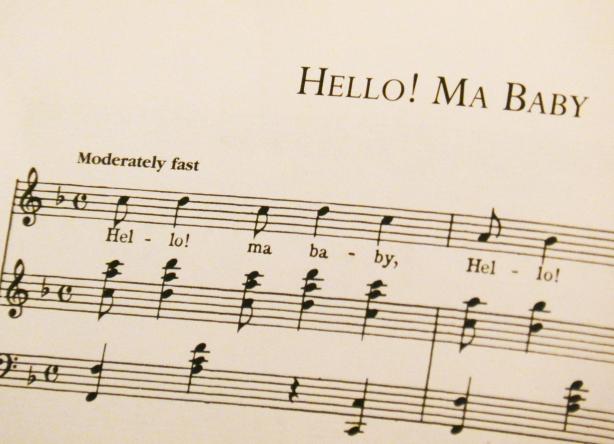
Every piece of music has a beat. Every human being has a beating heart.

Sometimes a piece of music is fast and frenzied. Sometimes the heart of a human being is fast and frenzied, too–when we’re worried, afraid, or excited. Sometimes music is slow, restful or quiet. The same with the human heart that keeps our life going.

The beat of music is called rhythm. Our individual lives have rhythm, too.

Rhythm is made up of sounds and silences. These sounds and silences are put together to form patterns which repeat to create rhythm. A rhythm has a steady beat, but it may also have many different kinds of beats. Some beats may be stronger or longer or shorter or softer than others. In a single piece of music, a composer can create many different rhythms. And in his or her life, a person can create and express many rhythmic beats as well.

God, our creator, made each of us unique, but in His creation of us, He gave us the power–the free will-to choose the beat, the rhythm, of our lives. The composition of our life on Earth is up to us. The sheet music of our life is what we show and give to others. We create it by the pattern of our attitude. Is our attitude toward this miraculous life that we possess positive or negative? Is the beat of it, good or not so good?

In this New Year, let’s step back and take a look at the rhythm of our life by reviewing our relationships with the ones we care about. And then let’s step up the beat. Let’s shake things up while we’re here until we positively affect those beloved hearts we treasure like a ball of fire!

Why Drag Through Life???

Posted: January 11, 2016 in World On The Edge
Photo by Prawny, 2014, MorgueFile.com

Photo by Prawny, 2014, MorgueFile.com

I often write about getting through the hard times, but what about celebrating the happy times? The great thing about being human is that we have the capability to be happy, to be filled with joy and to express it in celebration.

Each of us deeply desires JOY. Each of us has a need for CELEBRATION. Our human spirits are filled with those yearnings. But sometimes our busyness pushes them into a back corner, and we roll through life without taking the time for the joy and celebration–of ourselves.

But should we just drag through life as though it were a burden?

Our life alone is something to celebrate. And if we don’t believe that it is, it’s in our power to change it.

It’s possible we are losing the personal ability to be joyful and to celebrate–especially if we only look outside ourselves for amusement or entertainment to things that really have nothing to do with us, things that place us on the sidelines to watch. Celebration is something we do, not something to sit back and watch others do. It is participation, not spectating.

When we are entertained by someone or something, we are passive. We are receiving something, but not creating or doing something. On the other hand, when we celebrate we are active. We are expressing reverence or appreciation. We are confronting our personal world to give attention to the miraculously transcendent meaning of our life as a human being.

It’s a fine line between Saturday night and Sunday morning.
― Jimmy Buffett

Remember When???

Posted: December 24, 2015 in World On The Edge

file0001286135514This will be my last post until after the first of the year, and I will miss our communication. But I have lots of family coming for Christmas and New Years, so quite a bit of preparation on my agenda.

As people do, I’m remembering other Christmases because Christmases have the ability to track time for me, and I’ll bet they do for you, too. A year in time can change our lives.

Who was there at a particular Christmas, who was not? What things went right, or what went wrong? What was funny? What was sad? Our Christmases are filled with emotional memories.

I go back to my own childhood, and a rusty red swing on Christmas Eve–no shoes, it wasn’t cold enough for shoes that year.

I swung high as I could, nearly upside down, attempting to toe a high branch on a huge live oak in the back yard of my aunt, uncle, and cousins house, across the street from mine—- dreaming of all the toys I’d find the next morning under the Christmas tree. So much excitement! Imagination and anticipation do that.

How many of you ever actually saw Santa Claus when he visited your house ? You smile? Well, I’m certain I did on one particular Christmas Eve coming home from Midnight Mass— a flash of red just behind the chimney, the jingle of sleigh bells on a roof covered, not with snow, but pine straw.

We all have Christmas memories, some warm and delightful— and maybe others that we’d like to forget. And we do have that power to forget, to overlook and move on from Christmases that did not produce feelings of joy.

Your worst Christmas? Mine was the impending surgery of my middle daughter, three days after Christmas for a malignant brain tumor. That Christmas began many years of worry, but it began something else, too—my real joy, my total appreciation of the family I was blessed with. Remember the old song lyric—“You don’t know what you’ve got until you lose it?”

I think it’s good to Remember When— the good times and the bad, because we can learn from both.

This is a season that can fill us with strength, resolve, and a brand new lease on our lives.

Merry Christmas and Happy New Year to all of you!

And to my husband, my five children, ten grandchildren, sister, cousins, and their families, too. We’ve made it through the good times and the not so good. So let’s Remember When with all the love we’ve got!

Merry Christmas from Dixie !!

Posted: December 24, 2015 in World On The Edge