DEAR MAMAS, You are the wives. You are the mothers. You are the nannies. You are the teachers. You are the cooks–no, the gourmets! You are the washerwomen and the scrubbers. You are the taxi drivers. You are the gardeners. You are the counselors You are the peace-makers. You are the judges. You are the juries. You are the nesters. You are the consolers. You are the planners. You are the confessors. You are the dream-makers. You are the caterers. You are the celebrators. You are the lovers. You are the listeners.
YOU ARE THE GLUE.
YOURS IS THE HEART THAT TEACHES A CHILD TO LOVE.
YOURS ARE THE HANDS THAT PUT THE PUZZLE OF FAMILY TOGETHER.
YOU ARE IMPORTANT.
YOU ARE NECESSARY, NOT ONLY TO YOUR FAMILY,
BUT TO HUMANITY.
The Hand That Rocks the Cradle Is the Hand That Rules the World–William Ross Wallace
The expression is said to come from coon hunting. Once a raccoon is treed by the hounds, he’s a gone coon.
Do you like to be up a tree, with someone else in charge? Do you like to put yourself in a vulnerable position? Generally, I don’t.
I don’t like the feeling of not being in control. I want to know how something’s going to turn out before I step into it. I like the safety of the ‘usual.’ So, taking a risk is not a thing I’m likely to do easily–without a push, without a really good reason.
But there are some really good reasons for allowing ourselves to become vulnerable enough to take a risk. Another person’s life, for instance. We’d like to think that if someone was in danger, we’d step in to help, or even save his life, despite the risk to ourselves. We put another ahead of ourselves and this shows human love.
Love is a really good reason to make yourself vulnerable.
We cannot be truly in love with someone with out being vulnerable. We can’t walk around in armor; we have to take that off and let our true selves out in order to experience genuine love. Otherwise, it’s just a game of charade.
In love, we often have to back down, or give way. We cannot force those we say we love to do much of anything–ok maybe a little child, but even then, it’s not a good idea.
When we become vulnerable and let go—make ourselves completely available to the other—the love between us becomes stronger. We allow the other the freedom to find for themselves his/her way forward, even if it involves mistakes. Even if those mistakes affect us, too.
When we allow ourselves to be ‘treed…’
When we loosen our grip on the wheel and let go of every little thing…
When we allow ourselves to be vulnerable to someone we love, and they do likewise…
Then love becomes extremely powerful. Powerful enough to withstand any threat or risk.
This is selflessness— not selfishness.
This is when our hearts are open, and our very lives are on the line.
This is genuine love. And there is nothing else quite like it.
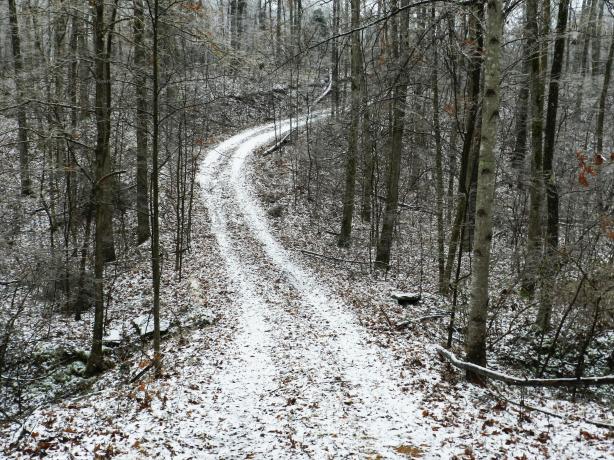
By now, most of us are tired of Winter’s mess. We are hoping that very cold temperatures, the unexpected snow, the continuing rain and wind, will soon be a thing of the past. We look forward to the promise of Spring.
The coming of green grass and budding plants. The sound of chirping birds making their nests in trees that are no longer barren and bare, but places for new lives to be born.
Yesterday, I had lunch with a friend who, along with her family, has come through a lot of suffering–a period of Winter in her life. There were a few tears. But there was a joy within her, too. A sort of Spring.
How does this happen? How does one get through the winter of his/her life?
By trusting in God’s promise.
And what is God’s promise to us?
He does not promise that we will not have our winters. He does not promise that we will not suffer(we know what His own son went through.) But His promise is that He will give us peace of heart and mind in everything, no matter how tragic, when we ask Him to. And that there will be a Spring for us.
There is no one reading this who has not experienced some hard knocks in life. Our time here is often difficult. But here, is ‘where the rubber meets the road.’ Here, is where a simple chunk of coal can become a diamond. Here is where we love and lose–and yet, survive. And become new.
Think of the desperate situations in our own lives. Don’t we sometimes become extremely strong in those situations? Well, that’s God’s promise to us. A promise that we can be stronger than we ever thought we could, if we look to Him.
Do not be anxious about anything, but in everything by prayer and supplication with thanksgiving let your requests be made known to God. And the peace of God, which surpasses all understanding, will guard your hearts and your minds in Christ Jesus. Finally, brothers, whatever is true, whatever is honorable, whatever is just, whatever is pure, whatever is lovely, whatever is commendable, if there is any excellence, if there is anything worthy of praise, think about these things. What you have learned and received and heard and seen in me—practice these things, and the God of peace will be with you. ..Philippians 4:6-9
Photo by Irish Eyes, MorgueFile.Com, 2006 Copyright Kaye Park Hinckley, 2016
God gave us life, and also the free will to live it our way.
So, on earth, our earthly lives are authored by us, by you and me. Our lives are as individual as a dance, a book, a poem, or a song.
But a dancer, a novelist, a poet, or a songwriter, does not always create excellence. Sometimes he or she creates, well…garbage.
So how do we create something worthy from our lives? How do we become a better person? And why should we?
Number One: We must admit that we’re far from perfect. We will understand this when we notice the tears we’ve caused others to shed. Amazingly, some people don’t notice the hurts they cause because in their mind the most important person is ME. These are people who use others as step ladders, or whipping posts, or as personal servants without reward or even acknowledgement. If this is the sort of person you have become, stop right there and notice. Decide to change.
Number Two: Look at the people you live and work with, and think: what do they need from me, rather than what can I get from them? When we take ourselves out of the equation only for a moment, we see someone before us who is very different from who we assumed them to be. We see their vulnerability. We attach to them as fellow human beings. Yes, we see them in a higher way. We see them as human as we are.
Number Three: Step back and consider that we are human, transcendent creatures made in the image of God. We are meant to have eternal life purchased for us at great cost by Jesus Christ. But, whether the eternal life will be with, or without God, depends on us. Never forget God’s mercy, but never forget that He is also just. So our attempt to change our life in order to become a better person is–at the very least–a good use of our free will.
This is an interesting explanation of the Star Wars movie themes from Wikipedia.
In the fictional universe of the Star Wars franchise created by George Lucas, The Force is a binding, metaphysical, and ubiquitous power Introduced in the original Star Wars film (1977), it is wielded by the Jedi and Sith monastic orders and is a part of all subsequent Star Wars works, including the Star Wars Legends collection of comic books, novels, and video games. The line “May the Force be with you”, spoken in each of the Star Wars films, has become part of the pop culture vernacular and is iconic of the series. The Force is a binding, metaphysical, and ubiquitous power in the fictional universe of the Star Wars franchise created by George Lucas. Introduced in the original Star Wars film (1977), it is wielded by the Jedi and Sith monastic orders and is a part of all subsequent Star Wars works, including the Star Wars Legends collection of comic books, novels, and video games. The line “May the Force be with you”, spoken in each of the Star Wars films, has become part of the pop culture vernacular and is iconic of the series.–Wikipedia
Asked whether the Force is God in the Star Wars universe, George Lucas replied:
“I put the Force into the movies in order to try to awaken a certain kind of spirituality in young people. More a belief in God than a belief in any particular religious system. The real question is to ask the question; because if you have enough interest in the mysteries of life to ask the questions “Is there a God?” or “Is there not a God?” that’s for me is the worst thing that can happen. If you asked a young person “Is there a God?” and they said “I don’t know” I think you should have an opinion about that. I think there is a God, no question. What that God is or what we know about that God, I am not sure. The one thing I know about life and the nature of the human race is that the human race has always believed it’s known everything. Even the cavemen thought they had it all figured out and they knew everything there was to know about everything because that’s where mythology came from. It’s constructing some kind of context for the unknown. I would say that cavemen on a scale understood about one. Now we’ve made it up to about five. The only thing is that most people don’t realize is that the scale goes to a million.”
When I was a young child, the Catholic Mass was celebrated only in Latin. The language of the church.
Few knew the literal meaning of each word in the prayers unless they followed along in their missal with Latin on one page and English on the opposite page. But it didn’t matter, at least to me. There was something in the Latin Mass that spoke to my soul in the same way as beautiful music without words. I loved the Latin Mass.
Music itself, has been called the language of the soul. There is no question that it connects us, not only by lyrics sung but by the intangible yearning, joy, and even the pain that we hear in a melody.
These emotions were absorbed by many upon hearing the Traditional Latin Mass, the essentials of which had remained constant since the time of Pope St. Gregory the Great (590-604). Today, it is still around and commonly known as the Tridentine Mass.
The Tridentine Mass is a name often applied to the Mass promulgated by Pope St. Pius V, on July 14, 1570, through the apostolic constitution Quo Primum, which standardized the traditional Latin Rite Mass. Then in 1969, it was replaced by the Mass of Pope Paul VI in 1969, called the Novus Ordo.
The Novus Ordo is the new Mass that Pope Paul VI introduced in 1969 after Vatican II, but it was already being revised before and during Vatican II. The desire of both the Council Fathers and Paul VI was to simplify the liturgy in order to make it more accessible to the average layman. While the Novus Ordo retains the basic structure of the Traditional Latin Mass, it removes a number of repetitions and simplifies the language of the liturgy.
This simplification is, of course, very good, but sometimes we appreciate more the ‘not so simple’ things. Those things we have to put additional effort into, those things we have to really think about and meditate upon to understand the awesome mystery in them.
For it is within the quiet depth of our hearts that we come to know the greatest of mysteries –God’s love for us, shown by the sacrifice of His son.
All there for us in the gift of The Mass.
Some say that a religious perspective shapes one’s creativity to such an extent that it corrupts art for its purposes. But does a non-religious perspective act in the same way? Does a non-religious perspective also corrupt art for its purposes?
A myriad of perspectives abound in our world: how do we see the world around us, how do we choose to live in it? A writer’s beliefs, whether religious, political, or social, will affect his or her creation. It is a matter of degree whether the creation becomes art, or whether it is turned into propaganda, which is not art.
Religion does not compromise art, and is not an impediment to the fiction writer. On the contrary, it aids in creativity, providing a component that pushes life and human reason to a higher, non-material level than simple, day to day dogmatisms. It is a lens through which an author translates a very human world, without moralizing propaganda, but rather with an empathy for all that makes us human, both spiritual (invisible) and physical (visible) components.
A common experience to humanity is one of depravity. The Christian author’s lens is the grace of God offered to humanity in spite of its depravity, but the reader shouldn’t have to be a believer to appreciate the author’s story.
Some Christian authors write a story that is slavishly and artificially constructed to argue his point. The story is not nearly as important as the moral of the story. This may, at first, sound logical. But this is definitely not the right approach to writing fiction—for Catholics or anyone.
Here is Flannery O’Connor’s Catholic orientation: from the sign to the thing signified, from the visible to the invisible, from the sacrament to the mystery. The more real fiction is, the more the story confronts the reader with concrete details in the language rather than abstract ideas, the greater and more forceful the metaphysical persuasiveness and power. Readers of “A Good Man is Hard to Find,” for example, do not have to be subjected to a Catholic lecture on human sinfulness; rather, “The Misfit” as a character is so concretely and vividly and authentically presented to our senses that we know him intimately, and the wickedness in his heart and life—and ours?—is a reality that cannot be denied without great effort.
Flannery O’Connor, as a Catholic Southern writer, understood that fiction is not firstly and ultimately about an idea, but about incarnation. It is about the concrete. It is about matter. It is about life. And this is the Art of Christian Fiction.
Based on Flannery O’Connor’s Religion and Literature:Dogma and its Implications for Art, by Tami England Flaum
Living is full of simple aggravations and complaints. Oddly the smaller things that bug us sometimes bother us more than much more serious situations we ought to be dealing with.
Time to take out the spectacles of definition.
What is most important? What is least important? Are hearts involved? Which things are we actually responsible for, and which are another’s responsibility?
Human beings were made to be good, yet there is a lot of corruption, evil, and violence in our world–all the work of a less noble chamber of the human heart. But we have a very noble chamber, too, and a loveable one. We only have to allow it to work that way, to act out the love within us–love that God put there.
Love is like a fire; it begins with a spark unique to each of us.
Genuine love for ourselves and others comes from our particular character traits, our likes and dislikes, and a whole lot about what we are willing to do to get where we want to be.
What is the spark that will ignite the love in you and me? What will cause us to take the high road toward love, or the low one toward indifference or even evil?
One definition of the word, situation is the way in which something is placed in relation to its surroundings. But often, when people talk about being in a situation, they usually mean that something important has gone bad in some way.
We all have those sorts of experiences. Some are social situations in which we don’t have enough confidence in ourselves. Maybe we are shy about conversing with others, afraid someone might be too critical of us.
Maybe our situation is that we’ve had a financial fall-out, and don’t know how to fix it.
Or it could be that we’re lonely, or sick, or even dying.
Maybe there’s a person we love, who doesn’t seem to love us. Or maybe we have an addiction, such as drugs or alcohol.
For many, there’s the situation of betrayal by a friend, or spouse.
In our life we will confront so many situations! Some are self-imposed, because all of us have choices, and often we choose wrongly. Some are thrust upon us through no fault of our own.
So how do we handle a harmful situation? Can we do it on our own?
Well, the answer to that is that we don’t have to do it on our own. Not if we have God as our partner in life. Not if we turn to him in all those situations listed above, even if they are situations we caused ourselves. God will help us through, if only we ask him.
Will our problem always be solved the way we want it to be solved? The answer is No.
But if God is involved, if we give our situation to Him, if we let Him carry us, we can have peace, trusting that good will come from it in a way we may not anticipate.
To disconnect is to sever the connection of or between two entities
To detach
To dissociate, as to disconnect from meaningful relationships
To be out of touch with
Have you ever listened to someone in charge talk intensely about something and scratched your head at how he could actually believe his own lies. Your first thought might be: This person is completely out of touch with reality!
To know what someone wants or needs from us, we must care enough to stay connected. We must be close enough to their daily ins and outs to understand them. If we have disconnected from someone, for example a child estranged from his/her parent, or vice versa, then we no longer have a true idea of what the other is presently thinking, even what danger he/she may be in. We must stay in close proximity to a person for any sort of real relationship.
This is also true in a religious sense. Today, many have disconnected from the source of our very life. God.
But just as no light will display from a lamp without the power source of an electrical socket, if we are not plugged into God we will not know Him. And if we do not know Him, we cannot, display the true light of our humanity which is in His image.
So God created man in his own image, in the image of God created he him; male and female created he them. Genesis 1:27
Our humanity is a gift, a magnanimous value God has given only to us over all other creation. Why? Because we matter to God. He loves us. He is never disconnected from us. He is always in touch with us. However, we can disconnect from Him. Yet even if that should happen, the power source of God is still available, but we must plug into it.


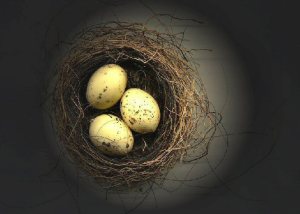 By now, most of us are tired of Winter’s mess. We are hoping that very cold temperatures, the unexpected snow, the continuing rain and wind, will soon be a thing of the past. We look forward to the promise of Spring.









 Translating a World on the Edge