First–if it’s a relationship you’ve invested in– you probably try to fix it.
But if that doesn’t work, do you wallow in its fall-out debris?
Do you hold grudges? Do you go for payback?
We know that one day, all things–including us– must end. And as we grow older, we see that ‘new and shiny’ doesn’t last. We also know that people aren’t perfect, and some are bad for us. We may have to give up on some relationships.
But I think it’s important that we don’t give up on the miracle of life itself.
To let go of life is counterproductive. Because when one door closes, another will open—if I don’t get bogged down in my own needs, and if I allow myself to notice it is opening.
Most broken relationships are thought of as negatives. But maybe some of them aren’t. There are some relationships that honestly can’t be fixed, and really shouldn’t be pursued any longer. In the long run, the breaking may be a positive thing for us.
Yes, we may need to grieve for awhile, but we ought to be careful that grieving isn’t what we spend the rest of our lives doing. Taking our own eyes off ourselves and shifting them elsewhere—to the need another may have– is what helps us grow in character.
And we should never let go of what will make us a better person, in the eyes of those who love us, and especially in the eyes of God.
If we’re honest, we’ll admit that we’re always looking for something more than what we have, even if we seem to have a lot. It may be something we can’t quite put a finger on, but we feel its lack and a certain craving for it inside us. Could that thing we’re looking for be God? The Good News is, God is looking for us.
God is truly seeking you. He has made Himself flesh for you because He is madly in love with you. And if you’re longing for Him in return, you will find Him right here on Earth. You will find him in the person sitting, sleeping, or working next to you, and in the myriad of other people you meet in life.
The Hound of Heaven is a 182-line poem written by English poet Francis Thompson (1859-1907). In the poem, the speaker is running from God, as do many of us who get caught up in the world. But God pursues him. The speaker is aware of God’s love for him, but he continues to run, thinking that if he turns to God, he will have to give up the worldly pleasures he holds to.
The name is strange. It startles one at first. It is so bold, so new, so fearless. It does not attract, rather the reverse. But when one reads the poem this strangeness disappears. The meaning is understood. As the hound follows the hare, never ceasing in its running, ever drawing nearer in the chase, with unhurrying and imperturbed pace, so does God follow the fleeing soul by His Divine grace. And though in sin or in human love, away from God it seeks to hide itself, Divine grace follows after, unwearyingly follows ever after, till the soul feels its pressure forcing it to turn to Him alone in that never ending pursuit.– The Neumann Press Book of Verse, 1988
God loves us and so He seeks us. If we run from Him, it’s because we don’t really know Him. We cannot love someone we don’t know. Neither can we love someone we know little about. Trying to get to know God is on our shoulders. He is there, always, loving us. He is waiting.
There are multitudes of Christians on Earth who know the need for God—especially in today’s superficial world. But many Christians suffer greatly because of their Faith.
What is the cost of your personal Christian belief? Many of us say we’re Christian, that we believe in God. We hold to that belief, even when some trash Christianity, personally maligning those who believe.
But think about this: To be different is a difficult state of affairs for many. Maybe those so opposed to Christianity are really not opposed at all, but only hold back because they’re afraid of rejection by their peers.
Of those who malign Christians, could it be that a belief in Jesus Christ sets them apart from others where they don’t want to be? Or that belief in God puts them in a category they’d rather not be in, because it isn’t seen as optimum for their career purposes. Or might they be afraid of being labeled because of the way Christians are portrayed in the media?
To say we’re Christians in today’s secular world is not for those who lack courage. To say we’re Christians, means we’re willing to suffer in the face of those who oppose Christianity enough to make fun of it, and us.
Here are some wise words by one of America, and the South’s, greatest writers: “I think there is no suffering greater than what is caused by the doubts of those who want to believe. I know what torment this is, but I can only see it, in myself anyway, as the process by which faith is deepened. A faith that just accepts is a child’s faith and all right for children, but eventually you have to grow religiously as every other way, though some never do.”
“This notion that grace is healing omits the fact that before it heals, it cuts with the sword Christ said He came to bring.”
“What people don’t realize is how much religion costs. They think faith is a big electric blanket, when of course it is the cross. It is much harder to believe than not to believe. If you feel you can’t believe, you must at least do this: keep an open mind. Keep it open toward faith, keep wanting it, keep asking for it, and leave the rest to God.” ———Flannery O’Connor
Faith comes from within each individual, as a grace. Faith is a part of who we are. It is not a fairytale reliance on things unseen. It is real. It is action. It is love. And–if we’re sincere about it–Our Faith is worth standing up for in a crowd, even if we’re standing up alone.
I know personally that standing up for one’s Faith actually deepens it. Because even if we must stand alone in some situation, we understand that God will give us the strength. All we have to do is seek His courage and we will find it in ourselves.
Purpose: the reason for which something is done or created, or for which something exists.
What is the purpose of our life? What is the reason we were created, the reason why we exist?
When is the last time we asked ourselves, “What is the purpose of my life?”
Maybe we’ve never asked it—-although we wouldn’t begin a task or a trip, consider a movie or read a book, without asking what those things were about.
Our life is the most personal and important thing we possess. Shouldn’t we wonder about why we have it? Why are we, each one of us individually, here on Earth? There has to be some reason for our being here, some meaning to our existence.
Maybe you’ll say it just happened that I’m here; some fluke of nature that caused a very particular ME.
Except, in itself, nature is orderly. Things that happen in nature are purposeful. A bee flies to a flower to pollinate it and to make honey. Trees produce oxygen so that animals can breathe. The Earth has an ozone layer to protect it from UV light. Even hurricanes have a purpose, the same purpose as winter storms, they vent off heat from the lower levels of the atmosphere. Each segment of nature is programed to accomplish a purpose.
As human beings, we have a purpose, too. I would suggest that our purpose is to love, in the fullest sense of the word.
Matthew 22:36-40: “Teacher, which is the greatest commandment in the Law?” Jesus replied: “Love the Lord your God with all your heart and with all your soul and with all your mind. This is the first and greatest commandment. And the second is like it: Love your neighbor as yourself. All the Law and the Prophets hang on these two commandments.”
The wrinkle is, though our purpose is ‘intended,’ we do have a choice in whether we carry it out. We can choose to love, or not.
Those of you who’ve read my novel, A Hunger in the Heart, know it’s about a hunger for love. Each main character strives for love. Often, they don’t put a label on it, but nonetheless the urge to have it is within them, pricking at their hearts.
It doesn’t matter if you haven’t read the novel. You know the characters. Maybe you even live, or have lived, with people like them.
You may have been the child of an alcoholic mother whose attention you desperately needed, but didn’t get. Or you may be that mother, a woman who at her core, wants to love, but uses an addiction to get through great sorrow and disappointment in her life. If so, can the child love the mother? Can the mother love the child?
You may know a father, a soldier, who fights in a war that forever changes him and the lives of those around him. Or a family patriarch, an aging old man, who uses his position to manipulate the ones in his care. Which of these does not deserve love?
You may have been unfortunate enough to see and experience evil in a person so shallow that he would defame goodness itself just to satisfy his own desires. Is this person worth loving?
Or you may know the personification of integrity in a man who has suffered by the hands of others—for others. Could we suffer for others if that’s what it takes?
Yes, our purpose in life is to love. And love can be prickly as a cactus. It can hurt. It is painful to be vulnerable, to allow ourselves to suffer for another. After all, we might be crucified for it.
But the bee on a flower might be swatted to death. The tree producing oxygen might be cut down. The ozone layer and the hurricane might be impeded by climate conditions. No matter, their purpose remains; it is not changed.
So even if we live in a world that is often unloving, even if we must go through some fire in order to love another; our purpose as human beings is not changed. It remains. The reason we are here, the reason we exist, is to love. To be a signpost for others. To be there for others.
Greater love than this no man hath, that a man lay down his life for his friends. –John 15:13
When another needs our help, can we overlook our own fear that involvement might hurt us?
Can we set aside our pettiness, especially if that same person has hurt us in the past?
Can we call out to someone who needs us and say, “I’m coming. Here I am–for you.”
There’s a character in one of the novels I’m working on, The Distance Between High and Low, called Hobart McSwain. He was born in Detroit, and adopted as a child by an Alabama family. Expressing his need for acceptance in the fictional town of Highlow, he says:
“I never asked for Alabama; I never asked to be her son. I had no choice over my deliverance. A child has no muscle, at all; just a displaced leaf riding on a stale wind, blowing this way and that. But when the wind stops, the leaf descends. I descended into the high side of Highlow and was raked aside, and it hurt that I wasn’t good enough to be noticed.”
Not good enough to be noticed. A frightening and continuous worry that most of us have throughout our lives.
On July 20, 2013, from 11am-2pm, I had my first book-signing at Barnes and Noble, here in my hometown.
I worried a lot–like a child: Will anyone come? Will I sign any books? As a new author, will I be accepted?
Since then, I’ve spoken at many events and venues, always wondering the same. Am I good enough?
Acceptance is what we all want, isn’t it? From the time we are born until the time we die, we strive for the acceptance of those we admire. Am I good enough?
In high school, in college, on the job—am I good enough?
In marriage, in parenthood, as a friend —am I good enough?
Living on the edge of a materialistic world that places wealth, power, and beauty on the altar of success—am I good enough?
Do I hide as if I’m inferior, and only now and then, peek out? If so, I need to remember that I don’t have to please another’s version of ‘good enough.’ I only have to satisfy that place in my own soul that pricks me to follow my highest inclinations, not my lowest ones.
Because in that place, I can relax in comfort and ask the Lord to lead me, then hear His voice as a Father to His child: “I love you no matter what you do, or who you are. I accept you. You are mine.”
It’s hard to believe that someone could be totally lonely in our busy—and seemingly connected–world. There are so many ways to communicate with each other. At least, electronically.
But is it ‘real’ communication? Haven’t you noticed people sitting in restaurants, across the table from each other where conversation would be easy? But they are not in conversation. Instead, they’re fiddling with their iPhones. Each of them, hoping to connect to that piece of equipment for some message they perceive as important–while missing connection with the person directly in front of them.
We are all meant to connect. Truthfully, we’re all connected to each other. Not by cell phone, or Facebook, but by the fact that we’re created in the image of God and because of that, our creation has a common purpose–goodness.
We are not created to be evil. Most people know this personally, otherwise we wouldn’t feel guilt or shame from some certain circumstance we may have caused or had a part in.
We are created to be good. Or we wouldn’t feel joy when a child escapes an accident, or a soldier comes home from Afghanistan to fall into the arms of his family. We wouldn’t appreciate beauty in the landscape, or feel great happiness when we’ve helped another who needs us in some way. We feel this way precisely because we are connected in a distinct way to other human beings.
In the South where I grew up and still live, people often refer to their kinfolks as ‘connections,” meaning connected by blood and a common purpose to stand together as family. And we’ve seen this on a larger scale in America’s reaction to helping others—fellow Americans and those who are not American–after huge disasters such as hurricanes, tornadoes, tsunamis, terrorism, and wars.
A person who helps others, in small ways or large, has found the urge to do so within himself because goodness comes from our Creator. Goodness is set within us. We are made to be good, and the fact that we often do not act ‘good’ does not negate the fact that we can be.
And it does not negate that our purpose to do good is meant to be communicated and shared with others.
Marriage is a life-changing comittment meant to last, yet most of us enter into it with ‘soaped-up’ windows, unaware of all it asks of us. May those married couples, and those soon to be being married, have the strength to persevere through the trials that come. And may they also have the exhuberance real love brings.
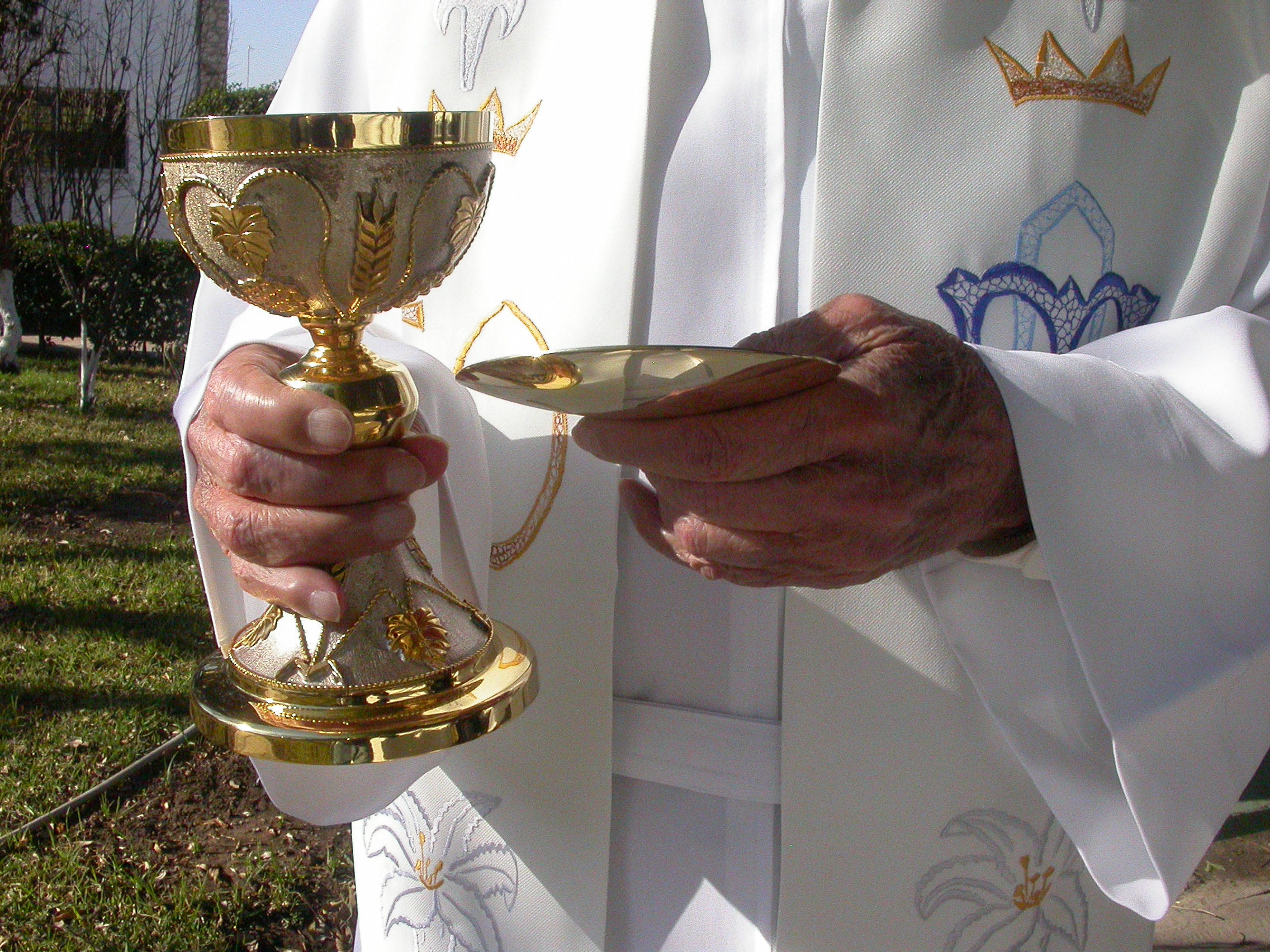
On Good Friday, the entire Church fixes her gaze on the Cross at Calvary. Each member of the Church tries to understand at what cost Christ has won our redemption. In the solemn ceremonies of Good Friday, in the Adoration of the Cross, in the chanting of the ‘Reproaches’, in the reading of the Passion, and in receiving the pre-consecrated Host, we unite ourselves to our Savior, and we contemplate our own death to sin in the Death of our Lord.
The Church – stripped of its ornaments, the altar bare, and with the door of the empty tabernacle standing open – is as if in mourning. In the fourth century the Apostolic Constitutions described this day as a ‘day of mourning, not a day of festive joy,’ and this day was called the ‘Pasch (passage) of the Crucifixion.’–Catholic News Agency
“From the earliest days of Christianity, no Mass has been celebrated on Good Friday; instead, the Church celebrates a special liturgy in which the account of the Passion according to the Gospel of John is read, a series of intercessory prayers (prayers for special intentions) are offered, and the faithful venerate the Cross by coming forward and kissing it. The Good Friday liturgy concludes with the distribution of Holy Communion. Since there was no Mass, Hosts that were reserved from the Mass of the Lord’s Supper on Holy Thursday are distributed instead.
The service is particularly solemn; the organ is not played, and all vestments are red or (in the Traditional Latin Mass) black.
Since the date of Good Friday is dependent on the date of Easter, it changes from year to year.
Fasting and Abstinence:
Good Friday is a day of strict fasting and abstinence. Catholics over the age of 18 and under the age of 60 are required to fast, which means that they can eat only one complete meal and two smaller ones during the day, with no food in between. Catholics who are over the age of 14 are required to refrain from eating any meat, or any food made with meat, on Good Friday.” –Catholicism, About.com
“For Catholics, HOLY THURSDAY is the most complex and profound of all religious observances, saving only the Easter Vigil. It celebrates both the institution by Christ himself of the Eucharist and of the institution of the sacerdotal priesthood (as distinct from the ‘priesthood of all believers’) for in this, His last supper with the disciples, a celebration of Passover, He is the self-offered Passover Victim, and every ordained priest to this day presents this same sacrifice, by Christ’s authority and command, in exactly the same way. The Last Supper was also Christ’s farewell to His assembled disciples, some of whom would betray,
desert or deny him before the sun rose again.
On Holy Thursday there is a special Mass in Cathedral Churches, attended by as many priests of the diocese as can attend, because it is a solemn observance of Christ’s institution of the priesthood. At this ‘Chrism Mass’ the bishop blesses the Oil of Chrism used for Baptism and Confirmation. The bishop may wash the feet of twelve of the priests, to symbolize Christ’s washing the feet of his Apostles, the first priests.
The Holy Thursday liturgy, celebrated in the evening because Passover began at sundown, also shows both the worth God ascribes to the humility of service, and the need for cleansing with water (a symbol of baptism) in the Mandatum, or washing in Jesus’ washing the feet of His disciples, and in the priest’s stripping and washing of the altar. Cleansing, in fact, gave this day of Holy Week the name Maundy Thursday.
The action of the Church on this night also witnesses to the Church’s esteem for Christ’s Body present in the consecrated Host in the Adoration of the Blessed Sacrament, carried in solemn procession to the flower-bedecked Altar of Repose, where it will remain ‘entombed’ until the communion service on Good Friday. No Mass will be celebrated again in the Church until the Easter Vigil proclaims the Resurrection.
And finally, there is the Adoration of the Blessed Sacrament by the people during the night, just as the disciples stayed with the Lord during His agony on the Mount of Olives before the betrayal by Judas.
There is such an abundance of symbolism in the solemn celebration of the events of Holy Thursday layer upon layer, in fact that we can no more than hint at it in these few words. For many centuries, the Last Supper of Our Lord has inspired great works of art and literature, such as the glorious stained glass window in Chartres cathedral and Leonardo’s ever popular (and much imitated) Last Supper in the 16th century.” Catholic Online
Not so long ago, if you turned on a local radio station in Dothan, Alabama, the music that came up was Gospel. You might hear The Blackwood Brothers, or the Blind Boys of Alabama. You might hear Mahalia Jackson or even Elvis Presley, but all of them were singing about the presence of God in our world.
Many times the songs were a sort of reaching up out of pain, and there was no question that God would reach back. For example, “His Eye is on the Sparrow,” verse Three:
Whenever I am tempted,Whenever clouds arise,When songs give place to sighing,When hope within me dies,I draw the closer to Him,From care He sets me free:His eye is on the sparrow,And I know He watches me.
Today’s world often seems filled with pain and sorrow. We all recognize it, and at times personally feel it, but after pain and sorrow hit us, do we feel as safe as that old gospel song says we should? Do we reach up in order for God to reach back?
Sometimes, when tragedy or disappointment strikes, all we want to do is crawl in a hole and stay there. And personally, I think that’s fine for a while. We have to get used to loss, or disillusionment, or whatever it is that has dented our life. But we can’t stay there forever.
We have to climb out of the hole and look up to realize we are loved, and that we will always be loved by God.
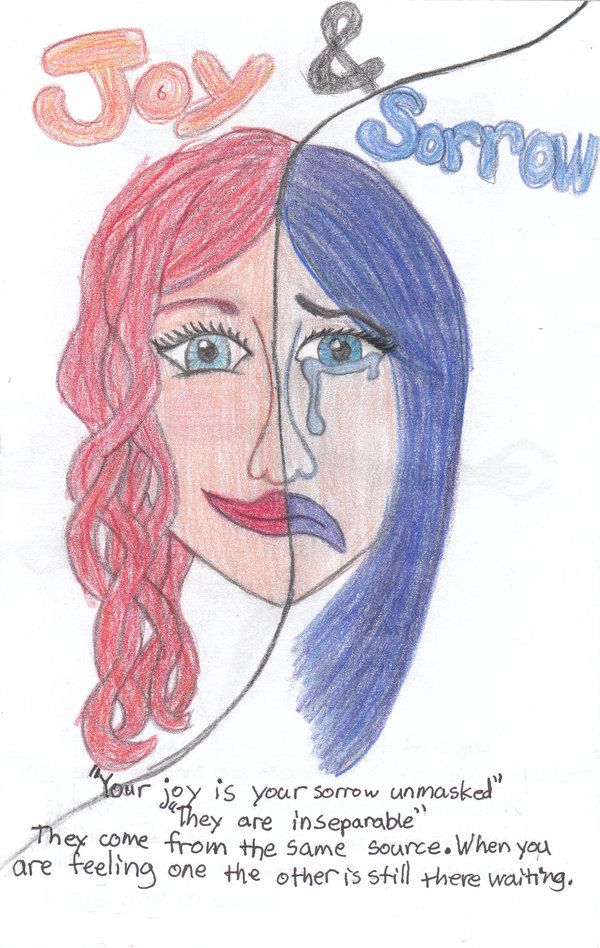 How do you react when relationships are broken?





 Translating a World on the Edge