Author Archive

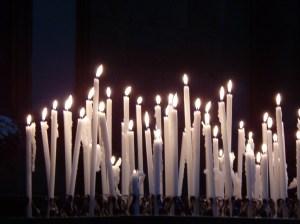
Photo by The Brass Glass, 2014, MorgueFile.com

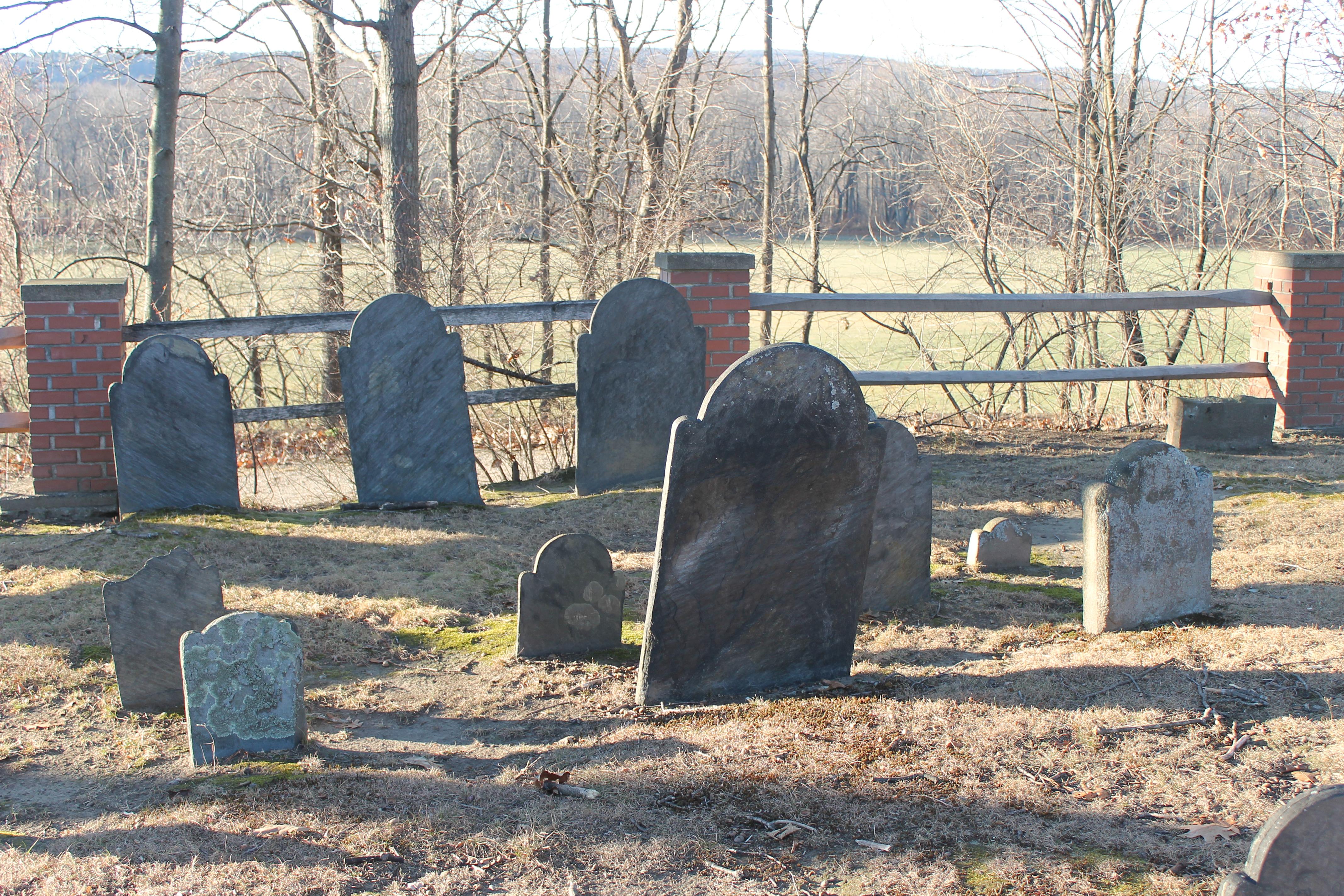
Photo by The Brass Glass, 2014, MorgueFile.com

On June 8, 1783, George Washington reminded the new country of America that “without a humble imitation” of “the Divine Author of our blessed religion” we “can never hope to be a happy nation.” His own adopted daughter said of  Washington that you might as well question his patriotism as to question his Christianity.

Fast forward to today.

Have we become gravediggers burying GOD?

If we do so, we are burying part of ourselves as well.

Friedrich Nietzsche (1844-1900) was a German philosopher and atheist, who claimed God is Dead. He thought the exemplary human being must craft his/her own identity through self-realization and do so without relying on anything transcending that life—such as God or a soul.

Of course, this is ridiculous, a contradiction to who we are. We have a soul–each of us, and that soul came from God. When we say we’re made in God’s image, our human soul is what we’re talking about. It is the one and only way we are like God, who is pure spirit.

However, my human soul, and yours, are not pure spirit. Spiritual, yes–but not pure spirit. Man is a spirit in matter, in the form of a body. He is spirit and body. God and the angels are pure spirits because they are not dependent on matter, as we are, either intrinsically or extrinsically. To be completely independent of matter for any material being is impossible. The human soul is intrinsically dependent on matter for some of its activities. But our soul is not purely material either, because for other activities it is not intrinsically dependent on matter.

So the human soul of man belongs to both the realm of the spirit and the realm of matter. Man is the lowest of the spirits, and the highest of the material beings, and he alone belongs to both the realm of the spirit and the realm of matter. As the new Catholic Catechism explains, spirit and matter, in man, are not two natures united, but rather their union forms a single nature. (CCC 365).

Most human beings understand that the soul, by its nature, is often in opposition to the body. This is the struggle of every human person. Because we have free will–we can choose.

Nietzsche struggled with many questions, and used his free will–a component of his soul, and part of his human spiritual make-up–to come up with his own wrong answer about a living God, only because that living God gave him the freedom to choose.

We have the same freedom as Nietzsche, and many other God-despisers like him, because despite what they say, they have inherited spiritualty from God.

When we make personal, even political, decisions, are we helping to dig those societal graves that want to bury God, too?

Well, it cannot be done without burying ourselves–we are part of Him.

Photo by Hamstersphere, 2005, MorgueFile.com

Photo by Hamstersphere, 2005, MorgueFile.com

WHAT IS CONFESSION AND WHY IS IT GOOD FOR YOU? By Paul Wilkes, Huff Post Religion, 4/10/2012

Deep within every human heart, there is the desire to be good. We all want to find and be our best selves, to go to bed each night at peace with who we are and how we acted that day. We want to be the kind of person we ourselves would want as a friend: trustworthy, dependable, fair. Yet often we fail — ourselves and others — in ways both small and significant.

What can lift this burden and restore our humanity is confession, a word that I use often in my new book, “The Art of Confession.” In my own religious tradition, Catholicism, the word “Confession” has a very specific meaning. That is not what I am talking about here. Instead, I’d like you to consider confession with a small c. Religious confession is directed to a higher power, but it is first and foremost a conversation with ourselves.

When we take an honest look at confession, we quickly see that it is a pillar not only of religious belief, but mental health. It demands something for which there is no substitute: that we be honest with ourselves.

Confession strips away the veil that we often cast over our actions, realigning our souls with what is best and truest in our natures. I use the word “align,” because when we betray ourselves (some would define this as sinning), we fall out of alignment. Until we acknowledge — confess — our souls remain confused and fragmented.

This kind of confession, which demands self-reflection and change, has little to do with the flood of confessional disclosures that characterize our age — on tell-all TV talk shows and social networking sites, even via an iPhone app for confession. In this time of Internet connectivity, amid the din of over-sharing, we mistake spasms of self-revelation for honesty. Our inner voice is not so easily found and cannot be parsed into 10-second bursts. That voice needs time to find the right words to say and the right place to say them.

As Thomas Merton, a monk and mystic, wrote: We are at liberty to be real, or to be unreal. We may be true or false, the choice is ours. We may wear now one mask and now another, and never, if we so desire, appear with our own true face. But we cannot make these choices with impunity. Causes have effects, and if we lie to ourselves and to others, then we cannot expect to find truth and reality whenever we happen to want them. If we have chosen the way of falsity we must not be surprised that truth eludes us when we finally come to need it!

Because it has been so trivialized, confession has lost its power and vitality. In our society today to confess is often considered foolish, weak, even corrosive to our self-esteem, unnecessary. “Such an antiquated notion,” some might say, “of right and wrong. What a naive understanding of how things really work, what people are really like.”

The truth is that confession, as I seek to redefine it in my book and in this series, is wise and strong and necessary, unburdening both the soul and the psyche to live a forthright, productive, and fuller life. Confession is not only for those who have committed some great public or private “sin.” For most of us, our “little murders” — our duplicities, the daily hurts, neglects, and carelessness we inflict upon others and upon ourselves — need to be confronted and acknowledged.

When confession becomes a practice, a daily reevaluation of one’s actions — an art — its power continues to grow, instilling a new sense of confidence, a vision of what life truly can be and hold. Something as simple as a short, nightly reflection, which I present in a later blog, can sort out the chaff from the wheat of the day just past, clearing the mind right then, and setting the tone for the days to come.

Using confession to live honestly and consciously — the goal in this book — is an art to be learned and a skill to be practiced. It is neither an easy fix nor a heal-all. Our brash modern optimism assumes that all can be made well if we only will it to be so, but human behavior is complex, requiring deeper thought and actual, sometimes painful recalibration.

Confession is, quite simply, an attitude. It is the cornerstone of the intentional life, not merely a clearing out of the debris, that which is bad or wrong in us, but a realignment of what is best in us, an intention to live a better life. When confession becomes a practice, a daily re-evaluation of one’s actions — an art — its power continues to grow, instilling a new sense of confidence, a vision of what life truly can be and hold. It is building upon something strong and sure and ultimately reliable. Confession is about truth, and as Thomas Merton advises us, what follows from an attitude of truth will not fail us.

sad childHow many people in today’s world would you call ‘damaged?’ Or does life itself just pre-conclude that by the time you leave it you’ll have been damaged in some way?

Life is difficult. For many, it is sometimes dangerous. It doesn’t seem like a gift, but something to get through. Of course, that’s a depressing view–but many people, especially some children, hold it.

Countless children are born into circumstances they did not create, and under circumstances that cause them great pain. Others have been taught to have no faith in anything except themselves, a ‘self’ that is blemished and marred: Trust no one. Somebody’s always out to get you. Take what you can before it’s taken from you. Grab. Steal. Even kill.

None of us choose the circumstances of our birth, but some appear to be luckier than others—I’m not talking about the amenities money can provide–I’m talking about strong families who support their children. Yes they make mistakes, but they confirm their children as being valuable, and patiently direct them onto non-destructive paths.

I’m talking about one father per family, not a father of ten by ten different women. Appalling? Yes. Yet those young lives are no less valuable in the eyes of God than are the more fortunate children. But how can they know this when their parents slap God in the face with their own selfishly stupid behavior?
There is no all-encompassing solution to changing this. More parental responsibility would go a long way, with fathers who not only see life as a gift, but their child and his mother as a gift, rather than a notch on his belt of so-called, ‘baby mamas.’

Every parent is human and often makes poor decisions. There’s no getting around that fact. And sometimes it takes tragedy to see what our mistakes as parents have been. When that happens, we can either fall apart or try to rectify it however we can.

Because life IS a difficult journey for each and every one of us; no matter our parents, no matter our circumstances.

Maybe we don’t honor our children. Maybe they don’t honor us. In the frustrations of life, we say things we don’t mean. Sometimes we even forget HOW to love them.

But we can get that back –in little steps, one foot in front of the other without giving up–and all the while thinking of ourselves and our children not as victims, but as victors, the way God wants them to be.

You may need a Kleenex for this next video about reconciliation between a Father and his son.

washington_resigning_his_commission_1The distance between intent and actual result can be very wide indeed. Is it because we lose sight of our intention? Is it because we allow an opportunistic evil to chip away at our noble intent?

Take a look America–a long look at the distance between what we intended out nation to be, and what our nation is becoming.

Here are the intentions for America by our first President, George Washington in his Thanksgiving Proclamation, New York, 3 October 1789

Whereas it is the duty of all Nations to acknowledge the providence of Almighty God, to obey his will, to be grateful for his benefits, and humbly to implore his protection and favor– and whereas both Houses of Congress have by their joint Committee requested me to recommend to the People of the United States a day of public thanksgiving and prayer to be observed by acknowledging with grateful hearts the many signal favors of Almighty God especially by affording them an opportunity peaceably to establish a form of government for their safety and happiness.

Now therefore I do recommend and assign Thursday the 26th day of November next to be devoted by the People of these States to the service of that great and glorious Being, who is the beneficent Author of all the good that was, that is, or that will be– That we may then all unite in rendering unto him our sincere and humble thanks–for his kind care and protection of the People of this Country previous to their becoming a Nation–for the signal and manifold mercies, and the favorable interpositions of his Providence which we experienced in the course and conclusion of the late war–for the great degree of tranquility, union, and plenty, which we have since enjoyed–for the peaceable and rational manner, in which we have been enabled to establish constitutions of government for our safety and happiness, and particularly the national One now lately instituted–for the civil and religious liberty with which we are blessed; and the means we have of acquiring and diffusing useful knowledge; and in general for all the great and various favors which he hath been pleased to confer upon us.

And also that we may then unite in most humbly offering our prayers and supplications to the great Lord and Ruler of Nations and beseech him to pardon our national and other transgressions– to enable us all, whether in public or private stations, to perform our several and relative duties properly and punctually–to render our national government a blessing to all the people, by constantly being a Government of wise, just, and constitutional laws, discreetly and faithfully executed and obeyed–to protect and guide all Sovereigns and Nations (especially such as have shewn kindness unto us) and to bless them with good government, peace, and concord–To promote the knowledge and practice of true religion and virtue, and the increase of science among them and us–and generally to grant unto all Mankind such a degree of temporal prosperity as he alone knows to be best.

Wonderful words, yet for many years, we have watched the principles of America decay. Will we continue to ignore what is happening?

The following, very prophetic radio warning was given in 1965! Remember this old English adage–“The road to hell is paved with good intentions.”

Living Lonely ???

Posted: May 16, 2016 in World On The Edge

file0001735309307Most of us have seen abandoned houses on country roads and city streets. There is something tragic about those unkempt places, those buildings that surely still hold the memories of people who once lived there, yet now, are no longer physically connected.

And because there is no physical connection, and the place is left alone, it falls into disrepair.

It’s the same with people left alone.

The most terrible poverty is loneliness, and the feeling of being unloved.–Mother Theresa

In fact, did you know that loneliness can kill you?

Emotional isolation is ranked as high a risk factor for mortality as smoking. A partial list of the physical diseases thought to be caused or made worse by loneliness would include Alzheimer’s, obesity, diabetes, high blood pressure, heart disease, neurodegenerative diseases, and even cancer—tumors can metastasize faster in lonely people.

“Real loneliness is overwhelmingly painful, disintegrative, and paralyzing. It represents a blocking of the fundamental need for personal intimacy, and it originates in pathological object relations in infancy and early childhood. Psychotherapeutically it is difficult to discern real loneliness because the patient cannot communicate it verbally and is frequently unaware of it, and because the more prominent symptoms of hostility and anxiety mask it”– Psychiatry. XXII, 1959: Loneliness. Frieda Fromm-Reichmann. Pp. 1-16.. Psychoanal Q., 28:572-573.

Personal intimacy is the key here. A person can be in the middle of many people, but without a connection to any one of them, he can feel lonely.

Lonely house, lonely me
Funny with so many neighbors
How lonesome you can be

——Langston Hughes lyrics, Street Scene


Are there people in our lives who need us, need our care and intimacy, yet we’re not giving it to them?
Why? Too busy, too involved with social media? There maybe be someone right in front of us, but we don’t see them because our eyes are always on our phones. Sad.


Photo by JPPI, 2015, MorgueFilen.com

Photo by JPPI, 2015, MorgueFilen.com

The fear of the Lord is the beginning of wisdom; all who follow his precepts have good understanding. To him belongs eternal praise.– Psalm 111:10 (NIV)

Fear is defined as an unpleasant emotion caused by the belief that someone or something is dangerous, likely to cause pain, or a threat.

But in the quote above, the word Fear is also used in reference to God. Are we supposed to fear, or be afraid of God?

Isn’t it that we revere the Almighty Power of God, because His power is absolute–the ultimate answer to all questions?

Isn’t it that we should be fearful for ourselves if we follow man alone, negating God?

What I tell you in the dark, utter in the light; and what you hear whispered, proclaim upon the housetops. And do not fear those who kill the body but cannot kill the soul; rather fear him who can destroy both soul and body in hell.–Matthew, 10:27-28

As human beings, when we are afraid, we either run from our fears–or face them with courage. In fact, fear can author courage in most of us. When we are most afraid, courage is offered to us by a loving God. But also a God who has given us free will either to run away, or to stand our ground. And if we choose not to stand our ground, if we don’t follow the precepts of God, but follow the precepts of Man, then we must be afraid.

Even then, fear is our opportunity for courage.

Courage is intangible within us. We cannot touch it. We can only see the result of it–just as we are unable to see the wind, yet its active result is apparent, in swaying trees, or even violent bursts of air that turn things upside down during a storm. It is the same with God. We are unable see to God except through His action of grace in our lives.

Courage– prompted by the fear of losing our religious freedom to practice what we believe in– is needed for those who revere God and His commandments. Never make the mistake of assuming that our religious freedom won’t be taken away by some of our less fearful, fellow men. We must stand our ground. We are called to courage today.

Photo from Pixabay

Photo from Pixabay

Science tells us that humans appeared on Earth over 200,000 years ago. Can you imagine how many human beings have come and gone in that time?

The older we get, the more we hear it: Life is Short.
And of course, it is. So, why do we think we’re so important when we’re ‘here today and gone tomorrow?’

Who are we anyway?? And why should anyone care whether we’re here or not?

Karl Rahner (March 5, 1904 – March 30, 1984), was a German Jesuit priest and theologian, is considered one of the most influential Catholic theologians of the 20th century. According to Rahner, all things in the world come from the one same origin, God; so there is “an inner similarity and commonality,” most clearly disclosed in a human being. A person is the unity of spirit and matter, and only in a human person can spirit and matter can be experienced in their real essence and in their unity. That spirit represents the unique mode of existence of a single person–when a person makes himself accessible to it. And it is always oriented towards the incomprehensible Mystery called God.

In other words, we are here because of God–and for God.

And what would he have us do?

“Teacher, which is the greatest commandment in the Law?”

Jesus replied: “Love the Lord your God with all your heart and with all your soul and with all your mind. This is the first and greatest commandment. And the second is like it: Love your neighbor as yourself. All the Law and the Prophets hang on these two commandments.” –Matthew 22:36-40

eyes of child

Is this statement True or False? Childish behavior is the opposite of adult behavior.

Well … do we ever fully let go of our childhood experiences—joyful or sorrowful? Either we expose them for all to see and hear, or we hide hide them so no one sees or hears about them. Regardless, our personal childhood experiences color nearly everything we do as adults.

The older I become, the more I’m assured of this—that our childhood years have created a blueprint for the rest of our lives. Sometimes a good blueprint, sometimes not so good.

This is precisely why childhood itself is so important—how and where we spend it, who was there, and most especially, what were the attitudes of our parents? More than likely–unless there’s a conscious effort— we express those same attitudes with our own children.

We not only look like our parents, but we also tend to think like them—unless something causes us to rebel—and many do rebel, swearing not to be a clone of either of their parents..

Still, we may later find ourselves like them. We may corner the sheets on bed just like our mother used to do. Or we may have interest in a particular sports team as our father did. Interiorly, we may have learned to solve problems the same as one or the other of our parents.

Because of our parents, we learned empathy for others, or not. We learned selfishness, or not. We put great emphasis on money, or not. We give of ourselves, or not.

As we grow into adults, we often try to forget any sorrows we may have had as children involving our parents, and our peers as well. We may even put aside the joys, too; intending to be ourselves, our own man or woman. Some who have been badly parented have success in consciously doing the opposite with their own children. But it’s not often any of us get away from the old tapes in our heads as our childhood re-plays. For better or worse, they are there.

The realization that your parents were human, and therefore, imperfect, can be tough to accept. We have a natural tendency to want to protect our parents. We even unconsciously identify with their critical attitudes toward us and often take on their disparaging points of view as our own. This internalized parent is what we refer to as one’s “critical inner voice.” It can feel threatening to separate from the people who we once relied on for care and safety.–Lisa Firestone, Ph.D, Psychology Today

Not all of us have/had mature, loving parents — and no parent is perfect. But even if our earthly parents fail, our heavenly Father never fails. Isaiah assures us, “Can a mother forget her infant, or be without tenderness for the child of her womb? Even should she forget, I will never forget you.” (Isaiah 49:15)

The love of God, Our Father, is constant and unlimited. In the parable of the prodigal son, the father loves his children beyond anything they have earned–the same way He loves us.

So when the blueprint of our earthly parents fail us, and our critical inner voice is heavy to bear, we can turn to the very personal and perfect love of God to become who we were truly born to be

imagesPUDVQR78Sacrifice: To forfeit something for something else considered to have a greater value.
Sacrifice does not mean giving up something for nothing; it means giving up one thing for something else we believe is worth more.
Sacrifice is part of the very definition of what it means to truly love another person. In fact, intimate relationships require sacrifice. I think we understand this most in the context of family, because we do sacrifice for our spouse, our children, and our parents. And one of the most important, and hardest, things to sacrifice for family is often our time.


Today’s society tries to obliterate sacrifice at every turn. Ads promise people that they can fulfill their desires without having to forsake anything at all. “Lose weight without giving up your favorite foods!” “Get a great body without long workouts!” “Get rich without having to work hard!” The denial of sacrifice is everywhere. How about our soaring credit card debts–and of course the national debt?

But it’s a fairy tale to think you can have whatever you want without sacrifice.

If you want to lose weight, you have to stop eating what puts the weight on. If you want to get ripped, you have to work out. If you want to be loved, and to love, you have to show another person that you would give up something of importance for them. Love and Sacrifice are intertwined–and they cost us, sometimes a great deal.

For Christians, the greatest sacrifice given out of love is the ransom Jesus Christ paid for us. And I believe the second greatest sacrifice was that of his mother, Mary. Can you imagine watching as your beloved innocent son suffered and died? Mary did something that only she and God have done. They both freely allowed their only Son to be a sacrifice for the salvation of the world.

Pixabay Photo

Pixabay Photo

The Latin word sacramentum means “a sign of the sacred.” In the Catholic Church, the seven sacraments are ceremonies that point to what is sacred, significant and important for Christians. They are special occasions for experiencing God’s saving presence. That’s what theologians mean when they say that sacraments are at the same time signs and instruments of God’s grace.

There are seven sacraments in the Church: Baptism, Confirmation, Eucharist, Penance, Anointing of the Sick, Matrimony, and Holy Orders. The purpose of each one is to make people holy, to build up the body of Christ, and finally, to give worship to God; but being signs, they also have a teaching function. They not only presuppose faith, but by words and object, they also nourish, strengthen, and express it. That is why they are called sacraments of faith.–Catholic.org

This blog is about one of the sacraments, the Sacrament of Marriage, and how it can lead us toward holiness.

Marriage is meant to be a lifelong union with the purpose of creating holiness in a man and a woman. In marriage each spouse gives up some rights over his or her life in exchange for rights over the life of the other spouse.

As Fr. John Hardon explains in his Pocket Catholic Dictionary, there are four elements common to natural marriage throughout history:

1. It is a union of opposite sexes.
2. It is a lifelong union, ending only with the death of one spouse.
3. It excludes a union with any other person so long as the marriage exists.
4. Its lifelong nature and exclusiveness are guaranteed by contract.

So, even at a natural level, divorce, adultery, and “homosexual marriage” are not compatible with marriage, and a lack of commitment means that no marriage has taken place.

It is important to remember, however, that the opposite occurrence of any of these points does not keep God from loving that person as if he/she were the only person in the world–He does. Neither does it keep God from continuing His offer of grace to all.

As a sacrament, Marriage is truly a vocation. But there will be ups and downs. Sometimes those ups and downs will be terribly exhausting,  and seemingly unsolvable. But then, out of  commitment, comes divine grace.

Marriage is a vehicle for God’s grace, his sanctifying grace which helps each spouse to help the other advance in holiness, as well as helping them together to cooperate in God’s plan of redemption by raising up children in the Faith.

In this way, sacramental marriage is more than a union of a man and a woman; it is, in fact, a type and symbol of the divine union between Christ, the Bridegroom, and His Church, the Bride. As married Christians, open to the creation of new life and committed to our mutual salvation, we participate not only in God’s creative act but in the redemptive act of Christ.–Aboutreligion.com