When I was a student at Spring Hill College in Mobile Alabama, I was taught by many wonderful Jesuits. One that I will always remember was Father Alfred Lambeau, who taught French.
He was small and wiry, had a glass eye, and a unique, sometimes biting, sense of humor. His method of grading papers began at the bottom with a failing grade, “Egad!” Next up from that was “Close But No Cigar” and upwards again was “So-So,” and finally, “Lollipop!”
“Close But No Cigar” was my favorite. It meant that I was at least on the right track, and with a little more effort I might finally get to “Lollipop!”
To put it into context for this blog–Life is surely like Father Lambeau’s grading system, isn’t it? Life is hard, but something–some spark–within us keeps us going, and trying, and sometimes succeeding.
What is that spark?
In one word–HOPE.
Hope makes us more human than anything else. It gives us wings, so to speak. It draws us closer to who we are created to be. This is not to say we will achieve material success because we’re hopeful, but we will achieve a peace and because of that peace, happiness, even joy.
Without hope, we’re spiritually dead. Hopelessness is the cause of an enormous amount of personal misery, and our hopelessness affects others. How many criminals act from a sense of hopelessness? Hopelessness often makes us feel alone and alienated from others. We may feel powerless, or even have a sense of doom.
So the term, “Close But No Cigar” used by Father Lambeau actually was a challenge for most of us. Keep going. Keep trying. And you’ll get there.
How would any of us get through difficult times without that hope–the language of God, eternally calling to us?
“God is in every person’s life. God is in everyone’s life. Even if the life of a person has been a disaster, even if it is destroyed by vices, drugs or anything else—God is in this person’s life. You can, you must try to seek God in every human life. Although the life of a person is a land full of thorns and weeds, there is always a space in which the good seed can grow. ” ~Pope Francis
Think of the stem of a rose. It’s not particularly beautiful. In fact it has thorns. We don’t look at the stem, except to avoid it. Instead we look only at the beautiful flower.
This is often the way we view people. We like the flamboyant, the showy. We pay attention to the beautiful, the successful. Most especially we pay attention to people we think will do something for us. We want flowers. We don’t want thorns. Thorns are dangerous. They can hurt.
But don’t we have thorns as well? I know I do. There are times when my own actions disappoint me so much that I feel very unworthy to be God’s child. But I am, and so are you. Even when– not if–we are covered by the thorns of life. God is in with us—-in fact, within us.
Between our thorns, no matter how thick, stiff, or close together they are, there is a small space. And often from this place comes the brand new sprout of something we may never have considered. It is tender and new in the beginning, but it has the possibility of becoming something gorgeous. We ought to look at others in this way, too. The thorns don’t take away from the purpose of the Rose.
We enter data into our computers, cell phones, and iPads by means of a keyboard with a universal set of letters and numbers. We can be certain that if we tap an ABC, we get an ABC. This is the reality of a keyboard.
If we enter wrong letters of figures, wrong letters or figures come out.
GIGO (garbage in, garbage out) is a concept common to computer science and mathematics: the quality of output is determined by the quality of the input.
What about the input and output of our lives?
Thinking of life as a keyboard. Again, we cannot tap the letters ABC and expect to get DEF. We cannot put into our mind ideas that we know are wrong, and expect the output of our actions to be good.
What we put into life is what we get out of it. This is also reality.
The best input for each life is a genuine, loving concern for others, as well as for ourselves. This has always been the case for humanity. It’s why the world has progressed.
Today, we live in a selfish society that asks first: What about ME?
So in our own lives, if we only input What about ME? then what do you think our output will be?
In my foyer there is a Grandfather’s Clock dating from the mid eighteen hundreds. Its origin is German. Before it came to me, it belonged to my husband’s uncle, a chaplain and Lieutenant Colonel in the U.S. Air Force. It is a beautiful clock, and temperamental, but if I keep it wound, its gong is clear and loud and steady with an echo that resounds for nearly a full minute throughout the house.
On top of a china cabinet in my dining room, there is an Arsonia Mantel Clock that belonged to my grandmother, also dating from the eighteen hundreds, and may have belonged to my great-grandmother. My grandparents had it when my mother was born in Savannah, GA, and it traveled with their family to Panama City Florida, and finally to Dothan, Al. I remember my grandmother’s daily ritual of winding it. I wasn’t allowed to touch it then, but today, I’m the performer of that ritual and the receiver of its chiming.
These two old clocks have evaluated time for nearly two centuries. They have broken silence as they struck through births and deaths, through happiness and sorrow, and through all in between. In hours and minutes, these clocks have measured out the lives of many people, some of my family and some unknown. And as people died, the clocks continued to tick along.
There are many clichés about Time: Time is of the essence. Time heals all wounds. Time is money. But what is time really? To understand, we might consider its opposite.
As human beings on Earth, we cannot experience the opposite of Time–timelessness, or eternity. We cannot fathom ‘No Beginning. No End.’ Our everyday lives are full of schedules and the ticking of clocks.
Some lives tick slow and heavy like the pulse of the Grandfather Clock. Others are quick and lithe as in the tick of the Mantel Clock.
But if Time is how we measure out our lives here on Earth, then what we do in those hours and minutes and seconds we have, must signal something awfully important.
Just as in the ritual of winding the old Mantel Clock, we have a great deal to do with how our time on Earth will be spent and perceived. And as with the Grandfather Clock, there will surely be an echo.
What sort of reverberation will my Time on Earth create?
We might have been born some years in the past, or in the future. But we were not born then.
We are here now. Today, in this particular world.
Our life is NOW.
This is Our Time to make a difference. And we will, one way or another. It may be a good difference or a bad difference, depending on whether we base our time here on Truth, or Lies.
But it counts.
We may make a difference in a very personal and singular way, with only one person. But if we give our loyalty, kindness, and love to that one person; he may give the same loyalty, kindness and love to another person, or to many people. And in turn, they may pass it on, too. A real domino effect.
And it counts!
We may not be someone who likes to work up close with others, but we work anonymously on the sidelines, taking no credit, no facebook publicity, no bows, at all.
It counts.
We may be people who pray for others, those we know and those we don’t.
It counts.
We may raise our children to love God, to love themselves as creations of God, and to treat others with respect.
It counts.
OR
We may not give, but only take. We may not work for anyone except ourselves. We may allow our children to lie and bully others. We may never give the problems of anyone else a passing thought.
All that counts, too, but in the opposite way.
Let’s make a difference in our time, in our world, that will not hinder but benefit ourselves and others. So that when we leave our time in this world, we’ll have left it better, not worse.
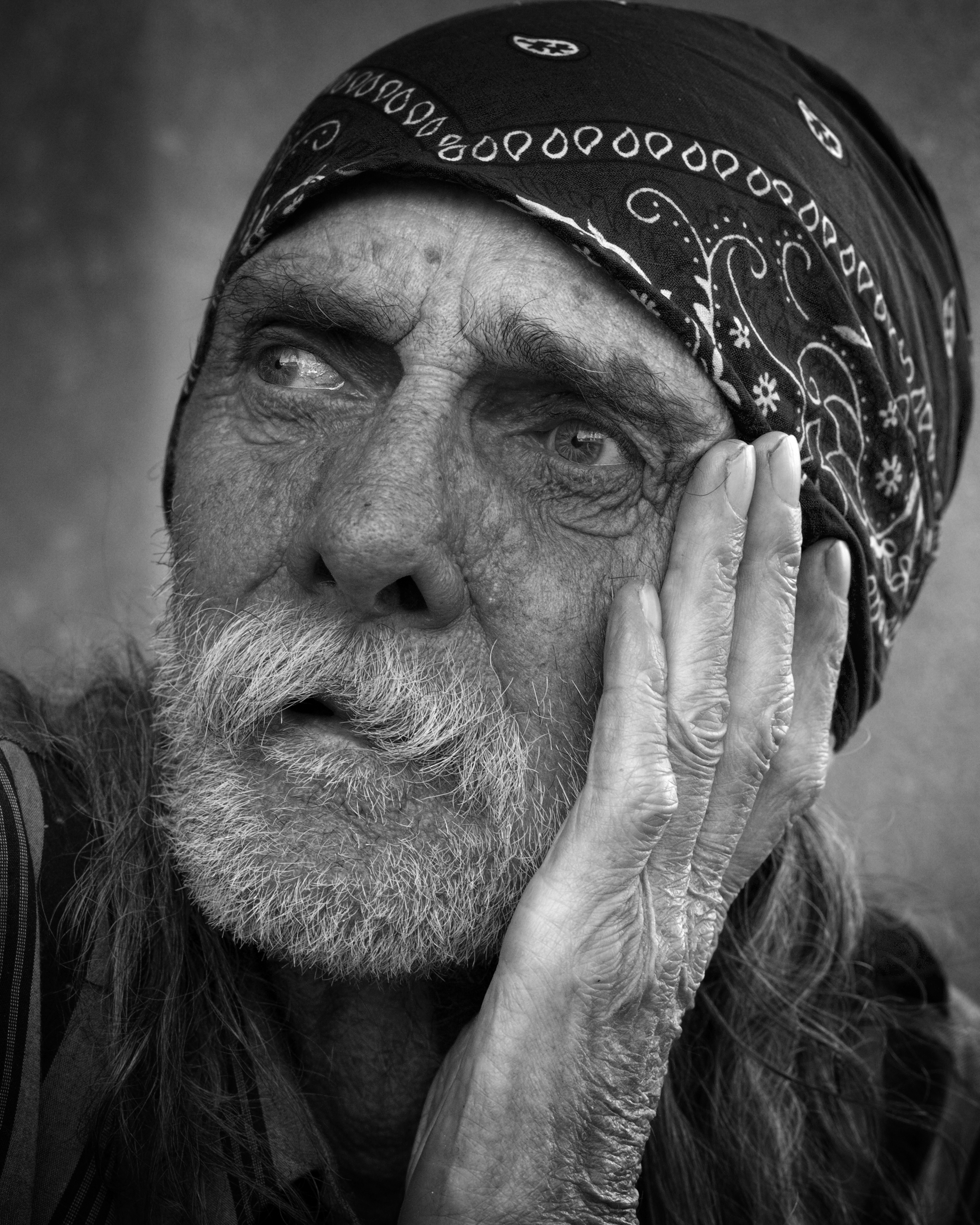
According to DataGenetics, the value of an adult human body, based around just the chemical elements that make up a corpse, is only $160. Of course, we all realize that this is not the true worth of a human being.
In Holy Scripture and the doctrinal tradition of the Church which is intrinsically based on God’s revelation, life is seen as a gift from God, as something holy and not disposable. And we as fellow human beings are to love life, to love our neighbor in the same way that we love ourselves. The perfection of that is to value the worth of a human life so much that we would give our own to save it–just as Christ did for each of us.
Here is one man who did just that.
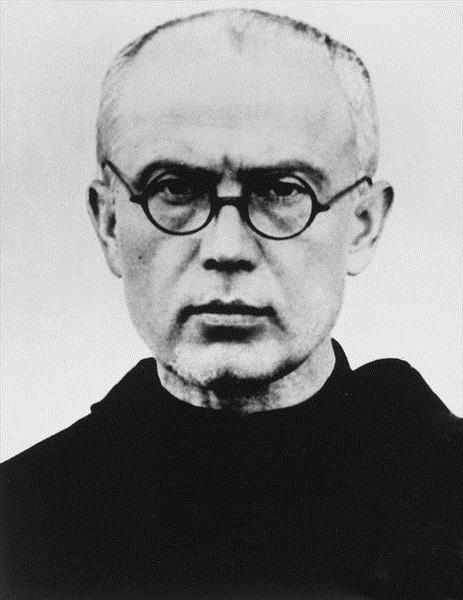
Maximilian Maria Kolbe, O.F.M. was a Polish priest who died on August 14, 1941, as prisoner 16670 in Auschwitz, located in German-occupied Poland during World War II.
Because a prisoner had escaped from the camp, the Nazis selected 10 others to be killed by starvation in reprisal for the escape. One of the 10 selected to die, Franciszek Gajowniczek, began to cry: “My wife! My children! I will never see them again!” At this Father Kolbe stepped forward and asked to die in his place. His request was granted.
Gajowniczek later recalled:
I could only thank him with my eyes. I was stunned and could hardly grasp what was going on. The immensity of it: I, the condemned, am to live and someone else willingly and voluntarily offers his life for me – a stranger. Is this some dream?
I was put back into my place without having had time to say anything to Maximilian Kolbe. I was saved. And I owe to him the fact that I could tell you all this. The news quickly spread all round the camp. It was the first and the last time that such an incident happened in the whole history of Auschwitz.
For a long time I felt remorse when I thought of Maximilian. By allowing myself to be saved, I had signed his death warrant. But now, on reflection, I understood that a man like him could not have done otherwise. Perhaps he thought that as a priest his place was beside the condemned men to help them keep hope. In fact he was with them to the last.
Father Kolbe was thrown down the stairs of Building 13 along with the other victims and simply left there to starve. Hunger and thirst soon gnawed at the men. Some drank their own urine, others licked moisture on the dank walls. Maximilian Kolbe encouraged the others with prayers, psalms, and meditations on the Passion of Christ. After two weeks, only four were alive. The cell was needed for more victims, and the camp executioner, a common criminal called Bock, came in and injected a lethal dose of carbolic acid into the left arm of each of the four dying men. Kolbe was the only one still fully conscious. With a prayer on his lips, he raised his arm for the executioner.
Father Kolbe’s death was not a sudden, last-minute act of heroism. His whole life had been a preparation. His holiness was a limitless, passionate desire to convert the whole world to God. He was
was active in promoting the veneration of the Immaculate Virgin Mary, founding and supervising the monastery of Niepokalanów near Warsaw, operating a radio station, and founding or running several other organizations and publications.
Kolbe was canonized on 10 October 1982 by Pope John Paul II, and declared a martyr of charity. He is the patron saint of drug addicts, political prisoners, families, journalists, prisoners, and the pro-life movement. John Paul II declared him The Patron Saint of Our Difficult Century.
We call ourselves Christians, followers of Christ, but the BIG question is, do we love God’s gift of human life so much that we would sacrifice ourselves for it?
Some take for granted food, water, and shelter. It’s easy to do–unless food, water, and shelter are in short supply, as they are for many in our world.
Or when we have plans for tomorrow, we don’t like to think they could be changed by an event out of our control.
And how about our health, our friends, our spouse? We surely don’t like to think of illness, death, or betrayal taking away those close to us.
Those kind of losses happen to someone everyday. We hope they won’t happen to us, but of course, that is foolish. We cannot be certain the economy will not affect our jobs, and then our way of life. We cannot be certain we will remain healthy. And ultimately, each of us will lose someone we care about through death or betrayal.
When a person is lost or taken from us, we’re likely to experience regrets–what did we not do that we could have done?
When my parents were older, they were curious as to what sort of childhood I’d had. Had they been good parents is what they were really asking. I told them I’d had a wonderful childhood because they had been wonderful parents. I’ll never forget the smile on my mother’s face when she said, “Well, Kaye, you knew you were loved.”
Regrets usually come when we haven’t loved enough, when we take each other for granted as much as we do taking a breath. Most of the time we don’t notice that we’re breathing at all–it’s just something that comes naturally, except we’d better not hold back our breath for too long.
Love is something that comes natural, too; part of our spirituality. But too often, we hold it back. We may even intentionally withhold love from another as a payback of sorts–a pretty risky thing to do on any given day. Because that one day may be the last we have to give our love, or to receive love from another.
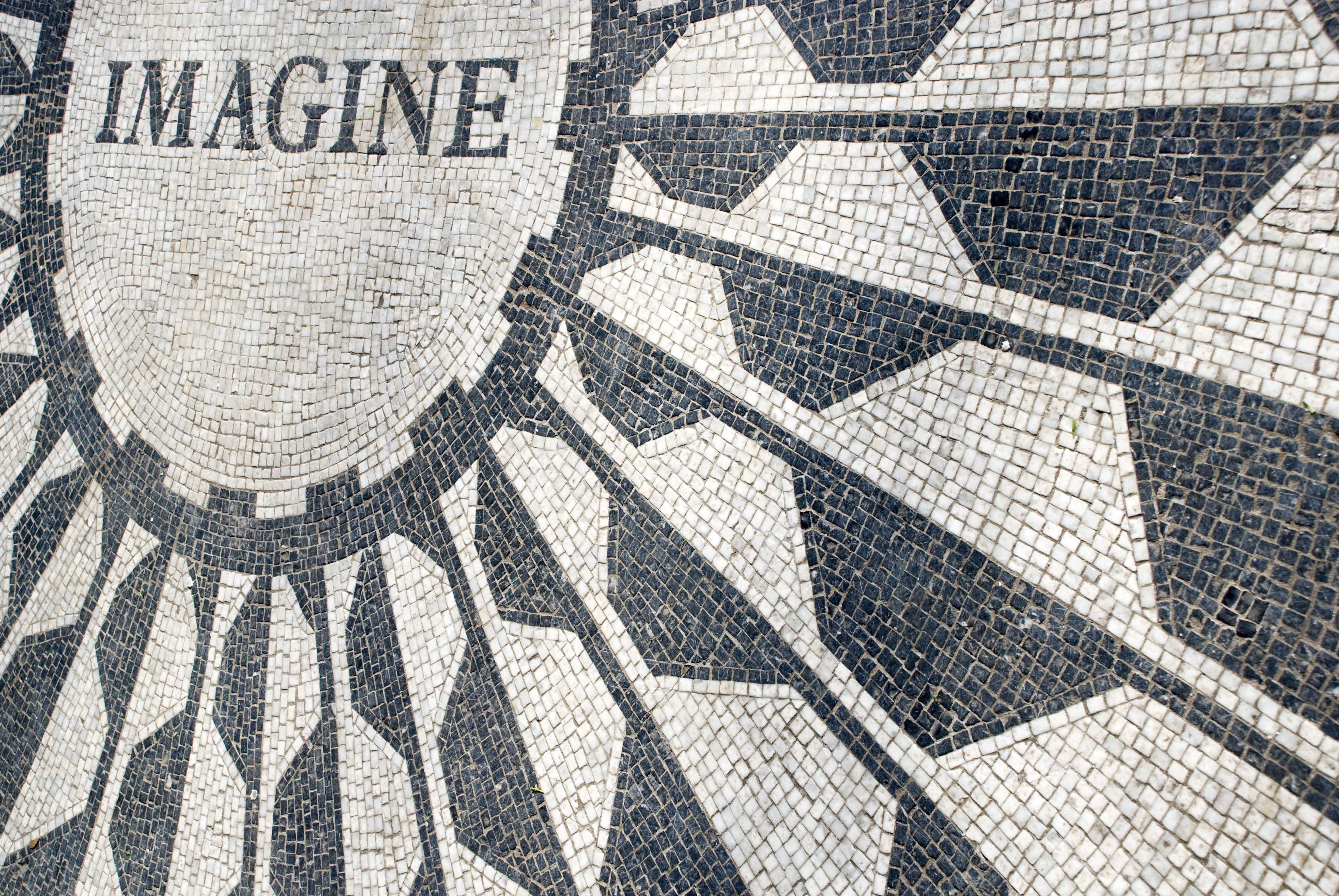
Can you imagine one photograph that contains all the events of your life from birth until death? For most of us, the photo would be miles long and wide.
Of course, we know this is not possible, but the very fact that we are imagining it shows that imagination goes much farther than simple knowledge.
Imagination is more important than knowledge. For knowledge is limited to all we now know and understand, while imagination embraces the entire world, and all there ever will be to know and understand. – Albert Einstein
Well, who embraces the entire world, knowing and understanding all? That sounds like God to me.
The root word in “imagination” is image. God uses his imagination to create us, and wills us to be made in His image and likeness. His imagination is directed by His will–just as our imagination is directed by our will. Our free will, our ability to choose one thing over the other.
Sometimes we choose one thing over the other based on memory, events that have affected us in some way, good or not so good. Those events can stoke our imagination positively, such as the memory of our best Christmas or Thanksgiving so far, and that leads to next year, and then the action of how we’ll create an even better Christmas or Thanksgiving.
Memory can also stoke a negative imagination. Someone did me wrong last week, so I imagine ways I can get back at him.
Our memories are entirely our own. If we choose to re-hash past hurts, it is no one’s fault but ours that we are miserable. It’s no wonder that our lives seem dark and confusing.
But we have an imagination that can alleviate that, if we choose to use it.
Our imagination can bring light back to our lives when we look at the bad situation with a different perspective. Then with our free will, we can choose to ‘act’ in a positive way. We can love, even those who have hurt us. We can heal and mend. We can turn ourselves away from those mental pictures that drag us down.
Working from memory, and with free will, imagination allows us to move forward, and keep going. What a great gift it is!
At times, it’s difficult to see the path we’re on. It may be a path not particularly good for us. It may be a path of sin, yet we don’t want to change our direction–even though there’s a restlessness inside us that says we should go another way.
“For Thou hast made us for Thyself and our hearts are restless till they rest in Thee.”—St. Augustine
Talk about great sinners! St. Augustine was truly one of them—until he became a converted sinner. . . and a saint.
As Augustine later told it in his work, “Confessions,” his conversion was prompted by a childlike voice he heard telling him to “take up and read” which he took as a divine command to open the Bible and read the first thing he saw: Paul’s Epistle to the Romans, called “Transformation of Believers,” consisting of chapters 12 through 15 – wherein Paul outlines how the Gospel transforms believers, and the believers’ resulting behavior. The specific part to which Augustine opened his Bible was Romans chapter 13, verses 13 and 14:
Not in rioting and drunkenness, not in chambering and wantonness, not in strife and envying, but put on the Lord Jesus Christ, and make no provision for the flesh to fulfill the lusts thereof.
Other philosophers, as well as people he lived around, pointed out that Augustine ought to change the path he was on. One who pushed him toward conversion was his own mother, Monica, who harped day and night, for many years, about his strictly human obsessions.
In “Confessions,” St. Augustine writes about how much he regrets having led a sinful and immoral life, shows intense sorrow for his sexual sins, and writes on the importance of sexual morality.
Most of us are like St. Augustine.
We live in the “City of Man,” and ignore the “City of God.”
Augustine writes: Accordingly, two cities have been formed by two loves: the earthly by the love of self, even to the contempt of God; the heavenly by the love of God, even to the contempt of self.
Nevertheless, St Augustine believed that God intervenes in the life of mankind by direct action—the action of grace– at certain definite points in time and place.
This is what happens to us, too. Our wandering spirits yearning for ‘something else,’ until we encounter the grace of God—maybe because of a situation, or through a person. This encounter with grace causes us to change our ways.
What a gift is this Grace, this ability to change! We can go from a lost and lonely soul, to one who recognizes the love of God, and yearns to be worthy of it.
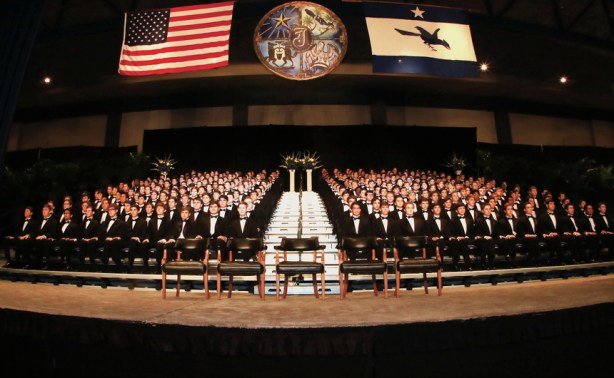
Last week I attended the graduations of three of my grandchildren; one from kindergarten, one from Middle School, and one from High School. All three were well-planned and all produced a few, joyful tears, but the advice in the commencement address of Fr. Anthony McGinn, S.J. to the 2016 Class of Jesuit High School, New Orleans, is one I hope all ten of my grandchildren will live by.
For the past twenty years, Fr. McGinn has led Jesuit High. Because this was his final year, his address is particularly poignant and wise–not only for the young graduates, but each of us on our journey through life.
The Address, The Wisdom, and The Hope:
“My fellow graduates who are of the class of two thousand sixteen, this evening we join you in saying farewell to a stage of your life that has seen great personal growth amid hard-won victories and challenging obstacles.
Today you see yourself and the world differently from when you were a child. You have developed a more mature outlook.
Your perspective will continue to change throughout your life as you grow into the man God has planned you to become.
Life is a dance you learn as you go. Sometimes you lead, sometimes you follow. Don’t worry about what you don’t know as long you have a right frame of mind that will open you to learn in diverse and challenging circumstances.
Some mindsets help us to mature; others lead us to unhealthy places that turn out to be dead ends.
What is the basic mentality that will guide you in every encounter with reality?
Do you experience the world through a lens of self-pity?
If you absolve yourself of all responsibility, take the role of a victim, make excuses, and exaggerate obstacles, then you will live in a world where challenges are magnified into catastrophes.
Every disappointment will become devastating if you see yourself as entitled to every success, honor, and fulfillment.
I challenge you to avoid this toxic cocktail of self-pity, envy, and resentment which would enfeeble you and undermine your motivation to learn the dance.
On the other hand, do you view the world through a lens of control and dominance?
If you perceive any limitation on your choices as an injustice, then yours is a mentality of exaggerated autonomy. Do you feel entitled to have all of your desires and whims satisfied?
Unfortunately, we cannot love the truth and at the same time demand to have reality conform to our desires.
Healthy choices are always circumscribed by the truth. Making one’s own truth requires a distorted sense of self and a twisted view of the world.
Both of these attitudes are unhealthy because they distort the truth. Both self-pity and exaggerated control will prevent you from learning life’s dance as you should. Integrity should be your partner in the dance of life.
I suggest a third way which involves your looking at the world with a humble recognition that all you are and all you have is a gift. All is grace.
The gift may not always fit our plans. We may want someone else’s talent, someone else’s success, someone else’s gifts.
Part of learning the dance is understanding we are entitled to nothing. We have begun the dance when we can say that our situation is better than we deserve.
Be patient, be humble, be grateful, and be open to challenges because life is a dance you learn as you go.
Thank you for your years at Jesuit. Please make the effort to stay connected with one another. Thank you for the difference you will make.”
 When I was a student at Spring Hill College in Mobile Alabama, I was taught by many wonderful Jesuits. One that I will always remember was Father Alfred Lambeau, who taught French.




 According to DataGenetics, the value of an adult human body, based around just the chemical elements that make up a corpse, is only $160. Of course, we all realize that this is not the true worth of a human being.




 Translating a World on the Edge