Archive for July, 2015

by Clarita, 2004, MorgueFile.com

by Clarita, 2004, MorgueFile.com

I love Netflix! Last night I watched “Death of a Salesman,” a classic, Pulitzer-winning play by Arthur Miller that I studied in college and never quite forgot.

The movie was beautifully acted by Dustin Hoffman as Willie Lohman, the salesman. Here is a man in his sixties who’s never quite made it because he’s had the wrong dream, trying to be a successful businessman when he was actually not equipped for it.

Unable to accept that he’s failed, Willie unloads his same dream onto his two sons, especially Biff, who Willie imagines will rise to greatness because of his looks, athletic ability, and the fact that “he was well-liked.”

The play is a tragedy, mostly in Willie’s role as a father. That he loves his sons is made apparent, but the kind of love he shows them is ruinous. He has a dream for them–his dream, not theirs. And he’s a man who cannot accept the reality that he is a failure in the job chose to build his life around, so he lies to make himself seem successful. He lies to his sons, and even to himself.

The greatest love we can give our children is Truth–to show them who they are–valuable human beings created by God. But we should never sugar-coat their mistakes. And often, we do that, maybe because their mistakes are similar to ours and we don’t want to personally own up either.

It’s important that we don’t selfishly implant in children our own dreams and expect them to play them out with any success. We have to realize each child’s uniqueness. But most of all we have to realize where we ourselves have failed in our lives so far, and make an attempt to keep our children from doing the same–by being truthful, not dishonest.

Getting to know our children and their personalities is so important. We cannot guide them properly if we look through the rose-colored glasses of what WE want them to be. Always, we need to see them as individuals, children who came through us—but are NOT US.

Parents and children—and I think especially Fathers and sons—no matter how deeply they love each other, often have many regrets. But there will always be a certain bond there.

So, may Fathers and Sons respect each other for who they are, and may each forgive the other for being a fallible human being.

Got a Logo????

Posted: July 3, 2015 in World On The Edge

file000103780820A logo is a graphic mark or emblem commonly used by commercial enterprises, organizations and even individuals to aid and promote instant public recognition. In the nearly twenty years I spent running an advertising agency, I created many logos for businesses. Some of those logos are still around, on billboards, trucks, and some television ads. That’s either because the business they represented is still around, too, or because the logo worked well for the business.

If you were interested in promoting yourself and what you stand for–what would your personal logo look like? Would it be bold and brazen, or sedate and sentimental? What would the colors be, the text style, the graphic if there was one? What is it about you that lets other people know who you are?

Logos is a Greek word which means rational thought or reason. In the Bible, it is translated to mean ‘word’ or another name for Jesus. In the beginning was the Word, and the Word was with God, and the Word was God. ]He was in the beginning with God. All things came into being through Him, and apart from Him nothing came into being that has come into being.–John 1:1-4

I would say the longest running logo, and most successful logo by far, is the Christian Cross. Can you imagine how many times it has been inscribed into stone, or imprinted? How many pieces of jewelry have used it? How many books? How many T-shirts?

But a Christian does not need to walk around in a T-shirt imprinted with a cross in order for people to know who we are. Being Christian isn’t just a word that we apply to ourselves. Being a Christian requires actions, the actions that love promotes.

1 John 3:16-20, “This is how we know what love is: Jesus Christ laid down his life for us. And we ought to lay down our lives for our brothers. If anyone has material possessions and sees his brother in need but has no pity on him, how can the love of God be in him? Dear children, let us not love with words or tongue but with actions and in truth. This then is how we know that we belong to the truth, and how we set our hearts at rest in his presence whenever our hearts condemn us. For God is greater than our hearts, and he knows everything.”

We can apply many other emblems to ourselves because we are unique and there are many words that might describe us as individuals. But together we are one. We are Christians. And unconditional love, symbolized by the Cross of Christ, is our logo.

Open to Miracles???

Posted: July 2, 2015 in World On The Edge
By Kakisky, 2010, MorgueFile.com

By Kakisky, 2010, MorgueFile.com

Young children have no problem believing in miracles. They are new, innocent, and without the constraints living in this world can produce. But despite our age, many of us are still open to miracles.

A miracle is a happening that no natural power can bring to pass in any manner or form whatsoever. Have you experienced one?

Of course you have:

If you have seen a baby growing in the body of a woman.

If you have held in your hand the seed of a flower, planted it, and watched it take root and bloom.

If you have seen the light and felt the burn of a sun you could never touch.

If you have forgiven an enemy when you never thought you would.

If you have risked your life for another’s. Or another has risked his for yours.

If you have lived another day in suffering, yet also lived that day with hope.

If you have heard the voice of God through another person, or media outlet, or in the frustrations of a difficult personal situation.

If you have experienced any of these things, you have experienced the miracle of Grace in the world–right here where you are. And there are many more opportunities than these.

But caution. Though it is always being offered, Grace must be noticed affirmatively to be taken advantage of.

If we don’t take the time to notice and affirm them, the miracles of Grace will not affect us–not even if they are all around us.

God’s Grace is as much a part of our earthly lives as our own breathing. But just as with our own breath, we must take it in and make it part of us.

For a Catholic, the greatest of miracles is the grace of the Eucharist. The Bread of Life. For a greater explanation of this, the greatest of miracles, go to: http://www.catholic.com/tracts/christ-in-the-eucharist

Let’s be alert, so we can be open to the miracles that the grace of God shows to the world.


Mary's_Mountain_Cover_for_KindleIn one way or another, each of my books portrays characters in the process of making dire choices. And often they make wrong choices that ultimately cost them. For example, Paul Dunaway in Mary’s Mountain discards his values and knowingly tolerates evil. Tolerance is the keyword in this book–a sickly, fluffy, and misleading tolerance, that costs Paul the highest price.

But aren’t we the same? Don’t we fall for well-presented propaganda (lies)? Are we just too busy to think for ourselves when we let others form our mindsets, our values?

Like a river that don’t know where it’s flowing, I took a wrong turn and just kept going.–Bruce Springsteen

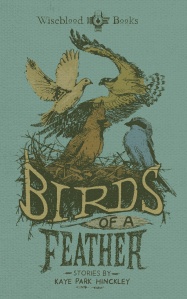
Lucy Adams, Lake Oconee Magazine, wrote the following about my short story collection, Birds of a Feather; but what she wrote also describes my writing in general.

“Hinckley writes characters who are shocking, flamboyant, disturbed, unkind. She writes characters who are merciful, gracious, empathic, loving. She writes characters who demonstrate the dualities of human nature. Edmund, in “Shooting at Heaven’s Gate,” allows himself to be used by evil. Rather than condemn his actions, Hinckley pushes her reader to acknowledge the frailties of the human heart. “We all are capable of doing great evil,” explains Hinckley. “Why does a person do this? I like to know reasons.” Curiosity about human nature propels her plots.Birds_of_a_Feather_FRONT_PUBLICITY_JPGDon’t seek clearly defined protagonists and antagonists here, however. Hinckley’s characters are complicated. They’ve done horrible things, witnessed horrible things, been the victims of horrible things, yet they continue rising each morning and putting one foot in front of the other. They fulfill their obligations to each other while these horrible things gnaw at them from the inside out. Hinckley deftly presents the repulsiveness of her character’s actions, while also revealing her characters’ drive toward love.”A Hunger in the Heart

Author, Richard Van Holst, had this to say about my novel, A Hunger in the Heart: “Like Flannery O’Connor, Hinckley shows us the virtues and the flaws in her characters. And while she displays their weaknesses as traits deserving of compassion, she does not whitewash their faults.”

My own contention is that any decision we make can drastically change the course of our own lives, and even change the kind of people we are as Americans. So, shouldn’t we comb through our hungers (our choices) and make only those we’re sure will better us all?

https://youtu.be/5lYpokhq_-w